The Science of Harmonic Dampening in Modern Auto Care
Achieving absolute silence in a braking system requires far more than a standard brake service; it demands a sophisticated appreciation for the tribological interactions between the friction material and the rotor substrate. Most car owners, and even many technicians, view brake noise as a simple indicator of wear. However, brake squeal is fundamentally an unstable vibration caused by the friction-induced excitation of the entire corner assembly. According to engineering standards established by SAE International, these high-frequency acoustic emissions are often the result of microscopic imbalances in the contact patch. To truly eliminate noise, a mechanic must look beyond the friction thickness and evaluate the resonant frequencies of the calipers and shims. For those experiencing issues before their pads are worn, the simple trick to stop brake squeal on cold mornings often involves addressing these surface-level harmonic disruptions early.
New Pads Alone Won’t Stop the Squeal
The prevailing industry myth is that a fresh set of pads will automatically result in a quiet ride. In reality, the hardware supporting those pads is often the culprit behind persistent chirping. Professional-grade auto repair involves replacing or meticulously cleaning the abutment clips and guide pins. Over time, heat cycles cause these components to lose their tension, allowing the pad to oscillate within the bracket. This oscillation manifests as the dreaded high-pitched squeak. Expert technicians prioritize brake maintenance hacks to prevent costly failures, such as applying specialized synthetic lubricants to metal-on-metal contact points. Without this attention to detail, even the highest quality ceramic pads will fail to perform silently.
Clean Hubs Prevent Lateral Run-out Issues
One of the most overlooked secrets in the shop is the cleanliness of the wheel hub surface. Even a human hair’s thickness of rust or debris between the rotor and the hub can cause lateral run-out. This slight wobble might not be felt as a pulsation initially, but it creates uneven pad-to-rotor contact that generates heat spots and subsequent noise. When you notice why your steering wheel shakes when you brake at high speeds, you are often feeling the advanced stages of this alignment failure. A top-tier mechanic uses a wire brush or a hub cleaning tool to ensure a perfectly flat mating surface, a step frequently skipped in high-volume ‘quick-lube’ environments. Ensuring this level of precision is exactly how a top-rated mechanic ensures safe auto repairs every time.
Can Micro-Vibrations Cause Permanent Hardware Fatigue?
Yes, sustained high-frequency vibrations do more than just irritate the driver; they can lead to the work-hardening of the stainless steel shims and the degradation of the rubber dust boots on the caliper pistons. When these vibrations are left unaddressed, the hardware loses its ability to dampen sound, leading to a cycle of noise that no amount of ‘brake quiet’ spray can fix. This is why a comprehensive tune up of the braking system is required every 12,000 to 15,000 miles to inspect the integrity of these dampening components. If you are unsure about the state of your system, consider our guide on why regular brake service is key to car safety and longevity to understand the preventative measures that save money in the long run. Professional drivers should actively contribute to their vehicle’s health by monitoring these subtle changes in pedal feedback.
Friction Material Science Determines Your Noise Floor
The choice between ceramic, semi-metallic, and organic friction materials is not just about stopping power; it is about heat management and acoustic damping. Semi-metallic pads offer superior thermal conductivity but are inherently louder due to their metallic content. Conversely, ceramic compounds are designed for low noise but can glaze if subjected to extreme heat without proper bedding. Every advanced auto repair professional knows that ‘bedding in’ the brakes—a process of controlled heat cycles—is essential to transfer a layer of friction material onto the rotor. This transfer layer is the secret to a smooth, silent interface. To ensure your vehicle is equipped with the right components for your driving style, you may want to contact our team of specialists for a personalized consultation on high-performance braking solutions.
Stop Ignoring the Fluid That Actually Stops the Car
While mechanical components like pads and rotors receive the most attention during a brake service, the hydraulic medium remains the most neglected critical factor. Brake fluid is hygroscopic, meaning it actively absorbs moisture from the atmosphere through microscopic pores in the rubber hoses. As the water content increases, the fluid’s boiling point drops significantly, leading to a phenomenon known as vapor lock. Under heavy braking, this water turns into steam, which is compressible, resulting in a dangerously soft pedal. According to the National Highway Traffic Safety Administration (NHTSA), moisture-contaminated fluid is a primary contributor to hydraulic system corrosion and failure in older vehicles. Expert technicians monitor these changes using a refractometer or by consulting the brake fluid color chart: when to worry. If you find why your brake fluid level keeps dropping slowly, it is often a sign of an internal master cylinder leak or a weeping caliper seal that demands immediate auto repair intervention.
Does Your Suspension Geometry Compromise Your Brake Pad Wear?
A vehicle’s braking efficiency is inextricably linked to its suspension geometry. When a mechanic identifies uneven pad wear, the culprit is often not the caliper itself, but worn control arm bushings or ball joints. Under braking force, the vehicle undergoes ‘nose dive,’ which shifts the weight forward. If the suspension is compromised, this weight transfer becomes erratic, causing the tires to lose optimal contact with the road. This instability forces the ABS to intervene prematurely, increasing stopping distances and heat buildup. Proactive drivers should learn how to spot a leaky shock before it ruins your tires and brakes alike. Furthermore, steering components play a role; for instance, recognizing 3 symptoms of a bad inner tie rod can prevent the minor lateral vibrations that mimic a warped rotor.
Leverage Modern Electronics to Find Ghost Noises
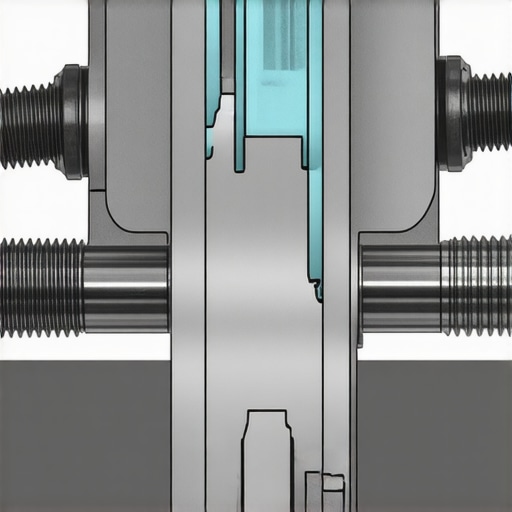
Modern vehicles are rolling data centers, and a tune up of the braking system now involves more than just a physical inspection. Electronic Stability Control (ESC) and Traction Control systems utilize the same sensors as your brakes to manage vehicle attitude. A faulty wheel speed sensor can send erroneous data to the ECU, causing the calipers to ‘drag’ or apply micro-adjustments that the driver feels as a faint surge or vibration. Using the $20 scanner that every modern driver should own allows you to pull real-time data from the ABS module to identify which corner is misbehaving before you start tearing into the hardware. This digital-first approach to auto repair saves hours of diagnostic time and ensures that the root cause—be it a sensor gap or a tone ring fracture—is actually addressed.
Why Your New Brakes Smoke During the First Mile
It is a common sight of panic: a driver pulls out of the shop only to see whisps of smoke rising from the wheel wells. In most cases, this is a normal part of the ‘outgassing’ process. High-quality pads use phenolic resins to bond the friction material; as these resins cure during the initial heat cycles, they release gas. This is precisely why your new brake pads are smoking and why the bedding-in process is so vital to ensure long-term performance and noise reduction. However, if the smoke is accompanied by a rock-hard pedal or a burning smell that persists, it may indicate a seized caliper slide pin. If you’ve ever felt a soft pedal on a mountain descent, tell us in the comments, or read more about why your brake pedal goes to the floor after a long drive to prevent your next scare.
Rotor Metallurgy Matters More Than You Think
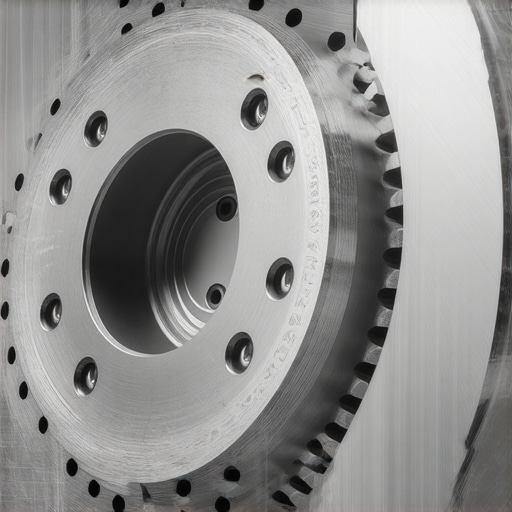
When selecting replacement parts during an auto repair, the weight and grain structure of the rotor are just as critical as the pads themselves. Standard aftermarket rotors often utilize lower-grade grey iron with high porosity, which lacks the thermal stability required for modern heavy-duty applications. In contrast, high-carbon rotors incorporate specific alloying elements that improve damping capacity and resistance to thermal cracking. According to standards set by ASTM International, the specific tensile strength and hardness of the casting determine how well a rotor can withstand the repeated thermal expansion and contraction cycles of stop-and-go traffic. A mechanic who understands metallurgy knows that a heavier, high-carbon rotor isn’t just about durability; it is a heat sink that prevents the brake fluid from boiling during spirited driving. If you have ever wondered drilled vs. slotted rotors: which is best for your daily driver, the answer often lies in how the internal cooling vanes are cast to move air efficiently through the center of the assembly.
Why Hybrid and EV Owners Face Unique Maintenance Challenges
It is a paradox of the modern era: vehicles that use their friction brakes less frequently often require more frequent brake service. In hybrids and EVs, regenerative braking handles the majority of deceleration, meaning the mechanical calipers may sit idle for days. This inactivity is a breeding ground for corrosion. Without the heat generated by friction to evaporate moisture, the slider pins and pad abutments begin to oxidize and seize. This is why a regular tune up for an electric vehicle must include a physical teardown and lubrication of the braking hardware, even if the pads look brand new. Ignoring this leads to a ‘frozen’ caliper that drags against the rotor, significantly reducing your battery range and causing localized overheating. If you’ve noticed a decrease in range on your EV, it might be time to contact our team of specialists to schedule a specialized inspection of your friction components.
Can a Leaking Brake Booster Cause Your Engine to Stall?
Many drivers are surprised to learn that a failure in the braking system can manifest as an engine performance issue. Most power-assist systems rely on a vacuum booster connected directly to the engine’s intake manifold. If the internal diaphragm of the booster develops a tear, it creates a massive vacuum leak. This lean condition causes the engine to stumble or stall specifically when you press the brake pedal at a stoplight. Identifying this requires a mechanic with a deep understanding of pneumatic systems. If you are tracking down a mysterious rough idle, check common signs of a vacuum leak you should not ignore to see if your booster is the hidden culprit behind your engine’s poor behavior. This intersection of mechanical systems is why a holistic auto repair approach is the only way to ensure total vehicle reliability.
The Invisible Creep of Rust Jacking in Salt-Belt States
In regions where road salt is a seasonal staple, a phenomenon known as ‘rust jacking’ can physically deform your braking components. Oxidation builds up behind the stainless steel abutment clips, literally ‘jacking’ the clip upward until it pinches the brake pad. This prevents the pad from retracting after you let off the pedal, leading to rapid wear and a permanent pull to one side. A tune up in these climates requires more than a simple visual check; it necessitates the removal of the clips and the grinding away of surface rust on the caliper bracket to restore the factory-spec tolerances. If your car feels like it’s dragging or you’ve noticed why your car pulls to one side during braking, rust jacking is a primary suspect that requires immediate professional intervention.
Why Your Impact Wrench Might Be Killing Your Rotors
Most DIYers and even some entry-level mechanic professionals rely solely on the “feel” of an impact wrench when securing wheels. However, uneven lug nut torque is a primary driver of disc thickness variation (DTV). When bolts are tightened in a non-uniform pattern or beyond the manufacturer’s specification, the rotor hat undergoes elastic deformation. Over thousands of heat cycles, this stress “sets” into the metal, creating a permanent pulse that no amount of resurfacing can fix. A precision auto repair shop uses a calibrated torque wrench in a star pattern to ensure the clamping force is distributed evenly across the hub face. This level of meticulousness distinguishes a basic brake service from a professional-grade restoration of the vehicle’s braking geometry.
Can Improper Lug Nut Torque Cause Permanent Hub Distortion?
Yes, excessive or uneven clamping force doesn’t just warp the rotor; it can actually distort the wheel hub itself. Once a hub is out of true, every new rotor installed on that vehicle will eventually develop a pulsation. Expert technicians use a dial indicator to measure run-out on the hub before installing new components. If the run-out exceeds 0.002 inches, the hub must be replaced to prevent premature failure of the new tune up parts. This is why following ASE (Automotive Service Excellence) certified procedures for fastener tension is non-negotiable for high-performance safety.
Using Infrared Cameras to Spot Hidden Brake Drag
Traditional diagnostics involve waiting for a component to fail, but proactive auto repair now utilizes thermal imaging. By using an infrared camera after a test drive, a technician can see “hot” corners where a caliper might be slightly sticking. If one rotor is 100 degrees hotter than its counterpart on the same axle, it indicates a hydraulic restriction or a mechanical bind. This diagnostic shortcut identifies issues long before they manifest as a pull or a smell. 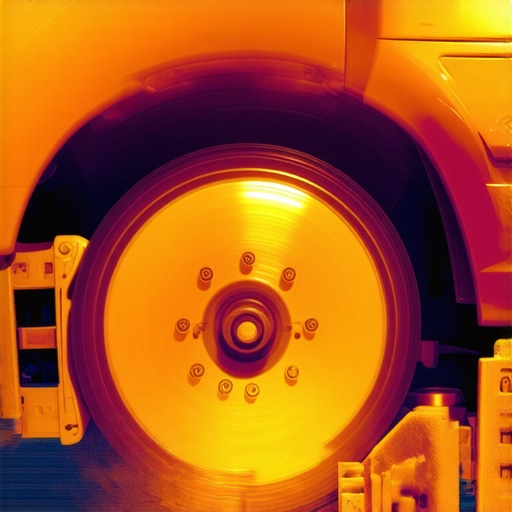 Identifying these thermal imbalances is part of a comprehensive tune up that ensures your vehicle operates at peak efficiency.
The Environmental Shift to Copper-Free Friction
As we approach new environmental mandates, the chemistry of the brake service is changing. Traditional friction materials relied on copper to dissipate heat and provide a smooth “feel,” but runoff from these pads has been linked to ecological damage in waterways. Modern “N” rated pads are virtually copper-free, requiring new proprietary ceramic blends to maintain the same thermal performance. These advanced compounds require a different bedding-in procedure and can be more sensitive to rotor quality. If you want to know more about how these changes affect your stopping distance, reach out to our master technicians today for an in-depth system evaluation. Don’t leave your safety to guesswork; ensure your next set of pads meets the latest industry standards for both performance and sustainability.
Expert Insights & Advanced Considerations
Why the Concept of Lifetime Components Is Engineering Fiction
Marketing departments love the term ‘lifetime,’ but in the realm of high-performance auto repair, nothing lasts forever. Heat cycles, moisture intrusion, and chemical degradation from road salts mean that even ‘sealed’ systems require a regular tune up. A proactive why regular tune ups are key to car longevity mindset prevents the cascading failures that occur when a ‘lifetime’ fluid eventually breaks down and destroys a multi-thousand dollar transmission or ABS module.
Ditch the Impact Gun for Your Final Lug Nut Turn
Overtightening is just as dangerous as leaving bolts loose. When a mechanic uses a high-torque impact wrench without a final hand-torque check, they risk stretching the studs and warping the rotor hat. Learning how to properly torque lug nuts without a professional gun ensures that the clamping force remains uniform, which is the single most effective way to prevent lateral run-out and steering wheel vibrations during high-speed braking.
Eyeball Your Safety Without Crawling Under the Chassis
Expert-level maintenance doesn’t always require a lift. Many modern alloy wheels offer enough clearance to perform a visual inspection of the friction material. Knowing the simple way to check your brake pad thickness through the rim allows you to monitor wear rates between scheduled visits. If you see less than 3mm of material, it is time to schedule a brake service before the backing plates contact the rotors and cause irreversible damage.
Curated Expert Resources
ASE (Automotive Service Excellence): The gold standard for technician certification. Their public resources help owners understand the level of training required for a truly competent mechanic.
SAE International: For those who want to dive into the metallurgy and friction physics mentioned earlier, SAE technical papers provide the raw data behind modern braking standards.
NHTSA Recall Database: A critical tool for any auto repair strategy, allowing you to check if your specific vehicle has known safety defects in its hydraulic or electronic braking systems.
Final Expert Perspective
Mastering the art of vehicle maintenance requires moving past the ‘fix it when it breaks’ mentality and embracing a holistic approach to safety. Whether you are performing a comprehensive tune up or a specialized brake service, precision is your most valuable tool. By addressing micro-vibrations, monitoring fluid chemistry, and respecting torque specifications, you ensure that your vehicle remains a reliable extension of your intent on the road. For a deeper dive into maintaining your vehicle’s peak condition, explore the essential guide to auto repair or contact our team of specialists to refine your maintenance strategy. Your safety is a product of technical diligence; never settle for ‘good enough’ when it comes to the systems that stop your car.