Diagnostic Precision Beats the Parts Cannon Every Time
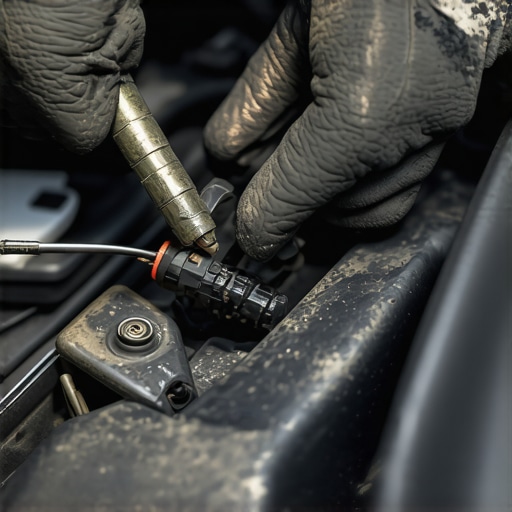
In the professional world of auto repair, the distinction between a master technician and a mere “parts swapper” is found in the ability to interpret live data streams rather than blindly chasing trouble codes. We recently handled a case where a customer had already invested hundreds in new spark plugs and ignition coils to solve a persistent engine stumble, only to find the solution was far simpler. The culprit was a failing Manifold Absolute Pressure (MAP) sensor, and this 12 dollar sensor fix restored the vehicle’s idle stability instantly. This case study serves as a stark reminder that a thorough tune up involves verifying sensor feedback loops, not just replacing wear items based on mileage intervals.
Why Does Your Engine Surge While Stopped at a Light?
A surging or rough idle is often the result of the Engine Control Unit (ECU) attempting to compensate for an unmeasured air-fuel imbalance. While many owners immediately suspect fuel pumps or injectors, experienced mechanic professionals look for “unmetered air.” If the ECU receives conflicting data from the MAP and the Mass Air Flow (MAF) sensor, it enters a search mode, constantly adjusting the idle air control valve. Before replacing expensive hardware, experts often utilize a 10 dollar cleaning move to see if carbon buildup on the sensor filament is the true cause of the erratic performance.
Mastering Airflow Data to Save Your Engine
Modern engine management relies heavily on the volumetric efficiency of the internal combustion process. According to technical documentation from SAE International, even a minor deviation in sensor voltage can lead to excessive fuel trim adjustments, eventually causing catalytic converter damage. When a vehicle enters the shop for brake service or routine maintenance, we often perform a quick scan of the Long Term Fuel Trims (LTFT). If these numbers exceed 10%, a deeper dive is required. Using mechanic-level diagnostic tools allows us to see if the engine is running lean or rich in real-time, preventing the “cascading failure” of related components. If you are struggling with a mystery vibration, check out these mechanic tips for diagnosing common auto problems to narrow down the source.
Why High Speed Shakes Often Point to Rotor Health
It is a common misconception that all vibrations are engine-related. Often, a customer complaining of a rough idle or a low-speed shake is actually experiencing the early stages of brake system degradation. If you notice why your steering wheel shakes when you brake at high speeds, the issue is likely lateral runout in your rotors rather than a vacuum leak. A comprehensive brake service should involve more than just slapping on new pads; it requires measuring the hub surface for debris and ensuring the caliper slide pins move freely. This holistic approach ensures that the vehicle remains safe and smooth across all driving conditions.
The Evolution of the Modern Tune Up
The traditional concept of a “tune up” has transitioned from adjusting carburetors to software-driven optimization. In 2025, maximizing vehicle longevity requires a proactive stance on both mechanical and electronic fronts. By following essential tune up tips to boost your car’s performance, drivers can avoid the heavy financial burden of emergency repairs. For those who want to ensure their vehicle is in top shape, we recommend finding the right mechanic who understands the complexity of modern sensors. Take a moment to review your maintenance logs and consult a professional if your idle feels even slightly off-balance.
Stop Ignoring the Fluid in Your Lines
Maintaining a vehicle’s hydraulic integrity is often the most overlooked aspect of a standard brake service. While most owners focus on friction material, the chemical composition of the fluid itself is the true gatekeeper of stopping power. Brake fluid is hygroscopic, meaning it actively absorbs moisture from the atmosphere over time. This water contamination lowers the boiling point of the fluid, which can lead to vapor lock during heavy braking scenarios. If you have ever wondered why your brake pedal feels hard as a rock or, conversely, spongy, the culprit is often internal degradation that hasn’t been addressed during a routine tune up.
How Can Your Brake Fluid Tell the Story of Your Master Cylinder?
The visual state of your hydraulics serves as a primary diagnostic window. A mechanic who simply tops off the reservoir is doing you a disservice; they should be analyzing the particulate matter suspended in the fluid. Dark, murky fluid is a sign of deteriorating rubber seals or copper leaching from the internal brake lines. To better understand the timeline of your vehicle’s health, consult the brake fluid color chart to determine when a full system flush is mandatory. Ignoring these visual cues leads to the eventual failure of expensive Anti-lock Braking System (ABS) modules.
The Transmission-Engine Link You’re Probably Missing
In the realm of complex auto repair, it is vital to recognize that the engine and transmission are not isolated systems; they exist in a constant state of communication. A misfire or a vacuum leak can trick the transmission control module (TCM) into altering shift points, leading many drivers to believe their gearbox is failing when the engine simply needs a tune up. When the engine isn’t producing the expected torque, the transmission may hunt for gears or shift harshly. If you notice why your transmission fluid is turning black, it is a clear indicator of excessive heat generated by these improper shift patterns. According to technical standards from the National Institute for Automotive Service Excellence (ASE), proper drivetrain diagnostics must always begin with an engine health check to ensure the transmission isn’t simply reacting to external power deficiencies.
Spot Electrical Gremlins Before They Strand You
Modern vehicles are essentially rolling computers, and low voltage is the enemy of reliability. A failing alternator can manifest as a multitude of phantom mechanical issues, from erratic idle to false sensor codes. Before you authorize an expensive auto repair for a suspected sensor failure, verify your charging system’s output. Using the 10 dollar multimeter trick allows you to see if your battery is receiving the necessary 13.5 to 14.5 volts while under load. If the voltage fluctuates, your ECU may provide erratic grounding signals to sensitive components, leading to “ghost” codes that disappear once the battery terminals are cleaned. High-impedance connections are a nightmare for modern auto repair diagnostics because they don’t always trigger a total system failure. Instead, they cause intermittent voltage drops that make fuel injectors fire late or sensors report values outside their calibrated range. A seasoned mechanic knows that a simple ground strap replacement can often solve more problems than a thousand-dollar computer swap.
Separate Drivetrain Shudders From Mechanical Engine Issues
Many drivers panic when they feel a rhythmic thud at highway speeds, immediately assuming the worst for their cylinders. However, before committing to a major tune up, it is worth investigating the torque converter clutch (TCC). If the clutch engagement is shuddering, it can feel remarkably like a multi-cylinder misfire. This is where professional-grade scan tools become indispensable; we look for “misfire counters” while the vehicle is under load. If the counters remain at zero while the car vibrates, the engine is likely healthy, and the focus shifts to the transmission fluid’s friction modifiers. Furthermore, a worn CV axle can transmit a rhythmic “wobble” during acceleration that mimics a fuel delivery issue. Separate these mechanical load-bearing failures from combustion-related stumbles requires a technician who understands the frequency of the vibration relative to engine RPM.
Can a Clogged Fuel Filter Mimic a Faulty Fuel Pump?
This is a sophisticated diagnostic trap. A partially obstructed filter allows for sufficient rail pressure at idle, but as soon as the throttle opens and demand increases, the flow rate drops. The symptoms mirror a failing pump—stumbling, lean codes, and loss of power—but the root cause is a simple maintenance oversight. According to technical bulletins from Bosch, modern gasoline direct injection (GDI) systems are particularly sensitive to particulate matter, where even microscopic debris can cause high-pressure pump cavitation.
Thermal Management is the Invisible Guard of Your Ignition System
Heat is the ultimate enemy of electrical resistance. In the cramped engine bays of today’s turbocharged vehicles, “heat soak” can degrade the insulation of your ignition coils long before the vehicle reaches its recommended tune up interval. When the engine is cold, everything runs perfectly, but after thirty minutes of stop-and-go traffic, the resistance in the primary windings spikes, leading to a “dead” cylinder.  This thermal degradation is why we often recommend upgrading to high-performance heat shields if you are frequently towing or driving in desert climates. If you are noticing these subtle “ghost” symptoms, don’t wait for a breakdown—check out our guide on finding the right mechanic to handle these high-tech hurdles.
Why Your ABS Module Cares About Your Tire Diameter
During a standard brake service, most shops ignore the rolling circumference of the tires, but your vehicle’s stability control system is watching every rotation. If you have replaced only two tires or have uneven wear, the wheel speed sensors report conflicting data to the ABS module. This can lead to premature brake activation or “phantom” ABS intervention when you are just trying to take a normal corner. Maintaining exact parity between tire diameters is as crucial to your braking performance as the thickness of your pads. In fact, many modern auto repair protocols now require a steering angle sensor recalibration following a basic alignment or suspension repair. The integration between the chassis and the braking system is so tight that even a one-degree deviation in the steering wheel’s center point can cause the electronic stability control to drag a rear brake pad unnecessarily, leading to premature wear. This hidden interplay between software logic and hydraulic pressure is what makes
Look Beyond the Wire to Fix CAN-bus Communication Faults
When multiple modules report ‘lost communication’ simultaneously, the average mechanic might suspect a blown fuse, but the reality is often found in the physical layer of the Controller Area Network (CAN). In modern auto repair, we treat the wiring harness like a nervous system. Intermittent ‘noise’ caused by a frayed shield or a failing resistor can corrupt the data packets, leading to a cascade of error codes that have nothing to do with the physical hardware. Diagnosing these ghosts requires an oscilloscope to visualize the square wave signals, ensuring the high and low lines mirror each other with mathematical precision.
Does carbon buildup on intake valves affect your fuel economy more than bad spark plugs?
While a tune up used to focus on ignition, the rise of Gasoline Direct Injection (GDI) has shifted the priority toward intake hygiene. Because fuel no longer sprays over the back of the intake valves, they lack the cleaning effect of gasoline detergents. Over 50,000 miles, heavy carbon ‘coking’ builds up, restricting airflow and causing a loss of volumetric efficiency that no spark plug replacement can fix. This is why a professional walnut blasting service has become a mandatory part of high-level engine maintenance. It restores the factory-spec airflow path without the need for a complete teardown.

Stop Starving Your Turbocharger of Vital Lubrication
A turbocharger spinning at 200,000 RPM relies on a microscopic film of oil to prevent catastrophic bearing failure. Many drivers fail to realize that the oil feed lines are subject to extreme thermal stress. When you shut down a hot engine immediately after a spirited drive, the oil sitting in the turbocharger ‘cooks,’ leaving behind carbon deposits that eventually choke the supply line. Incorporating a ‘cool-down’ period into your driving habit is just as important as the oil itself. During your next auto repair consultation, ask about the integrity of the turbo oil return lines to prevent an avoidable four-figure repair bill.
Why Your Next Brake Service Needs a Digital Handshake
The days of simple hardware swaps are over. Modern vehicles equipped with Advanced Driver Assistance Systems (ADAS) require a sensor recalibration whenever the geometry of the vehicle changes. According to technical bulletins from Delphi Technologies, even a minor suspension adjustment or a comprehensive brake service that involves hub removal can throw off the alignment of the forward-facing cameras and radar sensors. If these sensors are off by even a fraction of a degree, the emergency braking system may react to shadows or fail to detect an obstacle entirely. Ensuring your technician has the software to perform a static or dynamic recalibration is the only way to guarantee your safety suite functions as intended. If you want to dive deeper into the nuances of modern vehicle electronics, reach out to our team today for a comprehensive diagnostic consultation.
Expert Insights & Advanced Considerations
Software-Defined Maintenance Outpaces Mechanical Wear
In the current landscape of auto repair, we are seeing a shift where code integrity is just as vital as cylinder compression. A modern vehicle relies on millions of lines of code to manage everything from fuel injection timing to lane-keep assistance. When you perform a tune up today, you are essentially auditing a software ecosystem. If you ignore technical service bulletins (TSBs) that mandate ECU flashes, you might be fighting a mechanical symptom that only a digital patch can truly resolve.
The Thermal Window of High-Performance Brake Fluid
Professional brake service goes beyond the thickness of the friction material. Experts look at the dry and wet boiling points of the fluid relative to the driver’s habits. For those who drive in mountainous terrain or participate in track days, the standard DOT 3 fluid is often insufficient. Upgrading to a high-performance fluid prevents the pedal fade that occurs when kinetic energy is converted into heat faster than the system can dissipate it. If you have ever wondered why your brake pedal goes to the floor after a long drive, thermal saturation of the fluid is a likely culprit.
Scope Diagnostics Reveal Secrets Scan Tools Miss
While a generic OBD-II scanner can tell you that a sensor is out of range, it cannot always tell you why. A master mechanic uses a four-channel oscilloscope to watch the actual electrical signature of a component. This allows for the detection of noise from a failing alternator or a drop in signal voltage that occurs too fast for the ECU to log as a permanent fault. This level of granularity is what separates a successful repair from a frustrating comeback.
Curated Expert Resources
ASE Training and Certification
The National Institute for Automotive Service Excellence provides the industry standard for technician competency. For car owners, this is the primary metric for finding the right mechanic who has proven their knowledge across specific vehicle systems.
SAE Technical Papers
For those who want to understand the engineering behind automotive technology, the Society of Automotive Engineers offers deep-dive papers on everything from the metallurgy of brake rotors to the logic of electronic stability control.
OEM Service Information Portals
Platforms like Alldata or Mitchell 1 provide the exact wiring diagrams and torque specs used by the factory. Accessing this data ensures that your auto repair follows the precise engineering requirements of your specific VIN.
Final Expert Perspective
The era of the all-purpose mechanic is fading, replaced by a need for specialized knowledge that bridges the gap between hardware and software. True vehicle longevity is achieved through a synergy of high-quality mechanical brake service and precise electronic tune up strategies. By understanding how individual sensors influence the behavior of the entire drivetrain, you move from being a reactive owner to a proactive caretaker of your machine. If you are ready to elevate your maintenance game, explore our essential tune up tips to boost your car’s performance in 2025. For specific technical inquiries or to schedule a precision diagnostic session, feel free to reach out to our team today and ensure your vehicle remains a reliable asset for years to come.