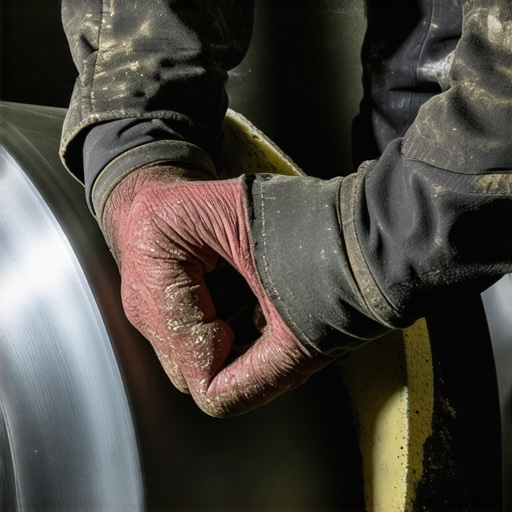
Pulsation in the brake pedal is one of the most frequent complaints handled by a professional mechanic, yet it is also one of the most commonly misdiagnosed. The standard industry response is often a blanket recommendation for new rotors and pads. However, from an engineering standpoint, brake rotors rarely ‘warp’ in the way most drivers imagine. Instead, the vibration is usually a result of Disc Thickness Variation (DTV) or uneven friction material transfer. To maintain an efficient auto repair strategy, one must understand the metallurgical changes that occur at the rotor surface before resorting to replacement.
The Science of Cementite and Pad Transfer
When brake pads are subjected to high thermal loads and then held stationary against the rotor—such as after a hard stop on a highway off-ramp—a chemical process can deposit uneven layers of friction material onto the cast iron. This creates microscopic high spots. Over time, these spots can turn into cementite, an incredibly hard carbon-iron compound that does not wear down at the same rate as the surrounding metal. Rather than a total brake service overhaul, identifying these deposits early can allow for a recovery of the existing hardware.
Why does your steering wheel shake specifically at high speeds?
If you notice that the vibration is localized to the steering column rather than the pedal, and it only occurs at highway velocities, you are likely dealing with steering wheel shakes specifically at high speeds caused by lateral runout. Runout is often not a flaw in the rotor itself, but rather a byproduct of debris or corrosion trapped between the wheel hub and the rotor hat. Even a single millimeter of rust can cause the rotor to wobble as it rotates, creating the sensation of a warped disc.
Hardware Failures That Mimic Warped Rotors
Professional-grade diagnostics during a tune up should always include an inspection of the caliper slide pins. Seized or poorly lubricated pins prevent the caliper from floating correctly, causing the inboard and outboard pads to apply uneven pressure. This specific brake slide pin error is a primary catalyst for DTV. Implementing the secret to quiet brakes that most shops ignore—which involves meticulous cleaning and the use of high-temperature silicone lubricants—can frequently resolve pulsation without the need for new iron.
Master the Bed-In Process to Save Your Rotors
Before authorizing an expensive auto repair, attempt a controlled ‘bed-in’ procedure to level out the pad transfer layer. This involves a series of aggressive decelerations from 45 mph down to 10 mph in quick succession, allowing the pads to scrub the rotor face clean. Leading manufacturers like Brembo emphasize that a consistent transfer film is critical for vibration-free braking. CTA: Have you struggled with persistent brake vibrations even after multiple repairs? Share your experience with our community or dive deeper into our mechanic tips for diagnosing common auto problems to ensure your next shop visit is productive.
While mechanical wear is a visible factor in system degradation, the chemical integrity of the hydraulic system often remains overlooked until a catastrophic failure occurs. Brake fluid is hygroscopic, meaning it actively absorbs moisture from the atmosphere through microscopic pores in rubber hoses and the reservoir cap. This water contamination lowers the boiling point of the fluid, leading to ‘brake fade’ during spirited driving or heavy mountain descents. To prevent internal corrosion of expensive ABS modulators, savvy owners should consult the brake fluid color chart to determine if their hydraulic system is compromised by oxidation.
The Invisible Enemy Inside Your Brake Lines
Contaminated fluid does more than just lower the boiling point; it alters the lubricity required for internal seals and pistons to retract correctly. When these components fail to retract, the pads maintain constant, light contact with the rotor, generating excessive heat that accelerates the formation of cementite. If you notice why your brake fluid level keeps dropping slowly, do not assume it is just pad wear. It could indicate a slow leak in the wheel cylinders or a failing master cylinder seal, both of which introduce air and moisture into the circuit, compromising the firm pedal feel essential for safety.
Is your hub actually the hidden culprit behind pedal pulse?
An expert mechanic knows that the relationship between the wheel hub and the rotor is a zero-tolerance game. If the hub face has even a tiny amount of rust or scale, the rotor will not sit perfectly flush. This misalignment is amplified as it extends outward to the edge of the rotor, creating significant lateral runout. Before replacing parts, use a dial indicator to measure the runout of the hub itself. If the hub is out of true, even the most expensive brake service hardware will develop pulsations within a few thousand miles. In some cases, what feels like a brake issue is actually a drivetrain vibration; learning how to identify a bad wheel bearing by ear can save you from chasing ghosts in the braking system.
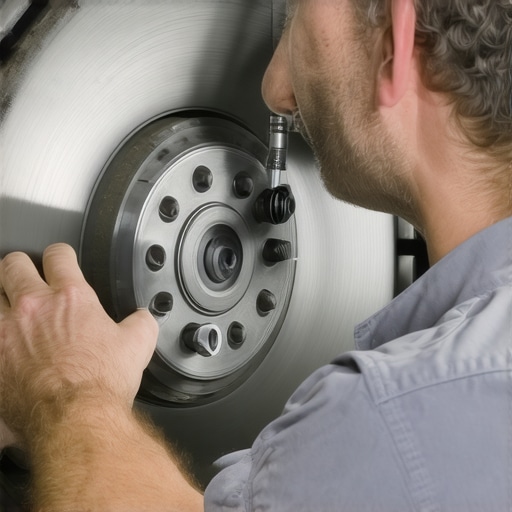
Technical standards from SAE International, specifically the SAE J431 guidelines for gray iron castings, highlight that the quality of the rotor’s metallurgy determines its thermal stability. Cheap, thin-cast rotors lack the mass to dissipate heat effectively, leading to rapid DTV development. Investing in high-carbon rotors provides better damping of noise and vibration, while also offering a higher resistance to the thermal cracking often seen in heavy-duty applications.
Stop the Distortion Before It Starts
Precision is the final step in any auto repair involving the wheels. Over-torquing lug nuts with an impact wrench is a leading cause of rotor distortion. This uneven clamping force squeezes the rotor hat against the hub with varying degrees of pressure, physically pulling the metal out of alignment. Mastering how to properly torque lug nuts without a professional gun using a calibrated torque wrench ensures that the clamping load is uniform across the entire surface area. This simple step is often the difference between a job that lasts five years and one that fails in five months. CTA: Which of these advanced diagnostic steps will you try first? Tell us in the comments or read our guide on the 15 dollar brake bleeder bottle that simplifies solo maintenance.
While mechanical wear is a visible factor in system degradation, the relationship between rotor mass and heat dissipation remains the primary defense against long-term distortion. A common auto repair mistake is opting for the lightest, cheapest rotor available, which lacks the thermal reservoir needed to absorb heat during a high-speed stop. This leads to a rapid rise in surface temperature that the cooling vanes cannot counteract. High-carbon rotors, though more expensive, utilize a specialized metallurgy that offers superior thermal conductivity and damping characteristics, which significantly reduces the ‘moan’ and vibration felt during heavy braking cycles.
Why Cheap Rotors Fail Where High-Carbon Castings Thrive
The difference between a budget rotor and a premium high-carbon unit is found in the microscopic grain structure of the iron. Standard gray iron can be prone to thermal fatigue, leading to the surface cracks often found during a routine brake service. High-carbon variants allow for better heat distribution across the entire disc, preventing the localized ‘hot spots’ that act as the foundation for cementite formation. When a mechanic installs these premium components, they aren’t just selling a part; they are providing a metallurgical solution to a thermal problem.
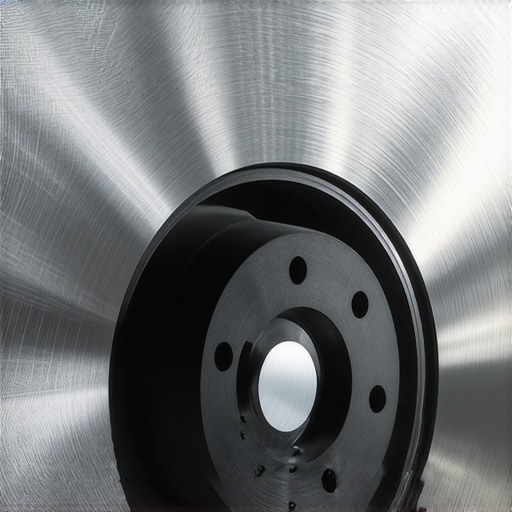
How do you tell the difference between a suspension shimmy and a brake pulse?
Isolating the source of a vibration requires a systematic approach. If the steering wheel shakes only when the brakes are applied, the issue is almost certainly front-end lateral runout. However, if you feel the vibration in your seat, the rear rotors are likely the culprit. To further differentiate a suspension-related shimmy from a brake pulse, try applying the brakes while shifted into neutral in a safe, open area. If the vibration persists with the same intensity, you may be dealing with a worn control arm bushing or a tire out of balance rather than a braking fault. Understanding these nuances is a key part of an effective auto repair strategy that avoids unnecessary parts replacement.
Stop the Glazing Cycle Before It Ruins Your New Pads
Friction material selection is the second half of the vibration equation. According to technical documentation from Akebono, the leading innovator in ceramic friction technology, a stable transfer film is the only way to ensure smooth operation over the life of the vehicle. If the pads are never properly bedded, or if they are subjected to extreme heat without a cooling-off period, the friction material can ‘glaze.’ This creates a glass-like surface on the pad that no longer bites into the rotor effectively, causing the driver to push harder, generating even more heat and restarting the cycle of DTV. CTA: Ready to master your own tune up? Check out our breakdown of essential tools for every home mechanic or share your diagnostic wins in the comments below.
The Rear-End Factor: Electronic Actuators and Modern Drag
In modern vehicles equipped with Electronic Parking Brakes (EPB), the rear calipers are no longer simple hydraulic clamps. These systems use electric motors to apply the parking brake, and if the calibration is off, the pads can drag slightly against the rotor even when the brake is released. This constant, light friction generates ‘silent heat’—the kind that doesn’t immediately cause smoke but slowly cooks the rotor over a long highway drive. When performing a brake service on these systems, a scan tool is often required to put the calipers into ‘service mode’ to ensure the internal screw jack is fully retracted. Failure to do so can lead to a deceptive pedal feel and premature rear rotor warping that bypasses traditional diagnostic logic. Moving beyond the mechanical clamp, we must also consider the role of the Electronic Brake-force Distribution (EBD) system, which dynamically adjusts…
Continuing from the logic of EBD, these systems dynamically adjust the bias between axles to ensure stability, but they can inadvertently accelerate Disc Thickness Variation if a mechanical imbalance is present. A mechanic with a high-level diagnostic perspective understands that EBD can pulse the rear brakes far more frequently than the driver realizes, especially during heavy cornering or while carrying variable loads. This invisible cycling creates thermal cycles that lead to localized metallurgy changes.
Electronic Brake-force Distribution Can Mask Critical Mechanical Flaws
While EBD is a marvel of safety, it often hides the early warning signs of a sticking caliper or a slightly warped hub. Because the system is constantly compensating for wheel speed differentials, the driver may not feel the ‘pull’ associated with a seized slide pin until the friction material is completely incinerated. During a comprehensive tune up, it is vital to verify that the hydraulic pressure is actually reaching the piston with the intended force and retreating just as quickly. This requires measuring the pressure drop across the hydraulic circuit to ensure that no restriction exists within the proportioning valves or the ABS modulator itself.
Could a Faulty Wheel Speed Sensor Mimic a Warped Rotor?
The answer is a resounding yes, though the mechanism is purely electrical. If a wheel speed sensor has a cracked casing or the tone ring is clogged with metallic debris, the signal to the ABS controller becomes ‘noisy.’ The controller may interpret this noise as a wheel lock-up event, triggering a rapid-fire pulsing of the hydraulic valves. This feels identical to a warped rotor to the uninitiated, yet no amount of brake service involving the rotors will fix an erratic magnetic signal. 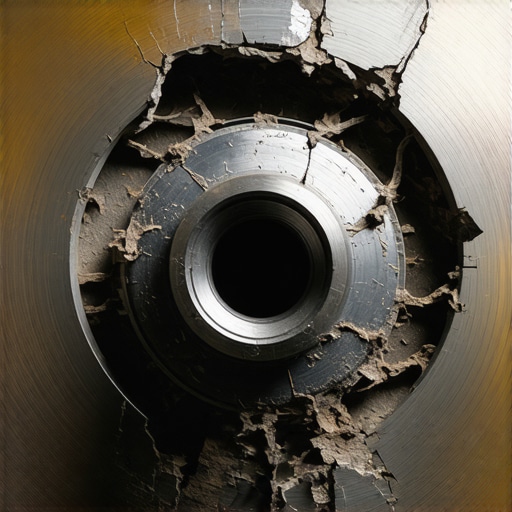
Soft Pedals and Dragging Calipers: The Internal Collapse of Brake Hoses
Beyond the iron and the electronics, the rubber hoses are the most neglected component in the hydraulic circuit. Over time, the inner lining of a brake hose can delaminate, creating a one-way ‘check valve’ effect. This allows high-pressure fluid to reach the caliper when you step on the pedal, but prevents it from returning to the master cylinder when you release it. The result is a brake that drags, overheats, and eventually induces the very DTV and vibration issues we aim to avoid. High-performance auto repair necessitates an inspection of volumetric expansion; if the hoses swell under pressure, the pedal will remain mushy regardless of how many times the system is bled. Technical data from the National Highway Traffic Safety Administration (NHTSA) indicates that hydraulic integrity is paramount for the operation of modern Electronic Stability Control (ESC) systems, as any delay in pressure transmission can compromise vehicle recovery in emergency maneuvers.
Transient Hydraulic Pulses and the Master Cylinder Bore
A subtle but recurring cause of pedal vibration is found within the master cylinder itself. If the internal seals are bypassing or if there is microscopic scoring in the bore, the piston may struggle to maintain steady pressure, leading to a ‘flutter’ that mimics rotor runout. This is particularly common in high-mileage vehicles where the fluid has not been exchanged regularly. When air or contaminants enter the master cylinder, they create air pockets that compress unevenly, leading to a vibrating feedback loop through the pedal during steady application. CTA: Do you suspect your ‘warped rotors’ are actually a software or sensor ghost? Explore our advanced guides on testing ABS sensors with a multimeter or join our forum to discuss the nuances of hydraulic diagnostic tools.
Expert Insights & Advanced Considerations
Resurfacing is often a short-term trap
Many shops suggest turning rotors to save money, but reducing the thickness significantly diminishes the iron’s ability to act as a heat sink. Thinner rotors reach critical temperatures faster, which accelerates the return of Disc Thickness Variation. If your brake rotors warp after only 5000 miles, resurfacing was likely a temporary bandage on a metallurgical problem.
Temperature mapping identifies the ghost in the machine
An elite mechanic does not just look for wear; they use an infrared thermometer to check for temperature deltas between wheels after a drive. A significant discrepancy often reveals a dragging caliper or a collapsing hose before it manifests as a vibration. Integrating this check into your ultimate tune up checklist transforms a routine inspection into a professional-grade diagnostic session.
Chemical contamination ruins even the best bedding procedure
Never underestimate the impact of assembly oils or skin oils on a new rotor. Even microscopic amounts of grease can prevent the initial transfer film from bonding correctly to the iron surface. Knowing how a 5 dollar can of brake cleaner saves your new pads from glazing is a fundamental skill for anyone attempting their own hydraulic work.
Curated Expert Resources
SAE International (Standard J431): This is the gold standard for gray iron castings, providing the metallurgical requirements needed to understand heat dissipation in premium rotors.
Brembo Engineering Portal: An invaluable resource for deep dives into lateral runout tolerances and the high-speed physics of thermal fatigue in performance braking applications.
Autoscare Hub Technical Library: Our internal repository offers specialized walkthroughs such as brake service secrets that bridge the gap between amateur maintenance and professional-grade auto repair.
Final Expert Perspective
True braking performance is a symphony of metallurgical stability, hydraulic integrity, and precision installation. Every tune up should be viewed as an opportunity to audit the entire system—from the hub face to the master cylinder seals—rather than just a simple pad swap. By adopting advanced brake service strategies that prioritize hardware cleanliness and correct torque, you move beyond the frustrating cycle of recurring pedal pulse. Whether you are performing an auto repair in your own garage or overseeing a professional mechanic, always demand the precision that your vehicle’s safety requires. Have you identified a hidden culprit in your braking system? Connect with our technical community or explore our guide on finding the right mechanic to ensure your vehicle receives the expert attention it deserves.