
Harmonic Resonance and the Physics of High-Speed Vibrations
When a steering wheel begins to oscillate violently at exactly 65 MPH, you aren’t just experiencing a mechanical failure; you are witnessing harmonic resonance. In the world of auto repair, this phenomenon occurs when the rotational frequency of the tire and wheel assembly matches the natural frequency of the vehicle’s suspension components. At lower speeds, the energy generated by a minor imbalance is absorbed by the bushings and dampers. However, as you reach highway speeds, the centrifugal force amplifies these forces, resulting in the dreaded ‘steering wheel shimmy.’ This specific speed threshold is a tell-tale sign that the issue is likely related to rotational mass rather than a fundamental structural failure.
Why Standard Balancing Might Not Solve the Problem
Many drivers assume a quick trip to a local shop for a tune up or a basic wheel balance will rectify the issue. Unfortunately, traditional spin balancers only measure ‘static’ and ‘dynamic’ balance while the wheel is in the air. Expert technicians prefer road-force balancing, which applies a load to the tire to simulate the weight of the vehicle. This process can identify ‘force variation’—essentially hard spots in the tire’s sidewall that act like a speed bump every time they hit the pavement. If you notice 3 tire wear patterns that prove your last alignment was lazy, it is a clear indicator that your suspension geometry is fighting against your tires, exacerbating any existing balance issues.
The Invisible Play in Your Suspension Geometry
While tires are the primary suspect, a seasoned mechanic knows that the suspension system is the silent accomplice. Components like control arm bushings, ball joints, and tie rods are designed to hold the wheel in a precise orientation. If these parts have even a millimeter of ‘play,’ they can no longer dampen the vibrations coming from the road. Instead, they allow the vibration to propagate through the rack and pinion and up the steering column. In fact, 3 symptoms of a bad inner tie rod often include this specific high-speed instability, as the part fails to maintain tension under high centrifugal loads.
It is also worth noting that the interface between the wheel and the hub must be perfectly clean. Corrosive buildup can prevent the wheel from sitting flush, creating a ‘runout’ issue that mimics a bent rim. Utilizing the 15 hub clean up that fixes steering wheel shake is a professional-level diagnostic step that addresses the mounting surface before replacing expensive parts.
Can a Faulty Brake Component Mimic a Balancing Issue?
It is a common misconception that brake service is only necessary when you feel a pulse while slowing down. However, a ‘hanging’ brake caliper or a severely warped rotor can create a parasitic vibration even when the pedal isn’t depressed. If the caliper slide pins are seized, the pads may maintain slight contact with the rotor, generating heat and causing the rotor to expand unevenly. According to technical reports from the National Highway Traffic Safety Administration (NHTSA), mechanical drag in the braking system is a frequent contributor to steering instability at high velocities. If your vibration persists after a balance, you may need to diagnose a bad cv axle or inspect the caliper piston retraction to ensure the rotational path is clear of obstruction.
If you are struggling to pinpoint the source of your highway-speed vibration, consider finding the right mechanic who specializes in NVH (Noise, Vibration, and Harshness) diagnostics to ensure your vehicle remains safe and stable at all speeds.
Stop Chasing Ghosts: Identify Drivetrain Instability First
When high-speed vibrations persist despite repeated wheel balancing, the mechanic must look inward toward the powertrain. A frequent yet overlooked culprit is the Constant Velocity (CV) axle. If the internal tripod joints develop wear pits, they can create a rhythmic shudder that feels identical to a tire imbalance, particularly under acceleration. Furthermore, the engine and transmission mounts serve as the primary isolators between the drivetrain’s kinetic energy and the cabin. If you fail to recognize how to tell if your transmission mount is snapped, the drivetrain can shift out of its longitudinal axis at high RPMs, sending raw mechanical resonance directly into the steering rack. This isn’t just an annoyance; it is a symptom of the chassis struggling to maintain its structural equilibrium under load.
Radial Force Variation: The Invisible Flat Spot
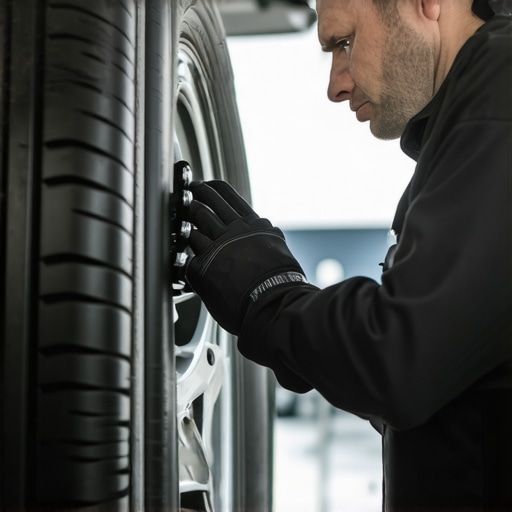
Standard balancing assumes that a tire is a perfect circle with uniform density, but reality is far more complex. Radial Force Variation (RFV) refers to the ‘stiffness’ of the tire as it rotates. A tire might be perfectly balanced on a machine, but if one section of the sidewall is stiffer than the rest, it will exert more force against the road during every revolution. This creates a high-speed hop that traditional weights cannot counteract. This phenomenon often explains why your new tires are wearing out in months or why a brand-new set still feels ‘lumpy’ on the interstate. To diagnose this, elite shops use a roller to apply 1,200 pounds of pressure during the balance cycle, identifying these internal structural defects before they ruin your driving experience.
Is Your Steering Rack Overcorrecting for Micro-Vibrations?
In modern vehicles equipped with Electronic Power Steering (EPS), the system uses sensors to provide active vibration damping. However, if the rack’s internal software receives ‘noisy’ data from a failing wheel speed sensor or an imbalanced hub, the EPS motor may actually fight the vibration, inadvertently amplifying it through the steering column. Distinguishing between a mechanical shudder and an electronic feedback loop requires precision. Utilizing the 20 scanner that every modern driver should own can help you monitor live data for steering angle sensor irregularities. According to the National Institute for Automotive Service Excellence (ASE), technician training now emphasizes that software-driven components can mimic mechanical failures, making it vital to rule out sensor error before replacing hard parts like the rack and pinion. Have you noticed your steering wheel shake specifically between 60 and 75 MPH? Share your experience in the comments below so we can help you narrow down the technical cause.
Beyond the sensors, the physical health of the hub assembly remains paramount. If you are trying to differentiate between a tire-related harmonic and a failing component, knowing how to identify a bad wheel bearing by ear is an essential skill. While a bearing usually creates a low-frequency hum, the increased play it introduces can exacerbate existing shimmies. Even if you already understand why your steering wheel shakes when you brake at high speeds, remember that high-velocity stability is a result of the entire system working in concert, from the rubber on the road to the software in the dash.
Why Cheap Wheel Spacers Destabilize Your Entire Front End
Many performance enthusiasts install spacers to achieve a wider stance or clear larger brake service kits, but they often ignore the critical distinction between hub-centric and lug-centric designs. If your spacer doesn’t have a precision-machined lip that fits perfectly into the wheel’s center bore, the wheel is essentially ‘floating’ on the studs. At 65 MPH, even a half-millimeter offset creates a centrifugal imbalance that no amount of lead weights can fix. This is a classic case where auto repair becomes a lesson in geometry; without that mechanical centering, the rotational axis is permanently compromised, leading to a shimmy that feels exactly like a bad balance but is actually a mounting error.
Can Uneven Lug Nut Torque Actually Warp Your Rotors?
It sounds like a myth, but uneven clamping force is a leading cause of lateral runout in the modern hub assembly. When a technician uses an impact wrench without a torque stick or a calibrated torque wrench, they apply asymmetrical pressure across the rotor hat. Over several heat cycles, this localized stress causes the metal to distort. According to research by the Society of Automotive Engineers (SAE), improper fastener tension is a primary contributor to ‘brake-induced’ vibration that eventually persists even when the brakes aren’t applied. If you’ve just had a tune up or new rotors installed and the shake returned within a week, check your torque specs before replacing parts again.
How Missing Belly Pans Create High Speed Turbulence
We often treat vibration as a purely mechanical issue involving metal and rubber, but at highway speeds, aerodynamics play a massive role in chassis stability. Modern cars use plastic underbody shields to manage airflow and create a low-pressure zone under the engine cradle. If these panels are loose, cracked, or missing entirely after a recent mechanic visit, air can catch the leading edge of the subframe. This turbulent air creates a high-frequency buffeting that vibrates the steering rack. It feels remarkably like a tire out of balance, yet it only occurs when the wind resistance reaches a specific peak, usually above 70 MPH. 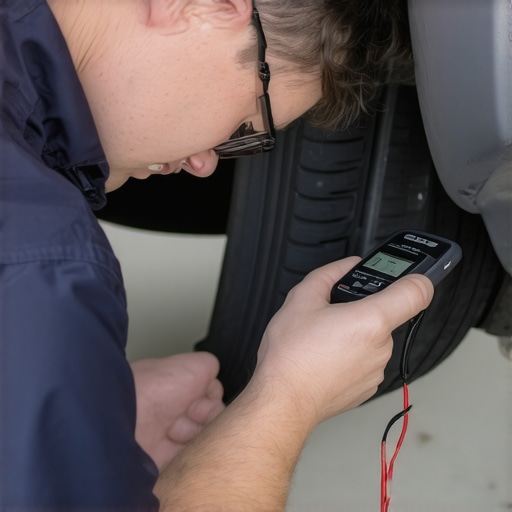 Identifying this requires an inspection of the vehicle’s underside for missing clips or shattered air dams that may be fluttering like a reed in a woodwind instrument.
Identify Hidden Faults Using PicoScope NVH Analysis
When ‘swapping parts’ fails to solve the riddle, elite technicians turn to a PicoScope with a 3-axis accelerometer. This tool converts physical vibrations into a frequency spectrum on a laptop screen. By analyzing the ‘orders’ of vibration—for example, a First Order (1st) vibration matches the tire’s rotation, while a Second Order (2nd) might indicate a CV joint angle issue—the diagnostic process moves from guesswork to pure physics. If you have already investigated why your steering wheel shakes when you brake at high speeds and still come up empty, you likely have a ‘Tire-Speed Related’ (T1) vibration that requires this level of digital scrutiny. If your local shop doesn’t own an NVH analyzer, it might be time to start finding the right mechanic who treats your car like the high-precision machine it is. What was the strangest diagnostic tool your technician ever used on your car? Drop a comment below and let’s talk shop about those hard-to-find rattles.
The Critical Role of Hub Runout and Flange Distortion
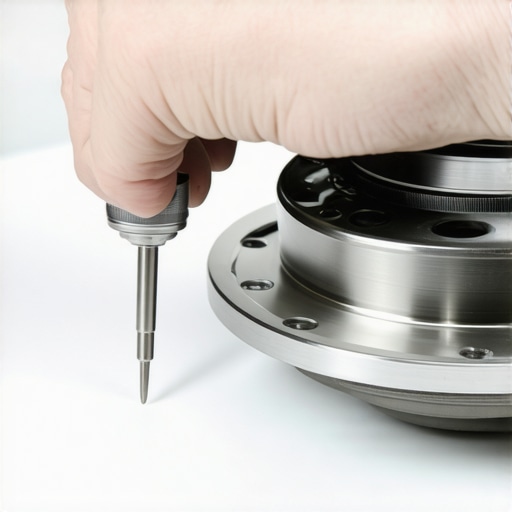
Even with a perfectly balanced tire and a brand-new rotor, a vibration can persist if the wheel hub itself is not perfectly true. Hub runout occurs when the mounting surface of the hub is no longer perpendicular to the axle centerline. This can be caused by excessive heat, a previous curb impact, or even metallurgical fatigue over hundreds of thousands of miles. To diagnose this, a technician must use a dial indicator to measure the ‘wobble’ of the hub flange as it rotates. If the runout exceeds just a few thousandths of an inch, the vibration will propagate through the wheel and into the cockpit, regardless of how many times you balance the tires. This is often the forgotten variable in the pursuit of a smooth ride, especially on high-mileage vehicles where the bearing races are still quiet but the flange has begun to
Harmonic Resonance and the Physics of High-Speed Vibrations
When a steering wheel begins to oscillate violently at exactly 65 MPH, you aren’t just experiencing a mechanical failure; you are witnessing harmonic resonance. In the world of auto repair, this phenomenon occurs when the rotational frequency of the tire and wheel assembly matches the natural frequency of the vehicle’s suspension components. At lower speeds, the energy generated by a minor imbalance is absorbed by the bushings and dampers. However, as you reach highway speeds, the centrifugal force amplifies these forces, resulting in the dreaded ‘steering wheel shimmy.’ This specific speed threshold is a tell-tale sign that the issue is likely related to rotational mass rather than a fundamental structural failure.
Why Standard Balancing Might Not Solve the Problem
Many drivers assume a quick trip to a local shop for a tune up or a basic wheel balance will rectify the issue. Unfortunately, traditional spin balancers only measure ‘static’ and ‘dynamic’ balance while the wheel is in the air. Expert technicians prefer road-force balancing, which applies a load to the tire to simulate the weight of the vehicle. This process can identify ‘force variation’—essentially hard spots in the tire’s sidewall that act like a speed bump every time they hit the pavement. If you notice 3 tire wear patterns that prove your last alignment was lazy, it is a clear indicator that your suspension geometry is fighting against your tires, exacerbating any existing balance issues.
The Invisible Play in Your Suspension Geometry
While tires are the primary suspect, a seasoned mechanic knows that the suspension system is the silent accomplice. Components like control arm bushings, ball joints, and tie rods are designed to hold the wheel in a precise orientation. If these parts have even a millimeter of ‘play,’ they can no longer dampen the vibrations coming from the road. Instead, they allow the vibration to propagate through the rack and pinion and up the steering column. In fact, 3 symptoms of a bad inner tie rod often include this specific high-speed instability, as the part fails to maintain tension under high centrifugal loads.
It is also worth noting that the interface between the wheel and the hub must be perfectly clean. Corrosive buildup can prevent the wheel from sitting flush, creating a ‘runout’ issue that mimics a bent rim. Utilizing the 15 hub clean up that fixes steering wheel shake is a professional-level diagnostic step that addresses the mounting surface before replacing expensive parts.
Can a Faulty Brake Component Mimic a Balancing Issue?
It is a common misconception that brake service is only necessary when you feel a pulse while slowing down. However, a ‘hanging’ brake caliper or a severely warped rotor can create a parasitic vibration even when the pedal isn’t depressed. If the caliper slide pins are seized, the pads may maintain slight contact with the rotor, generating heat and causing the rotor to expand unevenly. According to technical reports from the National Highway Traffic Safety Administration (NHTSA), mechanical drag in the braking system is a frequent contributor to steering instability at high velocities. If your vibration persists after a balance, you may need to diagnose a bad cv axle or inspect the caliper piston retraction to ensure the rotational path is clear of obstruction.
If you are struggling to pinpoint the source of your highway-speed vibration, consider finding the right mechanic who specializes in NVH (Noise, Vibration, and Harshness) diagnostics to ensure your vehicle remains safe and stable at all speeds.
Stop Chasing Ghosts: Identify Drivetrain Instability First
When high-speed vibrations persist despite repeated wheel balancing, the mechanic must look inward toward the powertrain. A frequent yet overlooked culprit is the Constant Velocity (CV) axle. If the internal tripod joints develop wear pits, they can create a rhythmic shudder that feels identical to a tire imbalance, particularly under acceleration. Furthermore, the engine and transmission mounts serve as the primary isolators between the drivetrain’s kinetic energy and the cabin. If you fail to recognize how to tell if your transmission mount is snapped, the drivetrain can shift out of its longitudinal axis at high RPMs, sending raw mechanical resonance directly into the steering rack. This isn’t just an annoyance; it is a symptom of the chassis struggling to maintain its structural equilibrium under load.
Radial Force Variation: The Invisible Flat Spot
Standard balancing assumes that a tire is a perfect circle with uniform density, but reality is far more complex. Radial Force Variation (RFV) refers to the ‘stiffness’ of the tire as it rotates. A tire might be perfectly balanced on a machine, but if one section of the sidewall is stiffer than the rest, it will exert more force against the road during every revolution. This creates a high-speed hop that traditional weights cannot counteract. This phenomenon often explains why your new tires are wearing out in months or why a brand-new set still feels ‘lumpy’ on the interstate. To diagnose this, elite shops use a roller to apply 1,200 pounds of pressure during the balance cycle, identifying these internal structural defects before they ruin your driving experience.
Is Your Steering Rack Overcorrecting for Micro-Vibrations?
In modern vehicles equipped with Electronic Power Steering (EPS), the system uses sensors to provide active vibration damping. However, if the rack’s internal software receives ‘noisy’ data from a failing wheel speed sensor or an imbalanced hub, the EPS motor may actually fight the vibration, inadvertently amplifying it through the steering column. Distinguishing between a mechanical shudder and an electronic feedback loop requires precision. Utilizing the 20 scanner that every modern driver should own can help you monitor live data for steering angle sensor irregularities. According to the National Institute for Automotive Service Excellence (ASE), technician training now emphasizes that software-driven components can mimic mechanical failures, making it vital to rule out sensor error before replacing hard parts like the rack and pinion. Have you noticed your steering wheel shake specifically between 60 and 75 MPH? Share your experience in the comments below so we can help you narrow down the technical cause.
Beyond the sensors, the physical health of the hub assembly remains paramount. If you are trying to differentiate between a tire-related harmonic and a failing component, knowing how to identify a bad wheel bearing by ear is an essential skill. While a bearing usually creates a low-frequency hum, the increased play it introduces can exacerbate existing shimmies. Even if you already understand why your steering wheel shakes when you brake at high speeds, remember that high-velocity stability is a result of the entire system working in concert, from the rubber on the road to the software in the dash.
Why Cheap Wheel Spacers Destabilize Your Entire Front End
Many performance enthusiasts install spacers to achieve a wider stance or clear larger brake service kits, but they often ignore the critical distinction between hub-centric and lug-centric designs. If your spacer doesn’t have a precision-machined lip that fits perfectly into the wheel’s center bore, the wheel is essentially ‘floating’ on the studs. At 65 MPH, even a half-millimeter offset creates a centrifugal imbalance that no amount of lead weights can fix. This is a classic case where auto repair becomes a lesson in geometry; without that mechanical centering, the rotational axis is permanently compromised, leading to a shimmy that feels exactly like a bad balance but is actually a mounting error.
Can Uneven Lug Nut Torque Actually Warp Your Rotors?
It sounds like a myth, but uneven clamping force is a leading cause of lateral runout in the modern hub assembly. When a technician uses an impact wrench without a torque stick or a calibrated torque wrench, they apply asymmetrical pressure across the rotor hat. Over several heat cycles, this localized stress causes the metal to distort. According to research by the Society of Automotive Engineers (SAE), improper fastener tension is a primary contributor to ‘brake-induced’ vibration that eventually persists even when the brakes aren’t applied. If you’ve just had a tune up or new rotors installed and the shake returned within a week, check your torque specs before replacing parts again.
How Missing Belly Pans Create High Speed Turbulence
We often treat vibration as a purely mechanical issue involving metal and rubber, but at highway speeds, aerodynamics play a massive role in chassis stability. Modern cars use plastic underbody shields to manage airflow and create a low-pressure zone under the engine cradle. If these panels are loose, cracked, or missing entirely after a recent mechanic visit, air can catch the leading edge of the subframe. This turbulent air creates a high-frequency buffeting that vibrates the steering rack. It feels remarkably like a tire out of balance, yet it only occurs when the wind resistance reaches a specific peak, usually above 70 MPH. Identifying this requires an inspection of the vehicle’s underside for missing clips or shattered air dams that may be fluttering like a reed in a woodwind instrument.
Identify Hidden Faults Using PicoScope NVH Analysis
When ‘swapping parts’ fails to solve the riddle, elite technicians turn to a PicoScope with a 3-axis accelerometer. This tool converts physical vibrations into a frequency spectrum on a laptop screen. By analyzing the ‘orders’ of vibration—for example, a First Order (1st) vibration matches the tire’s rotation, while a Second Order (2nd) might indicate a CV joint angle issue—the diagnostic process moves from guesswork to pure physics. If you have already investigated why your steering wheel shakes when you brake at high speeds and still come up empty, you likely have a ‘Tire-Speed Related’ (T1) vibration that requires this level of digital scrutiny. If your local shop doesn’t own an NVH analyzer, it might be time to start finding the right mechanic who treats your car like the high-precision machine it is. What was the strangest diagnostic tool your technician ever used on your car? Drop a comment below and let’s talk shop about those hard-to-find rattles.
The Critical Role of Hub Runout and Flange Distortion
Even with a perfectly balanced tire and a brand-new rotor, a vibration can persist if the wheel hub itself is not perfectly true. Hub runout occurs when the mounting surface of the hub is no longer perpendicular to the axle centerline. This can be caused by excessive heat, a previous curb impact, or even metallurgical fatigue over hundreds of thousands of miles. To diagnose this, a technician must use a dial indicator to measure the ‘wobble’ of the hub flange as it rotates. If the runout exceeds just a few thousandths of an inch, the vibration will propagate through the wheel and into the cockpit, regardless of how many times you balance the tires. This is often the forgotten variable in the pursuit of a smooth ride, especially on high-mileage vehicles where the bearing races are still quiet but the flange has begun to yield to material fatigue.
Why Aged Tires Fail Long Before the Tread Disappears
It is a common error for a vehicle owner to assume that a tire with 6mm of tread depth is inherently stable. However, the internal architecture of a tire relies on complex chemical bonding agents that degrade over time. This process, known as oxidative delamination, causes the steel belts to gradually detach from the rubber casing. At highway speeds, the internal structural integrity begins to fail, leading to a ‘belt shift.’ This creates a dynamic imbalance that no amount of lead weights can fix because the tire’s shape is literally changing while in motion. In these cases, a mechanic must perform a thorough visual inspection for sidewall bulging or ‘waist-line’ distortions that signal the end of the tire’s safe service life.
Does Your Steering Wheel Only Shake on Cold Mornings?
If your steering wheel oscillates for the first five miles and then smooths out, you are likely dealing with temporary flat-spotting. High-performance tires with high nylon content in their carcass are particularly susceptible to this. When the vehicle is parked, the weight of the car flattens the contact patch; as the tire cools, the rubber ‘sets’ in that shape. As the tire rotates and generates heat, the rubber regains its elasticity and the vibration disappears. According to the Tire Industry Association (TIA), this is often a characteristic of specific rubber compounds rather than a mechanical defect, yet it frequently leads to unnecessary brake service or suspension overhauls by less experienced shops.
How to Differentiate Between TCC Shudder and Wheel Balance
Sometimes the vibration isn’t coming from the tires or the rack at all. A ‘shudder’ that occurs specifically under light acceleration or when the transmission shifts into overdrive is frequently a symptom of torque converter clutch (TCC) chatter. This feels like driving over rumble strips and can mimic the frequency of a wheel imbalance. To differentiate, a tune up of the transmission fluid or a software update may be required. If the vibration disappears the moment you lift off the gas pedal, the drivetrain—not the wheels—is your primary suspect. Advanced diagnostics involve using a scan tool to monitor TCC slip RPM to ensure the fluid’s friction modifiers haven’t broken down, leading to mechanical slip.
The Hidden Danger of Missing Hub-Centric Rings
For those running aftermarket wheels, the hub-centric ring is the unsung hero of a smooth ride. These small plastic or aluminum inserts bridge the gap between the vehicle’s hub and the wheel’s center bore. If these rings are missing, melted from intense brake service heat, or crushed during a clumsy installation, the wheel will never center perfectly on the studs. Even a deviation the thickness of a human hair will manifest as a rhythmic thud at 70 MPH. Ensure your mechanic verifies the presence and condition of these rings every time the wheels are removed for service to prevent chasing phantom balance issues for months. Have you spent hundreds on balancing only to find the vibration persists? Describe the specific speed and feeling in the comments, and let’s troubleshoot the nuances of your vehicle’s chassis together.
Expert Insights & Advanced Considerations
The Harmonic Indexing Strategy for Stubborn Shimmies
Sometimes a wheel is balanced but the high-point of the tire and the low-point of the rim are mismatched. A top-tier mechanic will perform ‘match mounting,’ which involves rotating the tire on the wheel itself to align these two points. This reduces the amount of lead weight needed and provides a much smoother ride than simple spin balancing. If you are struggling with a persistent vibration, this is the advanced auto repair step most discount shops skip.
Why Hub-Centric Integrity Trumps Lug Nut Torque
If you use aftermarket wheels, ensuring you have the correct hub-centric rings is more important than the actual balancing process. Without that tight fit around the center bore, the wheel can shift slightly off-center under the load of highway speeds, rendering even a perfect balance useless. It is a common reason why your steering wheel is off-center after an alignment or a simple rotation, as the physical mounting geometry is fundamentally flawed.
The Thermal Distortion Factor in High-Speed Stability
Vibrations that only appear after twenty minutes of driving are often heat-related. A dragging brake caliper can slowly warp a rotor as you drive, leading to a high-speed shake that wasn’t there when you left your driveway. Utilizing brake service secrets like lubricating slide pins and checking piston retraction can prevent this parasitic heat from ruining your highway experience. #IMAGE_PLACEHOLDER_E#
Curated Expert Resources
The NHTSA Recalls and Technical Service Bulletins
The National Highway Traffic Safety Administration maintains a massive database of TSBs that often address specific high-speed vibration issues for particular vehicle makes. Checking this before starting a tune up can save you hours of diagnostic time.
The ASE Certified Technician Portal
The National Institute for Automotive Service Excellence (ASE) provides the gold standard for technician training. Their documentation on Noise, Vibration, and Harshness (NVH) is essential reading for anyone looking to master the science of chassis stability.
Tire Industry Association (TIA) Mounting Standards
This resource offers the definitive guidelines on how tires should be seated and balanced. Following TIA-approved procedures ensures that the auto repair performed on your wheels meets the highest safety and performance specifications.
Final Expert Perspective
Achieving a glass-smooth ride at 65 MPH is not about luck; it is about the precise synergy between your tires, suspension, and drivetrain. When you encounter a high-speed oscillation, remember that the most effective auto repair strategy starts with a systematic elimination of variables—from checking for steering noises that mean your car is unsafe to ensuring your hub-to-wheel interface is pristine. Don’t settle for ‘good enough’ when a technical mechanic using a road-force balancer can solve the issue permanently. If you’ve recently performed a tune up or brake service and the shake persists, it’s time to look deeper into the radial force variation of your tires. We invite you to explore our library of diagnostic guides or contact us for more specialized advice on keeping your vehicle stable and safe on the open road.