
Modern automotive drivetrains rely on a delicate feedback loop between mechanical hardware and high-frequency electronic telemetry. When a vehicle begins ‘hunting’ for gears—that frustrating indecision where the RPMs fluctuate as the Transmission Control Module (TCM) struggles to commit to a ratio—many drivers immediately fear a catastrophic mechanical failure. However, professional auto repair experience suggests that the culprit is rarely the gearset itself. Instead, the issue often resides in a signal integrity failure originating from a single, inexpensive component. By understanding the logic of modern shift scheduling, a mechanic can often rectify these complex symptoms with a $15 sensor replacement rather than a multi-thousand-dollar rebuild.
Stop the Gear Hunting Nightmare for Less Than Twenty Bucks
In the specialized world of transmission diagnostics, the difference between a minor fix and a total loss often comes down to the precision of the diagnostic process. Gear hunting is frequently caused by a faulty Output Speed Sensor (OSS) or a failing Throttle Position Sensor (TPS). These components provide the TCM with the necessary data to calculate load-based shift points. If the signal becomes ‘noisy’ or intermittent due to internal resistance or heat-soak, the computer enters a state of perpetual recalculation. Expert shops frequently see vehicles come in for what the owner believes is a transmission slip that is actually a $15 electrical issue. Addressing these sensors during a routine tune up can prevent the excessive heat and wear caused by constant shifting.
Why Is Your Transmission Refusing to Settle on a Gear?
This phenomenon typically occurs when the sensor’s voltage output falls outside the expected range but remains within the threshold that prevents a ‘hard’ OBD-II fault code. This creates a diagnostic ‘gray zone’ where the TCM receives conflicting data regarding engine load versus actual road speed. According to research published by the Society of Automotive Engineers (SAE), signal degradation in Hall-effect sensors can be exacerbated by electromagnetic interference from aging ignition components. When these signals fluctuate, the transmission toggles between gears to protect the torque converter, mimicking a mechanical slip. Identifying this early is as crucial as a regular brake service for maintaining overall vehicle safety and longevity.
Speed Sensors and the Illusion of Mechanical Failure
Replacing a $15 sensor is a surgical strike against a problem that mimics a dying gearbox. It is vital to distinguish between a ‘soft’ failure—where the hardware is fine but the data is bad—and a ‘hard’ failure, such as burnt clutch packs or scorched fluid. If you are noticing erratic shifting alongside other maintenance hurdles, it is time to apply professional mechanic tips for diagnosing common problems to avoid being overcharged for unnecessary labor. Often, a simple electronic sweep reveals that the mechanical integrity of the transmission is perfectly intact.
Prioritize Precision Diagnostics Over Part-Swapping
Many drivers instinctively prioritize visible maintenance like brake service while ignoring the subtle shudders of a hunting transmission. A precise approach involves monitoring the live data stream for erratic Vehicle Speed Sensor (VSS) readings under load. In some cases, the problem is even simpler than a sensor; a $9 vacuum hose can trick you into a transmission overhaul if the technician fails to check for air leaks that affect the manifold absolute pressure readings. Always insist on a full electronic diagnostic before authorizing a removal of the transmission. If you are currently dealing with mystery shifting or erratic gear behavior, we invite you to contact our technical team to explore advanced diagnostic strategies for your specific vehicle make and model.
The transmission’s reliance on electrical stability cannot be overstated. A common oversight in auto repair is the condition of the vehicle’s grounding system. If the engine-to-chassis ground strap is frayed or corroded, the Transmission Control Module (TCM) may experience a phenomenon known as ‘ground bounce,’ where the reference voltage for every connected sensor fluctuates wildly. This electrical turbulence often leads to a wild goose chase for mechanical defects when the reality is a simple ground strap fix for mystery electrical gremlins. Without a solid path to ground, solenoids can misfire and sensors can report phantom speed fluctuations, causing the gearbox to hunt for gears as it attempts to reconcile inconsistent data.
Ground Straps and the Hidden Current Path
Professional diagnostics require a holistic view of the vehicle’s electrical circuit. When the primary ground path is compromised, the high-amperage current required by the starter and alternator often finds ‘alternative’ routes through small-gauge sensor wires or even the transmission linkage itself. This stray current introduces noise into the TCM’s sensitive logic circuits. An experienced mechanic knows that checking the voltage drop across these straps is an essential step before recommending internal repairs. 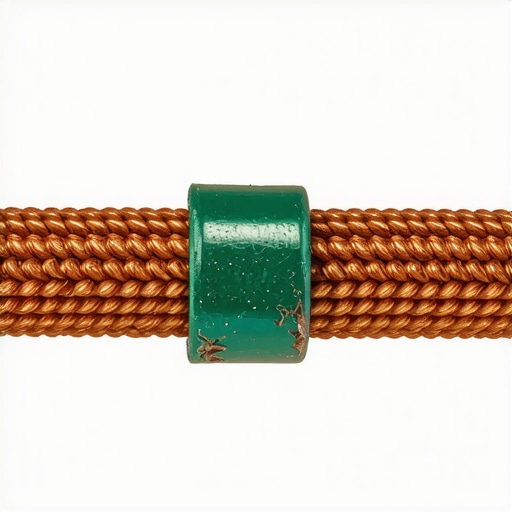 Ensuring these connections are clean and tight is a foundational aspect of any thorough vehicle inspection, much like how a regular brake service ensures hydraulic integrity.
Is Your Battery Sending False Signals to the Solenoids?
Modern automotive solenoids require precise amperage to pulse correctly and manage fluid flow within the valve body. According to the National Institute for Automotive Service Excellence (ASE), high resistance in the wiring harness is a primary driver of premature solenoid failure in electronically controlled transmissions. If the battery is weak or the alternator is underperforming, the voltage dip during high-load shifts causes the solenoids to move slower than the TCM expects. This results in a ‘lazy’ shift or an RPM flare that many drivers mistake for worn-out clutch packs. Before assuming the worst, utilizing a multimeter trick for spotting a dying alternator can save you from an unnecessary and expensive overhaul.
Stop Misreading Your Transmission Fluid Color
A frequent myth in the automotive world is that dark fluid always equals a dead transmission. While burnt-smelling fluid is a red flag, dark coloration can simply be the result of heat-stable dyes breaking down or the presence of non-harmful friction material. This is where many owners get talked into expensive services they don’t yet need. Understanding why your transmission fluid is turning black is key to making an informed decision. If the car drives perfectly but the fluid is discolored, the issue is likely a maintenance requirement rather than a mechanical failure. Combining this knowledge with tune up best practices allows you to extend the life of your vehicle without falling victim to predatory repair suggestions.
Own Your Diagnostics with Professional-Grade Tools
In the digital age, the most powerful tool in your arsenal isn’t a wrench—it’s data. Most gear-hunting issues can be narrowed down by looking at live PID data from the TCM. Identifying whether the computer is actually ‘commanding’ the shift or if the shift is happening due to hydraulic leakage is the first step in expert-level troubleshooting. You don’t need a thousand-dollar shop tool to do this anymore; a simple $20 scanner that every modern driver should own can provide enough transparency to see what the sensors are reporting in real-time. If you want to dive deeper into maintaining your vehicle’s peak efficiency, we highly recommend reading about why regular tune-ups are key to car longevity to stay ahead of these common electronic hurdles.
Reset the Brain Before You Replace the Transmission
Modern vehicles are equipped with adaptive learning software that adjusts shift timing and line pressure based on your driving habits and internal component wear. Over time, these ‘adaptation values’ can drift so far from their baseline that the mechanic sees a vehicle that shifts perfectly one day and hunts for gears the next. When you perform a major tune up or replace an electronic component, failing to reset these values via a factory-level scan tool is a common mistake in auto repair. Without a reset, the TCM continues to apply old pressure parameters to new hardware, leading to a harsh shift or an RPM flare that feels like a mechanical failure. Proactively managing these software adaptations ensures that the hardware operates within its designed tolerances, preventing the premature friction material loss that necessitates a total rebuild.
Can a Software Update Actually Fix a Slipping Transmission?
In many instances, the answer is a definitive yes. Manufacturers frequently release Technical Service Bulletins (TSBs) containing software ‘re-flashes’ that recalibrate shift points to address known engineering oversights. If the vehicle is experiencing a 1-2 shift shudder or a delayed engagement into drive, it may simply be a matter of the software failing to command enough initial line pressure. Before you commit to a heavy brake service or expensive drivetrain work, checking for available PCM/TCM updates is a non-negotiable step in modern diagnostics. These updates often refine the algorithm that handles torque converter lockup, which is frequently the true culprit behind what feels like a mechanical slip or ‘hunting’ behavior.
The Thermal Threshold of Transmission Fluid
Heat is the silent killer of hydraulic systems. As transmission fluid temperatures climb, the viscosity drops, and the fluid’s ability to hold a steady pressure against the internal seals diminishes. This fluid thinning often leads to ‘soft’ shifts or gear hunting during stop-and-go traffic. According to data provided by the Automatic Transmission Rebuilders Association (ATRA), every 20-degree increase in fluid temperature above 175°F can potentially halve the life of your transmission. If you notice your shifting becomes erratic only after an hour of driving, your auto repair strategy should focus on cooling efficiency rather than internal parts replacement.  High-performance external coolers or a simple radiator flush can often restore shift quality by keeping the ATF within its optimal operating window.
Distinguishing Engine Misfires from Transmission Shudders
One of the most difficult nuances in automotive diagnostics is separating a light engine misfire from a torque converter clutch (TCC) shudder. Because the torque converter is mechanically locked to the engine at cruising speeds, a failing spark plug or a clogged fuel injector can send vibrations directly through the drivetrain, mimicking a transmission problem. A seasoned mechanic will use a ‘brake torque test’ or monitor cylinder misfire counters during a tune up to ensure the engine is delivering smooth power before blaming the gearbox. If the shudder vanishes when you lightly tap the brake pedal—which commands the TCC to unlock—you have confirmed the issue is within the transmission’s lockup circuit. To learn more about identifying these subtle performance killers, you can read our guide on transmission vs. engine misfire diagnostics to avoid misdiagnosing your vehicle’s symptoms.
Vacuum Leaks and the Ghost in the TCM
While modern cars rely on electronic sensors, many still use engine load data derived from manifold absolute pressure to determine shift timing. A small, undetected vacuum leak can cause the engine to run slightly lean, reducing torque output. The TCM, sensing this lack of power but seeing a wide throttle angle, becomes confused and initiates a downshift, only to upshift again once the RPMs climb. This ‘ghost’ in the system is why a comprehensive tune up always includes a smoke test of the intake tract. Addressing a simple cracked hose is far more cost-effective than a brake service or a gearbox overhaul. If your vehicle feels indecisive on slight inclines, it is time to look at the relationship between intake pressure and transmission commands.
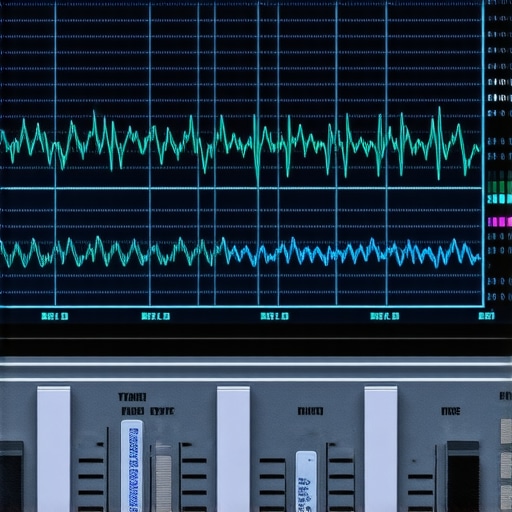
Beyond the sensors themselves, the architecture of the Controller Area Network (CAN-Bus) plays a pivotal role in shift quality. Every module on the vehicle, from the ABS to the instrument cluster, shares a high-speed data line. If a secondary module—such as a failing steering angle sensor—begins broadcasting junk data, it can congest the network, causing a lag in TCM command execution. This latency often manifests as a gear hunting event because the transmission is reacting to data that is already several milliseconds old. In the realm of advanced auto repair, a technician must look beyond the gearbox and perform a network integrity test to ensure no other system is shouting over the transmission’s requirements.
Stop Ignoring the Silent Data Collisions in Your CAN-Bus
Communication bottlenecks are the new frontier of drivetrain troubleshooting. When a mechanic observes a U-code or network communication fault in the system memory, it is often dismissed if the primary symptom is shifting issues. However, modern drivetrains are highly integrated; for instance, the Stability Control system can request a transmission downshift to assist with engine braking or traction recovery. If the wiring harness has suffered from vibration or moisture ingress, the resulting signal attenuation can make the vehicle feel as though the clutch packs are failing when, in reality, the modules are simply failing to talk to one another in real-time. Identifying these glitches is just as important as a standard tune up when dealing with high-mileage electronic systems.
Could Your Non-Matching Tires Be Destroying Your Shift Logic?
It is a little-known fact among car owners that tire diameter plays a massive role in shift scheduling. If you have replaced only two tires on an All-Wheel Drive (AWD) vehicle, or if your tire pressures are significantly uneven, the wheel speed sensors will report different rotational velocities to the computer. The TCM interprets this delta as wheel slip and may perpetually hunt for a gear that balances torque distribution. This is why a comprehensive brake service or tire rotation is more than just a safety measure; it is a critical calibration step for your transmission’s health. Maintaining a uniform rolling radius ensures the computer receives consistent data across all four corners, preventing the logic loop that leads to erratic shifting.
Treat Your Valve Body to a Solenoid Refresh
Inside the transmission, the valve body acts as the brain, directing pressurized fluid via Pulse Width Modulated (PWM) solenoids. These solenoids are effectively high-speed electromagnets that open and close hundreds of times per second. Over time, microscopic debris from normal wear can cause these solenoids to hang or respond sluggishly. According to technical insights from Motor Magazine, even a slight increase in solenoid coil resistance due to heat-soak can delay shift completion by fractions of a second, causing the TCM to abort the shift and try again—the very definition of gear hunting. Including a solenoid bench test as part of a major maintenance cycle for high-mileage vehicles can restore that factory-crisp shift feel without the need for a full rebuild.
Ultimately, the goal is to move from reactive part-swapping to predictive maintenance. If you suspect your vehicle is struggling with these complex electronic handshakes, we encourage you to consult with our drivetrain specialists for a deep-dive data log of your vehicle’s performance. By isolating these digital anomalies, you can protect your mechanical investment and ensure your vehicle remains on the road for years to come. Professional diagnostics offer the transparency needed to distinguish between a simple wiring fix and a complete mechanical overhaul.
Expert Insights and Advanced Considerations
The Brake Switch Often Triggers Phantom Shifting
Most drivers associate the brake pedal purely with stopping, but it is also a vital data input for the transmission. A misaligned or failing brake switch can send a signal to the computer while you are cruising, causing the torque converter to unlock prematurely. This mimics gear hunting and is a common reason why a professional brake service strategy should include an inspection of electronic switches, not just the mechanical hardware.
Why Generic Additives Rarely Fix Real Hydraulic Issues
While many owners look for a quick fix, chemical additives often mask symptoms rather than addressing the root cause. In high-mileage units, the issue is often seal shrinkage or internal pressure loss. Instead of miracle fluids, focusing on tune up strategies that save money by replacing specific high-failure components like accumulator springs is a far more effective long-term repair for your vehicle’s health.
Don’t Overlook the Shielded Cables on Speed Sensors
Electromagnetic interference (EMI) is the enemy of modern telemetry. Speed sensors use shielded wiring to prevent ignition noise from corrupting the data stream. If the shielding is frayed during an unrelated auto repair, the Transmission Control Module (TCM) receives ghost RPM spikes. Ensuring these wires are routed correctly is a detail a skilled mechanic you can trust will always prioritize over a blind parts-swapping approach.
#IMAGE_PLACEHOLDER_E#
Curated Expert Resources
ATRA (Automatic Transmission Rebuilders Association): This is the premier source for technical bulletins regarding specific transmission makes and models. It is where professionals go to find documented fixes for rare gear-hunting issues. SAE International (Society of Automotive Engineers): This resource provides the technical foundation for how modern drivetrain logic is developed, offering deep dives into the math behind shift schedules. ASE (National Institute for Automotive Service Excellence): The ASE standards ensure that the technician working on your car has been vetted for their understanding of complex electronic systems. Motor Magazine: This publication is essential for keeping up with mechanic tips for diagnosing common problems before they become catastrophic failures.
Final Expert Perspective
Solving a gear-hunting issue is rarely about replacing the largest part you can find; it is about respecting the intricate dance between electrical signals and hydraulic pressure. Whether the solution is a $15 sensor, a grounded wire, or a simple software update, a precise auto repair approach saves thousands in unnecessary labor. By treating your vehicle to a regular tune up and ensuring your brake service includes electronic diagnostics, you can maintain the mechanical integrity of your drivetrain for the long haul. If your vehicle is currently exhibiting erratic behavior, the first step is always data transparency. We encourage you to contact our technical team to discuss a diagnostic plan tailored to your specific vehicle or to explore our library of auto repair myths debunked to see what really matters for your car’s longevity.