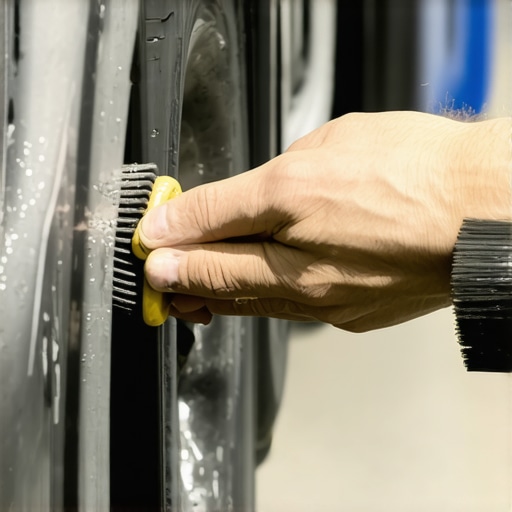
Why a Pristine Hub Flange Is the Difference Between Silent Stops and Constant Squealing
In the world of professional auto repair, the most frustrating comebacks are often caused by the smallest oversages. Most drivers and novice technicians focus exclusively on the brake pads and the friction surface of the rotor, yet they ignore the critical interface where the rotor meets the hub. When a mechanic performs a high-level brake service, the success of the job hinges on preventing lateral runout. Even a microscopic layer of rust or scale on the hub flange can prevent the rotor from sitting perfectly flush. This misalignment leads to an oscillating motion that mimics warped rotors and, more commonly, creates the high-frequency vibration we recognize as a persistent squeal. Professionals know that the secret to quiet brakes that most shops ignore lies in the meticulous preparation of these mating surfaces rather than just the quality of the pads themselves.
Why Does Even Minimal Corrosion Lead to Catastrophic Brake Pulsation?
The physics of a braking system are unforgiving. A deviation of only 0.002 inches at the hub center can translate into a significant lateral runout at the outer edge of a 12-inch rotor. As the rotor wobbles back and forth, it knocks the pads away from the surface, creating an uneven wear pattern known as Disc Thickness Variation (DTV). This isn’t just about noise; it impacts the hydraulic efficiency of your system. If you have ever wondered how to stop your brakes from pulsing without buying new rotors, the answer often starts with a wire brush and a hub cleaning tool. According to research published by the Society of Automotive Engineers (SAE), ensuring surface cleanliness is the primary defense against Noise, Vibration, and Harshness (NVH) issues in modern floating caliper systems.
Execute the Professional Hub Scrub During Your Next Tune Up
A comprehensive tune up for your braking system must include a mechanical cleaning of the hub. This process, often called the “hub scrub,” involves using a specialized abrasive disc or a high-carbon wire brush to strip away every trace of oxidation until the bare metal is visible. Once the surface is clean, a very light film of high-temperature nickel anti-seize can be applied, though many experts argue for a dry fit to maintain maximum torque accuracy on the lug nuts. This level of detail is why why new brake pads squeak even if they were installed correctly in many DIY scenarios where this step was skipped. By ensuring a perfectly flat mounting plane, you eliminate the root cause of harmonic resonance before the wheels even go back on. If you want to elevate your maintenance game, explore our deep dive into brake service secrets to master the techniques that separate the amateurs from the masters.
Beyond the structural integrity of the hub flange, the dynamic movement of the caliper assembly represents the next frontier in achieving a perfect brake service. Most technicians overlook the slide pins, assuming a quick spray of cleaner is sufficient. However, these pins are the pivot point of the entire stopping event. When they become gummed up with oxidized grease or road salt, the caliper loses its ability to float, which is precisely the 20-brake-slide-pin-error-that-causes-uneven-pad-wear found in most budget shops. This lack of movement forces the inboard pad to sustain 100% of the friction load, leading to localized heat spots and premature failure.
Is Your Mechanic Using the Wrong Grease for Your Silicone Seals?
This is where amateur auto repair often goes sideways. Many enthusiasts grab a tub of general-purpose petroleum grease, but petroleum-based products will cause the rubber boots on your slide pins to swell and eventually disintegrate. Professional technicians insist on high-temperature silicone or synthetic ceramic-based lubricants that won’t attack the rubber components. According to the Car Care Council, utilizing the correct chemical interfaces is non-negotiable for maintaining the safety margins of modern ABS-equipped vehicles. Without this specific attention to detail, you will likely find yourself wondering why your new brake pads wear down unevenly just a few months after an expensive replacement.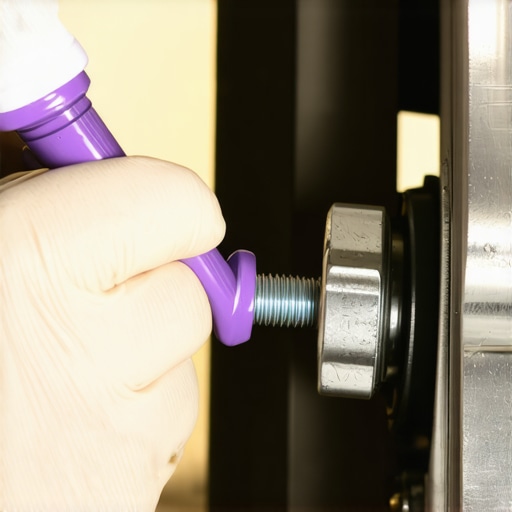
The Vital Role of Abutment Clips in Noise Dampening
The stainless steel clips that hold your pads in place, often called abutment or anti-rattle clips, are more than just guides. They act as tension springs that prevent the pads from vibrating within the bracket. Over thousands of heat cycles, these clips lose their springiness and become caked with brake dust. A true expert will always stop overpaying for brake pads when the real issue is a frozen pin or a collapsed clip. Before installing new hardware, the bracket surface underneath must be filed or brushed to a smooth finish to prevent rust jack. This is a phenomenon where corrosion builds up under the clip and pinches the pad so tightly it cannot move, which is a major contributor to a spongy pedal feel and dragging brakes.
Bedding-In Procedures That Lock in Long-Term Performance
The final stage of a master-level tune up is the bedding-in or burnishing process. This isn’t just a casual drive around the block; it involves a series of controlled stops that transfer a microscopic, uniform layer of friction material from the pad to the rotor. This transfer layer is what actually stops the car, as friction material rubbing against friction material is more efficient than metal on ceramic. If this step is rushed, the pads can glaze over, resulting in a permanent loss of bite. You can learn how a 5-dollar can of brake cleaner saves your new pads from glazing by removing shipping oils before you begin this critical heat-cycling process. Have you ever noticed your brakes feeling sharper a few days after a service? That’s the transfer layer at work. If you’ve had a different experience or a noise that just won’t quit, share your story in the comments below so we can help troubleshoot the issue.
Brake Fluid Moisture is the Silent Killer of Caliper Seals
Even with a perfect mechanical setup, the hydraulic integrity of your system often dictates the longevity of your recent brake service. Most drivers view brake fluid as a ‘set it and forget it’ lifeblood, but its hygroscopic nature means it actively absorbs water from the atmosphere through microscopic pores in the rubber hoses. Once moisture content exceeds 3%, the boiling point of the fluid drops significantly, leading to a phenomenon known as vapor lock during heavy braking. This isn’t just a performance issue; it’s a structural one. According to technical specifications provided by Bosch Mobility, moisture-contaminated fluid creates internal pitting in the master cylinder and ABS modulator valves, which can lead to intermittent pressure drops that are notoriously difficult for even a seasoned mechanic to diagnose. If you’re unsure when your fluid was last flushed, our guide on the complete brake fluid color chart can help you spot trouble before your pedal goes soft.
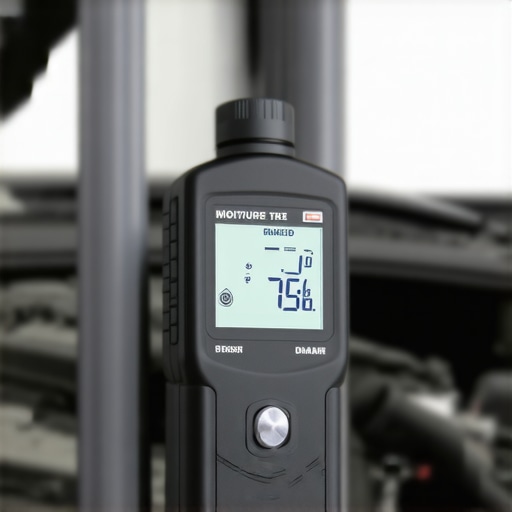
Can Moisture in Your Brake Lines Actually Corrode Your ABS Pump?
The short answer is a resounding yes. When water molecules settle in the lowest points of the hydraulic circuit—usually the calipers and the ABS control unit—they initiate an electrochemical reaction. This internal corrosion can seize the tiny solenoid valves inside the ABS module, leading to a hard pedal or a vehicle that pulls to one side during an emergency stop. For any high-end auto repair, a professional will not just top off the reservoir; they will perform a full sequence bleed to ensure that the fresh fluid has reached every corner of the system. This prevents the ‘black sludge’ often found in neglected systems, which is actually a mix of degraded rubber seals and oxidized metal. Ignoring this hydraulic maintenance is why many owners find themselves facing a four-figure bill for an ABS module replacement just a few years into the car’s life.
Stop Distorting Your Rotors with Improper Lug Nut Torque
You can spend hours cleaning the hub and installing the finest ceramic pads, but all that work is undone the moment you or a technician over-tightens the wheels with an uncalibrated impact wrench. Uneven torque on the lug nuts is the leading cause of ‘induced’ lateral runout. When one nut is tightened to 120 ft-lbs and another to only 80 ft-lbs, it creates a slight warp in the hub-to-rotor interface. Over a few thousand miles, this distortion leads to uneven heat distribution and the return of that dreaded pedal pulsation. A proper tune up for your wheel assembly requires a high-quality torque wrench and a star-pattern sequence to distribute the clamping force evenly across the rotor hat. This precision is the hallmark of a master technician who understands that the wheel and the brake system function as a single unit. As we look closer at the interaction between the wheel’s offset and the heat dissipation of the braking system, the importance of cooling airflow becomes the next critical factor.
Why Your Wheel Design Might Be Cooking Your Calipers
Thermal management is the final, often overlooked frontier of a master-level brake service. While the mechanical integrity of the hub and the hydraulic health of the fluid are paramount, the ability of the system to shed heat is what prevents fade during spirited driving or heavy towing. Many enthusiasts upgrade to larger wheels for aesthetics, but a wheel with a dense, closed-spoke design acts as a heat shield, trapping high temperatures within the wheel well. This stagnation prevents the rotor from utilizing its internal vanes to pull cool air through the center of the hub. When heat cannot escape, the friction coefficient of the pads drops precipitously, leading to a wooden pedal feel. Modern auto repair experts now consider the wheel’s offset and spoke clearance as part of a holistic cooling strategy, ensuring that the kinetic energy converted into heat has a clear path of dissipation. 
Does Brake Ducting Actually Lower Rotor Temperatures on Street Cars?
While often associated with the racetrack, functional air ducting can drastically improve the longevity of your braking components on heavy street vehicles. By directing a concentrated stream of ambient air toward the center of the rotor, you facilitate the venturi effect within the cooling vanes. This can lower peak operating temperatures by as much as 100 degrees Fahrenheit during repetitive stops. According to technical data from Brembo, maintaining a rotor’s temperature within its optimal thermal window not only prevents surface cracking but also ensures that the pad transfer layer remains stable. Without adequate cooling, even the most expensive ceramic pads will begin to outgas, creating a thin layer of hot air between the pad and rotor that acts like a lubricant, dangerously increasing stopping distances.
Mastering the Friction Coefficient of High-Performance Compounds
Choosing the right pad material is more complex than simply picking the most expensive option during a tune up. A common mechanic error is installing track-focused metallic pads on a daily driver. These compounds require a high ‘initial bite’ temperature to function correctly; when cold, they offer significantly less stopping power than a standard organic or ceramic pad. Conversely, a standard pad on a performance vehicle will quickly exceed its maximum operating temperature, leading to pad smear. A professional auto repair specialist evaluates the vehicle’s weight, the driver’s habits, and the local topography to select a friction material that provides a stable Mu (coefficient of friction) across the expected temperature range. This precision ensures that the brakes feel consistent whether you are pulling out of your driveway or descending a steep mountain pass.
The Forgotten Geometry of Master Cylinder Pushrod Gap
Precision in a brake service extends beyond the wheel end and into the heart of the firewall. The master cylinder pushrod gap is a measurement that determines exactly how much pedal travel occurs before the pistons begin to move. If the gap is too large, the driver experiences a disconcerting ‘dead zone’ at the top of the pedal. If it is too tight, the bypass port in the master cylinder may never open, preventing fluid from returning to the reservoir as it expands with heat. This can lead to brakes that slowly lock up as the car is driven, a phantom issue that has stumped many DIYers. Adjusting this gap requires a specialized depth gauge and a steady hand, but it is the secret to achieving that firm, instantaneous pedal response found in high-end sports cars. If you have ever felt that your brakes were ‘soft’ despite a perfect bleed, the mechanical linkage is the likely culprit. To truly master these advanced variables, we invite you to explore our deep-dive tutorials on specialized component calibration to ensure your next service is nothing short of factory-perfect.
Expert Insights & Advanced Considerations
Combatting Heat Soak Beyond the Rotor Hat
True performance isn’t just about how fast you stop once, but how the system recovers. If you notice your pedal getting longer after aggressive use, you’re likely experiencing fluid fade or pad outgassing. Many enthusiasts find that why your new brake pads are smoking is actually a symptom of resin binder breakdown. Investing in titanium shims between the pad and the piston can provide a thermal barrier that preserves your caliper seals and keeps brake fluid temperatures within a safe operating window.
Stop Trusting Lifetime Brake Fluid Claims
Even if the fluid looks clear, its chemical stability degrades. For high-performance auto repair, we recommend testing for copper content using strip tests, which indicates internal corrosion of the lines. This is far more accurate than a simple visual check. If you notice a change in color, our guide on why your new brake fluid turned dark gray this month explains the specific chemical interactions at play within your ABS unit.
The Quest for Zero Lateral Runout
In a world of mass-produced components, “good enough” usually means 0.003 inches of runout. A master mechanic aims for less than 0.001. By using an on-car brake lathe or meticulously indexing the rotor on the hub, you can virtually eliminate pedal pulsation. This level of detail prevents the common issue of why your brake rotors warp after only 5000 miles, which is usually just uneven pad deposit caused by runout-induced DTV.
Where Pros Get Their Data
StopTech Technical White Papers: This is the gold standard for understanding the physics of brake systems, including the math behind master cylinder sizing and bias. SAE International (Brake Colloquium): For those who want the latest data on friction materials and noise suppression, the annual SAE papers are the primary source for industry-wide brake service standards. Brembo Training Academy: A great resource for visual guides on identifying specific failure modes in high-performance calipers and pads.
#IMAGE_PLACEHOLDER_E#
Final Expert Perspective
A professional brake service is a symphony of mechanical precision, hydraulic integrity, and thermal management. By addressing the hub surface, the slide pin lubrication, and the final bedding-in process, you transform a standard auto repair into a long-term safety investment. Never settle for a “pad slap” when you can execute a master-level tune up of the entire braking circuit. If you’re ready to take the next step in your vehicle’s maintenance, check out our brake service secrets or contact us to share your own technical findings from the garage.