Stop Overheating Before It Starts: The Art of Fin Maintenance
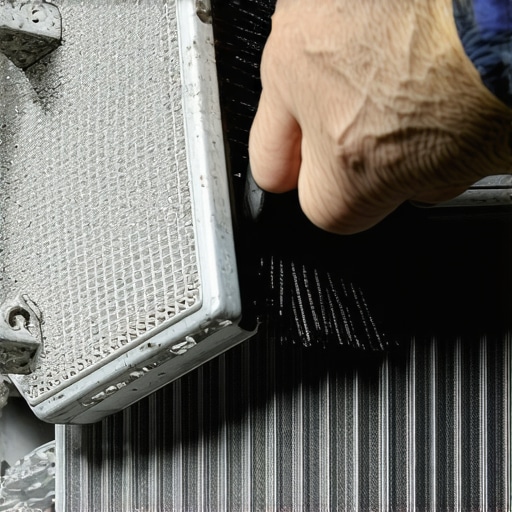
Heat rejection is the unsung hero of automotive longevity. While most enthusiasts focus on horsepower, the reality is that thermal management determines the survival of your engine under load. The radiator core, a delicate lattice of aluminum or copper-brass, is designed to maximize surface area for heat exchange. However, this design also makes it a magnet for road debris, insects, and oxidation. When a mechanic examines a vehicle for cooling issues, the first point of failure isn’t always a leak; it’s often the physical obstruction of these fins. A proper tune up should always extend beyond the combustion chamber and include an audit of the vehicle’s heat exchangers. If the boundary layer of air cannot pass through the core, the latent heat capacity of your coolant becomes irrelevant.
Why Your Pressure Washer Is a Core’s Worst Enemy
The impulse to use high-pressure water to blast away grime is a common pitfall that leads to catastrophic auto repair bills. Radiator fins are typically only 0.1mm thick—barely thicker than a human hair. A pressure washer can easily fold these fins flat, effectively sealing the radiator and creating a permanent hot spot. Expert technicians instead rely on a combination of chemical breakdown and low-pressure displacement. Before you consider your next brake service, ensure your engine’s primary cooling source isn’t being throttled by bent metal. According to technical documentation from SAE International, even a 10% reduction in effective fin surface area can lead to a disproportionate 15-20% increase in peak operating temperatures during high-load scenarios.
Essential Tools for Restoring Airflow Without Compromising Metal
To clean a radiator professionally, you need a specialized toolkit. A soft-bristle nylon brush and a dedicated fin comb are non-negotiable. Begin by vacuuming loose debris from the front—pulling the dirt out the way it came in, rather than pushing it deeper. Using a specialized foaming coil cleaner is the next step; these surfactants are designed to liquefy organic matter without corroding the aluminum. This level of detail is what separates a DIY attempt from a professional-grade auto repair standard. While you are under the hood, it is the perfect time to follow mechanic tips for diagnosing common auto problems, such as checking for brittle hoses or hairline cracks in the plastic end tanks.
Does a Dirty Radiator Actually Kill Your Fuel Economy?
Many drivers are surprised to learn that a clogged radiator forces the cooling fans to run more frequently and for longer durations. This increases the electrical load on the alternator, which in turn places more parasitic drag on the engine, directly impacting your MPG. Ensuring your cooling system is efficient is just as vital as a regular brake service for overall vehicle safety and performance. If you want to dive deeper into performance optimization, you can tune up your car like a pro by focusing on the often-ignored components like the radiator’s thermal efficiency. Have you ever noticed your car feeling ‘sluggish’ on a hot day? It’s likely the ECU pulling timing to compensate for poor heat rejection.
We invite you to share your own cooling system success stories or ask our experts about specialized cleaning solutions in the comments below.
Stop Relying on Visual Checks and Test Your Coolant’s pH Instead
While external cleaning prevents immediate overheating, the internal chemistry of your cooling system is what dictates the long-term health of your engine block and gaskets. Over time, the ethylene glycol base of your coolant remains stable, but the vital corrosion inhibitors begin to deplete. When these additives vanish, the fluid turns acidic, initiating a process known as electrolysis. This is where your coolant effectively becomes battery acid, pulling ions from the metal components of your engine. To diagnose this, a mechanic won’t just look at the color; they will use a digital multimeter to check for stray voltage. You can apply the same multimeter logic used for batteries to test your coolant. By placing the negative lead on the battery post and the positive lead into the coolant—without touching the metal radiator—any reading over 0.3 volts indicates that your system is undergoing electrochemical degradation. This level of precision is essential for an effective tune up that aims to prevent expensive internal auto repair projects down the line.
Can a Faulty Radiator Cap Mimic a Blown Head Gasket?
The radiator cap is far more than a simple lid; it is a calibrated pressure relief valve that raises the boiling point of your coolant. For every pound of pressure the cap maintains, the boiling point of the liquid increases by approximately three degrees Fahrenheit. When a cap fails to hold its rated pressure, usually 13 to 16 PSI, the coolant can boil locally around the cylinder heads, creating steam pockets that look remarkably like combustion gases escaping through a head gasket. This is one of the most common misdiagnoses in the industry. Before committing to a high-ticket engine teardown, a top-rated mechanic will always pressure-test the cap independently. A failed spring or a perishing rubber seal can cause persistent overflow and overheating, yet the auto repair is as simple as a fifteen-dollar replacement part. Keeping these small components in check is a cornerstone of tune up strategies to save money on auto repairs.
Stop Internal Erosion by Spotting Cavitation Early
Internal cooling system health also involves managing the physical movement of the fluid. When a water pump spins at high RPMs, particularly in a system with old or diluted coolant, micro-bubbles can form on the trailing edge of the impeller blades. This phenomenon, known as cavitation, causes these bubbles to collapse with enough force to pit the metal, eventually eating through the pump housing or the engine’s timing cover. According to the technical standards set by ASTM International (D3306), high-quality engine coolants must contain specific antifoaming agents and surfactants to prevent this vapor-induced erosion. If you notice a metallic ‘rattle’ coming from the front of your engine that disappears as the vehicle warms up, you may be hearing the early stages of water pump cavitation. Integrating a check for these chemical properties is just as vital as a routine brake service for vehicle reliability. If you’ve recently performed a cooling system flush, tell us in the comments what color your old fluid was and if you noticed any metallic debris in the drain pan.
Stop Blindly Mixing Coolants Before You Create a Chemical Sludge
Modern engine design relies on precise metallurgy, which in turn demands specific chemical compatibility from the cooling medium. The days of ‘universal green’ coolant are long gone, replaced by a complex array of Inorganic Additive Technology (IAT), Organic Acid Technology (OAT), and Hybrid OAT (HOAT) formulations. When an amateur mechanic tops off an OAT-based system with traditional silicates, the resulting chemical reaction can cause the inhibitors to drop out of suspension. This creates a thick, gelatinous sludge that settles in the narrowest passages of the heater core and radiator. Once this precipitation occurs, no simple tune up can fully reverse the blockage. You are often looking at a labor-intensive auto repair involving a full system teardown. According to technical bulletins from The Gates Corporation, mixing incompatible coolants can lead to a complete failure of the water pump seal within as little as 500 miles of operation due to the abrasive nature of the precipitated solids.
Does High Altitude Really Lower My Car’s Boiling Point?
Atmospheric pressure is the invisible hand that keeps your coolant from turning into steam. As you climb into higher elevations, the ambient pressure drops, which directly lowers the boiling point of any liquid. Even with a pressurized system, a car that operates perfectly at sea level might experience localized boiling around the exhaust valves when traversing a mountain pass. This is where the efficiency of your brake service and your cooling system converge; as you descend, you rely on engine braking, which generates significant heat without the benefit of high-speed airflow. If your coolant chemistry is weak or your pressure cap is aging, the system may fail just when you need it most. Ensuring your vehicle can handle these pressure differentials is a key component of an expert-level tune up for any high-performance or towing vehicle.
Guard Your Transmission Against the Silent Radiator Leak
Most modern radiators are dual-purpose units, containing an internal heat exchanger for the transmission fluid. This design is space-efficient but introduces a critical single point of failure known in the industry as ‘the strawberry milkshake of death.’ If the internal barrier between the engine coolant and the transmission fluid corrodes, the two fluids mix. The glycol in the coolant destroys the friction material on the transmission clutches almost instantly. Vigilant auto repair specialists look for subtle signs of cross-contamination, such as a slight cloudiness in the transmission dipstick or an oily film in the radiator expansion tank. Have you ever checked your transmission fluid during a routine oil change? Sharing your findings or asking about specific fluid colors in the comments can help others avoid a total gearbox failure. This integrated cooling approach requires a higher standard of maintenance than many realize, making it as essential as a regular brake service for long-term drivetrain health.
Why Your Modern Thermostat Is Not a Simple Mechanical Valve
In the quest for thermal efficiency and reduced emissions, manufacturers have moved away from basic wax-pellet thermostats in favor of map-controlled, electrically assisted units. These advanced components allow the ECU to artificially raise the engine temperature during light-load cruising—improving fuel vaporization and reducing internal friction—while instantly dropping the temperature under heavy acceleration to prevent knock. If you are performing a tune up and notice the engine isn’t reaching operating temperature quickly, don’t assume a simple mechanical failure. A mechanic must now use a scan tool to verify the duty cycle of the thermostat heater. This complexity means that a cooling system fault can often masquerade as a sensor issue or a fueling problem. Deep-diving into these electronic controls is what separates a true specialist from a generalist in the world of auto repair.
Find the Plastic Fatigue Hiding in Your End Tanks
Modern radiators aren’t solid metal; they are composite structures held together by tension. The interface where the aluminum core meets the glass-reinforced nylon end tanks is a primary failure zone that a seasoned mechanic watches like a hawk. Over thousands of thermal cycles, the difference in the coefficient of thermal expansion between these materials creates stress on the rubber gasket and the aluminum crimps. This eventually leads to ‘seam weep,’ a slow leak that only manifests under high pressure. If you are scheduling an auto repair for a mysterious loss of coolant, insist on a cold-soak pressure test. According to technical insights from The Car Care Council, these structural failures are responsible for nearly 30% of sudden cooling system collapses in vehicles over seven years old. Identifying these micro-fractures during a routine inspection prevents a minor drip from becoming a highway-side disaster.
Fix Airflow Short-Circuits by Restoring Your Fan Shrouds
Air is lazy; it takes the path of least resistance. Without a perfectly sealed fan shroud, the cooling fan pulls air from the engine bay rather than through the radiator core. This creates a ‘short-circuit’ that renders even the most expensive high-performance radiator ineffective at idle. When performing a tune up, ensure every plastic clip and foam seal is intact. A missing shroud can reduce low-speed cooling capacity by up to 40%, forcing the engine to run hotter and increasing the viscosity breakdown of your oil. This thermal stress is similar to the heat generated during a heavy brake service, where components are pushed to their material limits. Maintaining the integrity of the air path is just as critical as the fluid inside the tubes.
Can a Blocked Heater Core Bypass Cause High-RPM Overheating?
Many enthusiasts treat the heater core as an optional luxury, but in many modern cooling loops, it acts as a critical bypass circuit. When the thermostat is closed or partially open, the heater core ensures constant flow across the back of the cylinder head. If the core is clogged with the chemical sludge mentioned previously, you lose this stabilization. During high-RPM operation, this can lead to localized ‘hot spots’ that aren’t reflected on the dashboard gauge until it’s too late. An expert mechanic knows that a cold cabin in winter is often the first warning sign of a compromised engine cooling loop. Integrating a heater core flow test into your seasonal tune up protects the head gaskets from these invisible temperature spikes.
Shield Your Radiator from Corrosion with a Dedicated Grounding Strategy
As we discussed with electrolysis, the cooling system is highly susceptible to electrical interference. Modern auto repair standards now suggest checking the engine-to-chassis grounding straps as a part of cooling system health. If the main ground for the starter or alternator develops high resistance, the electrical current will seek the easiest path back to the battery—often through the conductive coolant. This accelerates the depletion of corrosion inhibitors and physically etches the internal surfaces of the radiator. Much like how a thorough brake service requires checking the electrical integrity of ABS sensors, a cooling system overhaul isn’t complete without verifying that your engine isn’t using its radiator as a grounding point.
Do you suspect your vehicle is suffering from ‘ghost’ leaks that only appear on long trips? Share your diagnostic journey or ask about pressure testing techniques in the comments below.
Expert Insights & Advanced Considerations
How Electrolytic Currents Dissolve Your Radiator From Within
Stray electrical currents can turn your cooling system into a destructive battery. Use a multimeter to test for stray voltage; anything above 0.3V indicates your coolant has become too conductive, leading to rapid internal erosion. This check is a hallmark of an expert mechanic during a professional tune up.
Why You Should Never Ignore a Cold Cabin in Winter
A heater core that fails to produce heat is often the first indicator of chemical sludge blockages. Before assuming the blower motor is at fault, a professional auto repair technician will verify coolant flow. Restoring this path prevents the localized hot spots that lead to catastrophic head gasket failure.
The Hidden Link Between Your Cooling System and Transmission Life
Because the radiator often houses the transmission oil cooler, a failure in the internal partition can destroy your gearbox in minutes. Smart drivers treat their cooling system maintenance with the same urgency as a regular brake service to avoid cross-contamination.
Curated Expert Resources
SAE International Technical Papers
The definitive source for automotive engineering standards regarding heat transfer. These documents provide the data behind why certain fin densities and core thicknesses are chosen for high-performance applications.
ASTM D3306 Specifications
This industry standard governs engine coolant quality. Always verify your fluid meets this benchmark to avoid chemical precipitation and internal erosion during your next tune up.
Gates Corporation Technical Bulletins
A vital resource for understanding belt-driven water pump failures and the vacuum leaks that trick many technicians into diagnosing mechanical failures incorrectly.
Final Expert Perspective
Mastering thermal management requires moving beyond simple visual checks to embrace chemical and electrical diagnostics. Whether you are performing a DIY tune up or seeking a professional auto repair, protecting your radiator’s fins and internal passages is as vital for vehicle longevity as a routine brake service. Staying ahead of electrolysis and chemical precipitation ensures your engine survives the most demanding environments. We encourage you to consult with a top-rated mechanic for a pressure-test assessment—don’t wait for the steam to rise before you take action.