The serpentine accessory belt is the unsung workhorse of the modern internal combustion engine, responsible for the synchronized operation of the alternator, power steering pump, air conditioning compressor, and occasionally the water pump. When this component begins to slip, it isn’t merely an auditory nuisance; it represents a critical failure in the transfer of kinetic energy. Professional technicians understand that a slipping belt introduces parasitic drag and inconsistent voltage regulation, which can mimic much more expensive failures in the charging system or steering rack. By analyzing the rib geometry and the tensioner’s oscillation, we can often bypass a $400 auto repair bill in favor of a targeted $18 solution that addresses the root cause of the friction loss.
Ditch the Expensive Diagnostics and Inspect the Rib Profile First
In the era of Neoprene belts, cracking was the primary indicator of failure. However, modern EPDM (Ethylene Propylene Diene Monomer) belts, standard since the late 1990s, rarely crack. Instead, they lose material over time, much like a tire tread. This loss of material changes the rib profile, preventing the belt from seating properly in the pulley grooves. When the belt rides too deep in the groove, friction is lost, and slippage occurs under high-load scenarios—such as during a cold start or when the A/C compressor engages. Utilizing mechanic-grade tools like a rib depth gauge is essential for an accurate tune up diagnosis. You can read more about the 18 fix for a noisy serpentine belt to understand how this material loss impacts performance and why simple visual inspections are no longer sufficient.
Harmonic Balancer Stability and Its Impact on Belt Life
A belt that slips or chirps often points to a larger systemic issue within the accessory drive. If the harmonic balancer—the pulley attached to the crankshaft—develops a wobble due to a failing rubber isolator, it will throw the belt out of alignment. This misalignment increases lateral heat and causes the belt to walk across the pulleys, leading to premature failure. Before committing to a full brake service or other major maintenance, ensuring that your belt is properly tracked is paramount. Identifying why your car screeches when you start the engine requires a keen eye on the pulley plane alignment and the structural integrity of the rubber dampening components.
Can a Contaminated Belt Be Saved with Degreaser?
The short answer from a professional perspective is no. If a leaking front main seal or valve cover gasket has saturated the belt with oil, the rubber compound is chemically compromised. Oil causes the EPDM to swell and soften, drastically reducing the coefficient of friction. In these instances, the mechanic tips diagnosing common auto problems emphasize that the source of the leak must be addressed first. According to technical bulletins from the Gates Corporation, a contaminated belt must be replaced to ensure the reliability of the accessory drive system, as chemical degradation is irreversible and leads to imminent snap risks.
Restore Tension Without Replacing the Entire Assembly
Many shops will recommend replacing the entire automatic tensioner assembly at the first sign of a squeak. While the spring inside the tensioner can fatigue, the most common failure point is actually the tensioner pulley bearing or the belt itself. By replacing just the belt for roughly $18, you can often restore the necessary grip and eliminate noise. However, if you notice the warning sign your serpentine belt is about to snap, such as fraying or glazing on the backside, immediate intervention is required to avoid being stranded. Professional maintenance is about precision, not just replacement. If you are also managing brake issues, check out these brake maintenance hacks to prevent costly failures to keep your entire vehicle in peak condition.
The idler pulley is often the forgotten sibling of the tensioner, yet it plays a pivotal role in maintaining the belt’s path. When the internal ball bearings of an idler pulley dry out or develop flat spots, they produce a high-pitched metallic chirp that many drivers mistake for a slipping belt. A simple test involves removing the belt and spinning the pulley by hand; a healthy pulley should spin silently with slight resistance, while a failing one will sound like a skateboard wheel on gravel. This mechanical friction doesn’t just create noise; it generates heat that can melt the belt’s EPDM material from the inside out, leading to a catastrophic failure that could have been avoided with a simple diagnostic check.
Look Beyond the Rubber to the Idler Pulley Bearings
A common mistake in the auto repair world is assuming that every noise under the hood requires a total overhaul of the accessory drive. However, a seized pulley can create enough resistance to snap even a brand-new belt within minutes. When performing a tune up, professional technicians look for signs of ‘fretting’—a rusty-looking dust around the pulley bearing—which indicates that the internal lubrication has failed. If you find yourself frequently adjusting components, it might be time to consult the ultimate tune-up checklist for every car owner to ensure you aren’t overlooking these smaller, critical hardware pieces that maintain system equilibrium.
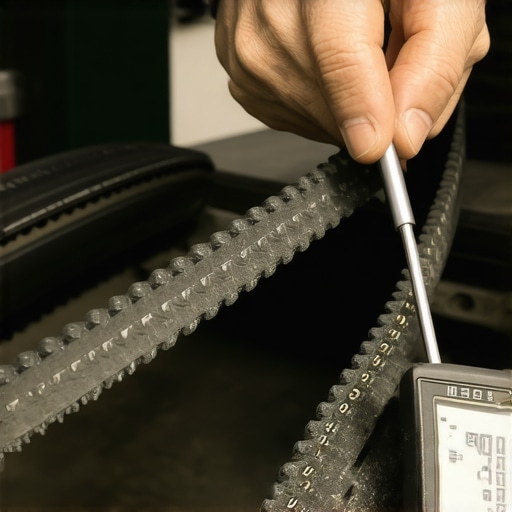
Is Your ‘Belt Noise’ Actually a Warning from the Charging System?
Sometimes, what sounds like a belt issue is actually the alternator protesting against an internal electrical short or a failing diode. When the alternator’s internal resistance spikes, it places an enormous physical load on the serpentine belt, causing it to slip even if the tension is correct. In some cases, electrical gremlins can be deceptive; for instance, the 12 relay that mimics a blown starter motor can lead a DIYer down the wrong path when the real issue is a seized accessory clutch putting too much load on the crank. Experts at the Car Care Council emphasize that neglecting the serpentine system accounts for a significant percentage of preventable roadside breakdowns, particularly during extreme temperature shifts where rubber compounds and electrical components are most stressed.
Why Surface Glazing Tells a Different Story Than Cracks
While the ribs of the belt are responsible for grip, the backside of the belt tells the story of the tensioner’s health. If the flat side of the belt looks shiny or ‘glazed,’ it indicates that the belt has been slipping across the pulleys, creating friction heat that has hardened the rubber. This hardened surface cannot be gripped effectively, no matter how much tension is applied. If you notice this glazing along with why your car screeches when you start the engine, the belt has likely reached its heat-cycle limit and needs replacement regardless of its remaining thickness. Addressing these nuances is what separates a basic mechanic from a specialist who understands the physics of power transfer. Have you ever replaced a belt only for the noise to return a week later? Share your experience in the comments or read our guide on how to choose a skilled mechanic you can trust to get a professional perspective on persistent engine noises.
Why Your AC Clutch Might Be Lying to You
When you engage the climate control and hear that telltale screech, the immediate instinct is to blame the belt tension. However, a seasoned mechanic knows that the air conditioning compressor clutch often masks a deeper mechanical resistance. As the clutch coil magnetizes and snaps the drive plate into the pulley, it creates a massive, instantaneous torque spike. If the internal swash plate of the compressor is beginning to bind due to oil starvation or ‘black death’ (internal sludge), the resistance can exceed the belt’s static friction limit. Before you assume you need a routine tune up, observe the clutch hub; if you see orange dust or ‘freckling’ around the compressor face, the bearing is likely overheating, which creates a drag that no amount of belt tension can overcome. This is where precision auto repair transitions from part-swapping to true mechanical forensics.
Does extreme cold actually stretch a modern EPDM belt?
Technically, no—EPDM belts do not stretch in the traditional sense like old-school neoprene. Instead, the polymer structure becomes significantly less pliable at sub-zero temperatures. This ‘cold set’ makes it difficult for the belt to conform to the smaller radius of the alternator or power steering pulleys, leading to a momentary slip until the friction-generated heat restores flexibility. According to technical standards published by SAE International, the performance of V-ribbed belts is heavily dependent on the glass transition temperature of the elastomer. If your vehicle struggles with morning noise, it may not be a failing component but rather a sign that the belt’s chemical additives have leeched out over time, leaving the rubber too stiff for cold-weather operation.
Stop Ignoring the Overrunning Alternator Pulley
Many modern luxury and diesel vehicles utilize an Overrunning Alternator Pulley (OAP) or an Overrunning Alternator Decoupler (OAD) to manage the rotational inertia of the alternator. This component allows the alternator to ‘freewheel’ when the engine speed suddenly drops, such as during a gear shift or when the engine is shut off. When this internal one-way clutch seizes, it forces the alternator to follow every micro-fluctuation of the crankshaft’s speed. The result is a violent belt flutter that can destroy a tensioner in weeks. 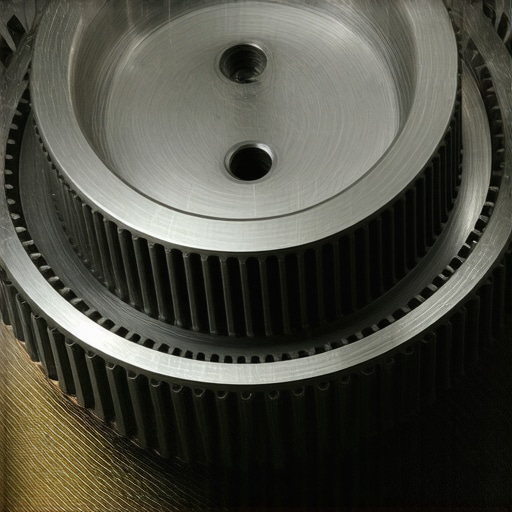 Identifying a seized OAP requires removing the belt and ensuring the alternator rotor can spin freely in one direction but locks in the other. If it’s locked both ways, you’re not just looking at a belt fix; you’re looking at a systemic vibration issue that could eventually lead to a snapped belt or a cracked bracket.
The Water Pump Connection You Probably Overlooked
In certain engine configurations, the serpentine belt drives the water pump, making its integrity a matter of engine survival rather than just a convenience issue. A slight leak from the water pump’s weep hole doesn’t just lower coolant levels; it lubricates the belt. Even a tiny amount of ethylene glycol acts as a high-end lubricant on EPDM, causing the belt to glide over the pulleys without any audible warning until the engine begins to overheat. During a comprehensive brake service or oil change, always check the underside of the water pump pulley for crusty white or pink deposits. If you’re noticing an intermittent loss of power steering assist or a flickering battery light, you might find that a slow coolant leak is the primary culprit. Have you checked your pulleys for ‘ghost leaks’ lately? If you’re unsure what to look for, take a moment to learn mechanic tips diagnosing common auto problems to stay ahead of these subtle failure points.
Torsional Vibration and the Hidden Stress on the Crankshaft
Every time a cylinder fires, the crankshaft experiences a minute burst of acceleration and deceleration. The serpentine system is designed to absorb these torsional pulses, but as the harmonic balancer ages, it loses its ability to dampen these shocks. This puts the entire accessory drive into a state of resonance, where the belt acts like a guitar string, vibrating at a frequency that can loosen mounting bolts and fatigue the tensioner spring. This mechanical stress is often misinterpreted as a simple belt squeak, but the underlying issue is the loss of the engine’s primary dampening system. Understanding the physics of this energy transfer is crucial for any high-level tune up, as it prevents the recursive cycle of replacing the same belt every 5,000 miles without ever addressing the crankshaft harmonics that are actually causing the damage.
While most mechanic-level training focuses on the tensioner’s spring rate, the internal friction dampener is the component that actually prevents the belt from vibrating like a plucked string. If you observe the tensioner arm bouncing excessively, it isn’t always a weak spring; the internal plastic or composite bushings may have worn away, losing their ability to absorb mechanical shocks. This lack of dampening leads to a phenomenon known as ‘belt slap,’ which can fatigue every accessory bearing in the loop. A precision tune up should involve checking for lateral play in the tensioner arm, which indicates that the pivot point has failed, even if the spring tension still feels within manufacturer specifications. Overlooking this leads to a cycle of repetitive belt failures that no amount of surface cleaning can resolve.
Clear Out the Debris Trapped in Your Pulley Grooves
A frequently overlooked cause of noise and slippage isn’t the belt itself, but the accumulation of ‘road glaze’ within the pulley grooves. Over thousands of miles, a mixture of road salt, microscopic sand, and rubber dust compresses into the bottom of the grooves, preventing the belt’s ribs from fully seating. This effectively reduces the surface area available for friction, forcing the belt to ‘hydroplane’ across the pulley at high RPMs. 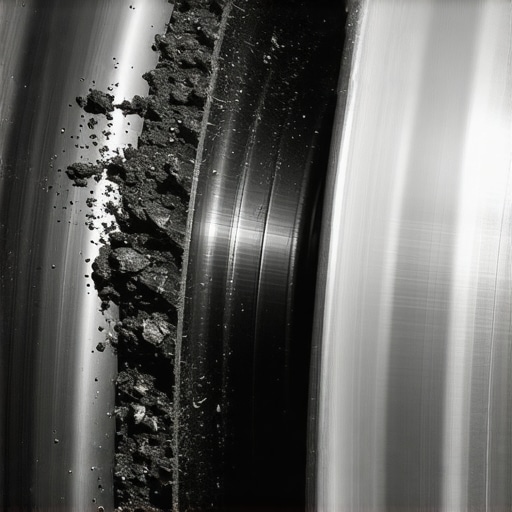 To rectify this, a technician must often use a wire brush or a specialized groove-cleaning tool to restore the original geometry of the metal pulleys. This step is a cornerstone of professional auto repair that distinguishes a lasting fix from a temporary one, especially in regions where winter road treatments are prevalent.
How Can You Tell if a Tensioner Is Shot While the Engine Is Running?
Diagnostic professionals use a visual reference called the ‘oscillation range’ to evaluate health without disassembly. By marking the tensioner body with a white paint pen, you can monitor how far the arm moves during a load shift—such as turning the steering wheel to full lock or cycling the A/C. If the arm moves more than three to five millimeters, or if it chatters violently, the dampening mechanism is compromised. For a deeper dive into these diagnostic nuances, the National Institute for Automotive Service Excellence (ASE) provides extensive documentation on accessory drive troubleshooting that highlights the importance of observing system behavior under variable electrical loads. If the tensioner is static while the belt is fluttering, the belt itself is likely stretched or contaminated.
Why Cheap Aftermarket Belts Kill Your Alternator Bearings
Choosing a budget-grade belt during a brake service or routine maintenance can be an expensive mistake. Lower-tier belts often have inconsistent rib thickness and inferior cord materials, which causes the tensioner to work overtime to compensate for the varying diameter as the belt rotates. This constant ‘pumping’ action generates internal heat and puts unnecessary radial stress on the alternator and power steering bearings. High-quality EPDM belts are manufactured to tighter tolerances to ensure a smooth, quiet transfer of power that mimics the factory original performance. If you are struggling with persistent squeals despite new parts, investigate the ultimate tune-up checklist for every car owner to see if your replacement parts meet OEM standards. Have you ever noticed a new belt making more noise than the old one? Tell us about your experience in the comments, and let’s troubleshoot the root cause together.
The Critical Role of Pulley Alignment in Lateral Belt Stability
Misalignment by even a single degree can cause the belt to ride up the side of a pulley flange, creating a chirp that sounds identical to a slipping belt. This lateral stress doesn’t just create noise; it gradually shears the internal reinforcement cords of the belt. Using a laser alignment tool is the only way to verify that the power steering pump or alternator hasn’t been mounted slightly ‘cocked’ during a previous repair. For those managing their own auto repair projects, checking the alignment across the longest span of the belt is the most effective way to catch these structural errors before they lead to a roadside snap. True mechanical mastery is found in these fine adjustments that ensure the entire accessory drive operates as a single, harmonized system.
Expert Insights & Advanced Considerations
Stop Relying on Your Ears Alone
Sound is inherently subjective; mechanical frequency is not. A veteran mechanic often utilizes a targeted water spray test—misting the ribs of the belt while the engine idles—to instantly distinguish between a tension failure and a structural misalignment. If the noise vanishes immediately upon contact with moisture, you are dealing with a friction loss issue. If the chirp persists or intensifies, the problem is likely a pulley that has moved out of its original plane. These high-level mechanic tips diagnosing common auto problems allow you to bypass the guessing game and target the specific hardware that has failed.
High-Output Alternators Demand Specialized Care
Modern vehicles equipped with high-amperage alternators to power sophisticated infotainment and safety systems place immense torque stress on the belt. During a routine tune up, it is vital to recognize that standard EPDM belts may not suffice for vehicles under constant high electrical load. If you observe repeated glazing, it is often a sign that the belt’s heat-cycle threshold has been exceeded. Consulting auto repair myths debunked can help you understand why simply tightening the system often leads to catastrophic bearing failure rather than a quiet engine.
The Decoupler Pulley is a Silent Failure Point
The Overrunning Alternator Decoupler (OAD) was engineered to protect the accessory drive from the violent pulses of high-compression engines, yet it remains a frequently misdiagnosed component. When the internal spring or clutch of the OAD fails, it sends a rhythmic vibration through the belt that mimics a bad tensioner. Integrating a check for OAD freewheeling into the ultimate tune-up checklist for every car owner prevents the unnecessary replacement of functional alternators and ensures the long-term stability of the drive system.
Curated Expert Resources
Gates Corporation Technical Training: Recognized as the industry gold standard for belt technology, their technical library provides deep dives into EPDM chemistry and pulley geometry that go far beyond standard auto repair manuals. ASE (Automotive Service Excellence) Study Guides: Particularly the A6 and A8 modules, these resources offer the theoretical foundation required to understand the electrical and mechanical synergy within the accessory drive. SAE International: For those seeking the engineering data behind the parts, SAE technical papers on V-ribbed belt dynamics provide the most accurate analysis of belt vibration and heat dissipation available to the public.
#IMAGE_PLACEHOLDER_E#
Final Expert Perspective
Maintaining a vehicle’s accessory drive is ultimately about managing the delicate balance between kinetic energy and friction. Whether you are performing a preventative tune up or addressing a screech during a brake service, success lies in diagnostic precision. By shifting your focus from simple part-swapping to analyzing the systemic causes of wear—such as pulley alignment and torsional vibration—you ensure a level of reliability that standard maintenance cannot provide. Adopting these tune-up strategies to save money on auto repairs is the most effective way to extend the life of your vehicle. Do you have a persistent engine noise that seems to defy logic? We invite you to share your diagnostic challenges in the comments or consult the essential guide to auto repair to refine your mechanical approach.