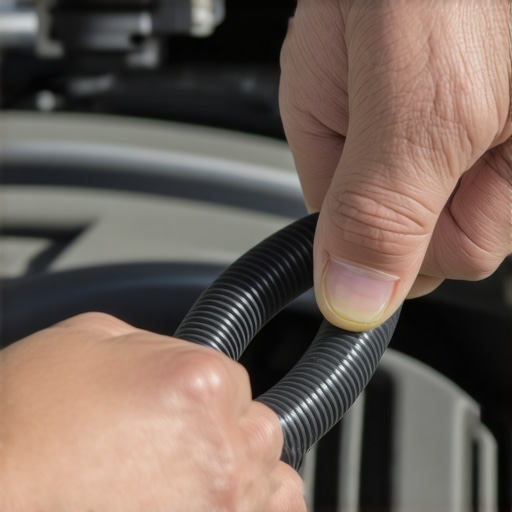
The modern internal combustion engine operates as a sophisticated air pump where precision is dictated by the balance of atmospheric pressure and manifold vacuum. When a driver experiences a ‘skipping’ sensation or a rhythmic hesitation during acceleration, the instinctive reaction is often to suspect high-cost components like fuel injectors or ignition coils. However, a seasoned mechanic understands that the most complex drivability issues frequently stem from a breach in the engine’s vacuum integrity. A simple $7 length of rubber tubing is often the only thing standing between a smooth-running vehicle and a frustrating series of expensive, unnecessary auto repair attempts.
Why Vacuum Integrity Matters More Than Your OBD-II Scanner Admits
Modern Engine Control Modules (ECMs) are designed to compensate for minor mechanical wear, but they are notoriously sensitive to ‘unmetered air.’ This occurs when air enters the engine behind the Mass Air Flow (MAF) sensor through a cracked vacuum line. This breach disrupts the stoichiometric ratio, forcing the ECM to adjust fuel trims to prevent a lean condition. According to technical standards established by the Society of Automotive Engineers (SAE), even a microscopic vacuum leak can significantly reduce volumetric efficiency, leading to the ‘skip’ or ‘miss’ that many drivers misinterpret as a failing spark plug. Before committing to a full tune up, performing a thorough visual inspection of the vacuum tree can save hundreds in diagnostic fees.
Does Your Engine Stumble Only at Idle?
One of the most telling signs of a vacuum-related issue is a car that runs poorly at a stoplight but smooths out once the throttle is applied. At idle, the throttle plate is closed, creating high vacuum pressure within the manifold. This pressure differential pulls air through any cracks in the rubber lines with maximum force. As you accelerate, the vacuum drops, and the relative percentage of unmetered air decreases, which is why the skipping often vanishes at highway speeds. If you are experiencing this specific symptom, it is vital to check our mechanic tips for diagnosing common auto problems before replacing your throttle body or oxygen sensors.
Trace the Leak Before Buying High-Dollar Sensors
The ‘parts cannon’ is a common pitfall in the automotive world, where components are replaced based on vague trouble codes rather than empirical testing. A code for a lean bank 1 (P0171) doesn’t always mean the sensor is bad; it often means the sensor is doing its job by reporting the excess air from a $7 vacuum leak. Incorporating a vacuum test into your regular tune up checklist is a professional-grade strategy that ensures long-term reliability. Furthermore, vacuum issues can even affect your brake service requirements, as a leaking brake booster line can lead to a hard pedal and poor stopping performance. For those dealing with erratic engine behavior, investigating the 12-dollar sensor that fixes a rough idle alongside vacuum checks can provide a comprehensive solution to performance degradation. If you’ve noticed your car lurching at red lights, it’s worth checking our guide on how the 5-dollar O-ring stops lunging.
Why Your Car Slams Into Gear Unexpectedly
For vehicles equipped with vacuum-modulated transmissions, the relationship between engine load and gear selection is a delicate dance of pressures. When a vacuum line to the transmission modulator fails, the gearbox loses its primary signal for engine load. This often results in ‘hard’ or late shifts that feel as though the transmission is failing mechanically. In reality, the unit is simply operating under the assumption that the engine is under full-throttle acceleration. Before authorizing a multi-thousand dollar overhaul, it is prudent to investigate the 5-dollar vacuum leak that makes your transmission shift hard. This simple diagnostic step exemplifies the value of auto repair cost-saving tips from industry experts who prioritize logic over parts replacement.

Beyond shifting issues, the vacuum system interacts directly with the Positive Crankcase Ventilation (PCV) network. A functioning PCV system uses engine vacuum to draw harmful blow-by gases out of the crankcase and back into the combustion chamber. When this system fails due to a clogged valve or a collapsed hose, the internal pressure has nowhere to go. This buildup can lead to devastating consequences, including catastrophic oil leaks. Expert technicians often find that how a clogged PCV valve can blow out your rear main seal is a lesson learned too late by many DIYers. Maintaining this system is a low-cost insurance policy against major engine repairs.
How a Clogged PCV Valve Destroys Your Engine Seals
The PCV system is essentially a ‘controlled’ vacuum leak that the engine control module (ECM) expects and accounts for. If the valve sticks open, the engine receives too much air at idle, causing the rough running mentioned earlier. Conversely, if it sticks shut, the engine begins to ‘consume’ its own oil through gaskets and seals not designed to withstand positive internal pressure. According to technical documentation from the National Institute for Automotive Service Excellence (ASE), secondary air systems and vacuum-operated actuators remain among the most overlooked failure points in modern emissions diagnostics. Proactive owners should consider the 14-dollar PCV valve fix that stops engine oil consumption as part of their annual maintenance routine to ensure the long-term health of their gaskets.
Is a Hidden Vacuum Leak Ruining Your Fuel Economy?
While a major leak causes a noticeable misfire, a pinhole leak can silently degrade your gas mileage without ever triggering a flashing dashboard light. The ECM will compensate for the extra air by adding more fuel, which keeps the engine running but burns through your tank significantly faster. This subtle efficiency loss is often confused with normal engine aging or poor fuel quality. If you find yourself visiting the pump more often, it may be time to evaluate the 15-dollar air filter mistake that costs you 3 MPG alongside a vacuum integrity check. Have you ever replaced a major part only to find a loose hose was the culprit? Share your most frustrating diagnostic story in the comments below so we can help others avoid the same ‘parts cannon’ trap. For those looking to refine their skills further, exploring auto repair cost-saving tips from industry experts provides the framework needed to stop guessing and start fixing.
Your AC Only Blows Through the Defrost Vents—Here is Why
While most enthusiasts focus on how vacuum leaks affect the combustion cycle, a significant number of comfort and utility failures occur because of the ‘hidden’ vacuum network behind the dashboard. Many older vehicles and heavy-duty trucks utilize vacuum-actuated motors to move the blend doors within the HVAC assembly. When a vacuum supply line perishes due to heat soak or rodent damage, the system is designed to fail-safe to the defrost position for safety. If you find that your air conditioning refuses to blow through the face vents regardless of the dial position, you aren’t looking at a broken blower motor or a refrigerant leak. Instead, the culprit is often a tiny plastic line near the firewall. These small failures can make a cross-country trip miserable, yet they are among the easiest auto repair tasks to perform once you identify the source of the hiss.
Can a Vacuum Leak Actually Compromise Your Stopping Distance?
The short answer is a definitive yes. Most modern vehicles rely on a vacuum brake booster to multiply the force your foot applies to the master cylinder. This booster is essentially a large diaphragm that uses engine vacuum to create a pressure differential. If the check valve fails or the supply hose develops a crack, the booster cannot maintain the necessary ‘reserve’ vacuum. This results in a brake pedal that feels rock-hard and requires massive effort to stop the vehicle. According to research documented by the American Society of Mechanical Engineers (ASME), the failure of pneumatic assist systems directly correlates with increased driver fatigue and significantly longer reaction-to-stop times in emergency maneuvers. Before you assume you need a new master cylinder or a full brake service, verify the vacuum signal at the booster’s check valve.
Master the Smoke Test Without Professional Gear
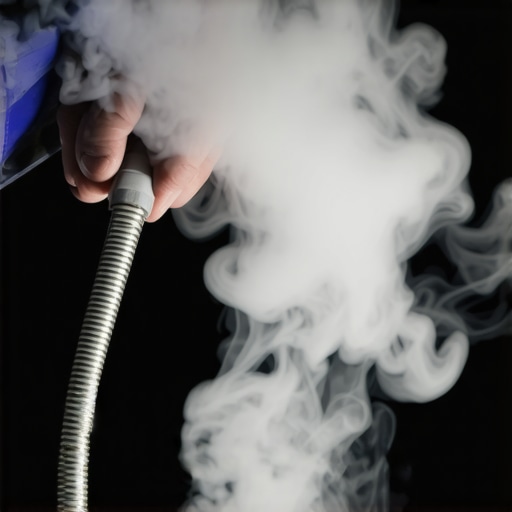
Finding a pinhole leak in a labyrinth of rubber hoses is like looking for a needle in a haystack. Traditional methods like spraying soapy water or flammable brake cleaner are often ineffective for internal leaks or components buried under the intake manifold. This is where the smoke test becomes an invaluable mechanic tip. By introducing thick, pressurized smoke into the intake tract, you can visually track where the ‘ghost’ is escaping. While professional smoke machines cost upwards of $600, resourceful DIYers can construct a functional tester using a paint can, some resistance wire, and baby oil. This allows you to see the exact point of failure, whether it’s a cracked intake boot or a leaking throttle body gasket, ensuring your tune up is based on evidence rather than guesswork.
The Invisible Check Valves Controlling Your Turbo
In a naturally aspirated engine, vacuum is relatively constant under high-load/low-throttle conditions. However, in turbocharged or supercharged applications, the intake manifold switches from vacuum to positive pressure (boost) the moment the turbines spool up. This transition creates a unique challenge: the vacuum-operated components, like the PCV system and the brake booster, must be protected from that positive pressure. If a one-way check valve fails, the turbo can actually ‘blow’ boost pressure back into the crankcase or the brake booster, leading to oil sprays or a sudden loss of braking assist during hard acceleration. Understanding this ‘tug-of-war’ between atmospheric pressure and forced induction is the hallmark of an advanced technician. If you’ve been chasing an erratic boost leak, it’s time to look beyond the intercooler pipes and start testing those small, plastic one-way valves that regulate the engine’s breathing patterns.
Have you ever spent a weekend chasing a ‘ghost’ in your engine only to find it was a simple vacuum line hidden behind the intake? Tell us about your most difficult diagnostic win in the comments below, or check out our guide on how to build your own diagnostic tools without breaking the bank.
Beyond the immediate mechanical failures of hoses, the evaporative emissions (EVAP) system represents a significant but often misunderstood vacuum-dependent circuit. This system is designed to trap fuel vapors within a charcoal canister and then ‘purge’ them into the engine to be burned during normal operation. However, when the purge solenoid sticks open, it creates a massive, unmetered vacuum leak that bypasses the throttle body entirely. This specific failure mode is notorious for causing a ‘skip’ or a stumble immediately after refueling, a symptom that frequently leads misinformed owners to replace fuel pumps or injectors. Expert diagnostics involve monitoring short-term fuel trims while manually commanding the purge valve closed; if the trims stabilize, you have found your ghost.
EVAP Systems Often Hide the Real Culprit
The complexity of modern emissions controls means that a single hairline fracture in a vapor line can trigger a cascade of diagnostic trouble codes. While many drivers simply replace their gas cap and hope for the best, a professional-grade approach involves inspecting the entire length of the vacuum-fed vapor recovery line. Technical documentation from Bosch Mobility Solutions clarifies that the duty cycle of a purge solenoid is critical for maintaining fuel-trim stability across varying engine loads. If the vacuum signal is intermittent due to a degraded line, the ECM cannot accurately predict the influx of fuel vapor, resulting in the erratic idle and rhythmic hesitation that mimics a failing ignition coil.
Could a Cracked Vapor Canister Be the Source of Your Lean Code?
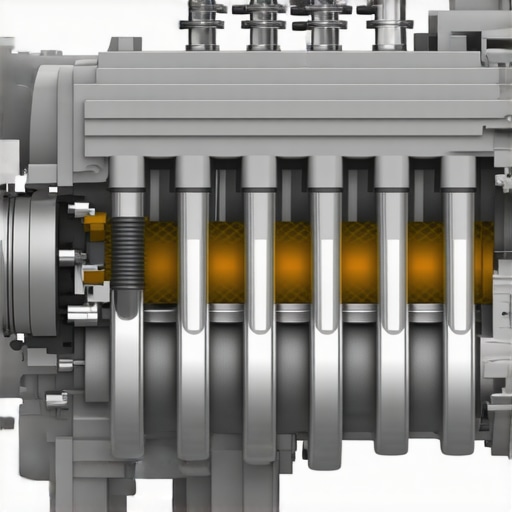
Yes, and it is more common than many DIYers realize. The vapor canister is often tucked away near the fuel tank or behind a wheel well liner, making it susceptible to road debris and latent thermal stress. A small crack in the canister housing acts as a permanent vacuum leak when the purge valve is energized. Because the leak is located so far from the engine, it can produce a ‘lazy’ oxygen sensor response that confuses technicians who are only looking under the hood. When you are performing your next tune up, taking five minutes to inspect the integrity of the rear vacuum lines and the canister housing can prevent a wild goose chase through the engine’s sensor array.
Variable Runners Need Constant Vacuum to Deliver Power
High-performance and modern economy engines often utilize Variable Intake Manifold (VIM) systems to optimize airflow. These systems use vacuum-actuated ‘flaps’ or runners to change the effective length of the intake tract based on RPM. At low speeds, a long runner increases torque; at high speeds, a shorter runner allows for maximum horsepower. When the vacuum actuators or their supply lines fail, the engine may feel sluggish or ‘flat’ in specific power bands. This isn’t a mechanical failure of the engine itself, but a failure of the pneumatic control system. Before assuming your engine is losing compression, verify that the VIM actuators are receiving a steady vacuum signal during throttle transitions.
Protect Your Diagnostic Budget With Empirical Testing
The temptation to simply swap parts is strong when a vehicle is running poorly, but the savvy owner treats auto repair as a process of elimination. By utilizing a simple handheld vacuum pump, you can independently test every actuator, from the EGR valve to the turbo wastegate, without ever turning a key. This empirical data is the only way to bypass the ‘guessing game’ that inflates repair bills. Have you ever replaced an expensive sensor only to find a loose hose was the culprit? Share your most frustrating diagnostic story in the comments below so we can help others avoid the same ‘parts cannon’ trap. For those looking to refine their skills further, exploring auto repair cost-saving tips from industry experts provides the framework needed to stop guessing and start fixing.
The modern internal combustion engine operates as a sophisticated air pump where precision is dictated by the balance of atmospheric pressure and manifold vacuum. When a driver experiences a ‘skipping’ sensation or a rhythmic hesitation during acceleration, the instinctive reaction is often to suspect high-cost components like fuel injectors or ignition coils. However, a seasoned mechanic understands that the most complex drivability issues frequently stem from a breach in the engine’s vacuum integrity. A simple $7 length of rubber tubing is often the only thing standing between a smooth-running vehicle and a frustrating series of expensive, unnecessary auto repair attempts.
Why Vacuum Integrity Matters More Than Your OBD-II Scanner Admits
Modern Engine Control Modules (ECMs) are designed to compensate for minor mechanical wear, but they are notoriously sensitive to ‘unmetered air.’ This occurs when air enters the engine behind the Mass Air Flow (MAF) sensor through a cracked vacuum line. This breach disrupts the stoichiometric ratio, forcing the ECM to adjust fuel trims to prevent a lean condition. According to technical standards established by the Society of Automotive Engineers (SAE), even a microscopic vacuum leak can significantly reduce volumetric efficiency, leading to the ‘skip’ or ‘miss’ that many drivers misinterpret as a failing spark plug. Before committing to a full tune up, performing a thorough visual inspection of the vacuum tree can save hundreds in diagnostic fees.
Does Your Engine Stumble Only at Idle?
One of the most telling signs of a vacuum-related issue is a car that runs poorly at a stoplight but smooths out once the throttle is applied. At idle, the throttle plate is closed, creating high vacuum pressure within the manifold. This pressure differential pulls air through any cracks in the rubber lines with maximum force. As you accelerate, the vacuum drops, and the relative percentage of unmetered air decreases, which is why the skipping often vanishes at highway speeds. If you are experiencing this specific symptom, it is vital to check our mechanic tips for diagnosing common auto problems before replacing your throttle body or oxygen sensors.
Trace the Leak Before Buying High-Dollar Sensors
The ‘parts cannon’ is a common pitfall in the automotive world, where components are replaced based on vague trouble codes rather than empirical testing. A code for a lean bank 1 (P0171) doesn’t always mean the sensor is bad; it often means the sensor is doing its job by reporting the excess air from a $7 vacuum leak. Incorporating a vacuum test into your regular tune up checklist is a professional-grade strategy that ensures long-term reliability. Furthermore, vacuum issues can even affect your brake service requirements, as a leaking brake booster line can lead to a hard pedal and poor stopping performance. For those dealing with erratic engine behavior, investigating the 12-dollar sensor that fixes a rough idle alongside vacuum checks can provide a comprehensive solution to performance degradation. If you’ve noticed your car lurching at red lights, it’s worth checking our guide on how the 5-dollar O-ring stops lunging.
Why Your Car Slams Into Gear Unexpectedly
For vehicles equipped with vacuum-modulated transmissions, the relationship between engine load and gear selection is a delicate dance of pressures. When a vacuum line to the transmission modulator fails, the gearbox loses its primary signal for engine load. This often results in ‘hard’ or late shifts that feel as though the transmission is failing mechanically. In reality, the unit is simply operating under the assumption that the engine is under full-throttle acceleration. Before authorizing a multi-thousand dollar overhaul, it is prudent to investigate the 5-dollar vacuum leak that makes your transmission shift hard. This simple diagnostic step exemplifies the value of auto repair cost-saving tips from industry experts who prioritize logic over parts replacement.
Beyond shifting issues, the vacuum system interacts directly with the Positive Crankcase Ventilation (PCV) network. A functioning PCV system uses engine vacuum to draw harmful blow-by gases out of the crankcase and back into the combustion chamber. When this system fails due to a clogged valve or a collapsed hose, the internal pressure has nowhere to go. This buildup can lead to devastating consequences, including catastrophic oil leaks. Expert technicians often find that how a clogged PCV valve can blow out your rear main seal is a lesson learned too late by many DIYers. Maintaining this system is a low-cost insurance policy against major engine repairs.
How a Clogged PCV Valve Destroys Your Engine Seals
The PCV system is essentially a ‘controlled’ vacuum leak that the engine control module (ECM) expects and accounts for. If the valve sticks open, the engine receives too much air at idle, causing the rough running mentioned earlier. Conversely, if it sticks shut, the engine begins to ‘consume’ its own oil through gaskets and seals not designed to withstand positive internal pressure. According to technical documentation from the National Institute for Automotive Service Excellence (ASE), secondary air systems and vacuum-operated actuators remain among the most overlooked failure points in modern emissions diagnostics. Proactive owners should consider the 14-dollar PCV valve fix that stops engine oil consumption as part of their annual maintenance routine to ensure the long-term health of their gaskets.
Is a Hidden Vacuum Leak Ruining Your Fuel Economy?
While a major leak causes a noticeable misfire, a pinhole leak can silently degrade your gas mileage without ever triggering a flashing dashboard light. The ECM will compensate for the extra air by adding more fuel, which keeps the engine running but burns through your tank significantly faster. This subtle efficiency loss is often confused with normal engine aging or poor fuel quality. If you find yourself visiting the pump more often, it may be time to evaluate the 15-dollar air filter mistake that costs you 3 MPG alongside a vacuum integrity check. Have you ever replaced a major part only to find a loose hose was the culprit? Share your most frustrating diagnostic story in the comments below so we can help others avoid the same ‘parts cannon’ trap. For those looking to refine their skills further, exploring auto repair cost-saving tips from industry experts provides the framework needed to stop guessing and start fixing.
Your AC Only Blows Through the Defrost Vents—Here is Why
While most enthusiasts focus on how vacuum leaks affect the combustion cycle, a significant number of comfort and utility failures occur because of the ‘hidden’ vacuum network behind the dashboard. Many older vehicles and heavy-duty trucks utilize vacuum-actuated motors to move the blend doors within the HVAC assembly. When a vacuum supply line perishes due to heat soak or rodent damage, the system is designed to fail-safe to the defrost position for safety. If you find that your air conditioning refuses to blow through the face vents regardless of the dial position, you aren’t looking at a broken blower motor or a refrigerant leak. Instead, the culprit is often a tiny plastic line near the firewall. These small failures can make a cross-country trip miserable, yet they are among the easiest auto repair tasks to perform once you identify the source of the hiss.
Can a Vacuum Leak Actually Compromise Your Stopping Distance?
The short answer is a definitive yes. Most modern vehicles rely on a vacuum brake booster to multiply the force your foot applies to the master cylinder. This booster is essentially a large diaphragm that uses engine vacuum to create a pressure differential. If the check valve fails or the supply hose develops a crack, the booster cannot maintain the necessary ‘reserve’ vacuum. This results in a brake pedal that feels rock-hard and requires massive effort to stop the vehicle. According to research documented by the American Society of Mechanical Engineers (ASME), the failure of pneumatic assist systems directly correlates with increased driver fatigue and significantly longer reaction-to-stop times in emergency maneuvers. Before you assume you need a new master cylinder or a full brake service, verify the vacuum signal at the booster’s check valve.
Master the Smoke Test Without Professional Gear
Finding a pinhole leak in a labyrinth of rubber hoses is like looking for a needle in a haystack. Traditional methods like spraying soapy water or flammable brake cleaner are often ineffective for internal leaks or components buried under the intake manifold. This is where the smoke test becomes an invaluable mechanic tip. By introducing thick, pressurized smoke into the intake tract, you can visually track where the ‘ghost’ is escaping. While professional smoke machines cost upwards of $600, resourceful DIYers can construct a functional tester using a paint can, some resistance wire, and baby oil. This allows you to see the exact point of failure, whether it’s a cracked intake boot or a leaking throttle body gasket, ensuring your tune up is based on evidence rather than guesswork.
The Invisible Check Valves Controlling Your Turbo
In a naturally aspirated engine, vacuum is relatively constant under high-load/low-throttle conditions. However, in turbocharged or supercharged applications, the intake manifold switches from vacuum to positive pressure (boost) the moment the turbines spool up. This transition creates a unique challenge: the vacuum-operated components, like the PCV system and the brake booster, must be protected from that positive pressure. If a one-way check valve fails, the turbo can actually ‘blow’ boost pressure back into the crankcase or the brake booster, leading to oil sprays or a sudden loss of braking assist during hard acceleration. Understanding this ‘tug-of-war’ between atmospheric pressure and forced induction is the hallmark of an advanced technician. If you’ve been chasing an erratic boost leak, it’s time to look beyond the intercooler pipes and start testing those small, plastic one-way valves that regulate the engine’s breathing patterns.
Have you ever spent a weekend chasing a ‘ghost’ in your engine only to find it was a simple vacuum line hidden behind the intake? Tell us about your most difficult diagnostic win in the comments below, or check out our guide on how to build your own diagnostic tools without breaking the bank.
Beyond the immediate mechanical failures of hoses, the evaporative emissions (EVAP) system represents a significant but often misunderstood vacuum-dependent circuit. This system is designed to trap fuel vapors within a charcoal canister and then ‘purge’ them into the engine to be burned during normal operation. However, when the purge solenoid sticks open, it creates a massive, unmetered vacuum leak that bypasses the throttle body entirely. This specific failure mode is notorious for causing a ‘skip’ or a stumble immediately after refueling, a symptom that frequently leads misinformed owners to replace fuel pumps or injectors. Expert diagnostics involve monitoring short-term fuel trims while manually commanding the purge valve closed; if the trims stabilize, you have found your ghost.
EVAP Systems Often Hide the Real Culprit
The complexity of modern emissions controls means that a single hairline fracture in a vapor line can trigger a cascade of diagnostic trouble codes. While many drivers simply replace their gas cap and hope for the best, a professional-grade approach involves inspecting the entire length of the vacuum-fed vapor recovery line. Technical documentation from Bosch Mobility Solutions clarifies that the duty cycle of a purge solenoid is critical for maintaining fuel-trim stability across varying engine loads. If the vacuum signal is intermittent due to a degraded line, the ECM cannot accurately predict the influx of fuel vapor, resulting in the erratic idle and rhythmic hesitation that mimics a failing ignition coil.
Could a Cracked Vapor Canister Be the Source of Your Lean Code?
Yes, and it is more common than many DIYers realize. The vapor canister is often tucked away near the fuel tank or behind a wheel well liner, making it susceptible to road debris and latent thermal stress. A small crack in the canister housing acts as a permanent vacuum leak when the purge valve is energized. Because the leak is located so far from the engine, it can produce a ‘lazy’ oxygen sensor response that confuses technicians who are only looking under the hood. When you are performing your next tune up, taking five minutes to inspect the integrity of the rear vacuum lines and the canister housing can prevent a wild goose chase through the engine’s sensor array.
Variable Runners Need Constant Vacuum to Deliver Power
High-performance and modern economy engines often utilize Variable Intake Manifold (VIM) systems to optimize airflow. These systems use vacuum-actuated ‘flaps’ or runners to change the effective length of the intake tract based on RPM. At low speeds, a long runner increases torque; at high speeds, a shorter runner allows for maximum horsepower. When the vacuum actuators or their supply lines fail, the engine may feel sluggish or ‘flat’ in specific power bands. This isn’t a mechanical failure of the engine itself, but a failure of the pneumatic control system. Before assuming your engine is losing compression, verify that the VIM actuators are receiving a steady vacuum signal during throttle transitions.
Protect Your Diagnostic Budget With Empirical Testing
The temptation to simply swap parts is strong when a vehicle is running poorly, but the savvy owner treats auto repair as a process of elimination. By utilizing a simple handheld vacuum pump, you can independently test every actuator, from the EGR valve to the turbo wastegate, without ever turning a key. This empirical data is the only way to bypass the ‘guessing game’ that inflates repair bills. Have you ever replaced an expensive sensor only to find a loose hose was the culprit? Share your most frustrating diagnostic story in the comments below so we can help others avoid the same ‘parts cannon’ trap. For those looking to refine their skills further, exploring auto repair cost-saving tips from industry experts provides the framework needed to stop guessing and start fixing.
Expert Insights and Advanced Considerations
Heat Soak is the Silent Killer of Rubber Lines
Every thermal cycle of your engine gradually bakes the plasticizers out of your vacuum hoses. Over a decade, a flexible line becomes as brittle as glass, leading to hairline fractures that only open up when the engine reaches full operating temperature. Using the 5-dollar soapy water trick for finding intake leaks is a great starting point, but remember that heat-induced leaks may require a professional smoke machine for definitive proof during a comprehensive tune up.
Don’t Let Your Fuel Trims Lie to You
A seasoned mechanic looks at long-term fuel trim (LTFT) values before ever pulling a spark plug. If your LTFT is pushing +15% at idle but drops to near zero at 2500 RPM, you aren’t looking at a bad fuel pump; you’ve found a classic vacuum leak. The engine simply doesn’t need that extra compensation once the throttle plate opens. This data-driven approach is essential for modern tune-up strategies that boost car performance.
Verify the Booster Check Valve Before the Master Cylinder
A hard brake pedal is terrifying, but it rarely signifies a total mechanical collapse of the hydraulics. By pulling the vacuum check valve and listening for the ‘whoosh’ of stored air, you can confirm if your booster is actually holding pressure. This simple check is a cornerstone of effective brake service strategies that save you money and prevent unnecessary component swaps.
Curated Expert Resources
SAE International Technical Papers
For those who want to understand the fluid dynamics of intake manifolds and the math behind volumetric efficiency, the Society of Automotive Engineers provides peer-reviewed data that sets the standard for the entire auto repair industry.
ASE Advanced Engine Performance Manuals
The L1 certification series is the gold standard for high-level diagnostics. These resources move beyond basic maintenance and into the complex interplay of sensor feedback loops and pneumatic actuators.
Motor Age Technical Deep-Dives
Written by and for professional technicians, this resource provides real-world case studies on ‘ghost’ leaks and elusive drivability issues that often baffle general shops.
Final Expert Perspective
Mastering engine vacuum is not just about fixing a rough idle; it is about respecting the precision required for modern internal combustion. Whether you are performing a routine tune up or deep in the weeds of a complex auto repair, identifying the source of unmetered air is the most cost-effective way to restore performance. By prioritizing logic and empirical testing over the ‘parts cannon,’ you safeguard both your vehicle’s longevity and your diagnostic budget. We invite our fellow automotive enthusiasts to apply these auto repair cost-saving tips from industry experts and join the conversation—what was the most elusive vacuum leak you ever tracked down? Share your professional insights in the comments below.