
Beyond the Cabin Filter: The Evaporator’s Microbial Ecosystem
The pungent aroma of dirty socks emanating from your vents is rarely a matter of simple hygiene; it is a biological reality of the modern automotive HVAC system. When you operate your air conditioning, the evaporator core becomes ice-cold to strip heat and moisture from the cabin air. However, once the engine is shut off, the dark, damp environment of the evaporator housing becomes a perfect incubator for mold and bacteria. An experienced mechanic knows that this ‘Dirty Sock Syndrome’ is often exacerbated by a clogged condensate drain or a saturated filter that has reached its moisture-holding capacity.
Does a lingering HVAC odor signal a deeper mechanical failure?
While the smell itself is a nuisance, it often points to a lack of maintenance that can lead to systemic issues. If moisture cannot escape through the drain tube, it can lead to corrosion of the evaporator core or electrical shorts in the blower motor resistor. During a comprehensive tune up, technicians should verify that the HVAC drainage system is free of debris. Ignoring these signs doesn’t just impact your comfort; it can lead to an expensive auto repair bill if the evaporator begins to leak refrigerant due to microbial-induced corrosion.
Why Professional Decontamination Outperforms Retail Solvents
Many drivers attempt to solve the problem with over-the-counter aerosol sprays. However, these often only provide a temporary mask. True remediation requires a foaming cleaner that can physically coat the evaporator fins and neutralize the fungal colonies at the source. This level of precision is similar to how a technician approaches a high-end brake service—you cannot simply spray the surface; you must address the underlying friction or contamination points. According to the Environmental Protection Agency (EPA), biological contaminants like mold and mildew thrive in moist environments, significantly impacting air quality within enclosed spaces like vehicle cabins.
Strategic Maintenance to Prevent Recurrence
To keep the air fresh, professionals recommend a ‘dry-out’ procedure: turning off the AC but leaving the fan on for the last two minutes of your drive. This simple step clears the moisture from the evaporator. Additionally, utilizing the 12 dollar cabin filter hack can drastically reduce the organic material that reaches the core in the first place. For those looking to maintain peak vehicle health beyond just the HVAC system, we invite you to contribute your professional insights or explore our deep-dives into mechanical longevity. Regular inspections of all systems, from cooling to drivetrain, ensure that small odors don’t become massive headaches.
How Your AC Stress Directly Impacts Fuel Economy and Engine Longevity
The climate control system is physically and thermally linked to your engine’s cooling circuit. Most drivers do not realize the AC condenser is bolted directly in front of the radiator. If the condenser fins are packed with road grime, bugs, or salt, the heat exchange process suffers, forcing your cooling fans to run at high speed indefinitely. This added electrical load and heat soak can lead to a car that stumbles when the AC is turned on, as the alternator and idle control valve struggle to compensate for the sudden torque demand. To prevent this, learning how to clean your radiator fins without damaging the core is a prerequisite for any vehicle owner aiming for thermal efficiency.
Can a Malfunctioning Blend Door Actuator Fool Even Seasoned Technicians?
One of the most frequent misdiagnoses in climate control involves the blend door actuator. This small electric motor manages the mix of hot and cold air inside the dash housing. When it fails, it often produces a rhythmic clicking sound or results in erratic temperature swings that mimic a failing compressor or low refrigerant. Inexperienced owners often rush to expensive repairs, assuming a leak is the culprit. However, a master mechanic will first perform a calibration test on the actuators. This methodical approach mirrors the diagnostic precision required for complex engine systems, such as identifying the 7 dollar vacuum hose leak that often mimics major transmission or internal engine failure.

Stop Ignoring the Economic Cost of a Clogged HVAC System
A dirty cabin filter or a mold-choked evaporator isn’t just an olfactory nuisance; it is a direct drag on your wallet. When airflow is restricted, the compressor must run longer cycles to reach the desired cabin temperature. According to research published by **SAE International**, an inefficient HVAC system can increase fuel consumption by significant margins due to the parasitic drag of the compressor and the increased load on the charging system. If you notice a sudden drop in power during acceleration, it might not be a failing fuel pump, but rather the 15 dollar sensor that fixes your rough idle struggling to keep up with the extra mechanical stress imposed by a struggling AC unit.
Align Cabin Maintenance with Critical Chassis Protection
It is easy to categorize cabin air quality as secondary to ‘real’ mechanical work like brake maintenance, but these systems are conceptually linked. Both require proactive debris removal to prevent expensive component failure. For example, the same organic debris that breeds mold in your HVAC can migrate into the cowl drains, eventually overflowing into the electrical fuse box or the ignition system. If you’ve ever wondered why your vehicle feels sluggish after a heavy rain, it’s worth investigating why your car cranks but won’t start when it’s raining, as water intrusion is often the common denominator for both HVAC and ignition issues. We invite you to share your own diagnostic triumphs in the comments—have you ever solved a major performance issue by simply swapping a filter? For more expert insights, continue exploring our essential guide to auto repair to keep your vehicle in peak condition.
Why Topping Off Your AC Might Kill Your Compressor
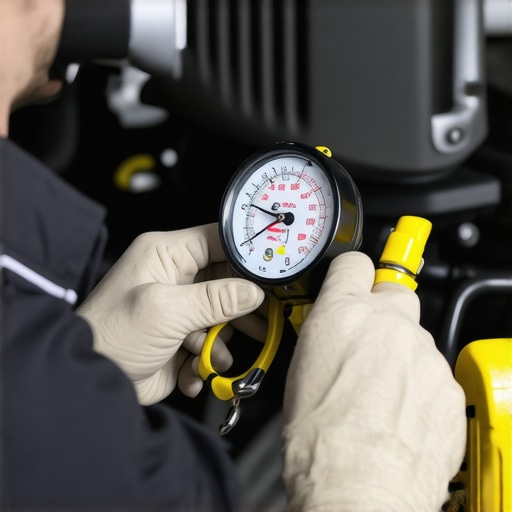
The rise of DIY refrigerant kits has led to a surge in a specific type of failure: the overcharged system. Many drivers assume that if a little bit of ‘freon’ is good, more must be better. However, modern automotive AC systems are precision-engineered to operate within a very narrow weight range, often measured to the nearest gram. When you introduce too much refrigerant, you risk liquid slugging—a condition where liquid refrigerant enters the compressor’s suction port. Because liquids cannot be compressed, this results in immediate and often violent mechanical failure of the compressor internals. A professional mechanic uses a digital scale and a recovery machine to ensure the charge is exactly to spec, a level of accuracy those cheap ‘blue-can’ gauges simply cannot provide.
Will a faulty expansion valve cause your engine to run hot?
While the expansion valve is part of the refrigeration loop and not the cooling system, its failure can create a dangerous ripple effect. If the expansion valve sticks closed, the high-side pressure in the AC system skyrockets. This causes the condenser to generate immense amounts of heat directly in front of your radiator. Consequently, the radiator cannot shed engine heat effectively, leading to elevated coolant temperatures and potential overheating during stop-and-go traffic. This is a classic example of why a comprehensive tune up must include a check of the AC high-side pressures; what looks like a radiator issue might actually be a clogged thermal expansion valve (TXV).
Save Your Compressor Clutch Before It Seizes and Snaps a Belt
One of the most overlooked components in the engine bay is the AC compressor clutch. This electromagnetic device is responsible for engaging and disengaging the compressor based on cabin demand. Over time, the air gap between the clutch plate and the pulley can widen due to heat and friction. If the gap becomes too large, the magnet can’t hold the plate firmly, leading to slippage, extreme heat, and that tell-tale ‘burnt rubber’ smell. In severe cases, the heat can melt the front seal of the compressor, leading to a total loss of refrigerant. Proactive technicians will often shim the clutch to the correct specification, a minor adjustment that avoids a major auto repair involving the entire accessory drive system.
The Critical Role of Refrigerant Oil Balance
Refrigerant doesn’t travel alone; it carries PAG (Polyalkylene Glycol) oil throughout the system to lubricate the compressor and seals. According to the **Mobile Air Climate Systems Association (MACS)**, modern variable-displacement compressors are incredibly sensitive to oil balance; even an extra ounce of oil can reduce cooling efficiency by up to 15% by coating the internal walls of the evaporator. Conversely, too little oil leads to ‘black death’—a catastrophic failure where the compressor disintegrates and sends metallic debris through the entire system. This is why if you ever have a leak, you cannot just fix the hose; you must calculate how much oil was lost to prevent a secondary failure. If you’ve ever dealt with a system that just won’t stay cold, we want to hear about it—share your diagnostic journey in the comments or check out our essential guide to auto repair.
Keep Your Engine Running Smoothly When the AC Slams On
The moment you hit the ‘Max AC’ button, your engine’s ECU must instantly adjust the idle air control and ignition timing to compensate for the sudden 5-10 horsepower draw of the compressor. On older or poorly maintained vehicles, this load can cause a significant dip in RPM or even a stall. This is often linked to a dirty throttle body or a failing 15 dollar sensor that fixes your rough idle, which fails to communicate the increased load to the computer. Ensuring these components are clean is just as important as the AC components themselves, especially when trying to avoid a car that stumbles when the AC is turned on. The synergy between the electrical system and the mechanical load of the AC is a delicate balance that requires a steady voltage from the alternator and a healthy battery.
The Hidden Risks of Saturated Desiccant Bags
Deep inside the climate control loop lies the receiver-drier or accumulator, containing a desiccant bag designed to pull every molecule of water from the refrigerant. This chemical sponge is not bottomless. Once the desiccant reaches saturation or physically ruptures due to age, the internal environment of your AC system turns acidic. This moisture reacts with refrigerant and oil to form hydrofluoric acid, which eats away at the aluminum of the condenser and evaporator from the inside out. This isn’t a problem a standard tune up usually catches unless the technician is looking for the subtle pressure fluctuations that signal a moisture-heavy system. According to technical documentation from the Ray W. Herrick Laboratories at Purdue University, even microscopic amounts of water contamination can trigger catastrophic internal corrosion, leading to the dreaded ‘black death’ that destroys compressors and clogs the entire circuit with metallic debris.
Stop the Cycle of High-Pressure Engine Overheating
If your radiator fans are screaming at full speed even on a mild day, your AC system might be the primary culprit rather than your engine cooling. The high-side pressure switch acts as a sentinel; when pressures spike due to a restricted expansion valve or a debris-clogged condenser, it commands the cooling fans to maximum duty to prevent a blowout. A seasoned mechanic will recognize that a failing fan motor is often the victim of an AC system running at dangerously high head pressures. This unnecessary thermal load forces the engine to run hotter than designed, potentially leading to warped cylinder heads or degraded oil viscosity if left unaddressed during a routine auto repair visit.
Can a blocked orifice tube cause your engine to lose power?
Yes, and the mechanism is purely mechanical. When the orifice tube or expansion valve becomes restricted, the compressor must work significantly harder against the rising head pressure. This creates a parasitic load that can sap several horsepower directly from the crankshaft. In many cases, a driver might mistake this for an engine misfire or a need for a brake service if the car feels like it is dragging or stumbling while decelerating. The extra torque required to spin a struggling compressor can even cause the ECU to pull ignition timing, further reducing your throttle response and fuel economy.
Look Beyond the Gauges with Thermal Imaging
Traditional manifold gauges tell you the pressure, but they don’t tell you where the heat is actually trapped. Modern auto repair now frequently involves using infrared thermography to see the temperature drop across the expansion valve or identify cold spots in the condenser. A uniform temperature across the condenser face indicates healthy airflow and heat rejection, while irregular patterns suggest internal blockages that no amount of fresh refrigerant can fix. Using these high-tech tools allows for surgical precision, ensuring you only replace the components that are actually failing rather than guessing with expensive parts.

Protect Your Investment through Total System Awareness
We have analyzed the chemistry and the physics of your HVAC system; now it is time to apply this expertise to your own maintenance routine. If you have ever encountered a phantom overheating issue that vanished the moment you turned the AC off, we want to hear about it. Your experiences help build a better knowledge base for the entire automotive community. We invite you to share your diagnostic triumphs in the comments or dig deeper into our technical archives to master the art of preventive car care. Maintaining the synergy between your climate control and engine cooling is the most effective way to ensure your vehicle remains reliable for the long haul.
Expert Insights & Advanced Considerations
Winter Operations Save Your Summer Seals
One of the most frequent causes of spring-time refrigerant leaks is winter neglect. Even when the heater is blasting, the system should be engaged periodically to circulate PAG oil. This lubrication prevents the compressor shaft seals from drying out and shrinking, which is a primary entry point for moisture and a common reason for a mid-summer auto repair visit. Most modern defrost modes handle this automatically, but manually cycling the AC once a week ensures total system integrity.
Stop Trusting the Dashboard Temperature Gauge
The temperature gauge on your instrument cluster is often heavily buffered by the ECU to prevent driver panic over normal thermal fluctuations. By the time it moves toward the red, the engine is already overheating. For a true diagnostic picture, use a real-time OBDII monitor to track the relationship between AC high-side pressure and actual coolant temperature. A seasoned mechanic knows that a 10-degree climb when the AC is engaged is the first sign of a restricted condenser or a tired water pump.
The Parasitic Load of Humidity
Cooling the air is easy; removing latent heat (moisture) is where the real mechanical work happens. In high-humidity environments, your compressor works up to 30% harder to condense water vapor into liquid. This increased load is why a comprehensive tune up must include an inspection of the evaporator drain; if water cannot exit the housing, the system stays under high pressure, kills fuel economy, and puts unnecessary strain on the engine’s accessory drive.
Curated Expert Resources
SAE International (Society of Automotive Engineers): This is the gold standard for technical papers regarding R-134a and R-1234yf system efficiencies. It is the best resource for those wanting to understand the physics of heat exchange at a molecular level.
MACS (Mobile Air Climate Systems Association): MACS provides the specific diagnostic flowcharts used by master technicians to troubleshoot complex ‘no-cool’ scenarios. Their field reports on compressor failure analysis are invaluable for preventing repeat repairs.
ASE (Automotive Service Excellence) Certification Tracks: For those looking to move beyond DIY and into professional-grade diagnostics, the ASE A7 heating and air conditioning study guides offer a rigorous deep-dive into electrical control logic and refrigerant recovery safety.
Final Expert Perspective
Mastering your vehicle’s climate control is about more than just staying comfortable; it is a fundamental pillar of long-term auto repair and engine preservation. By viewing the HVAC system as an extension of the engine cooling circuit, you can identify failures before they lead to roadside breakdowns or destroyed compressors. We invite you to contribute your own diagnostic success stories in the comments below or reach out with your most challenging HVAC puzzles. For those ready to take their vehicle maintenance to the next level, continue exploring our technical archives for the professional insights that keep high-mileage vehicles running like new.