Precision Trumps Appearance in Suspension Health
In the specialized world of auto repair, the distinction between a component being merely dirty and one that is functionally compromised is a hallmark of a master mechanic. Suspensions are frequently subjected to a barrage of road grime, brake dust, and lubricants, which can often camouflage their true condition. While a standard tune up or brake service might focus on immediate consumables, a deep-dive suspension analysis requires identifying mechanical deflection that exceeds the manufacturer’s tolerance. Relying solely on visual aesthetics is a common pitfall; instead, experts prioritize quantitative data—such as measured play in a ball joint or specific frequency responses in a shock absorber—to validate a necessary repair.
Test the Play Instead of Judging the Grime
One of the most definitive signs that a suspension component has failed is the presence of excessive lateral or vertical movement within a joint. When a technician utilizes mechanic tips for diagnosing common auto problems, they aren’t just looking at the grease; they are checking for structural integrity. A ball joint or tie rod end may look filthy due to a torn boot, but if the internal sphere remains within its seat without oscillation, it may not require immediate replacement. However, once that joint exhibits physical movement under load, the geometry of your steering is compromised. This is often the root cause of why your car wanders across the lane at high speeds, a symptom that compromises safety far more than any layer of mud ever could.
Does Your Mechanic Use a Dial Indicator to Prove Part Failure?
Professional accountability in auto repair often involves tools that provide empirical evidence of wear. According to the National Institute for Automotive Service Excellence (ASE), precise measurements are critical for verifying suspension health. If a shop recommends a replacement, ask if they have measured the axial play. A technician who can show you the specific thousandths of an inch of slack is providing the transparency necessary for high-trust service. This level of detail separates a quality repair from a simple parts-changing operation.
Identify the Point Where Seeping Becomes Failure
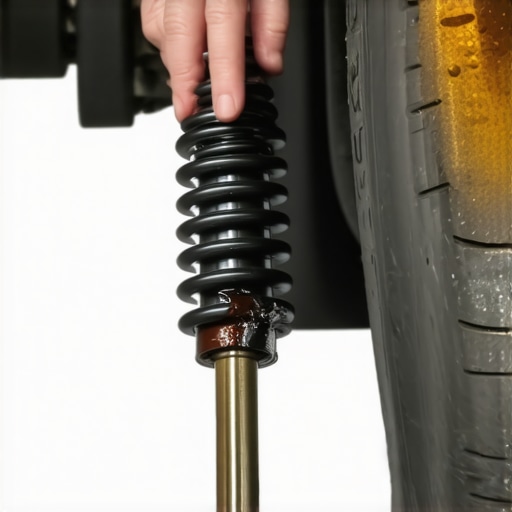
Struts and shocks are frequently misdiagnosed during a routine tune up. A light film of oil, known as seeping, is often normal as part of the component’s lubrication cycle. However, a blown strut is characterized by active dripping or a complete loss of damping force. To avoid unnecessary costs, it is essential to know how to tell if your struts are actually blown versus just showing signs of age. If the vehicle exhibits a rebound after a bump or shows cupping wear on the tires, the hydraulic integrity has failed. Before approving work, consider these essential questions to ask your mechanic to ensure the diagnosis is rooted in performance data rather than a sales quota. [IMAGE_PLACEHOLDER]
Look for Micro-Cracks in Your Control Arm Bushings
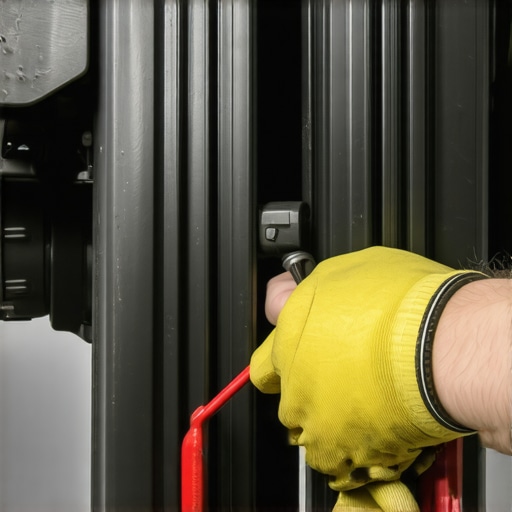
Rubber bushings act as the unsung joints of your vehicle’s skeletal system, absorbing road vibrations and maintaining the precise angles of your control arms. Unlike a metal ball joint that might clunk loudly, a bushing often fails through dry rot and a phenomenon known as ‘memory set,’ where the rubber loses its elasticity and no longer returns to its neutral position. When these pivot points degrade, you will notice a subtle drift or a lack of crispness in steering response during a tune up. A master mechanic knows that a comprehensive inspection must include a pry-bar test on the control arm bushings to check for excessive deflection that visual inspection alone might miss. If the rubber is torn through, it allows the control arm to shift under load, which is a major contributor to steering instability.
Let the Rubber Speak for the Metal
The road surface eventually etches the failures of your suspension into the tread of your tires with undeniable accuracy. For instance, 3 tire wear patterns that prove your last alignment was lazy can often be traced back to worn-out bushings or sagging springs that alter the camber. If you notice scalloped dips around the circumference of the tire, you are likely dealing with ‘cupping.’ This occurs because the wheel is literally bouncing down the road, and one of the most effective ways to stop your tires from cupping is by replacing worn dampers before they destroy your expensive new rubber. Ignoring these visual cues is the primary reason why your new tires are wearing out in months instead of years, turning a simple maintenance oversight into a recurring financial burden.
Can Your Suspension Actually Sabotage Your Brake Performance?
Most drivers view the suspension and the braking system as two independent entities, but in the world of high-stakes auto repair, they are deeply symbiotic. During hard deceleration, the vehicle’s weight shifts forward aggressively. If your front struts are worn, they cannot effectively resist this ‘nose-dive,’ leading to an uneven distribution of braking force and potentially increasing your stopping distance by up to 20 percent. This is why regular brake service is key to car safety and longevity, as even the highest-quality pads cannot compensate for a vehicle that cannot keep its tires planted firmly on the asphalt. Technical data from Car and Driver confirms that maintaining shock absorber integrity is essential for keeping the tire contact patch consistent during emergency maneuvers, ensuring that your brake service investment actually delivers the safety you expect.
Demand a Post-Repair Alignment Verification
When you finish a major suspension overhaul, the job is not truly complete until the geometry is reset to factory specifications. A common frustration among car owners is why your steering wheel is off-center after an alignment, which usually points to a technician failing to lock the steering wheel at dead center before adjusting the tie rods. Furthermore, if you experience a situation why your steering wheel shakes when you brake at high speeds, it might not be a warped rotor; it could be worn-out tension struts or bushings that allow the wheels to oscillate under the high stress of braking torque. Have you ever felt a steering shimmy that vanished only after a suspension repair rather than a brake job? Share your diagnostic stories or questions in the comments below, as your experience helps other drivers identify these tricky symptoms before they lead to a breakdown.
Why Your Computer Now Decides How Your Car Rides
Beyond the mechanical alignment of the tie rods, the modern mechanic must also contend with the ‘ghost in the machine’—the electronic stability and damping systems. Modern vehicles have transitioned from purely mechanical setups to sophisticated electronic-controlled systems, often referred to as active or adaptive suspension. Instead of relying solely on fixed valving, these systems use sensors to monitor body roll, throttle position, and road conditions in real-time, adjusting the damping force in milliseconds. When troubleshooting these systems, a standard brake service or visual auto repair check isn’t enough; a technician must interface with the vehicle’s ECU to check for stored fault codes. A failure in a ride-height sensor can trick the computer into over-stiffening a single corner, leading to a jarring ride that feels like a blown strut even when the hardware is physically intact.
Can You Swap Active Struts for Traditional Coilovers?
This is a frequent dilemma for owners of aging luxury or performance vehicles facing a $4,000 repair bill for electronic dampers. While physically possible, removing active components often requires ‘bypass’ modules to prevent the vehicle from entering a restricted ‘limp mode’ or disabling stability control. Beyond the software hurdles, switching to passive shocks fundamentally alters the car’s handling dynamics, as the chassis was tuned with the expectation of variable damping. According to technical standards from SAE International, the integration of electronic stability systems and suspension damping is so tight that unapproved modifications can significantly delay the onset of ABS or traction control during a crisis. Before making the switch, consider if the cost savings are worth the potential loss in active safety features.

The Hidden Penalty of Heavy Wheels
In the quest for a smoother ride, the ratio of sprung to unsprung weight is the golden metric every elite mechanic understands. Unsprung weight includes everything not supported by the springs—tires, wheels, brakes, and a portion of the suspension arms. When you install heavier-than-stock wheels or oversized brake rotors, you increase the inertia that the shock absorbers must control. A heavy wheel is harder to push down and harder to pull back up, meaning it won’t follow the contours of the road as effectively, leading to reduced grip. This is why a precision tune up for a performance vehicle often involves choosing lightweight components to ensure the suspension can react fast enough to keep the tire contact patch consistent. If your car feels ‘heavy’ or ‘clunky’ over small ripples, your suspension might be struggling with excessive unsprung mass rather than a component failure.
Kill the Clunk and Restore Cornering Flatness
One of the most frequently overlooked components during a brake service or general inspection is the stabilizer bar, also known as the anti-roll bar. Specifically, the end links—small rods with ball joints at each end—are the most common source of mysterious ‘popping’ or ‘clunking’ noises when turning into a driveway. These links transfer the force of the vehicle’s body roll into the stabilizer bar to keep the car level. Because they are under constant tension and exposed to the elements, the tiny internal boots often tear, allowing moisture to corrode the joint. A failure here won’t necessarily make the car undriveable, but it will significantly degrade cornering stability and contribute to a loose feeling in the steering rack. High-performance replacements often feature ‘greasable’ fittings, allowing a dedicated owner to extend the part’s life indefinitely with a simple grease gun during their next oil change.
Detect Silent Failures with Electronic Ears
While the pry-bar is a staple of the trade, advanced auto repair diagnostics now leverage ‘Chassis Ears’—a system of wireless microphones clipped to various suspension points. By driving the vehicle while listening to specific frequencies, a technician can isolate a failing wheel bearing from a noisy differential or a clicking CV joint. This empirical approach eliminates the ‘parts cannon’ method where components are replaced based on guesswork. If your shop uses these advanced diagnostic tools, you can be much more confident that the repair will actually solve the noise on the first attempt. If you have ever been told ‘it’s just a normal sound for this car,’ it might be time to seek an expert who uses digital acoustics to verify component health.
Stop Chasing Vibrations and Start Measuring Runout
When a standard brake service fails to eliminate a steering wheel shimmy, many owners assume they have ‘warped’ rotors. However, a seasoned mechanic knows that the culprit is often found in the interface between the hub and the suspension upright. Measuring lateral runout with a dial indicator is the only way to ensure that the hub itself is true. Even a deviation of a few thousandths of an inch at the hub is magnified at the edge of the rotor, creating a pulsating sensation that mimics a brake failure. This level of auto repair precision is what distinguishes a specialized tune up from a cursory inspection. If your technician isn’t checking the mounting surface for corrosion or micro-deformations, they are likely treating the symptom rather than the disease.
Why Your Modern ADAS Calibration Depends on Your Struts
Modern vehicles are increasingly reliant on Advanced Driver Assistance Systems (ADAS), such as lane-keeping assist and adaptive cruise control. These systems use cameras and radar that assume the vehicle’s chassis is at a specific, level height. If your rear springs have sagged or your struts are failing, the resulting ‘pitch’ of the vehicle creates a parallax error for the forward-facing sensors. A mechanic who ignores suspension health during a tune up is inadvertently compromising the safety software of the car. According to ZF Aftermarket technical documentation, even a minor change in ride height can throw off the sensor’s field of vision by several feet at highway speeds. Ensuring your dampers are within OEM specifications is no longer just about comfort; it is a prerequisite for the electronic safety net to function correctly. 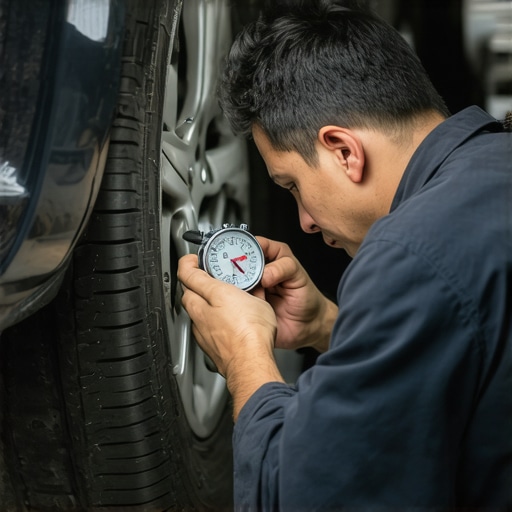
Is Your Suspension Geometry Changing While You Drive?
Static alignment on a rack is a snapshot in time, but dynamic geometry—how the wheels move through the suspension’s arc—is where true handling is won or lost. This phenomenon, often called ‘bump steer,’ occurs when a steering rack or tie rod is not perfectly synchronized with the control arm’s movement. In the realm of high-end auto repair, detecting these inconsistencies requires a deep understanding of kinematics. If you have replaced components and the car still ‘darts’ over expansion joints, the mechanic may need to shim the steering rack or check for bent knuckles that have subtly altered the steering geometry. This is the ‘phantom’ problem that a generic brake service shop will almost always miss because it requires an analytical approach to physics rather than a simple part swap.
Never Tighten Control Arm Bolts While the Wheels Are Hanging
One of the most common mistakes made during a suspension tune up occurs before the car even leaves the lift. Rubber bushings are designed to have a specific ‘neutral’ point when the car is at its normal curb weight. If a technician tightens the mounting bolts while the suspension is in full droop—with the wheels hanging in the air—the bushings become ‘pre-loaded’ once the car is lowered. This constant torsional stress leads to premature tearing of the rubber and a harsh ride that no new set of tires can fix. A master mechanic always performs the final torque-down while the vehicle is on a drive-on lift or supported by its own weight. Has your lane-keep assist ever felt ‘twitchy’ or has your car felt stiff after a repair? It might be a sign of pre-loaded bushings. Share your experiences with recent repairs in the comments below, as we dive deeper into the nuances of professional-grade chassis maintenance.
Expert Insights and Advanced Considerations
Heat Cycles Degrade Rubber Faster Than Miles
Most drivers focus strictly on mileage, but in high-stakes auto repair, the thermal environment of the suspension is just as critical. Rubber bushings located near exhaust components or in high-ambient heat climates undergo accelerated vulcanization, becoming brittle and cracking long before their expected service life. A proactive mechanic looks for glazing on the bushing surface as a sign that the material has been heat-cycled out of its effective range. If you notice a stiff ride, it might be worth investigating finding the right mechanic who understands these environmental stressors.
Don’t Overlook Your Tire Sidewall as a Spring
A vehicle’s suspension starts at the tire. If you switch from a standard tire to a low-profile variant during a tune up, you are effectively increasing the spring rate of the entire system. This change often exposes minor weaknesses in old shocks that were previously masked by the tire’s own compliance. If you’re experiencing a sudden harshness, it is often the lack of sidewall dampening rather than a failed metal component. This is one of the primary why your new tires are wearing out in months scenarios where the suspension cannot keep up with the new tire’s rigidity.
Reuse Single-Use Bolts at Your Own Peril
Modern suspension systems frequently use torque-to-yield (TTY) bolts, which are designed to stretch permanently when tightened. Attempting to save money during a brake service or suspension overhaul by reusing these fasteners is a recipe for disaster. Once stretched, they lose their clamping force, leading to shifting subframes or joint separation. Always prioritize safety over auto repair cost saving tips when it comes to critical load-bearing hardware.
Curated Expert Resources
SAE International Technical Papers: The gold standard for understanding the physics of chassis dynamics and material science in auto repair. It provides empirical data that goes beyond consumer-level advice.
Bilstein Academy: Offers deep-dive technical training specifically on gas-pressure shock technology and active damping systems, perfect for those who want to tune up your car like a pro.
Tire Rack’s Tech Center: An invaluable database for understanding how tire selection interacts with suspension geometry and alignment, helping you avoid issues like ways to stop your tires from cupping.
i-ATN (International Automotive Technicians Network): A professional hub where master technicians share real-world fix data for complex suspension ghosts and mechanic tips for diagnosing common auto problems.
Final Expert Perspective
Masterful suspension maintenance is a blend of empirical measurement and a deep understanding of dynamic physics. Whether you are performing a routine tune up or a complex overhaul, the goal remains the same: maximizing the tire’s contact with the road. High-quality auto repair is not about shiny new parts; it is about restoring the original handling intent of the engineers through precision and data. If you have questions about specific diagnostic techniques or want to share a particularly difficult mystery clunk you have solved, please contact us to join the professional discussion. Your insights help other drivers move beyond simple guesswork and toward definitive mechanical health.