How Defective Suspension Components Trigger Destructive Oscillatory Harmonics
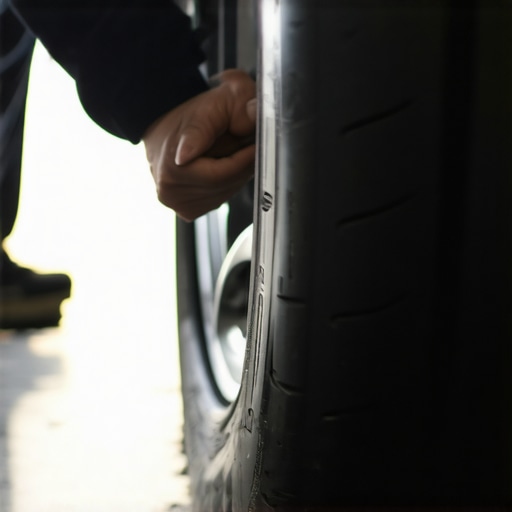
Tire cupping, frequently referred to by industry experts as ‘scalloping,’ is rarely a failure of the tire’s internal structure. Rather, it represents a systemic failure of the vehicle’s damping system to maintain consistent contact with the road surface. From an engineering standpoint, every time your suspension fails to dampen a vertical force, the tire experiences a high-frequency bounce. This oscillation causes the rubber to strike the pavement with rhythmic, excessive force, effectively shearing away the tread in scooped-out dips. As an experienced mechanic, I have frequently noted that drivers ignore the initial subtle vibrations until they escalate into a deafening road roar that mimics a failing wheel bearing. If you suspect your ride quality is deteriorating, it is imperative to investigate how to tell if your struts are actually blown before these harmonic vibrations necessitate an expensive set of new tires.
Does Dampener Fatigue Cause Your Vehicle to Bounce and Cup?
Internal valving within a shock absorber can fatigue long before a visible leak appears, typically around the 50,000-mile mark. This loss of ‘rebound’ control is the primary driver of tire cupping. According to technical documentation from the Society of Automotive Engineers (SAE), inconsistent tire loading significantly compromises both ABS performance and lateral stability during emergency maneuvers. To protect your vehicle’s safety profile and your wallet, you must learn to spot a leaky shock before it ruins your tires. Addressing these components during a scheduled tune up or auto repair visit prevents the secondary damage that occurs when high-frequency bouncing destroys other suspension bushings.
Reclaim Your Smooth Ride by Mastering Dynamic Alignment Geometry
While suspension damping is the leading cause of cupping, misaligned geometry acts as a powerful catalyst for rapid tread depletion. If your vehicle’s alignment is out of factory specification, the tire is essentially scrubbed sideways as it rotates forward. This creates localized friction-induced heat and uneven pressure across the contact patch. If you have recently observed that your new tires are wearing out in months, the culprit is often a ‘toe’ setting that is causing the tire to skip across the asphalt. A professional brake service should also include a cursory inspection of the steering linkages, as even a marginally bent tie rod can induce the oscillations that lead to permanent tire damage.
Rotate Your Rubber to Disrupt Periodic Wear Nodes
A proactive maintenance strategy requires more than just reactive fixes; it requires the disruption of wear patterns before they become ‘set’ in the rubber. By moving tires from a drive axle to a trailing axle, you change the direction and magnitude of the forces acting on the individual tread blocks. This effectively ‘resets’ the wear cycle. If you notice why your car shakes at exactly 55 mph, you may already be feeling the onset of cupped tread. Integrating a rigid rotation schedule into your ultimate tune-up checklist is the most cost-effective way to maximize the lifespan of your high-performance tires. If you are hearing a rhythmic thumping that changes with vehicle speed, do not wait for the tread to vanish; take action to diagnose your suspension health today.
Stop the Shake with a Clean Wheel Hub Mating Surface
Many drivers blame the tires themselves for rhythmic vibrations, but the physical connection between the wheel and the vehicle—the hub—is often the overlooked catalyst for tire damage. Over years of driving, road salt and moisture create a layer of corrosion on the wheel hub and the back of the brake rotor. This microscopic unevenness prevents the wheel from sitting perfectly flush against the mounting surface, creating a ‘run-out’ condition. Even if your tires are perfectly balanced on a machine, they will wobble once bolted to a dirty hub. This subtle oscillation mimics a heavy spot in the tire, leading to the precise conditions required for cupping to begin. Implementing the 15-dollar hub clean-up that fixes steering wheel shake is a critical step that most general shops skip during a standard tire change. If you have ever wondered why your car shakes at exactly 55 mph but not at 70, this infinitesimal gap between the hub and the rim is frequently the primary suspect.
Why Do Your Bushings Fail Before Your Struts Give Out?
While shock absorbers are the primary dampeners, the rubber bushings in your control arms are the secondary line of defense against oscillatory harmonics. Rubber is a polymer that undergoes a chemical process called ‘dry rot’ or oxidation over time, losing its ability to absorb road energy. When these bushings harden or crack, they allow the suspension arm to move in directions the manufacturer never intended. This dynamic misalignment means your tire isn’t just bouncing; it is vibrating laterally as it strikes the pavement. According to technical standards maintained by the National Institute for Automotive Service Excellence (ASE), worn chassis components can increase stopping distances and reduce the effectiveness of electronic stability control. Identifying the 8-dollar rubber bushing that ends your steering column clunk or suspension groan can save you hundreds in premature tire replacement. Often, a driver will assume they need complex auto repair when the solution is as simple as replacing a few degraded pieces of rubber that have lost their elasticity.
Brake Pulsation is Often a Suspension Cry for Help
It is a common misconception that a pulsing brake pedal is exclusively caused by ‘warped’ rotors. In many modern vehicles, brake-induced vibrations are actually the result of ‘thickness variation’ caused by a sticking caliper or a suspension that cannot hold the wheel steady during deceleration. When your suspension is loose, the brake pads do not strike the rotor surface evenly, leading to uneven heat distribution and localized cementite formation. This creates a rhythmic kickback that mirrors the symptoms of tire cupping. Learning how to stop your brakes from pulsing without new parts often involves deep-cleaning the guide pins and ensuring the suspension is tight enough to resist the torque of braking. If you are struggling with a front-end noise, you should investigate how to diagnose a mystery clunk in your front end before it evolves into a vibration that ruins your tread. Have you ever noticed a vibration that only appears when you hit the brakes? Share your experience in the comments below, or let us know if you have managed to solve a persistent shake with these expert-level maintenance tips.
The Critical Role of Load-Range and Inflation Pressure
Lastly, we cannot ignore the human element of tire maintenance: air pressure. When a tire is under-inflated, the sidewall flexes excessively, generating internal heat that softens the rubber compounds. This softened rubber is far more susceptible to the ‘scalloping’ effects of a weak strut. Furthermore, if you are seeing that your tires are wearing faster on the inside edge, you are likely dealing with a combination of negative camber and low pressure, which concentrates the vehicle’s weight on a small portion of the tread. During your next tune up, ensure your mechanic verifies your alignment under a ‘loaded’ state, which accounts for the weight of passengers and fuel, providing a more accurate real-world measurement of how your tires meet the road.
Eliminate Steering Wander by Inspecting Ball Joint Tolerance
While the shocks handle vertical energy, your ball joints are the pivot points that dictate horizontal stability. When these critical components develop even a millimeter of play, the wheel assembly begins to ‘shimmer’ under load. This isn’t a vibration you feel through the seat, but rather a subtle lateral oscillation that drags the tread across the asphalt. As an experienced mechanic, I often see cases where a tune up focused solely on spark plugs ignores the clunking sound of a dry ball joint. This metal-on-metal friction eventually causes the tire to develop ‘feathered’ edges on top of the existing cupping, creating a complex wear pattern that is impossible to correct without replacing the joint. If you have ever felt your car ‘hunting’ for a straight line on the highway, you are witnessing the death of your tread in real-time.
Can a failing steering rack cause tire cupping?
A steering rack that has developed internal leaks or worn bushings can certainly induce the harmonic vibrations required for cupping. In hydraulic systems, air trapped in the lines creates a ‘foamy’ fluid environment that fails to hold the rack steady against road forces. In modern electric power steering (EPS) systems, a failing torque sensor can send micro-corrections to the motor, causing the tires to twitch at high frequencies. This jitter mimics the bouncing of a bad strut, leading to rhythmic wear. According to technical resources from the Tire Industry Association (TIA), maintaining steering system integrity is as critical as maintaining air pressure for maximizing tire longevity. When you go in for a brake service, ensure the technician checks the rack-and-pinion bellows for signs of seepage or torn rubber that could invite abrasive grit into the steering gears.
Stop Chasing Ghosts with Road Force Balancing
Sometimes, a tire is perfectly balanced on a traditional machine but still vibrates like a jackhammer on the road. This happens because standard balancers do not account for ‘radial force variation’—the difference in the stiffness of the tire’s sidewall as it rotates. A hard spot in the tire’s internal structure will act exactly like a lead weight, causing a rhythmic thump every time it hits the ground. 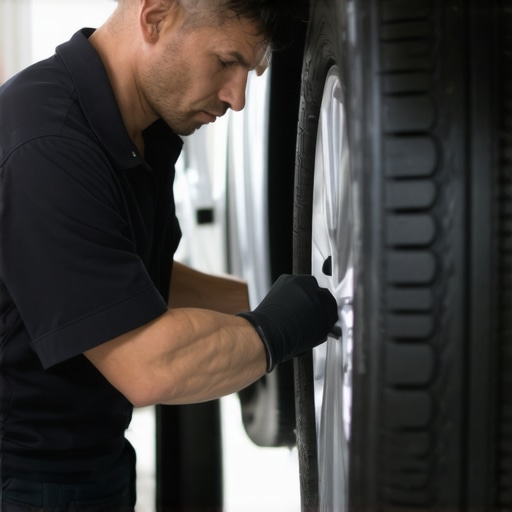 High-end shops use a process called ‘Road Force Balancing’ which uses a large roller to simulate the weight of the vehicle against the tire. This technology can identify if the tire is ‘out of round’ or if the rim itself has a slight bend that is causing the cupped wear. If you have been told your tires are ‘fine’ but the shake persists, specifically request a road force diagnostic during your next auto repair visit to see the hidden forces at play.
Why Cold Weather Makes Suspension Issues More Destructive
The elasticity of your tires and the viscosity of your shock absorber fluid are both temperature-dependent. In colder climates, rubber bushings become brittle and less capable of absorbing the high-frequency ‘buzz’ of rough roads. Simultaneously, the hydraulic fluid inside your struts thickens, which can lead to ‘harshness’—a condition where the suspension is too stiff to follow the road contours accurately. This lack of compliance forces the tire to take the brunt of the impact, accelerating the scalloping process. If your vehicle feels significantly rougher during the winter months, it is a sign that your suspension is struggling to manage these environmental stressors. Do you notice your steering wheel vibrating more on cold mornings before the car warms up? This is often the first indicator that your damping system is reaching the end of its functional life, long before the first signs of cupping appear on the tread surface. Check your tire date codes to ensure the rubber hasn’t hardened past its safe operating window.
Combat the Silent Killer of Tread Life: Micro-Lash in Hub Assemblies
Beyond the surface-level corrosion of the mating face, a more insidious mechanical failure often hides within the wheel bearing assembly itself. Known among high-end auto repair specialists as ‘micro-lash,’ this condition occurs when the internal race of a sealed bearing develops microscopic pits or clearance issues. This isn’t always audible as the classic ‘growl’ or ‘drone’ we associate with bearing failure. Instead, it allows for a subtle, high-frequency wobble that standard alignment racks cannot detect. This lateral instability prevents the tire from tracking true, exacerbating the scalloping effects of weak dampeners. When you bring your vehicle in for a brake service, it is vital to have your mechanic perform a dial-indicator test to ensure the hub’s run-out is within the strict tolerances dictated by the manufacturer.
Does a failing wheel bearing always make noise before it ruins your tires?
Contrary to popular belief, many modern double-row angular contact ball bearings can maintain structural integrity while still allowing enough play to induce tire cupping. If you feel a vibration that seems to migrate from one side of the car to the other during high-speed cornering, the bearing may be entering a ‘pre-failure’ state where the noise is masked by road roar. According to technical bulletins from SKF (a global leader in bearing technology), even 0.004 inches of excess clearance can lead to significant tire wear and compromised braking efficiency. Identifying these minute variances requires more than a visual inspection; it demands a technician who understands the nuances of hub-centric geometry.
Leverage Piezoelectric Sensors to Decode Mystery Vibrations
In the era of advanced vehicle dynamics, many master technicians are moving away from ‘part-swapping’ and toward data-driven diagnostics. By using piezoelectric sensors—essentially high-sensitivity microphones—connected to a digital oscilloscope, a mechanic can visualize the frequency of a vibration in real-time. This allows them to distinguish between a ‘first-order’ vibration (a heavy spot in the tire) and a ‘second-order’ vibration (a bent axle or failing CV joint). If your vehicle is plagued by persistent cupping even after a tune up and new shocks, this level of NVH (Noise, Vibration, Harshness) analysis is the only way to find the ‘phantom’ frequency that is destroying your rubber. These tools turn the invisible forces of suspension harmonics into a readable graph, ensuring that the root cause is addressed before you waste another thousand dollars on a fresh set of tires.
Chemical Integrity and the Silica-Grip Paradox
The very chemistry that makes high-performance tires grip the road also makes them vulnerable to oscillatory damage. Modern tires use high concentrations of silica and functionalized polymers to maintain flexibility in varied temperatures. However, these ‘soft’ compounds are less resilient to the repetitive impacts caused by a bouncing strut. If your auto repair shop doesn’t consider the specific ‘Durometer’ rating or hardness of your tire compound when diagnosing wear, they are missing half the equation. A softer, track-focused tire will cup significantly faster than a high-mileage touring tire under the same suspension conditions. If you’ve noticed your performance rubber wearing in strange patterns, tell us in the comments what brand you’re running—different tread designs often leave unique ‘fingerprints’ of the underlying mechanical failure.
How Defective Suspension Components Trigger Destructive Oscillatory Harmonics
Tire cupping, frequently referred to by industry experts as ‘scalloping,’ is rarely a failure of the tire’s internal structure. Rather, it represents a systemic failure of the vehicle’s damping system to maintain consistent contact with the road surface. From an engineering standpoint, every time your suspension fails to dampen a vertical force, the tire experiences a high-frequency bounce. This oscillation causes the rubber to strike the pavement with rhythmic, excessive force, effectively shearing away the tread in scooped-out dips. As an experienced mechanic, I have frequently noted that drivers ignore the initial subtle vibrations until they escalate into a deafening road roar that mimics a failing wheel bearing. If you suspect your ride quality is deteriorating, it is imperative to investigate how to tell if your struts are actually blown before these harmonic vibrations necessitate an expensive set of new tires.
Does Dampener Fatigue Cause Your Vehicle to Bounce and Cup?
Internal valving within a shock absorber can fatigue long before a visible leak appears, typically around the 50,000-mile mark. This loss of ‘rebound’ control is the primary driver of tire cupping. According to technical documentation from the Society of Automotive Engineers (SAE), inconsistent tire loading significantly compromises both ABS performance and lateral stability during emergency maneuvers. To protect your vehicle’s safety profile and your wallet, you must learn to spot a leaky shock before it ruins your tires. Addressing these components during a scheduled tune up or auto repair visit prevents the secondary damage that occurs when high-frequency bouncing destroys other suspension bushings.
Reclaim Your Smooth Ride by Mastering Dynamic Alignment Geometry
While suspension damping is the leading cause of cupping, misaligned geometry acts as a powerful catalyst for rapid tread depletion. If your vehicle’s alignment is out of factory specification, the tire is essentially scrubbed sideways as it rotates forward. This creates localized friction-induced heat and uneven pressure across the contact patch. If you have recently observed that your new tires are wearing out in months, the culprit is often a ‘toe’ setting that is causing the tire to skip across the asphalt. A professional brake service should also include a cursory inspection of the steering linkages, as even a marginally bent tie rod can induce the oscillations that lead to permanent tire damage.
Rotate Your Rubber to Disrupt Periodic Wear Nodes
A proactive maintenance strategy requires more than just reactive fixes; it requires the disruption of wear patterns before they become ‘set’ in the rubber. By moving tires from a drive axle to a trailing axle, you change the direction and magnitude of the forces acting on the individual tread blocks. This effectively ‘resets’ the wear cycle. If you notice why your car shakes at exactly 55 mph, you may already be feeling the onset of cupped tread. Integrating a rigid rotation schedule into your ultimate tune-up checklist is the most cost-effective way to maximize the lifespan of your high-performance tires. If you are hearing a rhythmic thumping that changes with vehicle speed, do not wait for the tread to vanish; take action to diagnose your suspension health today.
Stop the Shake with a Clean Wheel Hub Mating Surface
Many drivers blame the tires themselves for rhythmic vibrations, but the physical connection between the wheel and the vehicle—the hub—is often the overlooked catalyst for tire damage. Over years of driving, road salt and moisture create a layer of corrosion on the wheel hub and the back of the brake rotor. This microscopic unevenness prevents the wheel from sitting perfectly flush against the mounting surface, creating a ‘run-out’ condition. Even if your tires are perfectly balanced on a machine, they will wobble once bolted to a dirty hub. This subtle oscillation mimics a heavy spot in the tire, leading to the precise conditions required for cupping to begin. Implementing the 15-dollar hub clean-up that fixes steering wheel shake is a critical step that most general shops skip during a standard tire change. If you have ever wondered why your car shakes at exactly 55 mph but not at 70, this infinitesimal gap between the hub and the rim is frequently the primary suspect.
Why Do Your Bushings Fail Before Your Struts Give Out?
While shock absorbers are the primary dampeners, the rubber bushings in your control arms are the secondary line of defense against oscillatory harmonics. Rubber is a polymer that undergoes a chemical process called ‘dry rot’ or oxidation over time, losing its ability to absorb road energy. When these bushings harden or crack, they allow the suspension arm to move in directions the manufacturer never intended. This dynamic misalignment means your tire isn’t just bouncing; it is vibrating laterally as it strikes the pavement. According to technical standards maintained by the National Institute for Automotive Service Excellence (ASE), worn chassis components can increase stopping distances and reduce the effectiveness of electronic stability control. Identifying the 8-dollar rubber bushing that ends your steering column clunk or suspension groan can save you hundreds in premature tire replacement. Often, a driver will assume they need complex auto repair when the solution is as simple as replacing a few degraded pieces of rubber that have lost their elasticity.
Brake Pulsation is Often a Suspension Cry for Help
It is a common misconception that a pulsing brake pedal is exclusively caused by ‘warped’ rotors. In many modern vehicles, brake-induced vibrations are actually the result of ‘thickness variation’ caused by a sticking caliper or a suspension that cannot hold the wheel steady during deceleration. When your suspension is loose, the brake pads do not strike the rotor surface evenly, leading to uneven heat distribution and localized cementite formation. This creates a rhythmic kickback that mirrors the symptoms of tire cupping. Learning how to stop your brakes from pulsing without new parts often involves deep-cleaning the guide pins and ensuring the suspension is tight enough to resist the torque of braking. If you are struggling with a front-end noise, you should investigate how to diagnose a mystery clunk in your front end before it evolves into a vibration that ruins your tread.
Eliminate Steering Wander by Inspecting Ball Joint Tolerance
While the shocks handle vertical energy, your ball joints are the pivot points that dictate horizontal stability. When these critical components develop even a millimeter of play, the wheel assembly begins to ‘shimmer’ under load. This isn’t a vibration you feel through the seat, but rather a subtle lateral oscillation that drags the tread across the asphalt. As an experienced mechanic, I often see cases where a tune up focused solely on spark plugs ignores the clunking sound of a dry ball joint. This metal-on-metal friction eventually causes the tire to develop ‘feathered’ edges on top of the existing cupping, creating a complex wear pattern that is impossible to correct without replacing the joint. If you have ever felt your car ‘hunting’ for a straight line on the highway, you are witnessing the death of your tread in real-time.
Stop Chasing Ghosts with Road Force Balancing
Sometimes, a tire is perfectly balanced on a traditional machine but still vibrates like a jackhammer on the road. This happens because standard balancers do not account for ‘radial force variation’—the difference in the stiffness of the tire’s sidewall as it rotates. A hard spot in the tire’s internal structure will act exactly like a lead weight, causing a rhythmic thump every time it hits the ground. #IMAGE_PLACEHOLDER_E# High-end shops use a process called ‘Road Force Balancing’ which uses a large roller to simulate the weight of the vehicle against the tire. This technology can identify if the tire is ‘out of round’ or if the rim itself has a slight bend that is causing the cupped wear. If you have been told your tires are ‘fine’ but the shake persists, specifically request a road force diagnostic during your next auto repair visit to see the hidden forces at play.
Expert Insights & Advanced Considerations
Stop Ignoring the Harmonic Hum
Seasoned technicians know that tire cupping isn’t just about tread; it is a diagnostic map of your car’s dynamic health. A harmonic hum that changes frequency with speed—not engine RPM—is your suspension crying for help. Using a piezoelectric sensor to track these vibrations can distinguish between a bad wheel bearing and an out-of-round tire before you spend money on parts you don’t need.
Match Your Rubber to Your Real-World Driving Load
The chemical composition of your tire matters as much as the mechanical struts. High-silica performance tires offer incredible grip but are far more susceptible to ‘scalloping’ if your brake service professional overlooks a sticking slide pin. If you are a heavy loader or a frequent highway commuter, opting for a higher durometer rating during your next tune up can provide a structural buffer against oscillatory wear.
The Electronic Masking Effect in Modern Dampeners
Modern magnetic or electronic suspension systems can mask the physical symptoms of a failing strut by over-compensating in real-time. This means your tires might be cupping even if the car still ‘feels’ smooth. Only a physical inspection by a qualified mechanic using a dial indicator can verify if the hub and dampener are actually maintaining factory-spec stability.
Curated Expert Resources
SAE International Technical Papers: The gold standard for understanding vehicle dynamics and oscillatory harmonics. Essential for those who want to dive into the physics of tire-to-road contact patches.
ASE Certification Standards: Reviewing the A4 (Suspension and Steering) exam requirements provides a comprehensive checklist of every component that could contribute to irregular tire wear.
Hunter Engineering Road Force Documentation: Detailed whitepapers on how radial force variation differs from traditional balancing, helping you understand why your auto repair shop might need more advanced equipment to fix a persistent vibration.
Final Expert Perspective
Tire cupping is rarely an isolated failure; it is the final symptom of a complex mechanical system losing its equilibrium. By integrating advanced diagnostics like road force balancing and ensuring your brake service includes a hub-centric cleaning, you protect your investment and your safety. Remember that a proactive tune up is far cheaper than a full set of performance tires. We encourage you to consult with a high-level mechanic who uses data-driven tools to ensure your auto repair is permanent. Have you experienced a vibration that won’t go away? We invite you to share your diagnostic journey in the comments below or reach out for more advanced suspension troubleshooting guides.