Stop Paying for Precision You Aren’t Receiving
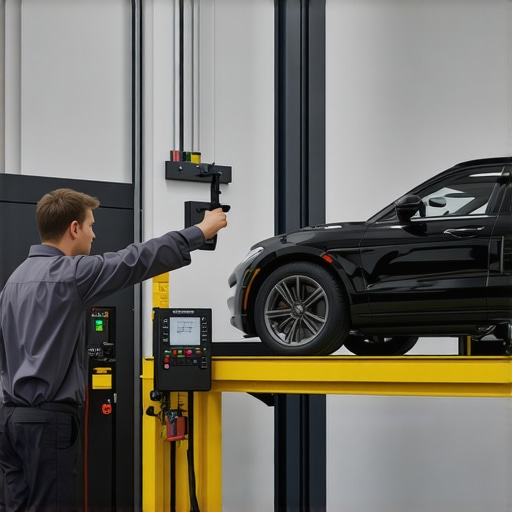
In the technical landscape of modern auto repair, the wheel alignment rack has become a significant profit center for many shops. While suspension geometry requires microscopic accuracy to ensure vehicle stability, the complexity of the digital interface often acts as a screen for unnecessary charges. An expert mechanic knows that while equipment costs are high, the labor for a routine tune up of your steering components should remain transparent. Unfortunately, predatory pricing often hides behind technical jargon. Understanding the intersection of chassis physics and shop economics is the first step in protecting your maintenance budget.
Verify Your Rear Axle Before Paying for a Four-Wheel Job
One of the most common overcharges occurs when a shop bills for a ‘four-wheel alignment’ on a vehicle with a fixed rear axle. Many front-wheel-drive economy cars and trucks utilize a solid beam or twist-beam rear suspension that offers no factory adjustments for camber or toe. If your vehicle lacks these adjustment points, the technician is simply performing a thrust-angle alignment to ensure the front wheels are centered. If you see a premium four-wheel rate on your invoice for a car that doesn’t support it, you are being overcharged. Before your next brake service, consult our guide on how to choose a skilled mechanic you can trust to avoid these ‘phantom’ labor fees.
Identify the Red Flags on Your Computerized Printout
Modern alignment machines produce a ‘Before and After’ report that many drivers take as gospel. However, an unethical technician can easily manipulate these readings. By slightly bumping a sensor target or not properly leveling the steering wheel during the initial ‘sweep,’ the machine will produce a report showing deep red bars indicating a fail. If your vehicle wasn’t pulling and your 3 tire wear patterns were perfectly even, yet the ‘before’ sheet looks like a disaster, the shop may be fabricating a need for service. Furthermore, always demand the ‘after’ sheet; if a shop refuses to provide the final ‘green’ calibration report, they likely haven’t finished the job correctly.
Is Your Mechanic Charging Extra for a Steering Angle Sensor Reset?
For vehicles equipped with Electronic Stability Control (ESC) and Advanced Driver Assistance Systems (ADAS), resetting the Steering Angle Sensor (SAS) is a mandatory procedural step. This calibration tells the car’s computer exactly where the steering wheel’s center point is located. Many shops list this as a separate $50 to $100 ‘electronic diagnostic’ fee. In reality, most professional alignment software integrates this reset into the standard workflow. Charging extra for this is essentially double-billing for a single service. For more insight into protecting your wallet, check out our auto repair cost saving tips from industry experts.
Don’t Buy New Tie Rods Without Physical Proof of Failure
A frequent tactic used to inflate alignment costs is claiming that adjustment nuts or tie rods are ‘frozen’ and require total replacement. While road salt and oxidation can seize components, a professional should always attempt to use penetrating lubricants or controlled heat first. If a shop insists on replacing expensive hard parts before even attempting a tune up of the existing threads, they are likely upselling. This is especially true if they claim you need a ‘camber kit’ that wasn’t previously required. Before authorizing a $400 suspension overhaul, read about 3 signs your mechanic found a real suspension problem to ensure the damage is legitimate. The Federal Trade Commission recommends always asking for an itemized breakdown of any parts the shop claims are ‘unserviceable.’
Demand a Waiver for Generic Shop Supply Fees
Finally, keep a sharp eye on the ‘Shop Supplies’ line item. This fee is intended to cover consumables like brake cleaner, shop rags, or specialized lubricants. Since an alignment is almost entirely a labor and equipment-usage task, there is virtually no consumable waste involved. If you see a $20 to $40 charge for supplies on an alignment-only invoice, you are paying for the shop’s overhead rather than actual materials used on your car. If your car still pulls to the right even with a fresh alignment, these administrative overcharges are even more egregious. A transparent facility will waive these fees for services that don’t involve fluids or hardware.
Stop Falling for the Seeping Strut Scare Tactic
When a technician points to a faint mist of oil on a strut body, panic should not be your first reaction. In the high-pressure environment of a service bay, minor ‘sweating’ is often mischaracterized as a catastrophic failure to justify an immediate tune up of your suspension system. Shocks and struts contain hydraulic fluid that can naturally weep over tens of thousands of miles without compromising the vehicle’s damping performance. If the shop insists that a moist strut body requires an instant replacement before they can perform a wheel alignment, demand a bounce test. A truly failed strut will allow the vehicle to oscillate multiple times after a sharp downward force is applied. If your car settles immediately, you can likely delay the repair. To better understand the threshold between a dirty component and a dangerous one, learn how to tell if your struts are shot without going to a shop. Replacing parts prematurely is one of the most common ways drivers bleed money in auto repair.
The Hidden Downside of Cheap Lifetime Maintenance Packages
Many national chains offer ‘Lifetime Alignment’ packages for a one-time fee that sounds like a bargain. However, the business model behind these offers often relies on ‘finding’ other repairs during the inspection. Since the alignment itself is already paid for, the shop has a financial incentive to identify worn bushings, leaking racks, or aging ball joints to make the visit profitable. An expert mechanic will tell you that a vehicle rarely needs an alignment more than once a year unless it hits a significant road hazard. If you find yourself constantly being told you need a brake service or tie-rod replacement every time you go in for your ‘free’ alignment, the package is actually costing you more in the long run. Strategic owners use tune up strategies to save money on auto repairs by choosing independent shops that charge for labor but offer objective advice.
Why Does Your Mechanic Insist on Replacing Rotors Every 10,000 Miles?
The concept of ‘warped rotors’ is one of the most persistent myths used to upsell during a standard brake service. Research from SAE International suggests that what drivers perceive as a warped rotor is actually an uneven transfer of friction material from the brake pads onto the rotor surface. This creates ‘thick spots’ that cause the pedal to pulse. Rather than spending hundreds on new iron, a technician could often solve the issue by simply cleaning the hub or using a specialized abrasive to remove the deposits. 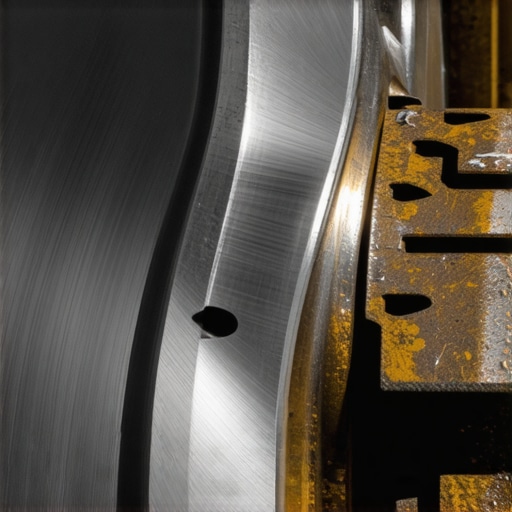 If you are told your rotors are thin after only a year of driving, ask to see the micrometer readings compared to the ‘discard’ thickness stamped on the rotor itself. You can often learn how to stop your brakes from pulsing without buying new rotors, saving a fortune on unnecessary hardware. If you’ve ever been quoted a ‘mandatory’ rotor replacement for a simple vibration, share your experience in the comments or read our breakdown of honest shop practices to stay ahead.
Spotting Labor Overlap in Multi-System Repairs
Double-billing for labor is a subtle art that adds hundreds to an invoice. For example, if a shop is already replacing your water pump, they often have to remove the serpentine belt and drain the coolant anyway. If they then charge you the full ‘book time’ for a belt replacement and a coolant flush as separate items, you are being overcharged for labor they are already performing. This applies to suspension work as well; if the wheels are already off for a brake service, the labor for a simultaneous tune up of the wheel bearings should be significantly reduced. Always ask the service writer if they have applied ‘labor overlap’ discounts to the estimate. Sometimes, what looks like a complex mechanical failure is actually a minor fix, such as how to tell if your transmission slip is actually a 15 dollar electrical issue. Protecting your budget requires a keen eye for these overlapping procedures before the technician even picks up a wrench.
Don’t Let a ‘Fluid Flush’ Recommendation Drain Your Savings
A common tactic in high-volume auto repair shops is suggesting a complete transmission or power steering flush based purely on the color of the fluid. While dark fluid *can* indicate oxidation, it isn’t a definitive diagnostic tool for internal component failure. A seasoned mechanic knows that some modern synthetic fluids darken significantly within the first few thousand miles of use without losing their lubricity or protective properties. If a shop pushes a $200 flush during a routine tune up without providing a chemical test strip result or showing you actual metal shavings in the pan, they are likely just meeting a monthly sales quota. Always cross-reference the fluid’s appearance with the manufacturer’s specific maintenance schedule before authorizing the work.
Demand Transparency for Every Minute the Scan Tool is Plugged In
In the era of software-defined vehicles, ‘diagnostic time’ has become a catch-all fee for anything involving a scan tool. However, there is a distinct difference between a quick code pull and a deep-dive diagnostic. If you brought your car in for a specific brake service related to an ABS light, the initial scan should be part of the estimate, not a standalone $150 charge added to the end.  According to the National Institute for Automotive Service Excellence (ASE), proper diagnostic procedures involve verifying the customer’s concern and performing pinpoint tests, but many shops simply charge for the ‘hook up’ time. If the shop is already billing you for ‘Labor’ on a repair, demand to know why the electronic reset of that same system isn’t bundled into the hourly rate. Professional software often automates these resets as part of the primary repair procedure, making an extra ‘software fee’ a redundant charge.
Does Every Modern Safety Sensor Require a Manual Reset?
This is one of the most nuanced questions in modern vehicle maintenance. If your car is equipped with lane-keep assist or adaptive cruise control, even a minor adjustment to the rear toe can technically change where the cameras and radar ‘see’ the road. However, many shops use this as an excuse to charge for a ‘Dynamic Calibration’ even when the steering angle sensor (SAS) values haven’t deviated from the factory-specified null point. Ask the technician for the ‘pre-calibration’ sensor values. If they are within the tolerance range, the expensive re-calibration procedure might be an unnecessary upsell. For a deeper look at how electronics impact your maintenance bill, read our guide on the hidden cost of modern car safety features to see which resets are actually vital for your safety.
Spot the Hidden Markup on Basic Maintenance Menu Items
Many franchise shops use ‘menu pricing’ for common tasks like a tune up or an oil change, which simplifies the invoice but often hides a massive markup on basic hardware. For instance, a shop might charge a flat $89 for a cabin air filter replacement. In reality, that filter likely costs the shop $12 and takes a technician less than three minutes to install. By itemizing the bill, you can often spot where the labor rate effectively jumps to $400 an hour for simple tasks. If you suspect your mechanic is padding the bill with these high-margin ‘menu’ items, ask for the labor time and part cost to be broken out individually. You might find that performing these small tasks yourself is the easiest way to keep your maintenance costs manageable while focusing your budget on critical items like a brake service or timing belt replacement.
Bypass the Fuel Induction Upsell During Your Routine Tune Up
As modern engines move toward Gasoline Direct Injection (GDI), a new favorite profit-driver has emerged: the ‘fuel induction service.’ A service writer might suggest this as a critical addition to your tune up, claiming it clears out carbon deposits that choke your engine. While it is true that GDI engines suffer from valvular carbonization, the $150 aerosol spray or ‘drip’ service often performed in the bay is frequently ineffective against hardened deposits. True carbon remediation usually requires mechanical cleaning, such as walnut blasting. If your car isn’t idling roughly or losing significant fuel economy, these chemical flushes are often just a high-margin additive for the shop.  Always ask for a borescope photo of your intake valves before authorizing an induction cleaning to ensure you aren’t paying for a ‘preventative’ measure that provides zero tangible benefit.
Demand a Battery Terminal Cleaning Before Buying a New Unit
A common trap in auto repair occurs during the cold season when a car struggles to crank. Many technicians will perform a quick load test, see a ‘fail’ or ‘weak’ result, and immediately quote you $200 for a new battery. However, a seasoned mechanic knows that galvanic corrosion—that white, crusty powder on the terminals—increases electrical resistance significantly. This resistance can trick a diagnostic tool into thinking the battery is dying when it simply cannot deliver current through the filth. Before you agree to a replacement, insist that the technician cleans the terminals and re-tests the battery. Often, a $15 cleaning service will restore your battery’s performance and save you from a premature replacement.
Do You Really Need to Replace Both Oxygen Sensors Simultaneously?
When a Check Engine light points to an Oxygen (O2) sensor failure, shops often recommend replacing ‘the pair’ to ensure balance. While it’s true that sensors on the same bank age at similar rates, they are independent components. If Bank 1 Sensor 1 is failing, there is no technical requirement to replace Bank 2 Sensor 1 unless it also shows a slow response rate on a live-data graph. This ‘pairing’ strategy is an easy way for a shop to double their parts profit and labor. Demand to see the specific error code; if only one sensor is out of specification, replace only that one. For more technical deep-dives into sensor logic, the Automotive Service Association (ASA) provides extensive resources on ethical repair standards and diagnostic procedures that prioritize consumer protection over part-swapping.
The ‘White Box’ Danger and Why Part Quality Dictates True Value
The price gap between an OEM (Original Equipment Manufacturer) part and an ‘economy’ aftermarket part can be staggering, but the cheaper option often leads to more frequent auto repair visits. Shops frequently buy ‘white box’ parts—unbranded components from offshore manufacturers—at a fraction of the cost while billing you at near-OEM rates. These parts rarely meet the same metallurgical or electronic tolerances, leading to premature failure of items like alternators or water pumps. When you are quoted for a repair, ask specifically for the brand of the part. If the shop cannot provide a reputable name like Denso, Bosch, or Akebono, you are likely receiving a low-tier component that will cost you double in labor when it fails in six months. Quality brake service components, in particular, should never be compromised with ‘value grade’ pads that lack proper shim integration.
Stop Paying for TPMS Rebuild Kits That You Don’t Need
During a tire replacement or a comprehensive brake service, many chains automatically add a $10 to $15 ‘TPMS Service Kit’ fee per wheel. The Tire Pressure Monitoring System (TPMS) does have rubber seals and nuts that can age, but they do not require ‘rebuilding’ every time the tire is removed from the rim. If your sensors are less than five years old and haven’t been exposed to heavy road salt, these kits are often unnecessary. It is a small fee that adds up quickly across four wheels, representing a pure profit play for the facility. If you have been pressured into these ‘mandatory’ kits or ‘complete system flushes’ recently, drop a comment below with the shop’s justification—let’s see if it holds up to engineering scrutiny and real-world necessity. Using advanced knowledge is the only way to ensure your maintenance budget goes toward performance, not shop overhead.
Master the Technical Nuances of Modern Maintenance
Check the Calibration Date on the Machine Itself
A precision alignment is only as accurate as the last time the rack was serviced by the manufacturer. If a shop hasn’t performed a quarterly calibration check, the ‘perfect green’ reading on your printout is a digital fiction. High-end facilities keep a log of these maintenance cycles; don’t be afraid to ask when the lasers were last verified before paying for an auto repair that relies on digital precision.
Why Bedding-In Your Brakes is Non-Negotiable
Most drivers leave the shop and immediately head into stop-and-go traffic, but a high-quality brake service requires a specific thermal cycle to transfer friction material to the rotor. Skipping this ‘burnishing’ process often leads to why your brake rotors warp after only 5000 miles. A truly elite mechanic will perform this test drive for you, ensuring the pads and rotors are chemically bonded before you take the keys.
Modern Engines Need Data Validation Instead of Just Parts
The era of replacing points and condensers is dead; today, a tune up is essentially an audit of fuel trims and sensor responsiveness. If a shop offers a flat-rate service without looking at your long-term fuel data, they are just throwing hardware at a computer. You can tune up your car like a pro by identifying a lazy oxygen sensor before it triggers a dash light, prioritizing diagnostic data over scheduled part-swapping.
Authority Sources for Savvy Drivers
To deepen your technical literacy and avoid being sidelined by jargon, consult these industry-standard resources. #IMAGE_PLACEHOLDER_E# iATN (International Automotive Technicians Network) provides a look into real-world troubleshooting shared by thousands of professionals, offering a perspective far beyond basic owner manuals. For verified labor times and technical service bulletins (TSBs), Alldata remains the gold standard for checking if a repair quote aligns with manufacturer standards. Additionally, the 10-minute multimeter trick for spotting a dying alternator is a vital skill for verifying electrical system health before authorizing expensive battery replacements.
Final Professional Takeaway
Navigating the technical landscape of auto repair requires more than just a passing interest in cars; it demands a strategic understanding of how shops operate and how digital tools can be used to inflate costs. Whether you are scheduling a comprehensive tune up or an emergency brake service, your strongest tool is the ability to ask for data-backed evidence of every failure. A transparent mechanic will always welcome an informed client who values precision over a quick quote. What has been your most challenging experience with shop transparency? Share your professional insights in the comments below or reach out to us to join the conversation on ethical vehicle maintenance.