Why Your Transmission Thinks It’s Under Full Load
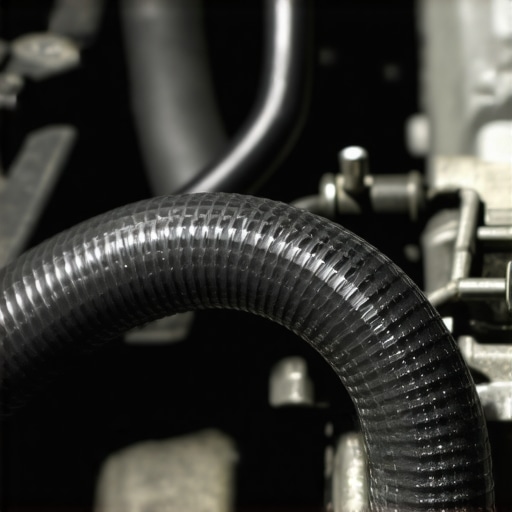
In the realm of advanced automotive diagnostics, few things are as deceptive as the relationship between engine manifold pressure and transmission shift timing. When a vehicle exhibits a harsh shift or a ‘clunk’ between gears, the immediate assumption by most car owners is a terminal mechanical failure within the gearbox. However, experienced technicians understand that the transmission’s hydraulic logic relies heavily on the vacuum signal provided by the engine. A minor $5 vacuum leak—often just a cracked rubber hose or a perished connector—can disrupt this signal, leading the transmission to believe the engine is under significantly more load than it actually is. This results in elevated line pressure and unnecessarily firm gear changes that feel like a failing component.
Instead of rushing into a multi-thousand dollar rebuild, a systematic tune up approach allows for the identification of these small, high-impact failures. For vehicles equipped with vacuum-modulated transmissions, the vacuum modulator valve acts as the interpreter. If the vacuum line to this valve is compromised, the internal diaphragm defaults to a ‘high pressure’ setting to protect the clutches from slipping under load. While this is a safety feature, it turns your daily commute into a jarring experience. This intersection of engine health and drivetrain performance highlights why a skilled mechanic is essential for nuanced troubleshooting.
How Can a Tiny Crack in a Rubber Hose Mimic Major Mechanical Failure?
The logic is simple yet often overlooked: modern and classic engines use vacuum as a primary load-sensing metric. When you accelerate, manifold vacuum drops; when you cruise, vacuum remains high. If a leak exists, the vacuum never reaches the intended levels at the transmission modulator or the MAP (Manifold Absolute Pressure) sensor. This discrepancy causes the Electronic Control Unit (ECU) or the hydraulic valve body to incorrectly increase the hydraulic pressure intended for the friction plates. For those performing their own auto repair, using a simple hand-held vacuum pump can verify the integrity of these lines in minutes, potentially saving a fortune on unnecessary parts. According to technical standards established by organizations like SAE International, maintaining precise manifold pressure is critical for emissions and drivetrain longevity.
The Invisible Link Between Engine Efficiency and Gear Timing
While newer vehicles have transitioned to fully electronic solenoids, many still use vacuum-referenced data to fine-tune the shift points. A vacuum leak doesn’t just affect the transmission; it can lead to a lean fuel condition, erratic idling, and poor braking performance if the brake booster is involved. This is why a comprehensive tune up is the first line of defense against complex drivability issues. If your car is stumbling while the AC is on or shifting late, don’t ignore the rubber bits under the hood. You might find that the $5 soapy water trick is all you need to find the culprit behind a ‘dying’ transmission.
Ditch the Guesswork Before You Visit the Service Bay
Before authorizing a high-ticket repair, ask your technician for a vacuum waveform or a simple smoke test. This is especially true if you have recently noticed a decrease in fuel economy or a slight ‘hissing’ sound under the hood. Identifying these minor leaks is a hallmark of quality auto repair practices that prioritize long-term vehicle health over quick part swaps. If you’re concerned about your vehicle’s overall safety, specifically regarding its stopping power, you should also evaluate your brake service needs, as the vacuum system often supports the brake booster as well.
Explore our deep-dive analysis on fluid swaps that save transmissions to see if your shifting issues require more than just a new vacuum hose.
Stop Chasing Phantom Misfires by Inspecting Intake Seals First
Many drivers mistake a rough idle for a failing ignition system. When the engine shudders at a red light, the instinctive reaction is to replace the ignition coils or assume there is a spark plug boot error. However, a vacuum leak introduces ‘unmetered air’ into the combustion chamber—air that the Mass Air Flow (MAF) sensor never accounted for. This creates a lean mixture that is difficult to ignite, resulting in a stumble that perfectly mimics a mechanical misfire. Unlike a hard mechanical failure, a vacuum-related misfire often disappears at higher speeds because the extra air becomes a smaller percentage of the total intake volume. If you find your car runs better on the highway than at a stoplight, you are likely dealing with a breached gasket or a cracked plastic intake manifold rather than a dead cylinder.
Can Your Scan Tool Distinguish Between a Bad Sensor and a Hole in a Hose?
The secret to professional-grade diagnosis lies in monitoring your Long Term Fuel Trims (LTFT). An expert technician looks for a specific pattern: if the fuel trims are highly positive at idle (meaning the computer is adding extra fuel to compensate for air) but return to normal levels when the engine is revved to 2,500 RPM, the diagnosis is almost certainly a vacuum leak. This is because the leak’s influence diminishes as the throttle plate opens. According to research published by the Car Care Council, unaddressed air-fuel imbalances are among the primary contributors to premature catalytic converter failure, as the ECU constantly over-corrects for the perceived lean condition. Relying on a 15 dollar sensor without checking these fuel trim values is a common DIY pitfall that leads to wasted money and unresolved issues.

How Vacuum Failures Compromise Your Stopping Power
The danger of a vacuum leak extends far beyond poor shifting or a rough idle; it directly impacts your vehicle’s ability to stop. Most modern vehicles utilize a vacuum brake booster to multiply the force you apply to the brake pedal. A leak in the booster diaphragm or the check valve can lead to a ‘hard’ pedal feel, making it significantly more difficult to slow the vehicle in an emergency. This is often misdiagnosed as air in the lines, but if you notice that your brake service efficiency is dropping specifically after the car has sat for a few hours, the vacuum reservoir is likely leaking. You should also pay attention to whether the engine stumbles when the AC is on or when you depress the brake pedal, as these are clear indicators that the vacuum system is struggling to maintain pressure under load.
Understanding these interconnected systems is what separates a parts-changer from a diagnostic specialist. Before you decide to diagnose a bad fuel pump or replace expensive injectors, spend ten minutes inspecting the small rubber lines and plastic T-junctions that hold your engine’s logic together. Have you ever discovered a tiny crack that was causing a massive headache? Share your diagnostic wins in the comments below or let us know which hidden leak gave you the most trouble during your last repair.
Why Turbocharged Engines Struggle with Tiny Vacuum Cracks
For drivers of modern forced-induction vehicles, the relationship between vacuum and boost is a delicate balancing act managed by complex bypass valves and wastegate actuators. In a turbocharged system, a vacuum leak doesn’t just cause a rough idle; it can lead to erratic boost delivery or a complete ‘limp mode’ condition. When the ECU requests boost, it relies on vacuum-operated solenoids to close the wastegate. If the supply line has even a microscopic fissure, the actuator may fail to hold the gate shut, resulting in a ‘boost leak’ feel despite the turbo spinning at full speed. This illustrates why a systematic diagnostic approach is vital; you aren’t just looking for air getting in, but for the system’s inability to control internal pressures.
Does a Vacuum Leak Always Throw a Check Engine Light?
Surprisingly, the answer is no—at least not immediately. A small leak might stay within the ‘adaptation limits’ of the ECU for weeks. The computer can compensate by adjusting fuel injectors to stay open longer, hiding the symptom from the driver while silently eroding fuel economy. According to technical documentation from Delphi Technologies, these hidden leaks often manifest only during specific ‘closed-loop’ operating conditions, such as light-throttle cruising. If you’ve noticed your fuel gauge dropping faster than usual but your dashboard remains clear of warning lights, your car is likely fighting an invisible battle against unmetered air. This is the perfect time to perform a comprehensive tune up that includes a visual inspection of the often-ignored PCV (Positive Crankcase Ventilation) hoses.
Identify the Defrost Vent Symptom Before It Kills Your MPG
One of the most peculiar ways a vacuum leak reveals itself is through your car’s climate control system. In many vehicles, especially those designed before the full transition to electric actuators, the ‘blend doors’ that direct air to your feet, face, or windshield are vacuum-operated. If you find that your air conditioning suddenly switches to the defrost vents every time you climb a steep hill or accelerate onto a highway, you have a classic vacuum reservoir failure. Under high engine load, manifold vacuum drops; without a functional check valve or reservoir to hold reserve vacuum, the HVAC doors default to their ‘fail-safe’ position, which is the windshield. 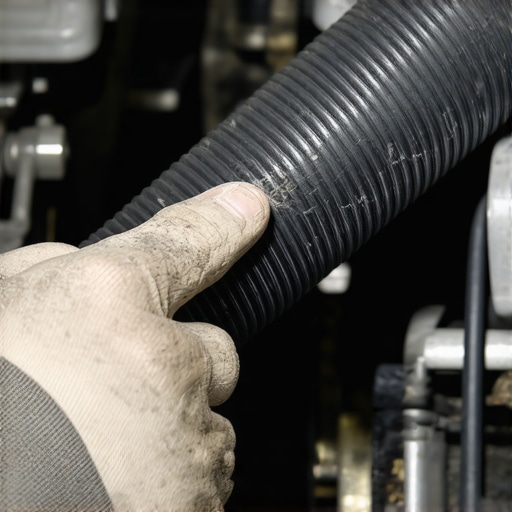 This isn’t just a comfort issue; it’s a diagnostic ‘smoking gun’ that indicates your engine’s vacuum signal is being bled off by a peripheral system.
Why High-Mileage Engines Are More Prone to Plastic Fatigue
Heat is the ultimate enemy of the modern engine bay. Over 100,000 miles, the constant thermal cycling—heating up to 200 degrees and cooling down to ambient temperature—turns flexible rubber into brittle plastic. Components like the intake manifold gaskets or the power brake booster check valve are prone to ‘crazing,’ where thousands of tiny surface cracks eventually unite into a structural failure. A seasoned mechanic knows that on high-mileage European or domestic cars, the plastic ‘hard lines’ used for emissions control are often the first to snap during a routine auto repair. Handling these lines with extreme care is part of the expertise required to avoid creating new leaks while trying to fix old ones.
Check out our guide on sensors that solve rough idle issues to ensure you aren’t overlooking a failed MAF sensor while hunting for those elusive air leaks.
The Critical Role of EGR Valves in Vacuum Stability
The Exhaust Gas Recirculation (EGR) system is another common site for vacuum-related headaches. To reduce nitrogen oxide emissions, the EGR valve introduces a controlled amount of spent exhaust gas back into the intake manifold. Many of these valves are controlled by a vacuum-operated diaphragm. If the vacuum line to the EGR solenoid is cracked, the valve may stay open too long or fail to open at all, leading to ‘pinging’ or ‘detonation’ under load. This creates a confusing diagnostic path where the engine sounds like it has a mechanical timing issue, yet the root cause is a simple lack of control pressure. Understanding how the EGR interacts with the throttle position is essential for anyone diving deep into their own drivetrain maintenance.
Don’t Ignore the Fuel Pressure Regulator’s Silent Cry
One of the most insidious vacuum-related failures occurs at the fuel pressure regulator. On many port-injection engines, the regulator relies on a vacuum signal to decrease fuel pressure when the engine is at idle (high vacuum). When you accelerate and vacuum drops, the regulator increases pressure to meet the demand. If the internal diaphragm ruptures, the engine’s intake vacuum literally sucks raw gasoline through the vacuum line and directly into the manifold. This creates a rich condition that no tune up can fix without a physical component replacement. 
Does Your Exhaust Smell Like Raw Gasoline at Idle?
If you notice a strong scent of fuel or black smoke during a hot start, it is time to pull the vacuum line off the regulator. If fuel drips out of that hose, you’ve found your culprit. This specific failure mode is a nightmare for emissions testing and can quickly destroy your catalytic converter. According to technical bulletins from the Automotive Service Association (ASA), fuel-saturated vacuum lines are a leading cause of rich codes in late-model vehicles. Professional-grade auto repair involves checking these peripheral vacuum-actuated components before condemning expensive fuel injectors or oxygen sensors.
Secondary Air Injection Systems Often Mask Vacuum Issues
The Secondary Air Injection (SAI) system is designed to pump fresh air into the exhaust stream to help the catalytic converter reach operating temperature faster. Many SAI systems use vacuum-operated valves to manage this flow. A small leak in the plastic lines feeding these valves will trigger a P0411 (Incorrect Flow) code, which many drivers ignore as a mere emissions annoyance. However, that same leak is bleeding off manifold pressure, potentially affecting your idle stability and transmission shift quality. A dedicated mechanic will use a smoke machine to pressurize the SAI system independently, ensuring that the vacuum signal reaches the valves without escaping through heat-stressed plastic connectors.
How to Differentiate Between Mechanical Air Leaks and Sensor Latency?
Advanced technicians often use an oscilloscope to compare the MAP sensor’s reaction time against the throttle position sensor (TPS). If the vacuum signal (MAP) lags significantly behind the throttle opening, it suggests a restriction in the vacuum port or a leak so large it is overwhelming the system’s ability to stabilize. This level of detail is crucial when your vehicle is suffering from phantom hesitation that doesn’t trigger a code. Proper brake service often reveals these leaks as well, especially if the tech notices the pedal feels firmer than usual during a test drive, indicating the booster is losing its reservoir. Don’t let a simple rubber fitting lead you into a cycle of replacing parts that aren’t broken. If you’ve ever spent a weekend chasing a hesitation only to find a $2 plastic T-fitting was the cause, we want to hear your story in the comments below.
The Critical Role of PCV Systems in Engine Breathing
The Positive Crankcase Ventilation (PCV) system is essentially a controlled vacuum leak. It is designed to pull blow-by gases out of the crankcase and into the intake to be burned. When the PCV valve sticks open or the hose collapses, the engine’s breathing is compromised. This often results in oil being sucked into the intake, coating the throttle body and causing a sticky pedal or erratic idle. Integrating a PCV check into your regular tune up schedule is the best way to prevent the carbon buildup that eventually leads to valve train issues. Understanding the delicate balance of these air pathways is the difference between a car that simply runs and a car that performs at its peak potential.
Expert Insights & Advanced Considerations
Why Altitude Changes Your Vacuum Signal
Seasoned technicians know that barometric pressure directly influences manifold vacuum levels. If you are diagnosing a shifting issue in the mountains versus at sea level, your baseline vacuum readings will differ significantly. A hidden vacuum leak that makes your transmission shift early or late may be more pronounced at higher elevations where the air is thinner, making it critical to calibrate your gauge based on local atmospheric conditions before condemning a modulator valve.
Thermal Expansion Can Hide Leaks Until the Engine is Hot
Many intake manifold gaskets are composed of composite materials that expand and contract at different rates than the cylinder head. You might have a perfectly sealed system during a cold start, only for a massive air breach to develop once the engine reaches operating temperature. This is why a professional tune up must include a hot smoke test to identify cracks that only open under thermal stress. If your car only stumbles after twenty minutes of driving, look for heat-sensitive plastic components that have lost their structural integrity.
Short Term Fuel Trims Reveal Immediate Breaches
While long-term fuel trims tell the history of the engine, the Short Term Fuel Trim (STFT) is your real-time window into vacuum stability. By monitoring STFT while spraying a small amount of propane or using the $5 soapy water trick around intake seals, you can see the computer react instantly to the change in air density. This level of precision is the hallmark of advanced auto repair, allowing you to pinpoint a leak within a fraction of an inch without removing a single bolt.
Curated Expert Resources
SAE International Technical Papers
For those who want to understand the fluid dynamics of intake manifolds and vacuum-operated actuators, the SAE library offers peer-reviewed research on drivetrain efficiency and pressure-wave tuning.
ScannerDanner Premium Diagnostic Library
Engineered for the serious mechanic, this resource provides deep-dive oscilloscope waveforms that show exactly how vacuum leaks disrupt ignition and fuel injection timing.
ASE Training Portals
The National Institute for Automotive Service Excellence provides high-level modules on engine performance and advanced brake systems, which are essential for understanding brake service secrets and vacuum booster logic.
#IMAGE_PLACEHOLDER_E#
Master the Air to Master the Machine
The vacuum system remains one of the most elegant yet misunderstood logic circuits in the modern vehicle. Whether it is a 14 dollar PCV valve fix or a complex brake booster failure, the ability to interpret pressure differentials is what separates a guessing DIYer from a diagnostic master. By prioritizing air-stream integrity, you ensure that every other aspect of your auto repair—from fuel delivery to transmission timing—works in perfect harmony. We invite you to share your most difficult vacuum diagnostic success stories below or reach out to our community for advice on your next high-level restoration project.