The fundamental physics of auto repair dictate that braking systems convert kinetic energy into thermal energy through friction. Any introduction of a lubricating agent, such as silicone spray, to the rotor surface directly undermines this energy conversion. While silicone is an excellent dielectric and water-repellent, its chemical stability means it does not easily burn off under typical heat cycles. Instead, it creates a persistent, slippery film that prevents the brake pads from ‘biting’ into the rotor. Professional mechanics recognize that even a microscopic layer of silicone can cause a vehicle to pull unpredictably or fail to stop within safe distances. Understanding brake service secrets is essential for any technician, as the margin for error in friction-based systems is nonexistent.
Friction is Your Only Defense Against a Collision
The interaction between the brake pad and the rotor surface requires a specific coefficient of friction to function safely. When a mechanic performs a high-quality brake service, the goal is to ensure both surfaces are clean and free of contaminants. Silicone spray is designed specifically to reduce friction and prevent sticking, making it the literal antithesis of what a braking system needs. According to technical documentation from the Society of Automotive Engineers (SAE), any contamination that lowers the friction coefficient can lead to a phenomenon known as brake glaze, where the pad material hardens and loses its ability to grip the disc. This is often why new brake rotors warped or felt ineffective shortly after an improper DIY attempt at silencing squeaks with aerosol lubricants.
Does Silicone Spray Cause Permanent Rotor Damage?
While the metal of the rotor itself isn’t ‘damaged’ in a structural sense by silicone, the chemical residue can be incredibly difficult to remove. Silicone is non-polar and resists most mild detergents. If driven while contaminated, the heat generated by the brakes can bake the silicone into the pores of the iron rotor, creating a permanent slick spot. This leads to uneven braking force across the axle. For a comprehensive tune up, technicians must use dedicated brake cleaners that leave zero residue. If you are struggling with noise, it is better to investigate a sticky brake caliper or worn shims rather than reaching for a spray can that could jeopardize your safety.
Chemical Contamination and the Myth of Rust Protection
Some drivers mistakenly apply silicone spray to the rotors during winter storage to prevent ‘flash rust.’ While it does prevent oxidation, the trade-off is a vehicle that cannot stop when it is brought back into service. In the world of professional auto repair, rust on the swept area of the rotor is considered a self-correcting issue; the first few applications of the brakes will safely scrub away surface oxidation. Using silicone to fight rust is a dangerous shortcut that ignores the mechanical reality of how pads bed into the iron. If you are concerned about long-term aesthetics, learn how to stop brake dust and corrosion using approved high-temperature ceramic coatings applied only to the non-contact surfaces of the rotor hat.
Expert Insight: Always ensure your hands are clean and free of grease when handling new rotors, as even skin oils can affect the initial bedding-in process. Have you experienced a loss of braking power after a cleaning session? Share your professional diagnostic findings with us to help other drivers avoid these critical maintenance errors.
The structural integrity of your brake pads is far more delicate than the cast iron rotors they grip. Most high-performance and standard pads use semi-metallic or ceramic compounds that are inherently porous. When silicone spray or other oil-based lubricants contact the friction material, they don’t simply stay on the surface; they permeate the pad compound. This leads to a permanent change in the pad’s density and friction profile, often causing a ‘spongy’ pedal feel that persists even after the rotors look clean. If you have mistakenly applied chemicals to the assembly, checking for saturation is as critical as learning how to test your brake fluid for water content at home to ensure overall system reliability.
How Chemical Slickness Confuses Your Vehicle Computer
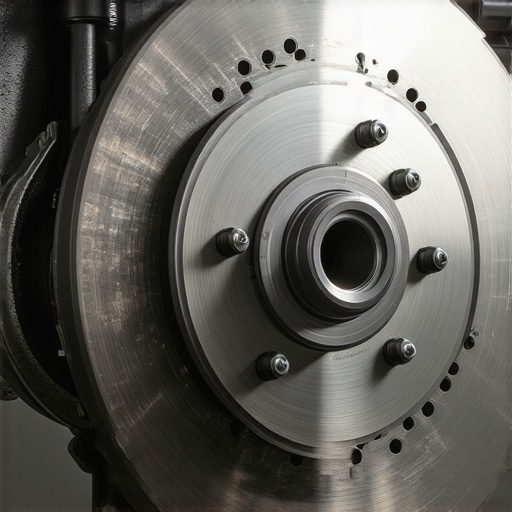
Modern safety suites, such as Electronic Stability Control (ESC) and Anti-lock Braking Systems (ABS), rely on predictable, consistent friction values at each corner of the car. These systems monitor wheel speed sensors hundreds of times per second to detect a lock-up. When one rotor is contaminated with silicone, its stopping power deviates from the others. The ABS module may interpret this lack of ‘bite’ as a loss of traction on a slick surface, causing it to pulse the brakes unnecessarily or, worse, fail to apply maximum pressure when you need it most. This digital confusion is why professional brake maintenance hacks always prioritize mechanical cleaning over aerosol shortcuts. According to technical bulletins from Brembo, consistent friction across the entire axle is the primary requirement for modern electronic brake force distribution (EBD) to function within its engineered parameters.
Can Your Modern Traction Control Compensate for a Slick Rotor?
Many drivers assume that advanced vehicle computers can simply ‘code out’ mechanical inconsistencies. However, traction control is designed to manage engine torque and individual brake pressure based on the assumption that the hardware is functioning at 100% capacity. If the friction coefficient is physically compromised by a chemical film, no amount of software intervention can restore the missing stopping power. The computer can only work with the friction it has available. This is a primary reason why a the 10 hub scrub that stops brake vibrations is a more effective repair than any ‘quieting’ spray; it addresses the physical mating surface rather than masking a symptom.
Protect Your Wallet from These Spray-Can Shortcuts
The financial consequences of a ‘quick fix’ with silicone or WD-40 often far outweigh the cost of proper parts. Once pads are contaminated, they generally cannot be saved and must be replaced. Furthermore, if the silicone has baked onto the rotors, a mechanic may need to perform a precision resurfacing or ‘turning’ of the discs to expose fresh metal. By attempting to save five minutes with a spray can, you might be committing yourself to hundreds of dollars in avoidable repairs. Utilizing auto repair cost saving tips from industry experts usually involves sticking to approved cleaning agents like isopropyl alcohol or chlorinated brake cleaner. If you are unsure if your current braking issues stem from a past maintenance error, we suggest reading our guide on how to choose a skilled mechanic you can trust to get a professional evaluation before the damage worsens. Have you ever noticed a strange ‘pull’ after cleaning your wheels? Leave a comment below and tell us about the diagnostic steps you took.
The chemical complexity of modern aerosols often escapes the casual DIYer, but for a mechanic, understanding these formulations is a matter of professional liability. Most silicone sprays are not pure polydimethylsiloxane; they are suspended in petroleum-based carriers like hexane or heptane to facilitate even distribution. While the silicone stays behind, these volatile organic compounds (VOCs) can act as solvents that aggressively attack the phenolic resins holding brake pad compounds together. This structural degradation isn’t always visible to the naked eye. Instead, it manifests as a crumbling of the pad edges or a loss of shear strength, which can lead to catastrophic friction material failure during an emergency stop. If you have ever wondered why some pads seem to disintegrate prematurely, chemical interference from ‘convenience’ sprays is a frequent, yet overlooked, culprit.
Don’t Trust the Quick-Dry Label on Your Spray Can
The marketing on many aerosol cans suggests that the product ‘dries in seconds,’ leaving behind a protective film. In the context of auto repair, this film is exactly what prevents the necessary mechanical bonding between the pad and the rotor. When these lubricated surfaces are subjected to the intense heat of a brake service road test, the silicone undergoes a process called thermal decomposition. According to technical studies published by ASTM International, silicone-based polymers can break down at high temperatures into silica (silicon dioxide), which is essentially a fine grit. Rather than lubricating, this byproduct creates an abrasive layer that scores the rotor surface and destroys the precise finish required for noise-free operation. This transformation from a lubricant to an abrasive is a primary reason why professional shops prohibit the use of non-specialized sprays near an open wheel assembly.
Beyond the friction surfaces, the overspray from these aerosols poses a significant risk to the hydraulic seals within the caliper. While silicone grease is often used for slide pins, the thin oils found in sprays can cause the rubber dust boots to swell or soften. A compromised boot allows moisture and road salt to enter the piston bore, leading to internal corrosion that causes the caliper to seize. This necessitates a much more expensive tune up or a full caliper replacement. It is far more effective to use a dedicated, high-viscosity silicone paste applied precisely with a brush, ensuring that the lubricant stays on the hardware and away from the critical friction zone.
Will a High-Heat Brake Cycle Burn Off My Mistake?
A common myth in the automotive community is that a few hard stops will simply ‘burn off’ any accidental silicone overspray. Unfortunately, the physical properties of silicone make this highly unlikely. Silicone has an incredibly high flash point and exceptional thermal stability, which is why it is used in high-temp applications in the first place. Instead of evaporating like water or even burning off like thin motor oil, it tends to smear across the rotor, being pushed into the microscopic valleys of the metal by the brake pads. This creates a ‘mottled’ friction surface where some areas have grip and others have none, leading to the erratic pedal pulsation often mistaken for a warped rotor. If you suspect contamination, the only reliable solution is a thorough mechanical cleaning with a solvent that has a high evaporation rate and no oily residue.
The Stealth Failure of Pad Saturation
Because brake pads are engineered with a specific level of porosity to manage heat and gases, they act like a sponge for low-viscosity chemicals. Once a silicone-based lubricant is absorbed into the friction material, no amount of surface cleaning will restore the pad’s integrity. Under braking pressure, the absorbed lubricant can be forced back to the surface as the pad heats up, creating a recurring ‘ghost’ slickness that defies standard diagnostic techniques. This is why a mechanic will almost always recommend a full pad replacement if contamination is confirmed. If you are performing your own auto repair, investing in a set of quality pads is a small price to pay compared to the risk of a brake system that fails to respond in a split second. To ensure your new hardware lasts, consider checking our guide on how to properly bed in new brake pads to establish a perfect transfer layer from the start. Have you noticed a persistent squeak even after trying to ‘lubricate’ your brakes? Tell us about your experience in the comments, and let’s discuss the safest ways to silence a noisy system.
The intricate relationship between the piston’s hydraulic force and the pad’s resistance is a finely tuned balance that leaves no room for aftermarket additives. When you depress the pedal, you are expecting a linear response based on the displacement of fluid. Chemical films introduce a non-linear variable that the driver cannot account for. As we move deeper into the mechanics of friction management, it becomes clear that the cleanest brake system is always the safest one.
The efficacy of a brake service often rests on the successful creation of a transfer layer—a microscopic film of friction material that migrates from the pad to the rotor surface. This process, known as bedding-in, is physically impossible when a silicone barrier is present. Silicone molecules are exceptionally stable and possess low surface energy, which prevents the semi-metallic or ceramic particles of the pad from adhering to the iron. Instead of a uniform friction interface, you end up with a ‘skating’ effect where the pad hydroplanes across the rotor surface at a microscopic level. This disruption in material transfer means your brakes never reach their engineered potential for stopping power.
Silicone Disrupts Critical Thermal Exchange Paths
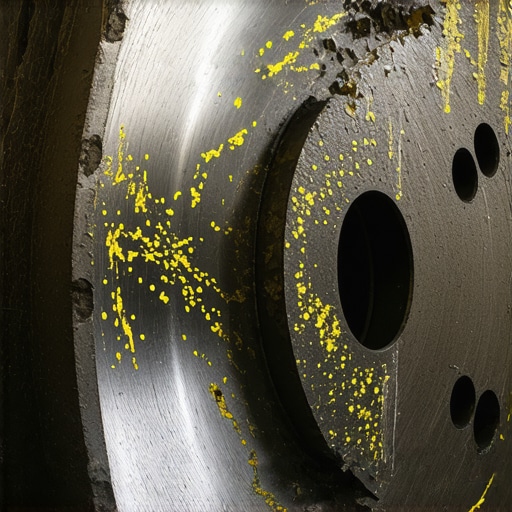
Beyond immediate friction loss, a silicone film interferes with the rotor’s ability to dissipate heat. In high-performance auto repair, we recognize that rotors act as heat sinks. According to research documentation from the Friction Materials Standards Institute (FMSI), even thin layers of non-conductive chemicals can alter the thermal emissivity of the metal. This localized insulation causes ‘hot spots,’ where the temperature spikes significantly higher than the surrounding material. These temperature gradients are the primary cause of cementite formation—extremely hard inclusions in the cast iron that lead to permanent pedal pulsation and required part replacement.
How do you restore a rotor’s friction surface after accidental overspray?
If the contamination is caught immediately, a mechanic may be able to save the rotor using a high-purity, non-chlorinated solvent that leaves no residue. However, the process usually requires a mechanical abrasive, such as a 120-grit flex-hone or ‘whirl-away’ disc, to physically strip the top layer of the iron and any embedded silicone particles. If the vehicle has been driven, the high clamping forces of the caliper have likely driven the lubricant deep into the grain structure of the metal, making a simple wipe-down insufficient for a professional-grade tune up.
The Grime Magnet: Turning Lubricant into Abrasive Slurry
A frequently overlooked consequence of silicone use is its ‘tacky’ nature once it begins to attract environmental debris. While it feels slick to the touch, silicone is an excellent binder for road salt, brake dust, and silica from the pavement. This creates an unintended abrasive paste. As the technician inspects the assembly, they often find accelerated wear patterns and deep scoring that wouldn’t exist in a dry, clean system. This slurry acts like liquid sandpaper, grinding away at the rotor’s thickness and drastically shortening the lifespan of even the most expensive premium pads. This hidden wear mechanism often masks the original symptom of reduced friction with an aggressive mechanical breakdown.
Why Professional Workshops Ban All-Purpose Sprays Near the Lift
In a commercial auto repair environment, the presence of silicone spray in the bay is often a fireable offense during brake work. The risk of aerosolized particles drifting onto a hung rotor is too high. Expert technicians prioritize the use of specialized ‘dry’ cleaners that evaporate completely, leaving the iron pores open for proper pad bedding. This level of rigor ensures that the coefficient of friction remains within the narrow window required by the vehicle’s safety software. Before you reach for that ‘fast-acting’ lubricant to stop a squeak, consider the complex metallurgy at play. Check your current chemical inventory against our list of approved cleaners, and if you’ve already made the mistake of spraying your rotors, don’t wait for a failure—schedule a professional inspection to ensure your stopping power hasn’t been compromised.
Expert Insights & Advanced Considerations
Why High Heat Turns Silicone into Liquid Sandpaper
Most DIYers think silicone spray stays a lubricant forever, but at the extreme temperatures generated during heavy braking, these polymers undergo thermal degradation. Instead of remaining slick, they can break down into silica, which becomes embedded in the iron. This abrasive byproduct is why you see premature scoring on the rotor face even after you think you’ve cleaned the surface. To maintain professional standards, a mechanic must avoid any chemical that isn’t specifically formulated for high-temp friction environments.
The Chemical Reason Pads Never Recover From Contamination
Because modern friction materials are porous, they absorb low-viscosity oils and silicone carriers via capillary action. Even if the surface looks dry, the heat of the next stop will draw those chemicals back to the interface, causing a recurring loss of bite. This is a primary reason why maximize your brake service efficiency with these tips focuses on dry assembly and isopropyl cleaning rather than ‘silencing’ sprays. Once the pad structure is saturated, its shear strength is compromised, making replacement the only safe path forward.
#IMAGE_PLACEHOLDER_E#
Your ABS System Can’t Compute Artificial Slickness
Electronic Stability Control and ABS rely on a specific, linear relationship between hydraulic pressure and deceleration. When silicone creates an artificial slip on one corner of the car, the safety computer detects a deviation it cannot fix through software. This ‘digital confusion’ can lead to unpredictable pedal feedback or increased stopping distances. In the realm of high-performance auto repair, ensuring mechanical consistency is more important than any software calibration. Understanding how a top-rated mechanic ensures safe auto repairs every time means recognizing that hardware integrity is the foundation of all electronic safety systems.
Resources Every Serious Mechanic Should Bookmark
Friction Materials Standards Institute (FMSI): This is the gold standard for identifying pad shapes and material specifications. It provides the technical data necessary to ensure that the friction coefficient of your replacement parts matches the OEM requirements exactly.
SAE International Technical Papers: For those who want to dive into the molecular level of brake fade and chemical contamination, the SAE database offers peer-reviewed studies on how various lubricants affect the transfer layer on cast iron rotors.
Brembo Technical Bulletins: Even if you aren’t working on a supercar, these bulletins provide the most rigorous cleaning and preparation protocols in the industry. They emphasize the ‘hub scrub’ method, which you can learn more about in our guide to the 10 hub scrub that stops brake vibrations.
Keep Your Brake System Lab-Clean
The most important takeaway for any brake service is that friction is not just a physical property; it is a chemical state that must be protected. Using silicone spray on rotors is a fundamental error that compromises the safety logic of the entire vehicle. Whether you are looking for auto repair cost saving tips from industry experts or performing a routine tune up, the rule remains: if it’s not brake cleaner, keep it away from the rotors. If you have already applied a lubricant and are feeling a loss of power, find out how to choose a skilled mechanic you can trust to perform a proper decontamination. We invite you to reach out to us on our contact us page if you have specific diagnostic questions. Staying informed and sticking to mechanical solutions over chemical shortcuts is the only way to ensure your car stops when it matters most.