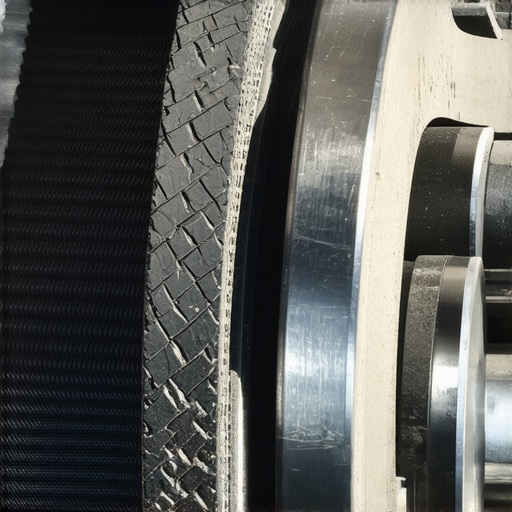
In the realm of advanced automotive diagnostics, the serpentine belt represents the single point of failure for nearly every critical engine accessory, from the alternator to the water pump and power steering system. While older neoprene belts were notorious for visible cracking and chunking, modern EPDM (Ethylene Propylene Diene Monomer) belts are engineered to resist cracking, often maintaining a deceptively healthy appearance even as they reach the point of structural failure. Understanding the physics of belt wear is essential for any mechanic or enthusiast performing a comprehensive ultimate tune-up checklist to prevent catastrophic engine overheating or loss of steering control.
EPDM Engineering Changes the Way We Inspect Accessory Drives
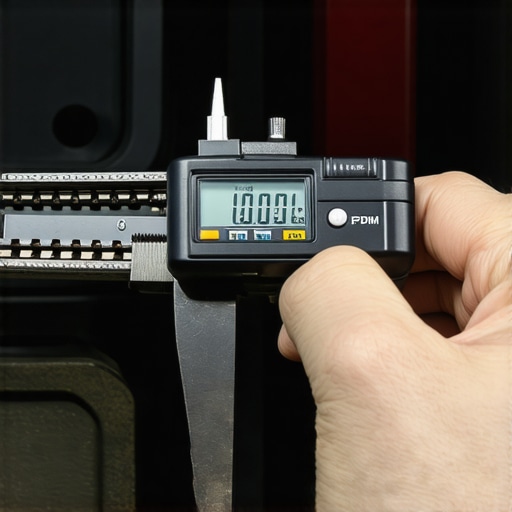
The industry shift to EPDM technology means that the traditional ‘visual crack test’ is largely obsolete. Instead of cracking, modern belts lose material from the ribs, much like a tire loses tread. This loss of material changes the way the belt seats into the pulley grooves, leading to hydroplaning during wet conditions and a loss of effective surface area for torque transfer. When the rib depth is reduced by even 10%, the belt’s ability to grip the pulleys under high load—such as when the A/C compressor engages—is severely compromised. A professional skilled mechanic will use a specialized depth gauge rather than relying on a simple visual scan to determine if the belt has reached its service limit.
Identify the High-Frequency Chirp Before It Becomes a Snap
Acoustic diagnostics are often more telling than visual ones in modern auto repair. A persistent ‘chirp’—a short, sharp sound that occurs at regular intervals—is frequently a symptom of pulley misalignment rather than a faulty belt. However, if this chirp evolves into a rhythmic squeal, it indicates that the belt is slipping and generating excessive heat. This thermal stress rapidly degrades the internal tensile cords of the belt. If you are experiencing these sounds, it is vital to learn how to fix a squeaky serpentine belt without using spray, as topical dressings only mask the friction issues that lead to a sudden snap. According to technical documentation from Gates Corporation, belt slip is the primary precursor to catastrophic cord failure.
Does Your Tensioner Have Enough Dampening Left?
The automatic belt tensioner is the unsung hero of the accessory drive, but its internal spring and dampening mechanism have a finite lifespan. When the dampener fails, the belt begins to oscillate or ‘flutter.’ This high-frequency vibration puts immense stress on the alternator and A/C compressor bearings, while simultaneously fatiguing the belt’s internal structure. If you notice the tensioner arm bouncing excessively while the engine is idling, the system is no longer maintained at the 100-120 lbs of force required for stability. This is a critical component of any advanced tune up or preventative maintenance routine.
Deciphering the Glazed Rib and Pitted Surface Warning
Heat is the silent killer of drive belts. If the underside of the belt appears shiny or ‘glazed,’ it is a sign that the belt has been slipping and the rubber has reached its glass transition temperature. This hardened rubber can no longer grip the pulleys effectively, leading to a feedback loop of more slip and more heat. Additionally, look for ‘pitting’—small holes or missing chunks in the ribs. This usually occurs when road debris or gravel gets trapped between the belt and the pulley. While it might seem minor, each pit is a stress concentrator where a tear can begin. When addressing these issues, ensure your brake service and other safety checks are performed concurrently, as a belt failure at highway speeds can affect power-assisted braking in some vehicle configurations. For more professional insights, explore our essential tune-up tips to boost your car’s performance in 2025.
Watch the Harmonic Balancer for Underlying Alignment Issues
While the belt itself is the focus of most inspections, a seasoned mechanic knows that the root cause of repeated belt failure often lies at the crankshaft. The harmonic balancer—the large pulley mounted to the end of the crank—features a thick rubber dampening ring designed to absorb torsional vibrations from the engine’s combustion strokes. Over time, this rubber degrades, causing the outer ring to shift or ‘wobble’ out of plane with the other accessories. This slight misalignment creates a lateral load on the serpentine belt, forcing the ribs to ride up against the sides of the pulley grooves. If you notice your belt wearing prematurely on just one edge, you should check for balancer runout before assuming the belt was defective. This type of mechanical instability can also contribute to engine-wide symptoms, much like how the 14 dollar PCV valve fix that stops engine oil consumption addresses a small part with a massive system impact.
Why Your Alternator Puts Extreme Stress on Modern EPDM
Modern vehicles demand immense electrical output for advanced infotainment systems, electric power steering, and heated components. When the alternator is under high electrical load, the magnetic resistance within the unit increases, significantly raising the torque required to spin its pulley. This resistive force is transferred directly through the belt. If the belt is glazed or the tensioner is weak, this is precisely when slip occurs. Drivers often report that their car stumbles when the AC is turned on, which is frequently a combination of parasitic engine load and a belt that momentarily loses its grip on the crank pulley. Ensuring the belt can handle these peak torque demands is a vital step in maintaining overall system reliability.
Could That Mysterious Engine Rattle Be a Failing Alternator Decoupler?
Many modern alternators are equipped with an Overrunning Alternator Decoupler (OAD) or a one-way clutch pulley. These specialized pulleys allow the alternator to ‘freewheel’ when engine RPMs drop suddenly, preventing the heavy internal rotor from snapping the belt due to inertia. When these pulleys seize, they introduce massive amounts of vibration into the belt drive system, often manifesting as a heavy rattle at idle that disappears once the engine speed increases. According to technical insights from SAE International, the use of decoupling technology is critical for mitigating the torsional stress found in high-compression, four-cylinder engines. Testing this component requires removing the belt and ensuring the pulley locks in one direction and spins freely in the other—a nuance often missed during a standard auto repair visit.
Beyond the alternator, every component in the accessory drive must be verified for smooth operation. A failing water pump bearing or a dragging A/C compressor clutch can create enough heat to melt the EPDM material, leading to a ‘smeared’ look on the pulleys. If you are chasing a mystery noise, use a mechanic’s stethoscope on the non-rotating bolt head of each pulley to isolate bearing growl. This level of precision prevents the ‘parts cannon’ approach, ensuring you don’t replace a perfectly good belt when the real culprit is a 12-dollar bearing or even the 12 dollar spark plug boot error that causes mystery misfires. If you have ever struggled to find the source of a persistent belt squeak after trying everything, share your story in the comments below or reach out—we’d love to hear how you finally solved the puzzle.
The Critical Role of Clean Pulley Grooves
Installing a new belt on dirty, contaminated pulleys is one of the most common mistakes in professional maintenance. Over years of service, microscopic bits of old rubber and road grime pack into the bottom of the pulley V-grooves. This buildup prevents the ribs of the new belt from seating fully at the bottom of the groove, reducing the contact patch and increasing the likelihood of high-speed slip. When performing a tune up, take the time to clean each pulley with a stiff wire brush and brake cleaner. Removing this debris ensures the new EPDM belt can achieve maximum surface area contact, which is essential for transferring the 50 to 100 horsepower required by some heavy-duty accessory systems during peak operation.
Stop the Fluid Leak Before It Eats Your Accessory Drive
Even the most resilient EPDM compounds have an Achilles’ heel: petroleum-based fluids. When an aging valve cover gasket or a front main seal begins to weep, the resulting oil mist doesn’t just coat the engine block; it saturates the belt’s ribbing. Unlike older neoprene belts that might simply slip when greasy, EPDM tends to absorb oil, causing the rubber to swell and soften. This volumetric expansion alters the rib profile, making it impossible for the belt to sit correctly in the pulleys. If you’ve ever noticed a belt that looks ‘swollen’ or feels unusually tacky, you’re likely dealing with fluid ingress. Take a moment to check your front-of-engine seals—it might save you a tow bill next month. According to technical bulletins from Continental ContiTech, even minor oil contamination can reduce the service life of a drive belt by more than 70% due to structural softening.
Why does my belt keep jumping off the tracks after a pump replacement?
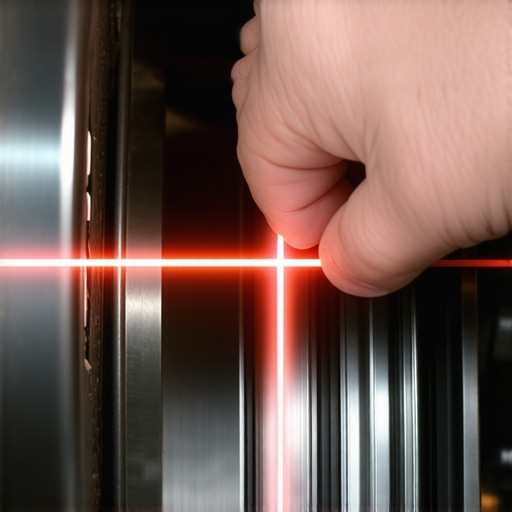
A common frustration during auto repair is the ‘throwing’ of a brand-new belt shortly after replacing an alternator or power steering pump. This is almost always a result of pulley hub offset. When pressing a new pulley onto a shaft, a mechanic must ensure it is flush with the manufacturer’s specifications, often within a tolerance of less than 0.5mm. If the pulley sits just a hair too far forward or back, it creates a ‘lead-in’ angle. As the belt enters the misaligned pulley, the lateral force tries to pull it over the shoulder of the groove. Using a laser alignment tool is the gold standard here; it projects a beam across the faces of all pulleys to highlight even the slightest angular or parallel misalignment that the naked eye would miss.
Why Laser Alignment Trumps the Eyeball Test
In high-performance or high-mileage scenarios, simply ‘eyeballing’ the belt path is a recipe for premature failure. Parallel misalignment occurs when two pulleys are in the same plane but their centers are offset, while angular misalignment happens when the shafts are not parallel. Both conditions generate massive amounts of internal friction within the belt’s tensile cords. During a comprehensive tune up, a technician using a professional laser tool can identify if a bracket has bent or if a bushing in the A/C compressor mount has perished. This precision ensures that the 100+ horsepower being channeled through that narrow strip of rubber isn’t being wasted as heat and noise.
Don’t Ignore the Micro-Cracks in Your Plastic Idler Pulleys
While we focus on the belt, the idler pulleys—often made of glass-reinforced nylon—are prone to their own specific failure modes. Over thousands of heat cycles, the plastic can become brittle and develop microscopic stress fractures around the bearing race. If these pulleys shatter at high RPM, the resulting shrapnel can pierce the plastic timing cover or damage the radiator. When you have the belt off for a brake service or oil change, spin every idler by hand. It should feel smooth and silent; any ‘dry’ spinning sound or gritty resistance indicates the internal grease has cooked out, and the pulley is on borrowed time. This is especially critical in modern engines where the belt routing is complex and the wrap angles are tight.
Debunking the Myth of the Stretching Serpentine Belt
Many drivers assume that a loose belt has simply ‘stretched’ over time, but the material science of EPDM tells a different story. Modern belts are reinforced with high-strength aramid or polyester tensile cords that are incredibly dimensionally stable; they do not actually elongate in the traditional sense. What is often perceived as stretch is actually the cumulative effect of rib wear. As the rubber ribs lose material, the belt sits deeper in the pulley V-grooves. This effectively increases the path length the belt must travel, causing the automatic tensioner to rotate further toward its stop. If your tensioner indicator shows the system is out of range, the belt hasn’t grown longer—it has simply become too thin to maintain proper geometry.
In regions where winter maintenance involves heavy application of liquid brines or magnesium chloride, the accessory drive faces an invisible threat. These salts do not just corrode the engine block; they penetrate the micro-pores of aluminum pulleys, creating a rough, oxidized surface. This oxidation acts as a high-grit sandpaper, rapidly grinding down the EPDM ribs of even the highest quality belts. A seasoned mechanic knows that simply replacing the belt is a temporary fix if the pulley surfaces are pitted. Restoring the smooth finish of the pulley grooves is a non-negotiable step in a high-level tune up to ensure the new belt is not shredded within its first 5,000 miles.
Why Hybrids Punish Belts More Than Your Average Commuter
The rise of mild-hybrid technology has introduced the Integrated Starter Generator (ISG), a component that fundamentally changes the physics of the serpentine system. In these vehicles, the belt is not just a passive transmitter of power; it is the primary medium for cranking the engine during stop-start cycles. This requires a ‘high-modulus’ belt construction capable of handling instantaneous torque spikes that would snap a standard EPDM belt. When performing auto repair on a hybrid, never substitute a standard belt for an OE-spec high-torque variant. The tensioning requirements are also vastly different, often requiring specialized hydraulic dampers that manage the bi-directional tension experienced during regenerative braking and engine restarts.
Can a Thermal Camera Spot a Bearing Before It Seizes?
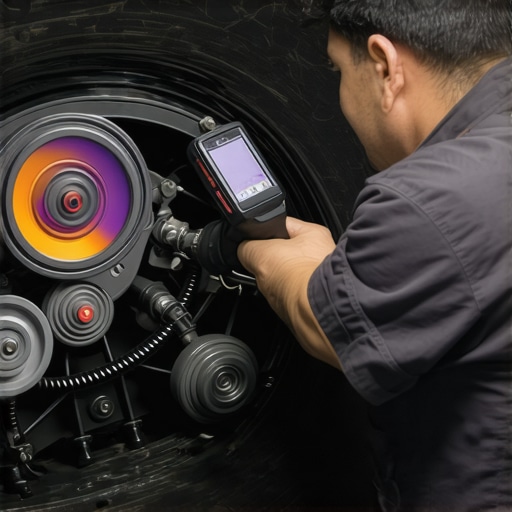
Advanced technicians are increasingly moving beyond the stethoscope and adopting infrared thermography to diagnose accessory drive health. By using a thermal imaging camera, you can visualize the heat signature of each pulley after a ten-minute drive. A pulley bearing that is beginning to fail will often show a temperature signature 20 to 30 degrees Celsius higher than its neighbors. This localized ‘hot spot’ indicates internal friction that has not yet manifested as an audible growl. Identifying these thermal anomalies during a routine brake service or inspection allows for a preemptive strike against a breakdown. According to the technical expertise shared by Dayco Aftermarket, thermal mapping is becoming a cornerstone of predictive maintenance in professional fleets.
Stop the Chatter by Checking Your Engine Mount Integrity
Sometimes, the source of a persistent belt vibration is not in the drive system at all, but rather the mounting hardware of the engine itself. If an engine mount has collapsed, the entire powertrain can tilt slightly, shifting the geometry of the belt’s path relative to chassis-mounted components like the A/C condenser or power steering lines. This shift introduces a resonance that can be felt through the steering wheel. A comprehensive tune up should always involve a ‘load test’ on the mounts to ensure the engine remains perfectly leveled. This systemic view separates a master mechanic from someone who just swaps parts, as it addresses the environmental factors that lead to premature belt fatigue and accessory wear.
Why High-Amperage Alternators Require Decoupler Maintenance
As vehicles integrate more power-hungry electronics, alternators have moved from 90-amp units to 200-amp behemoths. The rotational inertia of these larger rotors is significant. When you lift off the throttle, the engine slows down, but the alternator wants to keep spinning at its current velocity. This is why the Overrunning Alternator Pulley (OAP) is so critical—it allows the alternator to ‘overrun’ the belt, preventing the belt from being ‘jerked’ by the engine’s deceleration. If you experience a ‘thump’ when shutting off the engine, your OAP might be locked. Testing this is as vital as any brake service, as a locked pulley will eventually shatter the belt tensioner from the repeated shock loads. If you have encountered a belt mystery that defied logic, or if you have used thermal imaging to catch a ghost in the machine, we invite you to share your technical wins in the comments below.
Expert Insights & Advanced Considerations
Ditch the Visual Check for a Rib Depth Gauge
Because EPDM technology masks structural fatigue, a seasoned mechanic must transition from looking for cracks to measuring material loss. Utilizing tune-up strategies to save money on auto repairs involves recognizing that a belt with full ribs but hardened rubber is just as dangerous as a frayed one. A plastic depth gauge provides the empirical data needed to justify a replacement before the belt hydroplanes on the pulley surface during heavy rain.
Why Tensioners Fail Before the Belt Does
The internal damping mechanism of an automatic tensioner often loses its calibrated resistance long before the belt shows wear. If you notice a harmonic vibration, it might not be the rubber; it could be the tensioner’s inability to absorb crankshaft pulses. This is a common oversight during a standard auto repair, often leading to mystery noises that persist even after a belt swap. Integrating this check into your mechanic tips for diagnosing common auto problems ensures a first-time fix and prevents premature alternator bearing failure.
The One-Way Clutch Pulley Inspection
Modern high-output alternators rely on overrunning alternator decouplers (OAD) to prevent belt snap during rapid deceleration. A locked OAP pulley will mimic the symptoms of a failing harmonic balancer, causing the belt to flutter violently at idle. If your car shakes at exactly 55 mph or exhibits a heavy rattle when coming to a stop, the decoupler is the prime suspect. Testing this requires a specific splined tool and a hands-on verification of the one-way clutch action to ensure system stability.
#IMAGE_PLACEHOLDER_E#
Curated Expert Resources
Gates Corporation Technical Center: This is the gold standard for EPDM wear specifications and belt routing diagrams across all major OEMs. It provides the technical data necessary to understand why modern belts behave differently than their neoprene predecessors.
Dayco Aftermarket Training: Offers deep-dive videos on system-part diagnostics, focusing on how the tensioner, pulleys, and belt interact as a single unit rather than isolated components.
SAE International Research Papers: For those who want to understand the physics of torsional vibration and why decoupling technology is mandatory for modern 4-cylinder engines, these peer-reviewed documents offer the highest level of technical insight.
Precision Over Guesswork in Modern Drive Systems
The evolution of accessory drive systems from simple V-belts to complex, electronically managed EPDM networks requires a shift in how we approach auto repair. Success is no longer found in a quick visual glance but in the application of precision tools like laser aligners and rib gauges. By addressing the root causes—such as pulley contamination, tensioner fatigue, and decoupler failure—you ensure the longevity of the entire engine. When you follow these professional standards for checking service quality, you elevate the reliability of the vehicle beyond simple maintenance. We invite you to share your experiences with high-mileage EPDM failures or your favorite diagnostic shortcuts in the comments below.