
The phenomenon of a vehicle shaking at a specific velocity—most famously around the 55 to 60 mph mark—is rarely a random occurrence. From a mechanical engineering perspective, this is a textbook case of resonant frequency. Every rotating component in your vehicle, from the CV axles to the wheels, has a natural frequency. When the rotational speed of an unbalanced tire matches the natural frequency of the suspension system, the amplitude of the vibration spikes significantly. This is why the steering wheel might feel like it is jumping out of your hands at a specific speed, only to smooth out as you accelerate toward 70 mph. This specific range is often the “sweet spot” where mechanical imbalances are amplified by the physics of the vehicle’s design. [IMAGE_PLACEHOLDER]
Stop Chasing Ghosts and Focus on Dynamic Wheel Balance
When a driver visits an auto repair shop complaining of high-speed vibration, the first suspect is almost always the wheel balance. However, a standard “static” balance isn’t always enough to solve the 55 mph mystery. Modern vehicles require a dynamic balance that accounts for weight distribution across both the inner and outer planes of the wheel. If your tires are not balanced correctly, the centrifugal force created by the heavy spot will pull the wheel assembly up and down or side to side with every revolution. At 55 mph, a typical tire is rotating approximately 800 times per minute. If the imbalance is severe, that translates to 800 rhythmic “hammer blows” to your suspension every sixty seconds.
Why Does the Shuddering Disappear as You Increase Velocity?
It seems counterintuitive that driving faster would make a car feel smoother, but it comes down to the dampening effects of your suspension and the shift in harmonic frequency. As you move from 55 mph to 70 mph, the frequency of the vibration increases to a point where the suspension’s shock absorbers and bushings can more effectively mask the oscillation. The imbalance is still there, and it is still causing wear on your wheel bearings and tie-rod ends, but the vehicle is no longer “ringing” like a bell. Professional mechanic tips for diagnosing vibrations often emphasize that “smoothing out” at higher speeds is the hallmark of a tire-related harmonic issue rather than a structural failure.
When Brake Rotor Runout Mimics a Tire Balance Issue
While tires are the primary culprit, a comprehensive brake service assessment is sometimes necessary to rule out lateral runout in the rotors. If a brake rotor is warped or has uneven pad deposits—a condition often discussed in brake service secrets for longevity—it can create a rhythmic oscillation that travels through the steering rack. This is particularly common if the vibration intensifies slightly when you rest your foot on the brake pedal at highway speeds. According to technical standards published by SAE International, even microscopic variations in rotor thickness can induce significant steering wheel feedback when the components reach high thermal loads.
Identify Hidden Flat Spots and Radial Force Variation
Sometimes the wheel is balanced, but the tire itself is “out of round.” This is known as radial force variation. A tire can have a stiff spot in the sidewall that acts like a speed bump every time it hits the pavement. Even the most precise tune up of your engine won’t fix a structural defect in the tire’s carcass. High-end shops use Road Force Balancers that apply a load to the tire to simulate the weight of the vehicle, identifying these hidden hard spots that a traditional balancer would miss. If you’ve noticed these symptoms persisting after a basic balance, it’s time to consult with an expert mechanic who understands high-speed harmonics to ensure your vehicle remains safe and efficient. Don’t let a minor vibration turn into a major suspension overhaul.
Stop Ignoring the Rubber Between Your Metal Parts
While tires are the most frequent offenders, they rarely act alone. Think of your suspension bushings as the insulators of your vehicle’s chassis. When these high-density rubber or polyurethane components degrade, they lose their ability to dampen the minute oscillations produced by the road.
If you find that your vehicle drifts slightly or that your steering wheel isn’t straight after an alignment, there is a high probability that a worn control arm bushing is allowing the wheel assembly to “shimmer” under load. This shimmy hits its peak resonance at highway speeds, effectively turning a minor tire imbalance into a terrifying vibration that resonates through the floorboards.
Hunt Down Driveline Imbalances in the CV Axles
If the vibration feels like it is coming from “under your seat” rather than through the steering wheel, you need to look past the front tires. The CV (constant velocity) axles transfer power from the transmission to the wheels, and if the protective boots have failed, dirt and debris will quickly grind down the internal bearings.
You should learn how to identify a bad CV axle before it snaps, as a seized joint can create a heavy rotational wobble that mimics a tire issue. Unlike wheel balance, driveline vibrations often fluctuate based on whether you are accelerating or coasting, providing a vital clue for any auto repair specialist.
Why Does Your Steering Wheel Shake Even After a Perfect Balance?
This is the question that baffles most DIYers, and the answer often lies in the “stacking” of tolerances. Every component has a manufacturing tolerance. If your wheel hub has a tiny amount of runout and your new rotor also has a tiny amount, and they happen to be installed in a way where those high spots align, the result is a massive vibration.
The National Institute for Automotive Service Excellence (ASE) suggests that a technician must look at the vehicle as a unified system rather than a collection of isolated parts. Professional brake service should always include a check of the hub surface to ensure it is perfectly flat before mounting new rotors.
Verify Your Shock Absorbers Can Still Handle the Bounce
We often think of shocks as “comfort” parts, but their primary job is to keep the tire in contact with the road. If your struts are “leaking or soft,” they can no longer suppress the natural oscillation of the tire. You can easily learn how to tell if your shocks are shot without a mechanic’s help by observing how the car settles after hitting a bump.
A weak shock allows a tire with even a 0.25-ounce imbalance to bounce uncontrollably at 55 mph, a phenomenon known as “wheel hop.” Ensuring your dampers are healthy is a critical part of any long-term tune up strategy for your vehicle’s handling. Have you noticed your car shaking more on specific stretches of highway? Tell us about the “vibration zones” in your area in the comments below, or share this guide with a friend who is tired of their steering wheel dancing at 60 mph.
Don’t Overlook the Brackets Holding Your Engine in Place
When we talk about vibrations, we usually focus on the spinning parts, but the components that hold those spinning parts can be just as guilty. Engine and transmission mounts are designed to isolate the cabin from the natural torque and vibration of the drivetrain. Over time, the hydraulic fluid inside these mounts can leak, or the rubber can harden and crack. If a mount has collapsed, the engine’s natural firing pulses are no longer dampened. During a routine tune up, a technician might check your spark plugs but miss a sagging mount that only reveals its failure when the engine is under the specific load required to maintain 60 mph. This creates a structural resonance that feels like a tire issue but persists regardless of how many times you balance the wheels.
Driveshaft Harmonics: When the Problem Moves Under Your Seat
For those driving rear-wheel or all-wheel-drive vehicles, the culprit often hides in the driveshaft. A driveshaft is a precision-balanced tube that spins at several times the speed of your tires. If a universal joint (U-joint) begins to seize, it creates a binding effect that introduces a high-frequency buzz. Unlike the rhythmic thumping of a tire, a driveshaft imbalance often feels more like a tingle in the seat of your pants. Mechanical experts at the Tire Industry Association (TIA) note that even a small amount of debris or a missing balance weight on the shaft can trigger a harmonic vibration that peaks exactly at highway cruising speeds. 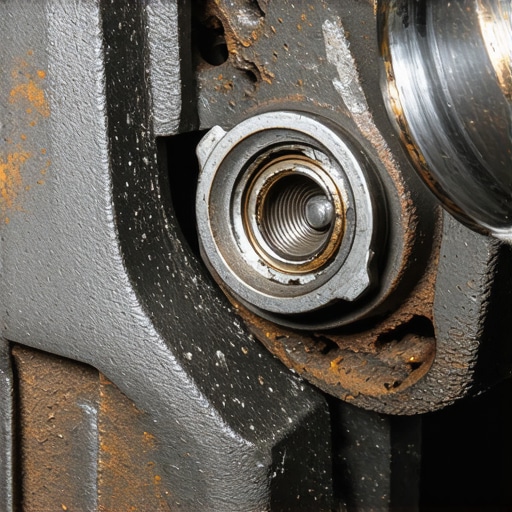
Can a Stuck Brake Caliper Cause a Vibration That Mimics an Out-of-Balance Tire?
The answer is a definitive yes, though the mechanics are distinct. A dragging brake caliper generates immense heat, which can lead to temporary thermal distortion of the rotor. This is known as hot spotting. As the rotor expands unevenly, it creates a pulse that feels identical to a wheel balance issue. If you notice a faint smell of burning toast or find one wheel significantly hotter than the others after a highway stint, your brake service needs to go beyond just pads and rotors; you likely need a caliper overhaul. This is a nuanced auto repair challenge because the vibration may disappear once the brakes cool down, making it a ghost that many shops struggle to catch.
Centric Mounting Matters More Than You Think
Sometimes the parts are perfect, but the installation is flawed. Most modern vehicles use hub-centric wheels, where the center hole of the wheel fits snugly over a lip on the hub. This ensures the wheel is perfectly centered. However, if you are using aftermarket wheels without the proper hub-centric rings, you are relying on the lug nuts to center the wheel (lug-centric). Even a fraction of a millimeter of offset can cause a massive vibration at 55 mph. If you’ve recently upgraded your rims and the shake started immediately, don’t just assume they need a balance; verify the mounting interface is precise. Have you checked your hub-to-wheel fitment lately? A quick inspection could save you hours of diagnostic frustration.
Look Beyond the Bearing for Microscopic Axial Play
While a failing wheel bearing typically announces itself with a low-frequency growl, a bearing in the early stages of fatigue can exhibit minute axial play that only manifests as a vibration under high-load highway speeds. This microscopic instability allows the entire hub assembly to oscillate within the knuckle. During a professional auto repair diagnostic, a technician might find that the bearing feels solid under a manual ‘shake test’ but fails to maintain concentricity when subjected to the 800+ RPMs required at 60 mph. This subtle deviation is often exacerbated by heat expansion, meaning the shake might only appear after twenty minutes of driving once the grease has reached operating temperature.
Identify the Silent Culprit of Aerodynamic Fluttering
Not every highway vibration is mechanical; some are purely atmospheric. Modern vehicles utilize extensive underbody shielding and plastic splash guards to improve fuel efficiency and reduce drag. If a single plastic fastener is missing or a shield is slightly deformed, the air rushing under the vehicle at 55 mph can create a ‘reed effect,’ where the plastic panel flutters violently. This harmonic vibration is often transmitted through the subframe and feels remarkably like a wheel balance issue. If you have recently had a tune up or an oil change where the belly pan was removed, verify that every clip is seated securely. Aerodynamic flutter is distinctive because it often changes in intensity based on wind direction or when passing large trucks, a nuance that tire-related issues lack.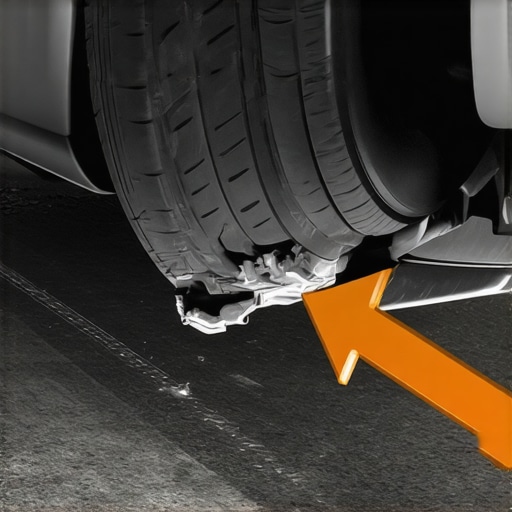
Could Your Electronic Power Steering System Be Amplifying a Minor Oscillation?
The transition from hydraulic to Electronic Power Steering (EPS) has introduced a new variable in the fight against highway shakes. EPS systems use sophisticated algorithms to provide ‘active dampening’ and ‘pull compensation.’ However, if the torque sensor in the steering column is slightly out of calibration, it can create a feedback loop. The system detects a tiny road-induced vibration and attempts to correct it, but the correction is millisecond-delayed, resulting in a synthesized shimmy that feels mechanical but is actually software-driven. Resetting the EPS steering angle sensor is a specialized step often overlooked during a standard brake service or alignment but is essential for modern steering rack health.
Don’t Let Nylon-Belted Tires Ruin Your First Ten Minutes
Many high-performance and heavy-duty tires utilize nylon overlay belts for structural integrity at speed. These belts are prone to ‘temporary flat-spotting’ if the vehicle sits overnight, especially in cooler climates. This phenomenon, colloquially known as ‘morning sickness,’ creates a significant vibration at 55 mph that miraculously disappears after the first few miles of travel as the tires warm up and regain their shape. The U.S. Tire Manufacturers Association (USTMA) notes that while this doesn’t necessarily indicate a defective tire, it can be mitigated by maintaining precise cold inflation pressures. If your vibration is a morning ritual that fades into a smooth ride, your concern is likely temporary deformation rather than a permanent mechanical failure. Professional brake service technicians should always check for flat-spotting before assuming a rotor is warped, as the symptoms can overlap during the initial warm-up phase of a commute. Have you noticed your car’s behavior changing as the tires warm up, or does the shake persist throughout the day? Join the conversation in the comments below and share your experience with high-speed harmonics.
Advanced Diagnostic Perspectives for Complex Shakes
Stop Blaming the Tires and Look at Hub Concentricity
Many technicians overlook the interface between the wheel and the hub. Even if your tires are balanced correctly, any corrosion or debris on the hub surface can prevent the wheel from sitting perfectly flush. Performing a thorough hub scrub is a critical step in professional auto repair that eliminates microscopic axial play, which often translates to that maddening 55 mph shimmer.
Account for the Harmonic Dampening of Modern Bushings
Your suspension isn’t just a set of springs; it is a complex filter. High-density rubber components are designed to absorb road noise, but when they harden with age, they lose their isolation properties. This makes the vehicle hyper-sensitive to minor imbalances. If you’ve followed mechanic tips for diagnosing common problems and still feel a pulse, it’s likely that a “soft” bushing is failing to dampen a natural resonant frequency.
[IMAGE_PLACEHOLDER_E]
Recognize How Temperature Shifts Mask Mechanical Faults
Heat expansion can be your best friend or worst enemy in diagnostics. A vibration that only occurs after twenty minutes of highway driving points toward a brake service issue, such as a sticking caliper or a rotor that develops “hot spots.” Conversely, a shake that disappears as the tires warm up is likely temporary flat-spotting, a nuance that requires patience rather than parts replacement.
Authority Sources to Refine Your Technical Edge
To truly master high-speed harmonics, you must look toward the organizations that set the benchmarks for the industry. SAE International provides the mathematical frameworks for resonant frequency and vehicle dynamics that define how modern chassis are engineered. The National Institute for Automotive Service Excellence (ASE) offers advanced training modules that help technicians differentiate between structural and rotational imbalances during an auto repair assessment. The Tire Industry Association (TIA) remains the definitive source for understanding radial force variation and how load-force balancing impacts highway stability.
A Master Mechanic’s Final Verdict on 55 MPH Vibrations
Solving why your steering wheel shakes at exactly 55 mph requires moving beyond guesswork and embracing a systematic approach. From verifying that your shocks are not shot to ensuring your tune up includes a driveline inspection, consistency is the key to a smooth ride. Don’t settle for a “good enough” balance; seek out a professional who understands that vehicle safety and performance are built on a foundation of precision. Do you have a vibration story that defied the usual fixes? Reach out to us through our contact page or share your technical insights with our community of drivers below.