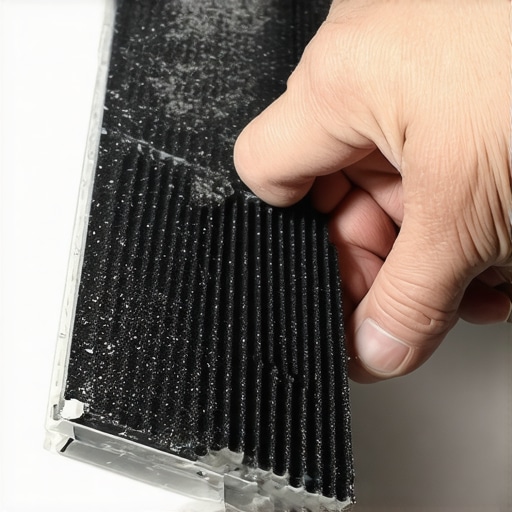
Expert technicians often witness a recurring phenomenon in the service bay: a customer arrives convinced their air conditioning compressor has seized, only to find the solution costs less than a tank of gas. The cabin air filter is the most underestimated component in the modern HVAC system. While it appears to be a simple pleated paper element, its role in maintaining specific airflow velocity is critical for the evaporation process that actually cools your vehicle. When this filter reaches its particulate saturation point, the entire thermal exchange cycle breaks down, leading to symptoms that mirror a catastrophic system failure and potentially leading to unnecessary auto repair expenses.
Prevent Costly Misdiagnosis of Total HVAC Failure
When airflow is restricted, the evaporator coil—the part of the AC system that gets cold—cannot transfer heat effectively because there is not enough air mass passing over its fins. This causes the coil temperature to drop below freezing, often leading to ice formation that physically blocks what little air was moving. To a driver, this feels like the AC is “dying” because the airflow gradually diminishes to a whisper over a long drive. Professional mechanic tips diagnosing common auto problems suggest that before you authorize a multi-hundred dollar diagnostic fee, you must verify the integrity of the intake path.
Thermal Exchange and Static Pressure Barriers
A restricted filter creates a high static pressure environment within the HVAC box, forcing the blower motor to work harder against a wall of debris. This is not merely a comfort issue; it is a mechanical hazard. High-quality filters capture everything from pollen to microscopic brake dust, but as they fill, the lack of CFM (Cubic Feet per Minute) causes the system to hunt for equilibrium. Utilizing a 12-dollar cabin filter hack is often the most effective way to restore climate control performance and prevent mildew odors from taking root in the damp evaporator housing.
End the Cycle of Unnecessary Refrigerant Recharges
It is a common industry pitfall for shops to suggest a refrigerant “top-off” when the real issue is a simple lack of airflow. If your essential guide to auto repair doesn’t prioritize filtration, you are likely overlooking a key maintenance pillar. A low-flow state forces the compressor to cycle more frequently, which an inexperienced technician might mistake for a low-pressure condition caused by a leak. This leads to overcharging the system, which can actually cause permanent damage to the compressor valves.
Why does your blower motor sound strained at high speeds?
The high-pitched whine or labored hum you hear when you turn the fan to the maximum setting isn’t always a failing bearing. It is often the sound of cavitation—the blower motor trying to pull air through a clogged medium that can no longer support the demand. According to technical standards established by the Society of Automotive Engineers (SAE), maintaining specific airflow rates is vital for preventing electrical component overheating. If you haven’t integrated filter checks into your regular tune-ups, you are essentially suffocating your vehicle’s most expensive interior components. Expert Tip: Always inspect the filter housing for rodent nests or moisture, as these can block airflow even if the filter itself looks relatively clean. Are you seeing a drop in fuel economy alongside your AC issues? It might be time to investigate further into how various systems interact to drain your engine’s efficiency.
Many modern climate control issues are compounded by inconsistent voltage delivery. If your headlights dim when the AC kicks on, you aren’t necessarily looking at a failing alternator; often, the culprit is a degraded ground path that starves the electrical system of the current required to engage the compressor clutch cleanly. Before you drop hundreds on a new charging system, you should stop buying new batteries and check this ground connection first. A stable 14.2 volts is the lifeline of your vehicle’s electronic control unit (ECU); without it, sensors provide erratic data that leads to poor fuel trim, weak spark, and eventually, erratic shifting. A resistive ground bolt essentially acts as an unwanted heater, wasting precious energy and causing control modules to brown out during high-load events like the cooling fan engaging. This cascading failure of electrical integrity is frequently what sends a perfectly repairable car to the scrap heap prematurely because the owner cannot find the ‘ghost’ in the machine.
Could a simple sensor cleaning restore your lost engine power?
When you notice a hesitation during acceleration or a sluggish response when passing on the highway, your mind might jump to failing fuel injectors or a worn transmission. However, much like the cabin filter’s role in the HVAC system, the Mass Air Flow (MAF) sensor is the gatekeeper of the combustion cycle. If it is coated in a fine layer of oil or dust, it sends incorrect air-mass data to the engine’s brain, resulting in a miscalculated air-fuel ratio. You can often recover your MPG with a simple 12-dollar sensor cleaning. This is not just about saving fuel; it is about preventing the lean condition that causes high-heat damage to your cylinder heads and exhaust valves. Many drivers ignore this vital component until the car enters a forced limp mode, but the performance degradation is usually linear, meaning you have likely been losing power and efficiency for months before the dashboard illuminates.
Identify the Five-Dollar O-Ring Saving Your Idle
Vacuum leaks are the bane of a smooth-running engine, yet they are frequently misdiagnosed as ignition failures or faulty spark plugs. An engine that lunges at stoplights or fluctuates wildly in RPM while idling is often just sucking ‘unmetered’ air through a perished seal. In many cases, it is the 5-dollar O-ring that stops your engine from lunging at stoplights. These small rubber components harden over time due to thousands of heat cycles, creating microscopic gaps that disappear once the engine reaches full operating temperature—making them notoriously difficult to catch during a standard cold-start diagnostic at a busy shop. When the seal fails, the engine pulls in oxygen that the MAF sensor never recorded, leading to a confusing mix that the computer tries to correct by dumping in more fuel, which only exacerbates the rough running condition.
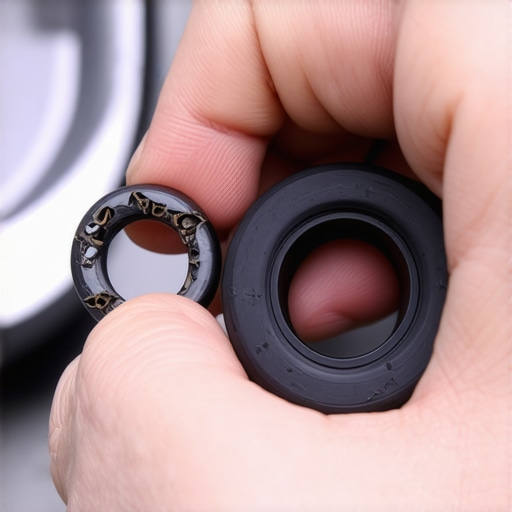
Expanding your diagnostic lens is the hallmark of an empowered car owner. If you find your car struggling with power delivery or a shaky vibration at red lights, don’t ignore the 15-dollar sensor that fixes your rough idle in minutes. According to the National Institute for Automotive Service Excellence (ASE), nearly 70% of check engine lights are triggered by simple sensor malfunctions or loose electrical connections rather than catastrophic mechanical hardware failure. This data underscores the importance of a systematic approach rather than the ‘parts cannon’ method of repair where expensive components are swapped in hopes of a lucky fix. If you are experiencing a high-pitched ‘pinging’ sound under load, you might be dealing with more than just poor-quality gasoline; why your engine pings when you accelerate up a hill often boils down to carbon buildup or timing adjustments that are easily addressed before they lead to permanent piston damage. Have you ever successfully fixed a major-sounding issue with a minor part? Share your story in the comments below, or check out our specialized guide on how to save your transmission after a radiator leak to stay ahead of the next potential mechanical disaster.
Stop the Chemical Erosion of Your Cooling System
While many drivers focus on oil changes, the pH balance of your coolant is a silent engine killer that operates largely out of sight. Over time, the corrosion inhibitors in modern Organic Acid Technology (OAT) or Hybrid OAT coolants deplete, turning your life-sustaining liquid into an acidic electrolyte. Once this chemical shift occurs, a process called electrolysis begins to eat away at the softest metals in your engine—typically the heater core and the head gasket’s fire rings. According to the ASTM D3306 technical standards, automotive engine coolants must maintain specific chemical stabilities to prevent this galvanic corrosion. If you see a faint ‘pink crust’ or white powdery residue around hose junctions, your system is already venting pressure and inviting oxygen to accelerate this internal decay.
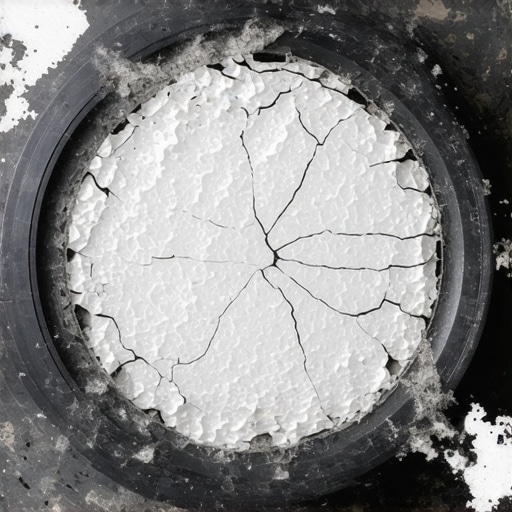
Why does your temperature gauge spike only during stop-and-go traffic?
This nuanced symptom often points toward a failing radiator cap or a primary cooling fan that has lost its high-speed circuit. A radiator cap is far more than a lid; it is a precision pressure-relief valve designed to raise the boiling point of your coolant by roughly 3°F for every pound of pressure (PSI) it maintains. If the seal is even slightly compromised, the system cannot reach its design pressure of 13 to 16 PSI, allowing the coolant to boil locally within the cylinder head passages. This creates steam pockets that insulate the metal from the liquid, leading to rapid heat spikes that vanish once you regain road speed and airflow. If you haven’t yet, learn how to pressure test your cooling system at home to catch these leaks before they warp your engine block and leave you stranded.
Silence the Clunks by Replacing These Hidden Rubber Components
Modern multi-link suspensions offer incredible handling, but they rely on a dozen or more rubber-to-metal ‘compliance’ bushings to isolate road noise. When these bushings tear, you don’t just get an annoying noise; you lose the precision of your alignment. A car that ‘darts’ under heavy braking or feels unsettled over mid-corner bumps is often suffering from control arm bushing failure rather than a major steering rack issue. Unlike a ball joint, which might squeak or pop, a failed bushing often remains silent until it reaches a critical point of delamination, allowing the wheel’s caster and toe settings to shift dynamically while you drive. This is why a standard static alignment at a tire shop often fails to fix a persistent ‘pulling’ sensation—the geometry is only correct when the car is sitting still on the rack.
Advanced diagnostic technicians use ‘chassis ears’—electronic microphones clipped to various suspension points—to isolate these harmonic ghosts that traditional inspections miss. If you’re chasing a vibration that feels like a bad tire but persists after three balances, look toward the inner tie rods or the steering rack mounting grommets. These small rubber interfaces absorb the micro-vibrations of the road, and when they harden with age, they transmit every imperfection directly into the steering column. Integrating a thorough inspection of these ‘soft’ components into your mechanic insider secrets to extending vehicle life routine will prevent the rapid tire wear that usually follows a neglected suspension system. You might be surprised at how a simple set of polyurethane inserts or fresh OEM bushings can restore the factory-fresh steering response you thought was lost forever. Even the most robust components are susceptible to the cumulative effects of thermal cycling and road salt, which lead to a loss of structural elasticity that no amount of grease can fix, eventually forcing the steering rack to compensate for play that shouldn’t exist.
While most drivers focus on pad thickness, the chemical integrity of the hydraulic fluid is the most neglected safety factor in any vehicle. Brake fluid is hygroscopic, meaning it actively attracts and absorbs moisture through microscopic pores in rubber hoses and the master cylinder reservoir seal. Over time, this moisture accumulation drastically lowers the fluid’s boiling point, a phenomenon known as vapor lock. According to technical bulletins and safety standards from the National Highway Traffic Safety Administration (NHTSA), even a 3% water content can reduce the boiling point by over 100°F, potentially leading to total pedal failure during heavy braking events. When the fluid boils, it turns into a gas, and since gas is compressible whereas liquid is not, your foot goes to the floor without actually slowing the vehicle.
Stop Ignoring the Invisible Moisture in Your Brake Lines
The transition from a crisp, responsive pedal to a ‘spongy’ sensation is often so gradual that the brain compensates for the change, masking a critical safety risk. This isn’t just about heat management; moisture also triggers internal corrosion within the expensive Anti-lock Braking System (ABS) pump and modulator valves. These high-precision components rely on the lubricity of fresh fluid to function within millisecond tolerances. If you see a dark, tea-colored liquid in your reservoir, the corrosion inhibitors have already failed, and you are likely circulating abrasive metallic particulates through your calipers and master cylinder. 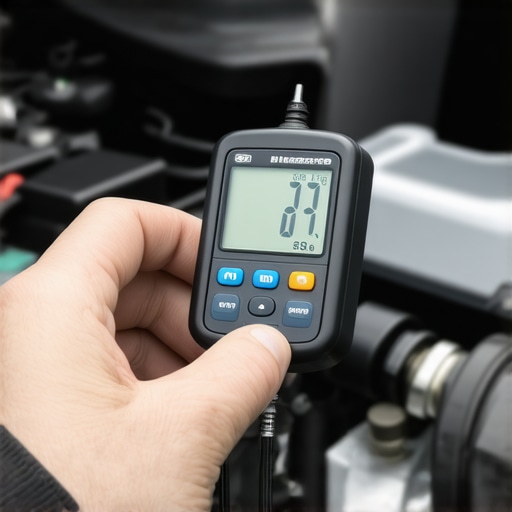
How does boiling point depression compromise your emergency stopping distance?
Under extreme load, such as descending a steep mountain grade or during repeated high-speed stops, the kinetic energy converted into heat at the friction surface transfers directly into the caliper pistons. If the fluid contains moisture, that thermal energy causes the water to flash into steam. Unlike hydraulic oil, steam is highly compressible, meaning the force you apply to the pedal is wasted squeezing gas bubbles rather than clamping the rotors. To maintain peak safety, professional technicians utilize electronic refractometers or copper-strip testing to quantify contamination levels—tools that go far beyond a simple visual check and provide a definitive snapshot of the fluid’s thermal stability.
Debunking the Myth of Forever Transmission Fluid
Modern manufacturers frequently market “lifetime” transmission fluids, but in the realm of high-performance engineering, ‘lifetime’ usually refers to the duration of the factory warranty, not the actual mechanical lifespan of the gears. Transmission fluid is a complex cocktail of detergents, friction modifiers, and viscosity index improvers that undergo massive shear stress every time you accelerate. As the fluid oxidizes due to heat, it loses its ability to keep the internal clutch packs from slipping, leading to increased heat and further degradation. A simple fluid analysis often reveals a high concentration of suspended friction material, which acts as an abrasive, accelerating the wear on needle bearings and planetary gear sets. Instead of waiting for a shift flare or a ‘shudder’ at highway speeds, proactive owners should treat transmission service as a non-negotiable insurance policy against a multi-thousand-dollar rebuild. CTA: Tell us in the comments if you’ve ever noticed a ‘spongy’ pedal after a long descent, or explore our deep dive into advanced diagnostic strategies to stay ahead of the curve.
Expert Insights and Advanced Considerations
Stop Blaming Rotors for Every Brake Shaking Issue
When you feel a rhythmic thumping under braking, the standard industry response is to replace the rotors. However, true experts know that lateral runout is often caused by a failure to perform the 10-hub scrub that stops brake vibrations. If the interface between the hub and the rotor isn’t surgically clean, even a brand-new rotor will sit at a slight angle, leading to uneven pad deposit buildup that mimics a ‘warped’ disc. Mastering this nuance distinguishes a temporary fix from a permanent professional auto repair.
The Invisible Link Between Modern Sensors and Shift Quality
Before you commit to a transmission overhaul, consider that your car’s brain uses engine data to calculate shift pressure. A dirty sensor or a blown electrical component, such as the hidden fuse that kills your entire transmission control module, can trick the system into ‘limp mode’ or harsh shifting. Modern vehicles are complex ecosystems where a minor electrical fault often manifests as a major mechanical symptom. Experts always verify the integrity of the data stream before condemning the hardware.
Why Chemical Testing Always Beats a Visual Inspection
While many shops rely on a quick look at fluid color, advanced technicians utilize chemical test strips to measure the actual depletion of corrosion inhibitors. Whether it is brake fluid or coolant, the visual appearance can be deceiving. Integrating scientific testing into your ultimate tune-up checklist for every car owner ensures you are making maintenance decisions based on objective data rather than guesswork, preventing the silent erosion of internal seals and metal surfaces.
Curated Expert Resources
SAE International (Society of Automotive Engineers): The gold standard for technical papers and engineering standards. This is where the actual physics of automotive design is documented for professionals who need to understand the ‘why’ behind the ‘how.’
NHTSA Recalls Database: A critical tool for any car owner to identify if a recurring issue is a known manufacturing defect. Checking this resource can save you thousands by identifying repairs that should be covered by the manufacturer rather than your wallet.
ASE (National Institute for Automotive Service Excellence): Use their directory to find certified professionals. Knowing how to choose a skilled mechanic you can trust is often the single most important factor in the longevity of your vehicle.
#IMAGE_PLACEHOLDER_E#
Final Expert Perspective
The transition from a passive car owner to an empowered one begins with understanding that your vehicle is a series of interconnected thermal and electrical cycles. Whether you are seeking a high-end brake service or a routine tune up, the goal should always be the preservation of factory tolerances through precision maintenance. By prioritizing airflow, chemical stability, and electrical integrity, you effectively opt out of the cycle of ‘catastrophic’ failures that plague the average driver. We invite you to explore our brake service secrets how to boost safety and longevity to further refine your maintenance strategy. What is the most surprising ‘small’ fix that saved your car from a major breakdown? Join the conversation in the comments below or contact our team for deeper technical insights.