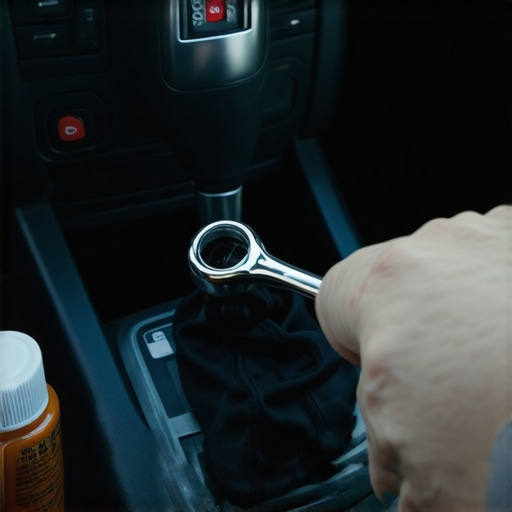
Stop fearing the worst when your gear selector binds
Automotive diagnostics often reveal a stark contrast between perceived mechanical catastrophe and actual component failure. For many drivers, a gear shifter that resists movement or feels ‘notchy’ triggers immediate anxiety regarding the health of the planetary gearsets or hydraulic valves within the transmission. Yet, in the realm of professional auto repair, the root cause is frequently found within the external linkage system. A veteran mechanic understands that the path from the cabin to the transmission is paved with small, sacrificial components designed to absorb vibration and provide tactile feedback. Over time, these parts—specifically shift cable bushings—succumb to thermal cycles and friction, resulting in a shifter that refuses to cooperate. This isn’t just an inconvenience; it can eventually lead to a vehicle that won’t start because the safety switch doesn’t recognize it is in park. While you are investigating mechanical gremlins, it is also a wise time to prioritize your brake service, as safety systems often degrade simultaneously with high-mileage wear components.
Does a stubborn gear selector always mean a dead transmission?
In short: No. High-ticket transmission replacements are often sold to unsuspecting owners when the issue is nothing more than a $20 plastic bushing that has disintegrated into dust. When a shifter sticks, the problem is usually mechanical resistance in the cable or at the pivot points. This differs from internal transmission failure, which typically manifests as slipping, grinding, or ‘hunting’ for gears. If your vehicle struggles to find the right gear while moving, you might actually be looking at the 20 dollar fix for a transmission that hunts for gears, which is a separate but equally affordable solution. Professional-level troubleshooting involves disconnecting the shift cable from the transmission arm; if the shifter moves freely while disconnected, the problem lies within the gearbox. If it remains stuck, you’ve confirmed that the linkage is the culprit, saving you thousands in unnecessary auto repair costs.
Locate the $20 culprit hiding under your center console
The shift linkage bushing is a small ring made of nylon or rubber that sits at the end of the shifter cable. Its job is to provide a tight, cushioned connection between the cable and the gear selector. When this bushing cracks, the cable gains too much ‘play,’ or worse, it slips off the post entirely. Many shops will try to sell you a complete shifter cable assembly, which requires hours of labor and expensive parts. However, savvy DIYers and honest experts know that you can simply replace the bushing itself. You can often find the 9 dollar plastic clip or a similar bushing kit online. According to research published by the Society of Automotive Engineers (SAE), the use of thermoplastic elastomers in these components is designed for longevity, but they are not immune to the extreme heat generated in the transmission tunnel. Replacing this single part restores the crisp, authoritative click of a healthy gear selector.
Take control of your car’s drivetrain health today
If you have managed to solve your shifting issues, do not neglect the rest of your vehicle’s maintenance schedule. A complete tune up is the best way to ensure that your engine’s power delivery matches the newly restored precision of your shifter. Explore our guide on tune up strategies to save money on auto repairs to keep your vehicle running at peak efficiency for years to come.
Electrical ghosts that mimic a dying gearbox
Beyond the mechanical linkage, modern vehicles are heavily reliant on stable electrical current to manage gear changes. When the electrical path is compromised, the Transmission Control Module (TCM) receives ‘dirty’ data, leading to erratic behavior that mirrors a mechanical breakdown. A common culprit often ignored by inexperienced technicians is a frayed or corroded ground connection. You might find that the 14 dollar ground strap that fixes ghost shifting is the only thing standing between you and a smooth commute. This simple piece of braided wire ensures that the sensors and actuators have a clean return path to the battery. If this connection is weak, the TCM may struggle to regulate line pressure, causing harsh shifts or ‘hunting’ for gears. In some extreme cases, a surge or drop in voltage can even trigger a ‘limp mode’ where the car stays in a single gear to protect itself. Before you authorize a teardown, check the simple things, like the hidden fuse that kills your entire transmission control module, which is another low-cost fix that often goes unnoticed in the service bay.
How do you tell if a ghost is shifting your gears?
Distinguishing between an electrical glitch and a mechanical failure requires observing the ‘when’ and ‘how’ of the symptom. If the shifting issues occur intermittently or correlate with using other electrical components—like your headlights or air conditioning—you are likely dealing with a voltage drop. The National Institute for Automotive Service Excellence (ASE) emphasizes that many computerized transmission ‘failures’ are actually diagnostic errors where the technician failed to verify the integrity of the vehicle’s electrical system first. This is why a simple 5-minute battery terminal clean can sometimes restore shifting logic that seemed lost forever. Mechanical issues, conversely, are typically constant and worsen as the transmission fluid reaches operating temperature.
Why you should ignore the ‘lifetime’ fluid label on your dipstick
One of the most pervasive myths in modern car ownership is the concept of ‘lifetime’ transmission fluid. While manufacturers use this term to lower the perceived cost of ownership during the warranty period, no lubricant lasts forever. Heat and friction eventually shear the molecules in the fluid, reducing its ability to protect moving parts and maintain hydraulic pressure. Professional auto repair experts recommend a drain and fill every 30,000 to 60,000 miles, regardless of what the manual says. Ignoring this can lead to ‘burned’ fluid that smells like singed toast and looks like dark chocolate. If you catch it early, the 20 dollar fluid swap can literally save a slipping transmission from a total rebuild. You must also be wary of the truth about lifetime transmission fluid and when to ignore it to avoid the long-term damage caused by contaminated oil. Keeping your drivetrain healthy isn’t just about big repairs; it is about the small, consistent actions that prevent them. Have you ever experienced a mystery shift issue that turned out to be a simple wire? Share your story in the comments or read our checklist on the ultimate tune up checklist to stay ahead of the curve.
Solenoids are the gatekeepers of every smooth shift
While mechanical bushings and cables often fail, the intelligence behind the shift often resides in the solenoids. These electromagnetic valves act as the gatekeepers for hydraulic fluid, directing pressure to the appropriate clutch packs at precisely the right millisecond. In many modern units, these components are controlled via Pulse Width Modulation (PWM), allowing for a gradual engagement that prevents the ‘clunk’ associated with older designs. However, as the fine mesh screens on these solenoids become clogged with the very debris we discussed in the fluid section, the transmission may begin to skip gears or fail to downshift entirely. Before assuming the mechanical clutches are burnt, a mechanic will often perform a resistance test. If a solenoid is out of spec by even a few ohms, the Transmission Control Module (TCM) will often trigger a P0700 series code, sending the vehicle into a defensive limp mode.
Can a tiny bit of debris actually paralyze a solenoid?
Yes, and the margin for error is incredibly small. According to technical documentation from ZF Friedrichshafen AG, even microscopic metallic particles can interfere with the magnetic plunger’s movement. This creates a lag in fluid delivery that the computer interprets as a mechanical slip. Fortunately, many of these solenoids are accessible just by dropping the transmission pan, meaning you can often perform a high-level auto repair without ever removing the gearbox from the chassis. If you find yourself staring at a diagnostic tool with a ‘Solenoid A Performance’ error, checking for electrical continuity should be your first step before authorizing a complete rebuild.
Don’t let a misaligned safety switch kill your starter
Another common ‘ghost’ in the transmission system is the Neutral Safety Switch (NSS), sometimes called the Range Sensor. This device tells the car’s computer exactly what gear the lever is in. If the switch is slightly out of alignment—perhaps due to the same worn bushings we addressed earlier—it might think the car is in Reverse when it is actually in Park. To prevent the car from lurching forward or backward during ignition, the system will simply refuse to send power to the starter. This leads many owners to waste money on a new battery or starter motor when the fix is as simple as a 10-minute adjustment under the vehicle. If you’ve been having trouble with your ignition, it is worth a tune up of your sensor positions to ensure everything is communicating correctly.
Why does my car only start in Neutral but refuse to crank in Park?
This is a classic symptom of a Range Sensor that has shifted its physical position or has developed internal wear. When the internal contacts for the ‘Park’ position become pitted or corroded, they fail to complete the starter circuit. However, because ‘Neutral’ is used less frequently, those contacts often remain pristine. If you can wiggle your shifter and suddenly get the car to start, you have confirmed that the issue is external to the engine. You can often clean these switches with specialized contact cleaner, but if the internal springs have lost their tension, replacement is the only permanent solution. For those looking to broaden their DIY skills, reading up on how to diagnose electrical shorts in older vehicles can provide the foundational knowledge needed to tackle these sensor issues with confidence.
The hidden role of vacuum lines in vintage shifting
For those driving older vehicles, the lack of electronic sensors doesn’t mean you are immune to mystery shifting issues. In many classic designs, a vacuum modulator serves the same purpose as a modern TCM. This small, bell-shaped component uses engine vacuum to determine the load on the engine and adjust shift points accordingly. A cracked rubber hose costing less than a dollar can cause the transmission to hold onto gears far too long or shift so hard it feels like you’ve been rear-ended. This physical link between the engine’s intake manifold and the transmission’s hydraulic circuit is a prime example of how a simple auto repair can resolve what looks like a terminal mechanical failure. Checking for transmission fluid inside the vacuum line is a pro tip; if you see red fluid in the hose, the modulator’s internal diaphragm has ruptured, and it is actively sucking transmission fluid into your engine’s combustion chamber.
Why your transmission’s internal thermometer dictates every shift
Beyond the mechanical and vacuum-driven systems, the digital brain of your vehicle relies heavily on thermal data to maintain operational integrity. The Transmission Fluid Temperature (TFT) sensor serves as a critical feedback loop that determines fluid viscosity and, consequently, the precise line pressure required to engage clutch packs without slippage. When this sensor fails or begins providing ‘drifted’ data—readings that remain technically within a valid voltage range but are contextually inaccurate—the Transmission Control Module (TCM) may delay shifts or apply them with jarring force. This is a nuanced area of auto repair where a professional mechanic must look past basic trouble codes and scrutinize live data streams. A faulty TFT sensor can trick the vehicle into ‘cold start’ mode indefinitely, causing high-rev shifts that feel like the transmission is struggling when it is merely adhering to a flawed thermal map.
Does extreme weather trick your car into shifting poorly?
Environmental extremes play a significant role in shift quality, but a healthy system is designed to compensate automatically. If you notice a sudden change in gear selection during a deep freeze or a summer heatwave, it is often because the fluid’s physical properties are clashing with the TCM’s programmed expectations. High-level diagnostics often reveal that the fluid has degraded to a point where its ‘viscosity index’ no longer aligns with the factory-programmed lookup tables. This is why seasonal maintenance and a professional tune up of your cooling system—including the dedicated transmission cooler—are vital. If the fluid cannot shed heat effectively, the TCM will intentionally trigger ‘limp mode’ to prevent internal seals from hardening and failing prematurely. Understanding these shifts in behavior is essential for accurate auto repair and long-term vehicle health.
Give your gearbox a fresh start with adaptive resets
Modern transmissions are effectively ‘learning’ devices; they constantly adjust hydraulic pressure levels to compensate for the microscopic, natural wear of internal clutches. However, this creates a hidden trap for the DIY enthusiast or the inexperienced technician. When you perform a significant auto repair, such as replacing a solenoid or conducting a high-mileage fluid swap, the TCM remains calibrated to the old, worn-out parameters. This can result in ‘flare shifts’ or harsh engagement because the computer is still over-compensating for a problem that no longer exists. According to technical bulletins from the Automatic Transmission Rebuilders Association (ATRA), performing an ‘Adaptive Learning Reset’ is a mandatory step after most transmission-related services. This digital reset clears the old wear-data and allows the computer to relearn the optimal pressure for the newly cleaned or replaced components, ensuring the longevity of your repair and the smoothness of your drive.
Loose mounts create a false sense of mechanical doom
Sometimes the most alarming shifting issues have nothing to do with the transmission’s internal hydraulics or its sophisticated electronics. The engine and transmission are suspended by heavy-duty rubber and hydraulic mounts designed to isolate the cabin from drivetrain vibrations. When an engine mount shears or a transmission mount collapses, the entire drivetrain can tilt significantly under torque. This physical shift in geometry puts immense tension on the shift cable, pulling it out of alignment and causing the selector to feel stiff or inaccurate. You might find that the car shifts perfectly while coasting but binds or ‘pops’ out of gear under heavy acceleration. This is a classic scenario where a savvy mechanic examines the physical alignment of the powertrain before condemning the gearbox. Replacing a collapsed mount is a straightforward auto repair that can instantly restore the factory-smooth feel of your gear selector. If you suspect your vehicle is suffering from these complex symptoms, don’t wait for a total failure—consult a specialist who understands the synergy between electronic data and mechanical integrity today.
Stop fearing the worst when your gear selector binds
Automotive diagnostics often reveal a stark contrast between perceived mechanical catastrophe and actual component failure. For many drivers, a gear shifter that resists movement or feels ‘notchy’ triggers immediate anxiety regarding the health of the planetary gearsets or hydraulic valves within the transmission. Yet, in the realm of professional auto repair, the root cause is frequently found within the external linkage system. A veteran mechanic understands that the path from the cabin to the transmission is paved with small, sacrificial components designed to absorb vibration and provide tactile feedback. Over time, these parts—specifically shift cable bushings—succumb to thermal cycles and friction, resulting in a shifter that refuses to cooperate. This isn’t just an inconvenience; it can eventually lead to a vehicle that won’t start because the safety switch doesn’t recognize it is in park. While you are investigating mechanical gremlins, it is also a wise time to prioritize your brake service, as safety systems often degrade simultaneously with high-mileage wear components.
Does a stubborn gear selector always mean a dead transmission?
In short: No. High-ticket transmission replacements are often sold to unsuspecting owners when the issue is nothing more than a $20 plastic bushing that has disintegrated into dust. When a shifter sticks, the problem is usually mechanical resistance in the cable or at the pivot points. This differs from internal transmission failure, which typically manifests as slipping, grinding, or ‘hunting’ for gears. If your vehicle struggles to find the right gear while moving, you might actually be looking at the 20 dollar fix for a transmission that hunts for gears, which is a separate but equally affordable solution. Professional-level troubleshooting involves disconnecting the shift cable from the transmission arm; if the shifter moves freely while disconnected, the problem lies within the gearbox. If it remains stuck, you’ve confirmed that the linkage is the culprit, saving you thousands in unnecessary auto repair costs.
Locate the $20 culprit hiding under your center console
The shift linkage bushing is a small ring made of nylon or rubber that sits at the end of the shifter cable. Its job is to provide a tight, cushioned connection between the cable and the gear selector. When this bushing cracks, the cable gains too much ‘play,’ or worse, it slips off the post entirely. Many shops will try to sell you a complete shifter cable assembly, which requires hours of labor and expensive parts. However, savvy DIYers and honest experts know that you can simply replace the bushing itself. You can often find the 9 dollar plastic clip or a similar bushing kit online. According to research published by the Society of Automotive Engineers (SAE), the use of thermoplastic elastomers in these components is designed for longevity, but they are not immune to the extreme heat generated in the transmission tunnel. Replacing this single part restores the crisp, authoritative click of a healthy gear selector.
Take control of your car’s drivetrain health today
If you have managed to solve your shifting issues, do not neglect the rest of your vehicle’s maintenance schedule. A complete tune up is the best way to ensure that your engine’s power delivery matches the newly restored precision of your shifter. Explore our guide on tune up strategies to save money on auto repairs to keep your vehicle running at peak efficiency for years to come.
Electrical ghosts that mimic a dying gearbox
Beyond the mechanical linkage, modern vehicles are heavily reliant on stable electrical current to manage gear changes. When the electrical path is compromised, the Transmission Control Module (TCM) receives ‘dirty’ data, leading to erratic behavior that mirrors a mechanical breakdown. A common culprit often ignored by inexperienced technicians is a frayed or corroded ground connection. You might find that the 14 dollar ground strap that fixes ghost shifting is the only thing standing between you and a smooth commute. This simple piece of braided wire ensures that the sensors and actuators have a clean return path to the battery. If this connection is weak, the TCM may struggle to regulate line pressure, causing harsh shifts or ‘hunting’ for gears. In some extreme cases, a surge or drop in voltage can even trigger a ‘limp mode’ where the car stays in a single gear to protect itself. Before you authorize a teardown, check the simple things, like the hidden fuse that kills your entire transmission control module, which is another low-cost fix that often goes unnoticed in the service bay.
How do you tell if a ghost is shifting your gears?
Distinguishing between an electrical glitch and a mechanical failure requires observing the ‘when’ and ‘how’ of the symptom. If the shifting issues occur intermittently or correlate with using other electrical components—like your headlights or air conditioning—you are likely dealing with a voltage drop. The National Institute for Automotive Service Excellence (ASE) emphasizes that many computerized transmission ‘failures’ are actually diagnostic errors where the technician failed to verify the integrity of the vehicle’s electrical system first. This is why a simple 5-minute battery terminal clean can sometimes restore shifting logic that seemed lost forever. Mechanical issues, conversely, are typically constant and worsen as the transmission fluid reaches operating temperature.
Why you should ignore the ‘lifetime’ fluid label on your dipstick
One of the most pervasive myths in modern car ownership is the concept of ‘lifetime’ transmission fluid. While manufacturers use this term to lower the perceived cost of ownership during the warranty period, no lubricant lasts forever. Heat and friction eventually shear the molecules in the fluid, reducing its ability to protect moving parts and maintain hydraulic pressure. Professional auto repair experts recommend a drain and fill every 30,000 to 60,000 miles, regardless of what the manual says. Ignoring this can lead to ‘burned’ fluid that smells like singed toast and looks like dark chocolate. If you catch it early, the 20 dollar fluid swap can literally save a slipping transmission from a total rebuild. You must also be wary of the truth about lifetime transmission fluid and when to ignore it to avoid the long-term damage caused by contaminated oil. Keeping your drivetrain healthy isn’t just about big repairs; it is about the small, consistent actions that prevent them. Have you ever experienced a mystery shift issue that turned out to be a simple wire? Share your story in the comments or read our checklist on the ultimate tune up checklist to stay ahead of the curve.
Solenoids are the gatekeepers of every smooth shift
While mechanical bushings and cables often fail, the intelligence behind the shift often resides in the solenoids. These electromagnetic valves act as the gatekeepers for hydraulic fluid, directing pressure to the appropriate clutch packs at precisely the right millisecond. In many modern units, these components are controlled via Pulse Width Modulation (PWM), allowing for a gradual engagement that prevents the ‘clunk’ associated with older designs. However, as the fine mesh screens on these solenoids become clogged with the very debris we discussed in the fluid section, the transmission may begin to skip gears or fail to downshift entirely. Before assuming the mechanical clutches are burnt, a mechanic will often perform a resistance test. If a solenoid is out of spec by even a few ohms, the Transmission Control Module (TCM) will often trigger a P0700 series code, sending the vehicle into a defensive limp mode.
Can a tiny bit of debris actually paralyze a solenoid?
Yes, and the margin for error is incredibly small. According to technical documentation from ZF Friedrichshafen AG, even microscopic metallic particles can interfere with the magnetic plunger’s movement. This creates a lag in fluid delivery that the computer interprets as a mechanical slip. Fortunately, many of these solenoids are accessible just by dropping the transmission pan, meaning you can often perform a high-level auto repair without ever removing the gearbox from the chassis. If you find yourself staring at a diagnostic tool with a ‘Solenoid A Performance’ error, checking for electrical continuity should be your first step before authorizing a complete rebuild.
Don’t let a misaligned safety switch kill your starter
Another common ‘ghost’ in the transmission system is the Neutral Safety Switch (NSS), sometimes called the Range Sensor. This device tells the car’s computer exactly what gear the lever is in. If the switch is slightly out of alignment—perhaps due to the same worn bushings we addressed earlier—it might think the car is in Reverse when it is actually in Park. To prevent the car from lurching forward or backward during ignition, the system will simply refuse to send power to the starter. This leads many owners to waste money on a new battery or starter motor when the fix is as simple as a 10-minute adjustment under the vehicle. If you’ve been having trouble with your ignition, it is worth a tune up of your sensor positions to ensure everything is communicating correctly.
Why does my car only start in Neutral but refuse to crank in Park?
This is a classic symptom of a Range Sensor that has shifted its physical position or has developed internal wear. When the internal contacts for the ‘Park’ position become pitted or corroded, they fail to complete the starter circuit. However, because ‘Neutral’ is used less frequently, those contacts often remain pristine. If you can wiggle your shifter and suddenly get the car to start, you have confirmed that the issue is external to the engine. You can often clean these switches with specialized contact cleaner, but if the internal springs have lost their tension, replacement is the only permanent solution. For those looking to broaden their DIY skills, reading up on how to diagnose electrical shorts in older vehicles can provide the foundational knowledge needed to tackle these sensor issues with confidence.
The hidden role of vacuum lines in vintage shifting
For those driving older vehicles, the lack of electronic sensors doesn’t mean you are immune to mystery shifting issues. In many classic designs, a vacuum modulator serves the same purpose as a modern TCM. This small, bell-shaped component uses engine vacuum to determine the load on the engine and adjust shift points accordingly. A cracked rubber hose costing less than a dollar can cause the transmission to hold onto gears far too long or shift so hard it feels like you’ve been rear-ended. This physical link between the engine’s intake manifold and the transmission’s hydraulic circuit is a prime example of how a simple auto repair can resolve what looks like a terminal mechanical failure. Checking for transmission fluid inside the vacuum line is a pro tip; if you see red fluid in the hose, the modulator’s internal diaphragm has ruptured, and it is actively sucking transmission fluid into your engine’s combustion chamber.
Why your transmission’s internal thermometer dictates every shift
Beyond the mechanical and vacuum-driven systems, the digital brain of your vehicle relies heavily on thermal data to maintain operational integrity. The Transmission Fluid Temperature (TFT) sensor serves as a critical feedback loop that determines fluid viscosity and, consequently, the precise line pressure required to engage clutch packs without slippage. When this sensor fails or begins providing ‘drifted’ data—readings that remain technically within a valid voltage range but are contextually inaccurate—the Transmission Control Module (TCM) may delay shifts or apply them with jarring force. This is a nuance area of auto repair where a professional mechanic must look past basic trouble codes and scrutinize live data streams. A faulty TFT sensor can trick the vehicle into ‘cold start’ mode indefinitely, causing high-rev shifts that feel like the transmission is struggling when it is merely adhering to a flawed thermal map.
Does extreme weather trick your car into shifting poorly?
Environmental extremes play a significant role in shift quality, but a healthy system is designed to compensate automatically. If you notice a sudden change in gear selection during a deep freeze or a summer heatwave, it is often because the fluid’s physical properties are clashing with the TCM’s programmed expectations. High-level diagnostics often reveal that the fluid has degraded to a point where its ‘viscosity index’ no longer aligns with the factory-programmed lookup tables. This is why seasonal maintenance and a professional tune up of your cooling system—including the dedicated transmission cooler—are vital. If the fluid cannot shed heat effectively, the TCM will intentionally trigger ‘limp mode’ to prevent internal seals from hardening and failing prematurely. Understanding these shifts in behavior is essential for accurate auto repair and long-term vehicle health.
Give your gearbox a fresh start with adaptive resets
Modern transmissions are effectively ‘learning’ devices; they constantly adjust hydraulic pressure levels to compensate for the microscopic, natural wear of internal clutches. However, this creates a hidden trap for the DIY enthusiast or the inexperienced technician. When you perform a significant auto repair, such as replacing a solenoid or conducting a high-mileage fluid swap, the TCM remains calibrated to the old, worn-out parameters. This can result in ‘flare shifts’ or harsh engagement because the computer is still over-compensating for a problem that no longer exists. According to technical bulletins from the Automatic Transmission Rebuilders Association (ATRA), performing an ‘Adaptive Learning Reset’ is a mandatory step after most transmission-related services. This digital reset clears the old wear-data and allows the computer to relearn the optimal pressure for the newly cleaned or replaced components, ensuring the longevity of your repair and the smoothness of your drive.
Loose mounts create a false sense of mechanical doom
Sometimes the most alarming shifting issues have nothing to do with the transmission’s internal hydraulics or its sophisticated electronics. The engine and transmission are suspended by heavy-duty rubber and hydraulic mounts designed to isolate the cabin from drivetrain vibrations. When an engine mount shears or a transmission mount collapses, the entire drivetrain can tilt significantly under torque. This physical shift in geometry puts immense tension on the shift cable, pulling it out of alignment and causing the selector to feel stiff or inaccurate. You might find that the car shifts perfectly while coasting but binds or ‘pops’ out of gear under heavy acceleration. This is a classic scenario where a savvy mechanic examines the physical alignment of the powertrain before condemning the gearbox. Replacing a collapsed mount is a straightforward auto repair that can instantly restore the factory-smooth feel of your gear selector. If you suspect your vehicle is suffering from these complex symptoms, don’t wait for a total failure—consult a specialist who understands the synergy between electronic data and mechanical integrity today.
Advanced Insights for the Professional DIYer
Why Pressure Profiling Trumps Error Codes
Relying solely on a cheap OBD-II scanner often leads to ‘parts cannon’ syndrome. A seasoned mechanic knows that monitoring live line pressure provides a window into the transmission’s heart. If your car is suffering from the simple reason your transmission shifts hard when its cold, a real-time data stream will show whether the pressure regulator is lagging or if the fluid is simply too viscous to move the valves efficiently.
Resetting the Brain After a Mechanical Fix
Modern transmissions are adaptive, meaning they compensate for wear over time. If you replace a solenoid or fix the 14 dollar ground strap that fixes ghost shifting, you must reset these adaptive tables. Failing to do so forces the computer to apply pressure settings meant for a failing system to a now-healthy one, which can cause premature clutch wear and harsh engagement.
The Hidden Cost of Thermal Neglect
Most transmission failures are heat-related. While you might fix the 5 dollar vacuum leak that makes your transmission shift hard, an inefficient radiator or a clogged external cooler will eventually cook your fluid. High-level auto repair involves verifying that the thermal management system can shed heat under load, especially if you tow or drive in stop-and-go traffic.
Curated Expert Resources
Automatic Transmission Rebuilders Association (ATRA): This is the gold standard for technical bulletins. Their case studies on ‘impossible’ shifting issues provide the deep-dive logic needed for professional-grade auto repair.
ZF Technical Documentation: For owners of modern 8 or 9-speed units, ZF offers unparalleled engineering insights into fluid specs and solenoid operation that most generic manuals skip.
ASE Test Prep Guides: Even if you aren’t seeking certification, the ASE A2 guides break down the relationship between hydraulics and electronics in a way that simplifies complex troubleshooting.
Mastering Your Drive for the Long Haul
Success in modern auto repair comes from looking beyond the obvious mechanical symptoms and understanding the synergy between electrical signals, hydraulic pressure, and thermal stability. By identifying small culprits like bushings and ground straps before they escalate, you ensure your drivetrain remains efficient for hundreds of thousands of miles. Don’t stop at just fixing the shifter; explore our auto repair cost saving tips from industry experts to build a comprehensive maintenance plan. What was the most surprising simple fix you’ve found for a major-sounding car problem? Reach out to our community for more advanced diagnostic strategies.