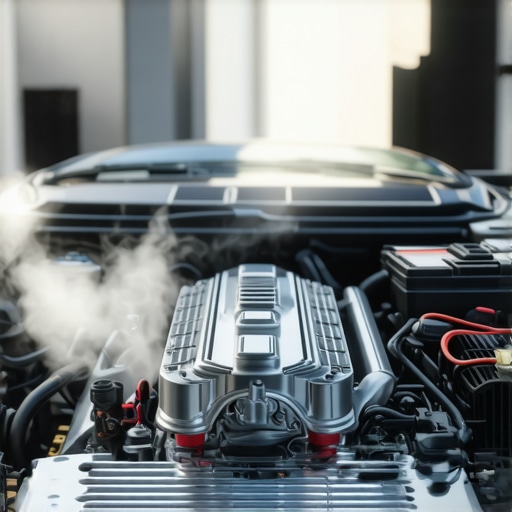
Hot-start failures represent one of the most frustrating enigmas for drivers and a sophisticated diagnostic challenge for any seasoned mechanic. While many vehicle owners immediately suspect a terminal battery failure, the reality is often rooted in the complex interplay between thermal expansion and electrical resistance. When an internal combustion engine reaches its optimal operating temperature, the environmental heat within the engine bay can increase by several hundred degrees, fundamentally altering the performance of critical electrical and mechanical components. In the professional world of auto repair, identifying these heat-induced anomalies requires a deep understanding of electrical physics and sensor logic. While many drivers prioritize a regular brake service for safety, managing the vehicle’s thermal profile is equally vital for consistent reliability.
Heat Resistance and Electrical Integrity in Modern Starters
The primary culprit in most hot-start scenarios is the starter motor solenoid. As heat radiates from the engine block, it saturates the starter’s copper windings, leading to a phenomenon known as heat soak. According to Ohm’s Law, as the temperature of a conductor increases, its electrical resistance rises proportionally. This increased resistance demands a higher current flow to achieve the same mechanical torque required to turn the flywheel. If the starter motor is already experiencing internal wear or the battery is not at 100% capacity, the system simply cannot overcome the thermal load. Professional mechanic tips for diagnosing common auto problems suggest that measuring the voltage drop at the starter while the engine is hot is the only definitive way to confirm this failure. A high-quality tune up should always involve an inspection of the high-amperage cables, as even minor corrosion significantly amplifies heat-related resistance issues.
Diagnostic Secrets for Heat-Soak Issues Beyond the Battery
Beyond the high-draw electrical components, electronic sensors are highly susceptible to thermal degradation. The Crankshaft Position (CKP) sensor, for instance, often utilizes a Hall-effect or inductive design that is sensitive to high temperatures. When these sensors overheat, internal micro-cracks in the magnetic pickup can expand, causing the signal to drift or disappear entirely. Without a valid RPM signal, the Engine Control Unit (ECU) will refuse to pulse the injectors or fire the ignition coils, leading to a ‘crank, no-start’ condition. This level of nuanced failure is precisely how a top-rated mechanic ensures safe auto repairs every time, by looking for data patterns rather than just swapping parts. Furthermore, failing fuel pressure regulators can allow fuel to boil within the rail during heat soak, creating transient vapor pockets that hinder ignition.
Is Vapor Lock Still a Threat in Modern Fuel Injection Systems?
While the pressurized nature of modern fuel injection systems has largely relegated classic vapor lock to the history books, it has not entirely eradicated the problem. At high temperatures, lower-quality fuel or a weakened fuel pump may allow fuel to atomize prematurely in the rail before it reaches the combustion chamber. This results in a lean-start condition that can mimic a mechanical failure. Technical studies from SAE International indicate that thermal management in fuel rail design is a critical factor in preventing these hot-restart issues. If your vehicle struggles to maintain a steady idle after a hot restart, it may be due to specific sensors that impact idle quality being affected by the surrounding heat. If you are experiencing these symptoms, don’t wait for a complete breakdown; visit our contact page to schedule a high-load electrical diagnostic with a professional.
Beyond the Electrical: How Thermal Expansion Affects Mechanical Drag
While electrical resistance is a well-documented foe, the physical expansion of internal engine components can also contribute to a labored hot start. As the engine reaches peak temperatures, metal alloys expand at different rates. If a vehicle has seen significant mileage without a proper auto repair history, the minute clearances between pistons and cylinder walls—or within the crankshaft bearings—can tighten slightly. This increased mechanical drag requires more work from the starter motor, which, as we’ve established, is already struggling with heat soak. A skilled mechanic you can trust will look for signs of high amperage draw that exceeds the motor’s rating, often indicating that the physical effort to rotate the assembly has increased beyond factory specifications.
Why does a faulty temperature sensor lead to a flooded engine during hot restarts?
One of the most overlooked components in a hot-start diagnostic is the Engine Coolant Temperature (ECT) sensor. This sensor acts as the primary thermostat for the Engine Control Unit (ECU), dictating the air-fuel ratio during the cranking phase. If the ECT sensor develops an internal resistance offset—often called ‘skewing’—it may report that the engine is at 40°F when it is actually at 210°F. The ECU responds by providing a ‘cold start’ fuel enrichment, essentially flooding the cylinders with excess gasoline. This creates a condition where the spark plugs cannot ignite the overly rich mixture. According to technical documentation from The National Institute for Automotive Service Excellence (ASE), sensor skewing is a top cause of driveability issues that do not always trigger a Malfunction Indicator Lamp. In these cases, the real reason your check engine light stays off is that the sensor is still within its theoretical operating range, even if the data is contextually incorrect.
The Critical Role of Grounding Straps and Thermal Shields
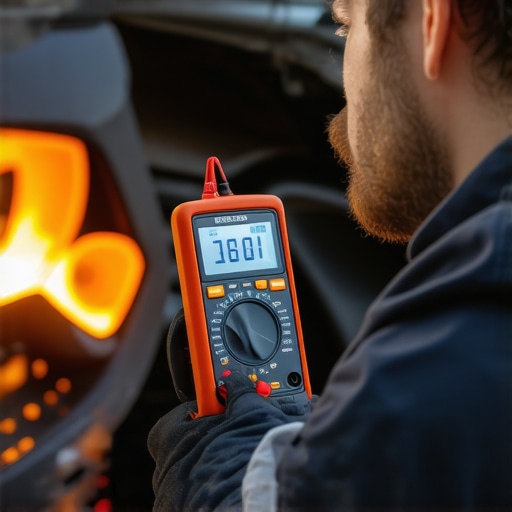
Thermal management is not just about cooling the engine; it is about protecting the pathways of electricity. Modern vehicles rely on thin, braided ground straps to complete the circuit between the engine block and the chassis. Over time, these straps oxidize. When they get hot, the oxidation layers act as insulators. This is why the 12-dollar ground wire that fixes stalling issues is often the secret weapon of the professional diagnostic tech. By bypassing a heat-compromised ground, you restore the full path for current, allowing the starter to spin at its intended RPM. Additionally, missing or rusted heat shields—often discarded during previous repairs—can expose the starter and wiring to direct radiant heat from the exhaust manifold. Restoring these shields is a vital part of tune-up strategies to save money on auto repairs, preventing premature component failure. If you are tired of the uncertainty of a car that won’t start at the gas station, we encourage you to share this guide with a fellow driver or browse our ultimate tune-up checklist to ensure your thermal protection is intact.
Interpreting Ghost Data and ECU Logic Failures
Advanced diagnostics sometimes reveal that the hardware is fine, but the software logic is being tricked. During a hot soak, the Intake Air Temperature (IAT) sensor can absorb heat from the manifold, reporting air temperatures far higher than the actual ambient air. This leads the ECU to retard ignition timing to prevent knock, which simultaneously makes the engine harder to start. Understanding why your check engine light goes off by itself after the car cools down can be the first clue that you are dealing with a thermal mapping error. Replacing a sensor is easy, but verifying its accuracy against a physical thermometer is what separates a parts-changer from a technician. Ensuring that your vehicle’s computer receives clean, accurate data is the only way to guarantee a first-time start, every time, regardless of the thermometer’s reading.
Modern Stop-Start Systems Turn Heat Into a Performance Barrier
Modern stop-start technology has fundamentally shifted the duty cycle of the starting system, moving from a single engagement per trip to potentially dozens in heavy traffic. This shift places an unprecedented thermal load on the motor and the associated wiring. When these systems fail during a hot-restart at a busy intersection, the culprit is often a combination of battery state-of-health and heat-induced resistance. Unlike traditional systems, these require a highly resilient power source. If you haven’t recently checked your battery’s CCA rating during a tune up, you may find your vehicle’s computer disabling the stop-start feature as a fail-safe against a permanent stall. Professional auto repair for these vehicles must include a battery conductance test that accounts for high-temperature environments.
Does an aging cooling system contribute to hot-start issues if the gauge looks normal?
Many drivers assume that if their temp gauge sits in the middle, the cooling system is performing perfectly. However, ‘heat soak’ refers to the temperature rise that occurs after the engine is turned off and the coolant stops circulating. A radiator that is 20% clogged with mineral scale might provide enough heat rejection to keep the engine safe while moving, but it fails to bring the block temperature down sufficiently before shutdown. This results in a much higher thermal spike once the water pump stops. Technical data from Denso Global suggests that even marginal cooling inefficiencies can lead to engine bay temperatures exceeding 250°F during the first ten minutes of soak time. This is why a comprehensive mechanic’s diagnostic should always include a thermal imaging scan of the radiator to find cold spots that signify internal blockage.
Why Carbon Deposits Act Like a Heat Sponge in Your Engine
In high-mileage engines, the accumulation of carbon on the intake valves and piston crowns creates a secondary thermal problem. Carbon is an excellent insulator and a poor conductor of heat. While the engine’s coolant might be at 200°F, the carbon deposits can remain significantly hotter, glowing like tiny embers. When you attempt a hot start, these deposits can pre-ignite the incoming fuel-air mixture before the spark plug even fires, creating a ‘kick-back’ effect that makes the engine very difficult for the starter to turn over. This mechanical resistance is often misdiagnosed as a weak battery. Incorporating a professional induction cleaning into your tune-up strategy can remove these ‘heat sponges’ and restore the original thermal characteristics of the combustion chamber.
Combat Fuel Atomization Failures at the Injector Tip
The final frontier in heat-soak diagnostics is the fuel injector itself. While the fuel rail is pressurized, the very tip of the injector—the nozzle—is exposed to the intense heat of the intake port or combustion chamber. If the fuel quality is subpar or contains a high ethanol content, the fuel at the very tip can boil away, leaving behind a dry nozzle or a pocket of vapor. This creates a momentary ‘lean’ condition upon restart that requires several revolutions of the engine to purge. Skilled mechanics often look for long crank times specifically during the 15-to-45-minute window after a drive. If you find yourself pumping the gas pedal to get the car to fire, you are likely dealing with this specific vaporization issue. Keeping your fuel system clean is as critical as maintaining your brake service intervals for long-term vehicle health.
While the mechanical components struggle against the laws of thermodynamics, the electrochemical health of the battery during a heat-soak event is equally critical. High ambient temperatures within the engine bay do more than just stress the starter; they fundamentally shift the battery’s internal resistance profile. In extreme heat, the chemical reactions inside a lead-acid or AGM battery accelerate, which might seem beneficial for current flow, but this is often offset by a phenomenon known as thermal hysteresis in the plates. A mechanic who only tests a battery’s health in a cool shop environment is missing half the story. To ensure a vehicle is truly reliable, an auto repair specialist must perform a high-load test after the vehicle has been driven for at least thirty minutes, exposing the battery’s inability to maintain terminal voltage under the heavy draw of a heat-soaked starter.
High Heat Turns Your Battery into a High-Resistance Barrier
As temperatures climb toward the 200°F mark under the hood, the internal components of the battery undergo significant stress. This isn’t just about losing water through evaporation; it’s about the physical expansion of the internal grids. If those grids have any degree of sulfation, the heat exacerbates the bottleneck, preventing the rapid discharge required to overcome the increased mechanical drag of a hot engine. This is why a comprehensive tune up should involve more than just checking fluid levels; it requires an analysis of the battery’s Reserve Capacity (RC) in real-world operating temperatures. Neglecting this leads to the dreaded ‘slow crank’ that leaves drivers stranded in parking lots. Just as you wouldn’t skip a brake service before a mountain trip, you shouldn’t ignore battery thermal health before the summer heat hits.
Can a microscopic fuel leak prevent a massive engine from starting?
One of the most insidious causes of a hot-start failure is a ‘leaking’ fuel injector. Unlike a catastrophic leak that causes a fire, this is a slow, internal drip that occurs after the engine is shut off. When the engine stops, the fuel in the rail remains under high pressure. If an injector seal is slightly compromised, it will slowly weep fuel into the intake manifold or cylinder. In a cold engine, this fuel might evaporate or be compensated for by the cold-start enrichment. However, during a hot soak, this fuel creates a localized ‘rich soak’ condition. When you attempt to restart, the air-fuel ratio is far too rich for combustion, effectively flooding the engine. Expert technical documentation from Bosch Mobility Solutions highlights that even a variance of a few microliters can disrupt the stoichiometric balance required for a hot restart. This is a prime example of mechanic tips for diagnosing common auto problems where the solution is found in the data stream, specifically looking at short-term fuel trims immediately following a restart attempt.
Thermal Imaging Picks Up Where the Scan Tool Ends
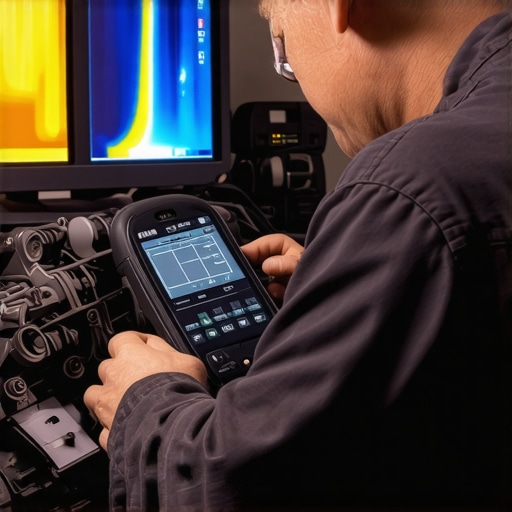
When the OBD-II scanner shows no codes but the car refuses to fire, the seasoned mechanic reaches for a thermal imaging camera. This tool allows for the visualization of heat signatures that indicate high-resistance electrical joints. A ground terminal that appears tight might be internally corroded, creating a massive thermal bottleneck that only shows up as a bright ‘hot spot’ on an infrared screen. By identifying these invisible chokepoints, a top-rated mechanic can solve a hot-start issue without the expensive ‘parts cannon’ approach. Seeing a battery cable glowing at 180°F while the rest of the engine is at 140°F is the definitive proof of a failing connection that needs immediate auto repair attention.
The Silent Sabotage of Alternator Diode Leakage
Rarely discussed but frequently the culprit, the alternator’s internal diodes can also play a role in hot-start mysteries. Diodes are one-way valves for electricity, but heat can cause them to fail in a ‘leaky’ state. When a diode fails due to thermal stress, it may allow AC ripple current into the DC system or, worse, allow the battery to drain back through the alternator windings once the engine is off. This parasitic draw, accelerated by heat, siphons off the very amperage needed for that critical first turn of the crankshaft. Incorporating a diode ripple test into your regular auto repair history ensures that your charging system isn’t secretly working against you. If you’ve fought a hot-start ghost that only appears in July, leave a comment with your vehicle’s year and model so our community can help decode the data and find the thermal culprit.
Advanced Diagnostic Strategies for Thermal Overload
Thermal Hysteresis Kills Batteries Before They Show Age
Professional technicians understand that battery health isn’t a static metric. Heat-induced thermal hysteresis can temporarily alter the chemistry of lead-acid plates, causing a battery that tested fine in a cool shop to fail after a long highway run. Before committing to expensive components, check this ground connection first to ensure a simple resistance barrier isn’t mimicking a dead cell.
Why Static Ohmmeter Readings Fail in High-Heat Scenarios
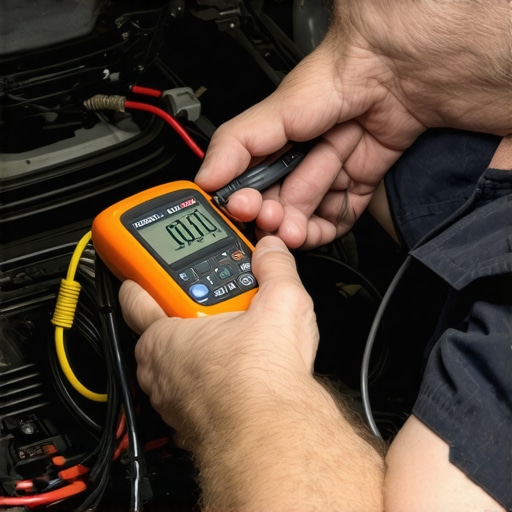
A static resistance test with a multimeter is often useless for diagnosing hot-start issues. High-amperage circuits must be tested under load; by performing a dynamic voltage drop test during the actual cranking event, a mechanic can see exactly where energy is being converted into wasted heat rather than mechanical motion. This level of precision is part of the mechanic tips for diagnosing common auto problems that separate true diagnosticians from parts-changers.
Beware the Clear Flood Mode Logic Trap
Modern ECUs include a “Clear Flood” mode that can be triggered if a skewed sensor reports an impossible temperature or throttle position. If the computer mistakenly enters this mode, it will cut fuel entirely during cranking, leading to a frustrating no-start condition. Integrating sensor data validation into your ultimate tune-up checklist ensures you are not fighting a software ghost with unnecessary hardware replacements.
#IMAGE_PLACEHOLDER_E#
Authoritative Resources for Deep Technical Mastery
SAE International (Society of Automotive Engineers): The industry standard for technical white papers on thermal management and starter motor efficiency under extreme load. Bosch Mobility Solutions Aftermarket: An essential repository for understanding fuel injection behavior and the logic thresholds of modern engine sensors. The National Institute for Automotive Service Excellence (ASE): Provides advanced technical briefs that are vital for mastering the nuances of high-load electrical systems and complex auto repair workflows.
The Technician’s Final Take on Heat-Soak Failures
Solving the riddle of a vehicle that refuses to start when hot requires looking beyond the dashboard lights. True expertise lies in understanding how heat shifts the physical properties of every wire, sensor, and mechanical seal in the engine bay. Whether it is restoring a missing heat shield or identifying a leaking fuel injector tip, high-quality auto repair is about data-driven verification. By following the essential guide to auto repair, you can ensure your vehicle remains reliable regardless of the thermometer. If you have dealt with a persistent hot-start issue that defied the usual fixes, we invite you to share your findings with our community or visit our contact page to consult with an expert diagnostic team. Your insights help how a top-rated mechanic ensures safe auto repairs for every driver on the road.