Stop Swapping Batteries and Inspect the Negative Terminal Path
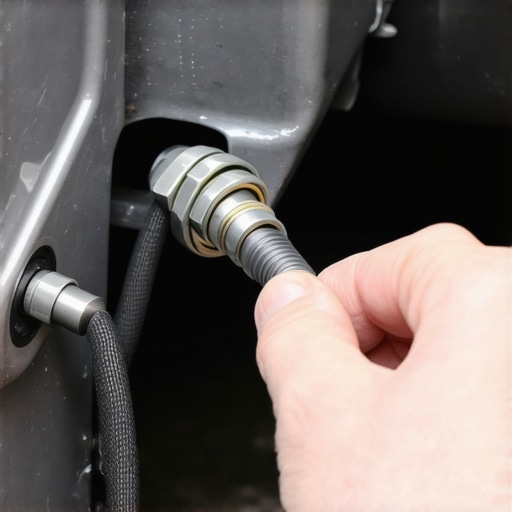
Modern automotive diagnostics often fall into the trap of component-swapping rather than root-cause analysis. When a vehicle exhibits a slow crank or a flickering dashboard, the immediate impulse for many car owners—and even some entry-level technicians—is to condemn the battery. However, field experience suggests that a significant percentage of these issues stem not from a lack of chemical energy storage, but from the inability of that energy to traverse the circuit. The ground connection is the most overlooked failure point in the modern 12-volt system. Before you invest in a costly replacement, any seasoned mechanic will tell you to verify the integrity of the chassis ground. [IMAGE_PLACEHOLDER]
How Voltage Drop Masks Itself as Component Failure
Voltage drop is the silent killer of electrical components. While a battery might show a healthy 12.6 volts at rest, the high amperage required for a starter motor can cause a bottleneck at a corroded ground bolt. This resistance generates heat and effectively starves the starter, leading to symptoms that mimic a dying battery. This phenomenon isn’t limited to starting; it affects the entire vehicle’s performance. For instance, poor grounding can cause electronic control units (ECUs) to receive erratic signals, leading to phantom misfires that look like they require an engine tune up when the hardware is actually sound. According to research by SAE International, electrical system integrity is foundational to the longevity of modern sensor arrays. If you are noticing weird electrical gremlins, check the simple ground wire move that fixes dim headlights before assuming the worst.
Why Does Your Car Start Fine Only After It Warms Up?
This is a classic inquiry found in professional diagnostic forums, highlighting a nuance of thermal expansion. As the engine bay heats up, the metal around a loose or corroded ground connection expands, sometimes temporarily improving contact and reducing resistance. This leads many drivers to believe they have a ‘cold-start battery’ issue. In reality, the high resistance at the ground point is the primary culprit. Professional mechanic tips for diagnosing common auto problems emphasize that checking for 0.1V or less between the battery negative post and the engine block is the gold standard for verifying ground health. If the reading is higher, your auto repair needs to focus on cleaning metal-to-metal surfaces rather than purchasing new lead-acid cells.
The High Cost of Ignoring Basic Electrical Continuity
Ignoring a bad ground doesn’t just annoy you with slow starts; it can destroy expensive hardware. An ‘open’ or high-resistance ground path often forces the electrical current to find an alternative route, frequently through delicate components like transmission shift cables or throttle linkages, causing premature mechanical wear. This can lead to unexpected bills for a brake service or transmission work that could have been avoided. By taking a proactive approach to your vehicle’s maintenance, you can implement tune up strategies to save money on auto repairs that focus on preventative electrical cleaning. If you have been struggling with a battery that seems to die every year, investigate the path to the chassis first. Professional insights like these are why we recommend you learn more about auto repair cost-saving tips from industry experts to keep your vehicle running without unnecessary overhead.
Modern fuel injection and ignition systems rely on precise millivolt signals to operate at peak efficiency. When the return path to the battery is compromised by oxidation, these low-voltage signals become distorted by electrical ‘noise.’ This interference often leads to the illumination of the check engine light, prompting owners to replace perfectly functional parts. For example, a technician might see a code for a lean oxygen sensor and immediately assume the component has failed. However, if the sensor’s ground reference is skewed, the data it sends to the engine control module is essentially fiction. Before you start buying parts, it is much more effective to learn how to test your own o2 sensor using a 15 multimeter to see if the voltage is actually responding to engine conditions or just reacting to a poor connection.
Stop Chasing Phantom Sensor Codes with Expensive Replacements
The complexity of modern CAN-bus networking means that a single bad ground can cause a cascading failure across multiple modules. If the dashboard is lighting up like a Christmas tree with unrelated errors—such as ABS, traction control, and transmission warnings appearing simultaneously—you are likely looking at a grounding issue rather than a mechanical breakdown. In these scenarios, the ‘floating ground’ forces the computer to make decisions based on erratic voltage spikes. This often leads to a rough idle or stalling that feels like a massive mechanical failure. In many cases, the 15-sensor that fixes your rough idle in minutes might actually be a simple cleaning of the ground strap located on the firewall or engine block. Professional diagnostic data from companies like Delphi Technologies suggests that up to 20% of returned ‘defective’ electronic components are actually functional parts that were victims of poor circuit integrity elsewhere in the vehicle.
Is Your Computer Hallucinating Data Due to High Resistance?
This is the question every DIYer should ask when a scan tool reveals impossible data pids. High resistance in the ground circuit doesn’t just lower voltage; it changes the scaling of every analog sensor on the engine. If the coolant temperature sensor suddenly reads 300 degrees while the engine is stone cold, the computer isn’t lying—it’s just measuring the only potential it can find. This digital hallucination can lead to excessive fuel dumping, which eventually fouls spark plugs and ruins catalytic converters. Checking the ground is not just about starting the car; it is about preserving the delicate balance of the air-fuel ratio. If you suspect your charging system is contributing to these spikes, you can test your alternator using a simple screwdriver to check for magnetic pull and basic diode health before diving into deeper diagnostics.
Protect Your Alternator from Early Internal Burnout
A bad ground creates a massive load on the charging system because the alternator has to work significantly harder to push current through a resistive path. This extra effort generates internal heat, which eventually cooks the diodes and the voltage regulator. When this happens, the alternator might still put out some voltage, but the ‘ripple’ (AC voltage leaking into the DC system) will wreak havoc on your electronics. Watch for the warning signs; there are 5 ways your car tries to tell you the alternator is about to quit, and many of them start with dimming lights or strange whining noises during acceleration. Furthermore, a weak ground can even lead to the hidden ground bolt that causes transmission false neutrals, a terrifying experience where the car suddenly loses drive power because the solenoids can’t stay engaged. Have you ever encountered a mystery electrical issue that a simple bolt-cleaning solved? Share your experience in the comments below or suggest what diagnostic guide we should tackle next to help you keep your vehicle on the road longer.
Why a Standard Multimeter Often Misses the Real Issue
While a digital multimeter is an essential tool in any DIYer’s kit, relying solely on it for grounding diagnostics can lead to a false sense of security. The limitation lies in the sampling rate. A standard meter averages voltage over several hundred milliseconds, which is an eternity in the world of high-speed digital communication. Modern vehicles utilize Pulse Width Modulation (PWM) to control everything from cooling fans to fuel pumps. These components switch on and off thousands of times per second, creating rapid fluctuations in the return path. If your ground strap is frayed or slightly loose, a multimeter might show a clean 12.6V, while an oscilloscope would reveal a ‘noisy’ signal filled with transient voltage spikes that confuse sensitive microprocessors. To truly master the electrical system, you must look at the quality of the signal, not just its average strength.
Can a Poor Rear Ground Actually Burn Out Your Fuel Pump?
This nuanced question addresses the relationship between resistance and current draw in DC motors. The fuel pump, often located at the furthest point from the battery, relies on a dedicated ground point usually fastened to the rear subframe or trunk floor. When this specific connection succumbs to road salt and moisture, the resistance in the circuit increases. Because the fuel pump must maintain a specific RPM to provide the fuel pressure requested by the ECU, it attempts to compensate for the lower voltage by pulling more amperage. This increased current flow generates excessive heat within the pump’s internal windings. Over time, this thermal stress degrades the insulation and causes the motor to seize prematurely. If you find yourself replacing a fuel pump every two years, the pump likely isn’t the problem; the path back to the battery is the real thief.
Beat the Chemistry of Galvanic Corrosion in Modern Engines
As manufacturers shift toward all-aluminum engine blocks and magnesium alloy housings to save weight, a new challenge has emerged: galvanic corrosion. When a steel ground bolt is threaded directly into an aluminum block, the two dissimilar metals create a microscopic battery when moisture is present. This electrochemical reaction creates an insulating layer of aluminum oxide—a material so non-conductive that it is often used as a dielectric in capacitors. This is why a ground bolt can look perfectly tight and clean on the outside while being completely insulated from the block by a layer of white, powdery oxidation on the threads. According to technical standards in the Bosch Automotive Handbook, ensuring the integrity of these interfaces is critical for maintaining a quiescent current of less than 30mA, preventing battery drain during long periods of storage. To combat this, technicians now use specialized conductive anti-seize compounds specifically designed to maintain metal-to-metal contact while sealing out oxygen.
Find the Parasitic Draw Keeping Your Modules Awake
One of the most frustrating symptoms of a compromised ground is the dreaded parasitic draw. In a healthy vehicle, once the ignition is turned off, the various ECUs go through a ‘power-down’ sequence into a sleep mode. However, a ‘dirty’ ground—one with just enough resistance to create a small voltage offset—can prevent these modules from ever fully entering sleep mode. The module detects a small voltage on the ground side and interprets it as a wake-up signal or a ‘keep-alive’ command. This keeps the CAN-bus active, draining the battery overnight. If you are tired of waking up to a dead car, check out our guide on advanced diagnostics to see how the pros catch these glitches in real-time. Identifying which module is staying awake requires a methodical approach, often involving a millivolt drop test across the fuses to see which circuit is still pulling current long after the key has been removed. This level of detail is what separates a parts-changer from a true diagnostic technician, and it is the key to stopping the cycle of unnecessary battery replacements.
Why High-Resistance Grounds Cause Transmission Shifting Issues
The relationship between the transmission control module (TCM) and the engine ground is perhaps the most sensitive link in the powertrain. Modern automatic transmissions rely on solenoids that are triggered by very specific current thresholds. If the ground path for the TCM is compromised, the solenoids may struggle to reach their full magnetic pull, leading to ‘soft’ shifts, flared gear changes, or even a total loss of engagement in certain gears. This often leads owners to believe they need a full transmission rebuild when the actual fix costs less than five dollars in cleaning supplies. When the return current is blocked, it can even ‘back-feed’ through the shift cable, causing the metal cable to heat up and eventually snap or melt its plastic bushings. Before you authorize an expensive overhaul, ensure you have verified the primary ground strap between the transmission case and the chassis, as this is the most common failure point for intermittent shifting errors.
Your Ground Strap Might Be Acting Like an Interference Magnet
In the high-speed environment of modern automotive networking, a ground wire does more than just complete a circuit; it acts as a shield against electromagnetic interference (EMI). When a ground strap becomes frayed or internal strands begin to oxidize, it loses its ability to effectively sink the ‘noise’ generated by ignition coils and high-pressure fuel injectors. This digital jitter can infiltrate the CAN-bus lines, causing data packets to drop or collide. To a mechanic, this manifests as erratic communication codes that disappear and reappear without logic. High-frequency digital signals require a rock-solid reference point to maintain their integrity, and a single milliohm of added resistance can turn a stable communication line into a chaotic mess of transient voltage spikes.
Stop Ground Loops from Sabotaging Sensitive Modules
Ground loops occur when multiple electronic components are grounded at different physical locations on the chassis, creating a potential difference between them. In older vehicles, this was merely a nuisance that caused humming in the radio. In today’s sophisticated machines, it can lead to catastrophic data corruption. For example, if the ABS module and the ECU are grounded at points with different resistance levels, the ‘floating’ voltage can lead to false sensor readings that trigger emergency braking or limp-home modes. The Automotive Service Association (ASA) highlights that verifying ground symmetry is often the most critical step in resolving complex diagnostic puzzles that stump less experienced shops. Before you commit to a major auto repair, ensure that all major control modules share a common, clean, and low-impedance path to the negative terminal.
Why Does Your Scan Tool Show Lean Codes When the Engine Runs Rich?
This paradox is a hallmark of ground-side voltage offsets. If the oxygen sensor’s ground is compromised, the voltage signal it sends back to the computer is shifted upward. The ECU interprets this higher voltage as an indicator of a lean condition and responds by dumping more fuel into the cylinders. The result is an engine that is physically running rich—smelling of unburnt gas and potentially ruining the catalytic converter—while the diagnostic software insists the engine needs more fuel. This illustrates why a standard tune up that only involves changing plugs and filters often fails to solve the root problem. You must verify that the sensor’s ground reference is identical to the ECU’s ground reference to ensure the data is grounded in reality, not fiction.
Don’t Let Your Smart Charging System Kill Your New Battery
Modern vehicles utilize intelligent Battery Management Systems (BMS) that monitor the current flowing through a shunt on the negative battery cable. If you ignore a poor ground connection further down the line, the BMS receives inaccurate data about the battery’s state of charge. This can cause the alternator to overcharge the battery in a desperate attempt to overcome perceived resistance, or conversely, it may stop charging altogether to ‘protect’ the system. If you find your car requires frequent battery replacements despite having a new alternator, the problem likely lies in the communication between the BMS and the chassis ground. Investigating these tune up strategies to save money on auto repairs can prevent the premature death of expensive AGM batteries. Stop guessing and start measuring—use our diagnostic checklists to isolate ground faults before they turn into multi-thousand-dollar engine repair bills.
Expert Insights & Advanced Considerations
Don’t Trust a New Battery Without a Shunt Test
A common mistake in modern auto repair is assuming a new battery solves a low-voltage condition. Professionals know that even a fresh cell cannot overcome a high-resistance ground. Using a shunt to measure actual current flow under load is the only way to verify the system is receiving what the battery is giving. Always verify the current path before condemning the storage device. [IMAGE_PLACEHOLDER]
Stop Relying on Multimeter Averages for Digital Signals
Scoping a ground circuit is becoming mandatory for high-level diagnostics. Transient spikes on a ground wire can crash a CAN-bus node while your digital multimeter shows a perfect 12.6 volts. To truly tune up your car like a pro, you must use an oscilloscope to look for high-frequency noise that disrupts modern ECUs. If the signal isn’t flat, your ground isn’t good.
Thermal Imaging Spots Resistance That Your Eyes Miss
High resistance generates heat long before it causes a total circuit failure. A quick pass with an infrared camera during a high-load event like cranking can highlight a glowing ground bolt that looks perfectly clean to the naked eye. This non-invasive technique is one of the most effective mechanic tips for diagnosing common auto problems without disassembling half the engine bay.
Curated Expert Resources
SAE International Technical Papers These provide the engineering standards for automotive electrical architectures and are essential for anyone wanting to understand why ground symmetry is vital for sensor accuracy.
The Bosch Automotive Handbook Often called the mechanic’s bible, this resource offers deep dives into galvanic corrosion and the physics of automotive electronics.
Delphi Technologies Diagnostic Portal A top-tier resource for learning how to interpret complex sensor data when electrical noise is present in the system.
ASA Professional Webinars The Automotive Service Association offers advanced training on CAN-bus troubleshooting that goes far beyond basic battery testing.
The Ground-First Philosophy for Longevity
Mastering the electrical integrity of your vehicle is the single most effective way to avoid the parts cannon approach to maintenance. By shifting your focus from the battery to the ground path, you ensure that every electronic module operates with the precision intended by the factory. This proactive mindset is a cornerstone of effective auto repair and prevents the cascading failures that lead to expensive shop visits. We invite you to share your most challenging electrical ghost stories in the comments—what simple ground fix saved your car from the scrap heap? For more advanced strategies, reach out to choose a skilled mechanic you can trust to perform a full system voltage drop test.