The phenomenon of a brake pedal migrating toward the floorboard during or after a prolonged drive is an alarming symptom that points to a systemic failure of hydraulic integrity. Unlike the immediate failure of a snapped line, this delayed reaction is often a byproduct of thermodynamic stress. When a vehicle is in motion for hours, the brake system experiences constant, localized heat soak. This thermal energy eventually migrates from the friction surfaces into the hydraulic circuit, exposing any latent weaknesses in the fluid or the mechanical seals. While most owners prioritize a comprehensive engine tune up for performance, the degradation of the braking system under heat is a far more critical safety threshold that demands expert analysis.
Thermodynamics and the Critical Failure of Hydraulic Integrity
In a standard closed-loop system, brake fluid is designed to be incompressible. However, because brake fluid is hygroscopic, it naturally absorbs moisture from the atmosphere over time. This moisture significantly lowers the fluid’s boiling point. During a long drive, the heat generated by the pads and rotors is transferred to the calipers and the fluid within. When this fluid reaches its ‘wet boiling point,’ the water content turns into vapor. Because gas is compressible, the force you apply to the pedal is wasted on squishing steam bubbles rather than engaging the calipers. Professional brake service strategies suggest that fluid with even 3% water content can fail under the high-temperature conditions of highway driving. According to the National Highway Traffic Safety Administration (NHTSA), hydraulic failures of this nature are a leading cause of mechanical-related accidents on high-speed roads.
What Happens When Brake Fluid Vaporizes Mid-Journey?
Vapor lock is the invisible enemy of the long-distance driver. As the fluid vaporizes, the pedal loses its firm resistance, often requiring the driver to ‘pump’ the brakes to build enough pressure for a stop. This is a classic indicator that you need to test your brake fluid for water content immediately. If the pedal feel returns to normal after the vehicle has sat and cooled down, the diagnosis is almost certainly moisture-induced vaporization. This requires a full system flush by a qualified top-rated mechanic to replace the contaminated fluid with a high-performance DOT 4 or 5.1 variant.
Master Cylinder Bypass and Thermal Expansion
Beyond the fluid itself, the mechanical components of the braking system react to heat in ways that can simulate a leak. The master cylinder relies on internal rubber seals to maintain pressure. As these seals age, they become susceptible to thermal expansion. During an extended trip, the heat soak can cause these seals to soften or warp slightly. If they fail to provide a perfect seal against the cylinder bore, fluid will ‘bypass’ the piston and return to the reservoir rather than heading to the wheels. This internal bypass is a subtle but dangerous failure in auto repair, as it provides no external visual leaks yet results in a pedal that slowly sinks under steady pressure. If you have encountered a sinking pedal on a descent, share your diagnostic findings with our community of specialists to help refine our collective troubleshooting protocols. Maintaining a consistent brake service schedule is the only way to ensure these elastomers remain resilient under the extreme temperatures of interstate travel.While the master cylinder is often the primary suspect, the ABS (Anti-lock Braking System) modulator serves as a secondary, more complex point of failure that often goes ignored until a crisis occurs. Inside the ABS block is a series of precision solenoid valves and a low-pressure accumulator. Under the sustained heat of a multi-hour drive, these internal valves can expand slightly. If a microscopic piece of debris is trapped in the seat, or if the valve itself is slightly out of tolerance due to heat soak, fluid can leak past the valve and into the accumulator. This creates a sensation where the pedal travels further toward the floor because the fluid is taking a path of least resistance instead of pushing the brake pads. Professional mechanic tips for diagnosing common auto problems often highlight that these internal ABS leaks won’t necessarily trigger a warning light on your dashboard, making them particularly insidious. 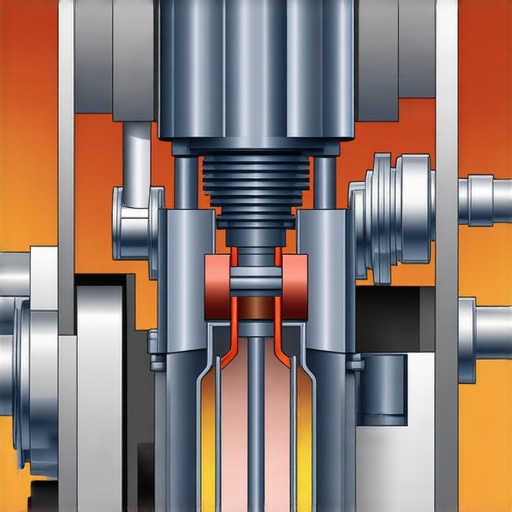
Could Your Anti-Lock System Be Stealing Your Pedal Pressure?
The problem with an internal ABS leak is that it remains invisible to the car’s computer as long as the electronic circuits remain intact. When you are traveling at highway speeds, the constant vibration and airflow might keep the system cool enough for a while, but the moment you enter stop-and-go traffic after a long haul, the heat soak becomes critical. Research by the Society of Automotive Engineers (SAE) indicates that the viscosity of brake fluid changes significantly at these thermal peaks, which can exacerbate the leak-down rate of aged solenoid valves. If you notice your pedal sinking specifically after heavy use but see no puddles on the ground, the modulator is a high-probability culprit. This is why advanced brake maintenance hacks always include a gravity bleed or a bidirectional scan tool purge to ensure no air or contaminated fluid is trapped within the ABS valves.
How Heat-Induced Hose Expansion Mimics a Sinking Pedal
Another mechanical factor often overlooked by DIYers is the physical expansion of the brake lines themselves. Standard rubber brake hoses are reinforced with fabric, but after years of heat cycles and environmental exposure, this reinforcement weakens. During an extended trip, the temperature of the fluid rises, softening the rubber. When you apply the brakes, the pressure causes the hose to expand outward—a phenomenon known as volumetric expansion—rather than directing that force to the calipers. This results in a spongy or sinking pedal that feels increasingly worse as the journey continues. You might even find that environmental factors play a role; for instance, some drivers report that your brake pedal sinks to the floor only when it is raining, which can be linked to the rapid cooling and contraction of these stressed components. Ensuring your lines are securely mounted with the 7-dollar clip that stops your brake lines from rubbing is a small but vital step in preventing premature hose fatigue. If you’re looking to bulletproof your vehicle’s overall reliability before a big trip, check out our essential tune-up tips to boost your car’s performance in 2025 for a complete pre-departure checklist. Unlike the sudden hardness found when your brake pedal feels hard as a rock, a sinking pedal is a plea for hydraulic restoration.
Stop Blaming the Master Cylinder and Check Your Caliper Pistons
While internal bypass in the master cylinder is a frequent culprit, long-distance drivers often overlook the mechanical behavior of the calipers during extended highway stints. When you spend hours at 70 mph with minimal braking, the rotors are subjected to constant, high-frequency vibrations. If there is even a microscopic amount of hub runout or a slightly loose wheel bearing, the rotor will ‘wobble’ just enough to push the brake pads and caliper pistons back into their bores. This phenomenon, known as piston knock-back, creates a terrifying void the next time you press the pedal. You expect immediate resistance, but instead, the pedal travels halfway to the floor just to move the pistons back into contact with the rotors. High-performance brake service strategies often involve checking for lateral runout using a dial indicator to ensure the rotor surface remains perfectly true. 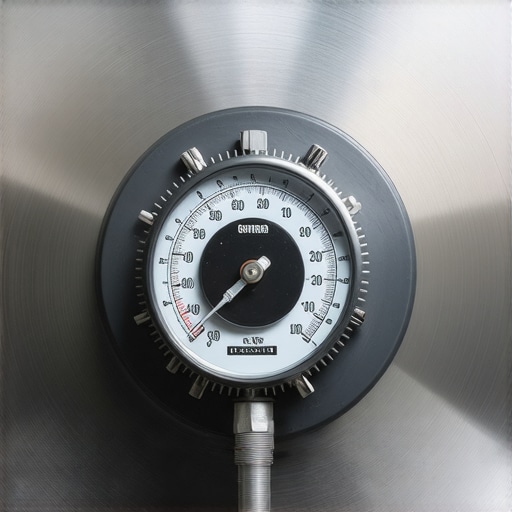
Why does my brake pedal feel lower after high-speed highway cruising?
The ‘lower’ pedal sensation often stems from a combination of mechanical deflection and thermal taper in the brake pads. Under the intense, localized heat of a long mountain descent or high-speed commute, the pad material itself can compress slightly, or the caliper bracket can flex under the strain. If the pads are worn unevenly—a condition known as taper wear—the piston must travel further to achieve full surface contact against the rotor. This mechanical ‘slack’ manifests as a sinking pedal. According to technical documentation from Brembo, even a few tenths of a millimeter of increased piston travel can drastically alter the driver’s perception of brake system ‘firmness’ and safety. If you feel this softening, it is a clear signal that your current top-rated mechanic should inspect the caliper slide pins for proper lubrication to prevent uneven pad engagement.
The Hidden Role of Vacuum Boosters and Check Valve Fatigue
We often think of the brake booster as a binary component: it either works or it doesn’t. However, the vacuum check valve is a plastic and rubber assembly that lives in one of the hottest environments in your car—the engine bay. During a five-hour drive, the plastic becomes exceptionally pliable. If the check valve develops a hairline crack that only opens under extreme heat, it can cause erratic vacuum pressure. While this usually results in a hard pedal, a leaking booster diaphragm can sometimes cause the engine to lean out, which in turn affects the idle and the master cylinder’s return speed, making the pedal feel ‘lazy’ or slow to return, which drivers often interpret as sinking. Integrating a vacuum system check into your tune up routine is essential for maintaining that crisp, immediate response.
Brake-by-Wire Complexity and the Digital Pedal Paradox
In the latest generation of vehicles, the physical connection between your foot and the hydraulic lines is being severed in favor of ‘brake-by-wire’ or Integrated Power Brake (IPB) modules. In these systems, the pedal is essentially a sophisticated joystick connected to a simulator that provides artificial feedback. If the pedal sinks on one of these modern machines after a long trip, the issue might not be hydraulic at all, but rather a software calibration error or a sensor drifting due to heat. Professionals in auto repair are finding that the simulator’s pressure-displacement curve can be affected by the ambient temperature of the electronics. When the IPB unit heat-soaks, the solenoid valves that create the ‘feel’ can behave inconsistently, leading to a pedal that drops further than intended without any loss of actual stopping power. This digital-mechanical disconnect requires specialized diagnostic software that…The intricate dance between hydraulic pressure and electronic intervention becomes increasingly fragile as heat-soak permeates the vehicle’s chassis. While most drivers assume a sinking pedal is a binary hydraulic leak, the reality often lies in the nuanced behavior of the Electronic Stability Control (ESC) module.
How Heat-Saturated ABS Valves Deceive the ECU
Within the ESC manifold, microscopic solenoid valves manage the distribution of braking force to each wheel. During an arduous trek through mountain passes or high-speed interstates, these valves are subjected to intense thermal cycles. If the solenoid housing reaches a critical temperature, the metal can expand just enough to allow a ‘micro-bypass’ of fluid. This bypass is frequently too small to trigger a fault code in the vehicle’s onboard diagnostics, yet it is significant enough to cause a perceptible drop in pedal height. In the world of high-end auto repair, technicians often find that these thermal ghosts only appear when the module is at operating temperature, making them notoriously difficult to replicate in a cold shop environment.
Why does your brand-new brake fluid still feel spongy after a long descent?
Even with fresh fluid, you might encounter a softening pedal if the fluid’s kinematic viscosity has been compromised by aeration during a botched brake service. If tiny micro-bubbles are trapped within the intricate channels of the ABS pump, they remain dormant until the fluid thins out under heat. Once the temperature rises, these bubbles expand, creating the classic sinking sensation. According to the Federal Motor Vehicle Safety Standard (FMVSS) No. 116, brake fluids must maintain specific stability across a massive temperature range, but even the best fluids cannot compensate for air trapped in the secondary valves of a modern modulator.
Stop Overlooking the Role of Wheel Bearing End-Play
Beyond the hydraulics, a mechanical culprit often mimics a master cylinder failure: excessive wheel bearing end-play. As you cruise for hours, a worn wheel bearing can heat up, allowing the hub to tilt slightly. This tilt causes the brake rotor to push the caliper pistons back into their housing. When you finally reach for the brake pedal, the first few inches of travel are spent simply reseating the pistons against the rotor. This phenomenon can be easily confused with a ‘sink’ because the resistance isn’t where your muscle memory expects it to be. A proactive tune up should always include a check for hub runout to prevent this mechanical ‘knock-back’ from compromising your safety. 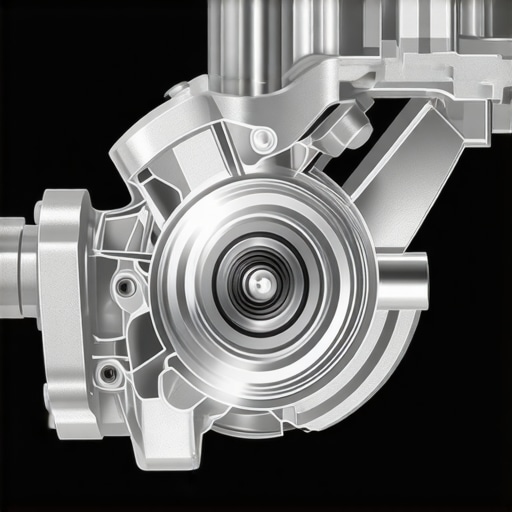 These low-drag caliper designs, while efficient for fuel economy, exacerbate the problem by providing less ‘grip’ on the piston, allowing it to retract further than necessary when subjected to hub vibration. A qualified mechanic will utilize a dial indicator to ensure that bearing tolerances are within a thousandth of an inch. If you have noticed your pedal height fluctuating after long stretches of highway driving, it is imperative to perform a high-temperature pressure-drop test to isolate whether the fault is hydraulic or mechanical in nature.
Expert Insights & Advanced Considerations
Go Beyond Standard DOT 4 for Thermal Resilience
While most vehicles leave the factory with standard DOT 3 or 4 fluid, these often reach their moisture-saturated boiling point sooner than expected during interstate hauls. Upgrading to a high-temp DOT 5.1 provides a significantly higher dry and wet boiling point, which prevents the transition of moisture into vapor. Implementing brake service secrets like switching to premium synthetic fluids can provide that extra safety margin when descending steep grades.
Why Hot Pressure Testing Beats Cold Diagnostics
A common mistake in the shop is testing a vehicle after it has sat for two hours. Thermal expansion in the master cylinder seals often retracts as the unit cools, sealing the leak and making the system appear healthy. To find a true ‘phantom’ sink, a technician must perform a pressure-drop test immediately after a road test while the components are still heat-soaked. You can maximize your brake service efficiency by duplicating the exact thermal conditions where the failure occurs.
Don’t Ignore the Micro-Bypass in High-Heat Solenoids
Internal leakage within the ABS/ESC modulator is often the ‘silent killer’ of pedal height. When these solenoid valves expand under extreme heat, they allow fluid to bleed into the low-pressure accumulator. This does not leave a puddle, but it robs your pedal of its firm foundation. Use the 10-dollar hub scrub technique during rotor replacement to ensure zero runout, which reduces the mechanical feedback that can stress these delicate valves.
#IMAGE_PLACEHOLDER_E#
Curated Expert Resources
Brembo Technical Portal: This is a goldmine for understanding how high-performance braking systems manage thermal dissipation and pad taper wear under extreme stress.
SAE International (J1703 Standards): Essential documentation for those who want to understand the chemical stability and kinematic viscosity requirements of motor vehicle brake fluids.
NHTSA Recalls Database: A critical tool to check if your specific vehicle model has known issues with ABS modulator internal bypass or master cylinder seal degradation that could explain a sinking pedal.
Final Expert Perspective
Solving a sinking pedal after a long drive requires moving past surface-level checks and diving into the thermodynamics of the entire hydraulic circuit. Whether it is vapor lock from moisture-laden fluid or the mechanical reality of piston knock-back, your safety depends on a system that remains stable under heat. To ensure your vehicle is handled with the precision it deserves, you must learn how to choose a skilled mechanic you can trust who understands these advanced failure modes. We invite you to share your specific diagnostic data with our team or schedule a comprehensive thermal analysis to keep your stopping power consistent, no matter how long the journey.