Water Doesn’t Just Wet the Road—It Challenges Your Hydraulic Seal
When a driver experiences a sinking brake pedal during a rainstorm, the immediate instinct is to blame the slick surface. However, a pedal that travels to the floor signifies a loss of hydraulic pressure or a mechanical bypass within the master cylinder. Rain acts as a catalyst for these symptoms primarily because the demand on the braking system changes. Wet conditions often trigger the Anti-lock Braking System (ABS) more frequently. If your system has internal vulnerabilities, such as a micro-leak or air trapped within the ABS modulator, the high-frequency cycling during a rain-induced stop will expose what a dry-weather brake service might have missed. It is a common misconception that environmental moisture only affects the external friction surfaces; in reality, atmospheric changes can reveal deep-seated issues within the sealed hydraulic circuit.
Why the ABS Controller Might Be Mimicking a Failing Master Cylinder
In many modern vehicles, the ABS pump and valves are the only components that behave differently in wet weather. If the internal valves of the ABS unit are not seating correctly due to debris or corrosion, moisture-laden air can exacerbate the issue. While brake fluid is hygroscopic—meaning it absorbs water—the sudden ‘sink’ during rain is often related to the ABS pump trying to move fluid that contains air or moisture. Professional mechanic tips for diagnosing common auto problems suggest that if the pedal only drops when the ABS is active, the fault likely lies within the hydraulic control unit rather than the wheel cylinders themselves. This specific failure mode is often overlooked during a standard tune up because it requires a dynamic test that mimics low-traction events.
Could Internal Bypass Be Triggered Specifically by Low-Traction Events?
This is a common point of contention in expert forums and among seasoned technicians. The answer lies in the ‘stroke’ of the master cylinder. Under normal dry conditions, you may only use the first 20% of the cylinder’s travel. In a panic stop on wet pavement, or when the ABS modulates pressure, the piston may travel into a portion of the bore that is rarely used. If that section of the bore is corroded or pitted, the internal seals will fail to hold pressure, causing the pedal to sink. This is why regular brake maintenance hacks involve flushing the system to prevent such localized corrosion. According to technical standards established by the Society of Automotive Engineers (SAE), brake fluid integrity is paramount to preventing vapor lock and seal degradation in high-stress scenarios.
The Critical Link Between External Humidity and Fluid Boiling Points
Extreme humidity during heavy rain can interact with degraded brake fluid. If your fluid hasn’t been changed in years, its boiling point is significantly lowered. The heat generated by the friction of braking, combined with the inability of the fluid to reject moisture, can create ‘gas pockets’ in the lines. You can actually test your brake fluid for water content at home to see if your system is compromised. When these gas pockets form, the pedal loses its firmness because gas is compressible, whereas hydraulic fluid is not. If you are noticing this trend, it is time to schedule an urgent auto repair to prevent a total loss of stopping power. Do not wait for a dry day to ignore a wet-weather failure; the underlying cause is persistent and dangerous.
If you’ve encountered this specific sinking sensation, we invite you to share your vehicle’s make and model in our professional community or consult our guide on when to know you need brake service now to help identify common ABS unit failures.
How a Clogged Cowl Drain Turns Your Booster Into a Reservoir
Many drivers overlook the physical proximity of the brake booster to the vehicle’s external drainage systems. When heavy rain hits, the area beneath the windshield—known as the cowl—is responsible for diverting gallons of water away from the engine bay. If these drains are blocked by leaves or debris, water pools around the brake booster’s vacuum seal. Under high vacuum conditions, a small leak can actually ingest water directly into the booster housing. This won’t just cause a sinking pedal; it can lead to internal corrosion of the diaphragm and check valve. This is a critical distinction to make during any brake service strategies discussion, as many shops only look at the fluid, ignoring the pneumatic side of the assist system.
Eliminate the Hidden Friction That Wet Pavement Disguises
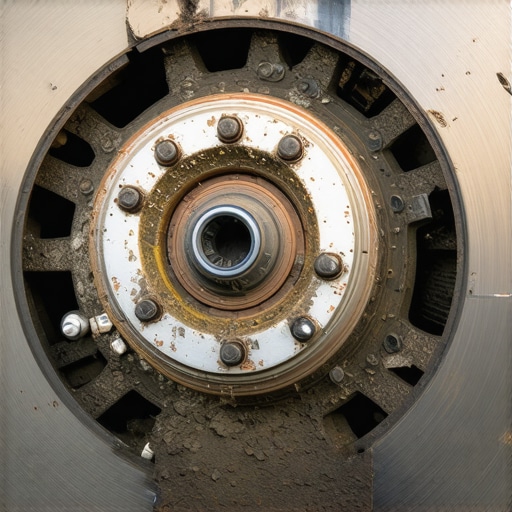
Wet roads provide a low-friction environment that often hides a ‘lazy’ or sticky brake caliper. In dry conditions, a sticking slide pin requires high pressure to move, which gives the pedal a firm, albeit heavy, feel. However, when the road is slick, you are likely applying lighter, more frequent pressure. If the caliper is seizing, the piston may not retract or extend smoothly, creating an inconsistent feedback loop to the pedal. This is often where a simple move that fixes a sticky brake caliper can save you from a major repair bill. Furthermore, if the hub surface isn’t perfectly clean, you might experience lateral runout that feels like a sinking pedal as the pads are knocked back further into the bore than intended. Implementing the $10 hub scrub that stops brake vibrations ensures that the rotor-to-hub mating surface remains true, preventing the excessive piston travel that mimics a hydraulic bypass.
Why Does the EBD System Mask Hydraulic Failure Until Traction Drops?
Electronic Brakeforce Distribution (EBD) is the sophisticated cousin of the ABS, and it plays a massive role in how your car handles wet stops. By electronically modulating the pressure sent to the rear wheels based on load and grip, EBD can temporarily compensate for a weak master cylinder by shifting the workload to different corners of the car. However, this ‘digital band-aid’ can fail when the road becomes exceptionally slick, as the system reaches its compensation limit and the pedal suddenly drops. According to data from the National Highway Traffic Safety Administration (NHTSA), electronic assist systems can sometimes delay the driver’s perception of mechanical degradation until a critical threshold is crossed. This is why understanding how to stop your brakes from sponging after a long drive is vital; you need to recognize the mechanical reality beneath the electronic intervention.
The interaction between wet environmental conditions and aged components creates a perfect storm for hydraulic failure. If moisture has compromised your external wheel speed sensors, the ABS computer might also receive erratic data, causing it to ‘hunt’ for the right pressure level, which the driver feels as a fluctuating or sinking pedal. If you have noticed your pedal height changing specifically during a storm, it is crucial to verify your rotor health to ensure you aren’t dealing with pad knock-back; check our analysis on why your new brake rotors warped in less than six months to see if runout is the true culprit. What’s your experience with ‘mystery’ pedal fade during bad weather? Drop a comment below or share this guide with someone dealing with a soft pedal.
Why Old Rubber Lines Expand Like Balloons in a Panic Stop
In dry weather, your brake system operates within a predictable pressure range, but the sudden, high-intensity modulation required on wet pavement pushes every component to its limit. One of the most insidious causes of a sinking pedal is the expansion of aged flexible rubber brake hoses. Over years of service, the internal braided reinforcement of these hoses weakens. When you apply the brakes firmly during a hydroplaning scare, the pressure that should be clamping your pads is instead wasted as the hose wall balloons outward. This volumetric expansion creates a ‘soft’ or ‘sinking’ sensation that vanishes once the pressure is released. If you notice this specifically during emergency stops in the rain, it is a clear sign that your hoses have lost their structural rigidity. According to the Federal Motor Vehicle Safety Standards (FMVSS) No. 105, hydraulic systems must maintain specific pressure thresholds to ensure safety, and ballooning hoses are a direct violation of that performance integrity.
Can a Dirty Wheel Speed Sensor Fool Your Master Cylinder?
Technically, a wheel speed sensor cannot cause a mechanical failure of the master cylinder, but it can certainly trick the driver into thinking one has occurred. In heavy rain, road grime, salt, and water can bridge the gap between the sensor and the tone ring. This interference leads to erratic signals where the ABS computer ‘thinks’ a wheel has locked up, even if it hasn’t. The system responds by opening the dump valves to release hydraulic pressure, causing the pedal to drop suddenly under your foot. This is not a loss of fluid, but a deliberate (though mistaken) reduction in pressure by the ABS. If your pedal ‘sinks’ with a vibrating sensation only when the road is wet, your first move should be to clean the sensors rather than replacing the master cylinder components.
If you are worried about your brake line integrity, check out our guide on how to inspect brake lines for cracks and bulges before your next rainy commute to ensure your system can handle the pressure.
Stop the Steam from Warping Your Caliper Seals
The physics of a rainy day involves more than just traction; it involves rapid thermal cycling. Your brake rotors can reach several hundred degrees during a drive, and hitting a deep puddle sends a shock of cold water directly onto the hot metal and the surrounding caliper. This ‘thermal shock’ causes the metal components to contract rapidly. If your caliper piston seals are already brittle or aged, this sudden contraction can allow a microscopic amount of air to be drawn into the system or allow fluid to bypass the seal momentarily. This is why a pedal might feel firm for the first half of a rainy drive but start to sink after you have encountered standing water. High-quality brake service strategies always include an inspection of the dust boots and seals to ensure they remain pliable enough to handle these temperature swings.
The Hidden Risks of a Compromised Secondary Piston
Most modern master cylinders use a tandem design with two separate pistons to ensure that if one circuit fails, you still have 50% of your braking power. However, a failure in the ‘primary’ seal can often go unnoticed until a low-traction event in the rain forces you to use the full stroke of the pedal. In these moments, the primary piston may slide past its normal operating range and bottom out against the secondary piston. While you will eventually get stopping power, the ‘dead space’ at the top of the pedal travel feels exactly like a sinking pedal. When this bypass happens, the driver often pumps the brakes instinctively. On a dry road, this might build pressure quickly, but on a slick surface, the ABS sees these rapid fluctuations as a series of lock-up events, further complicating the hydraulic recovery. You might find that the pedal pressure returns momentarily only to fade again as you navigate a long, wet descent, making this a staple concern for mechanic tips for diagnosing common auto problems.
Don’t Let a Clogged Check Valve Steal Your Vacuum Assist
While we often focus on the hydraulic side of the system, the pneumatic component is equally susceptible to wet-weather interference. The brake booster check valve acts as a one-way gate, maintaining vacuum pressure even when the engine isn’t providing it. In high-humidity environments or during heavy downpours, moisture can infiltrate the vacuum lines if the seals are aged. This water can mix with residual oil vapors, creating a ‘sludge’ that causes the check valve to stick or move sluggishly. When this happens, the transition between vacuum-assisted braking and manual effort becomes inconsistent, often manifesting as a pedal that feels like it’s falling away from your foot before finally catching. This is a nuanced failure that standard tune up procedures might miss unless the technician specifically tests the booster’s ability to hold a vacuum under load.
How Flash-Cooling Rotors Can Push Your Pads Out of Position
One of the most elusive causes of a sinking pedal in the rain is known as ‘pad knock-back’ triggered by thermal shock. When a glowing hot rotor is suddenly doused in cold rainwater, the metal doesn’t just contract—it can temporarily distort. This slight oscillation is enough to push the brake pads further back into the caliper than their normal resting position. The next time you press the pedal, the first half of the stroke is simply spent moving the pads back into contact with the rotor. To the driver, this feels like a terrifying loss of pressure. According to technical bulletins from the Automotive Aftermarket Suppliers Association (AASA), ensuring that your wheel bearings are torqued to exact specifications is the best defense against this phenomenon, as even a millimeter of play can exacerbate the effect of water-induced rotor distortion.
Is Your Brake Fluid Actually Aerating During Rapid ABS Cycling?
This is a question that many master technicians debate when diagnosing ‘intermittent’ pedal fade. In a system where the fluid is already contaminated with moisture, the high-frequency vibration and pressure changes of the ABS pump can cause ‘micro-cavitation.’ Small bubbles of water vapor form and collapse within the fluid stream, effectively aerating the hydraulic column. Since air is compressible and brake fluid is not, the pedal will sink until those bubbles are re-absorbed or pushed through the circuit. This is why a simple brake service that includes a full sequence bleed of the ABS modulator is non-negotiable for vehicles operating in coastal or high-rainfall regions. If you are still experiencing a soft feel after a bleed, you may need to investigate the internal seals of the modulator itself.
Stop Salt and Grime from Shorting Your Electronic Sensors
In winter storms, the water on the road is often a saline solution, which is far more conductive than pure rainwater. This conductivity can create ‘ghost’ signals in the wheel speed sensor wiring. If the ABS computer receives a signal that suggests a wheel is locking up—even for a millisecond—it will pulse the dump valves. If this happens continuously, the pedal will slowly descend as the system attempts to ‘save’ the car from a skid that isn’t actually happening. You can mitigate this by applying a specialized dielectric grease to the sensor connectors, a brake maintenance hack that prevents environmental interference from reaching the ECU. Have you ever felt your ABS kick in on a perfectly flat, though wet, road? Tell us about your experience in the comments below or reach out to our experts to discuss your specific sensor readings.
Expert Insights & Advanced Considerations
Pressure Spikes During ABS Activation Can Crack Aging Seals
When your ABS engages on a slick surface, the system cycles pressure hundreds of times per second. This rapid hammering is far more stressful than a standard dry stop. If you have noticed a soft feel specifically during storms, it is time for a professional brake service to ensure your internal master cylinder seals aren’t bypassing under these high-load scenarios.
Thermal Shock is the Unseen Enemy of Piston Retraction
Hitting a deep puddle with hot rotors causes immediate metal contraction, which can physically push pads back into the caliper bore. To prevent this terrifying sensation of a low pedal, implement brake maintenance hacks like checking wheel bearing play and ensuring your caliper slide pins are properly lubricated to resist environmental shock.
#IMAGE_PLACEHOLDER_E#
Saline Road Grime Creates Parasitic Electrical Loads
In winter or coastal areas, the water on the road is often a saline solution. This high conductivity can create “ghost” signals in the wheel speed sensor wiring, leading to unnecessary ABS intervention that feels like a sinking pedal. Use professional mechanic tips for diagnosing common auto problems to check for sensor corrosion and harness integrity before you commit to replacing expensive hydraulic hardware.
Curated Expert Resources
The Society of Automotive Engineers (SAE) Technical Database provides the gold standard for hydraulic fluid specifications and heat-cycle benchmarks. It is the best place to understand why fluid integrity is the backbone of safety in high-moisture environments.
Federal Motor Vehicle Safety Standards (FMVSS) No. 105 outlines the legal requirements for hydraulic brake systems, providing a technical benchmark for what constitutes a safe versus a failing pedal feel under extreme conditions.
AASA Technical Bulletins offer real-world data from the field regarding pad knock-back and rotor distortion issues that are frequently misdiagnosed by general repair shops as master cylinder failure.
Final Expert Perspective
A sinking brake pedal in rain is a powerful mechanical diagnostic tool that you simply cannot ignore. Whether the root cause is a bypass in the secondary piston or moisture-laden fluid reaching its boiling point, your safety depends on immediate technical intervention. By recognizing that wet conditions simply expose existing vulnerabilities, you can move toward a more efficient brake service strategy that addresses both the hydraulic and pneumatic sides of the system. Don’t wait for a dry day to address a wet-weather failure. Consult our guide on when to know you need brake service now to stay ahead of safety risks and maintain total control over your vehicle’s stopping power.