The Catastrophic Physics of Incompressible Fluids
In the realm of advanced auto repair, few scenarios strike fear into a car owner like the ingestion of water into the intake. While air is highly compressible, water is not. When a piston attempts to compress a cylinder full of water, the result is a catastrophic failure known as hydro-lock. From a professional diagnostic perspective, this isn’t just a stall; it is a violent mechanical collision within the block. Specialized mechanic tips for diagnosing common auto problems often highlight that the split-second of water entry can result in bent connecting rods or shattered pistons, effectively totaling the powertrain.
Can You Actually Reverse Hydro-lock Without a Full Engine Swap?
The answer depends heavily on the engine’s RPM at the precise moment of intake. If the vehicle was idling through a deep puddle and died instantly, there is a legitimate chance for recovery. However, if the vehicle was under load on the highway, the kinetic energy usually translates into structural failure. A professional mechanic will first check for mechanical freedom by hand-rotating the crankshaft before attempting any fluid extraction. If the engine is seized, it requires a complete teardown; if it is merely ‘stuck’ by fluid pressure, our $20 strategy provides a path toward salvation.
The Plug-Pull Strategy to Purge a Drowned Cylinder
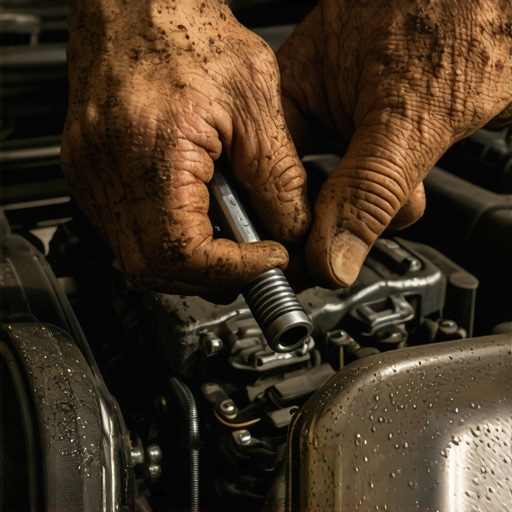
The secret to saving a submerged engine lies in the immediate removal of the spark plugs. By removing these components—a task that costs essentially nothing beyond the labor or a cheap socket set—you provide a path of least resistance for the trapped water. When you crank the engine with the plugs removed, the pistons act as high-pressure pumps, ejecting the water out through the spark plug holes. This prevents the pressure from building up and allows the internal components to cycle without resistance. This is a foundational step in any emergency tune up following a flood event. For those interested in more preventative measures, implementing a performance-focused tune up can help prepare a vehicle’s electrical seals for harsh environments.
Why Every Recovery Needs a Comprehensive Tune Up
Once the liquid is ejected, the battle for engine longevity is only half-won. Water contaminates the lubrication system, creating a milky emulsion that offers zero protection to rod bearings. An immediate oil change and a complete tune up are non-negotiable. Furthermore, water in the braking system is equally dangerous; heat during a standard brake service can turn that moisture into steam, leading to brake fade and pedal sponginess. Professional research from SAE International demonstrates that even minor water contamination in hydraulic fluids significantly lowers the boiling point, compromising safety. You must verify the integrity of every fluid system to ensure long-term reliability. We highly recommend reviewing why regular tune ups are key to car longevity to understand the full scope of post-recovery maintenance. If you have successfully cleared a drowned engine, do not stop at the cylinders—inspect your differentials and transmission for milkiness to prevent total drivetrain failure.
For more advanced diagnostics or to schedule a professional inspection, consult our expert team to ensure your vehicle remains road-worthy after a major environmental incident.
Stop the Short Circuits Before They Fry Your ECU
Immediate mechanical extraction is vital, but the electrical fallout often presents a slower, more insidious death for a modern vehicle. Water ingress into the wiring harness can cause high-resistance shorts that are notoriously difficult to trace. According to the National Institute for Automotive Service Excellence (ASE), electrical connectors that have been submerged require thorough cleaning with a dedicated electrical contact cleaner to prevent long-term pin corrosion. If you ignore this, you might find that the 12-dollar sensor that fixes your rough idle is actually failing because of a green, corroded ground wire rather than a faulty internal component. Professionals use dielectric grease post-cleaning to ensure that future moisture cannot bridge the gap between sensitive pins.
How Can You Tell if Your Intake Manifold is Still Hiding a Gallon of Water?
One of the most dangerous mistakes a DIYer can make is assuming that clearing the cylinders means the engine is safe. Modern cross-flow intake manifolds often feature deep plenums and runners where water can pool like a reservoir. Even after you have successfully purged the block, the first time the throttle plate opens wide, the high-velocity air can lift that pooled water and dump it right back into the combustion chamber. This leads to a second, often more violent, hydro-lock event. Always use a shop vacuum or a bore-scope to inspect the intake tract beyond the throttle body. If your car is turbocharged, the intercooler acts as a massive trap; you must drain it completely to avoid a runaway engine scenario or bent valves.
Flush the Milkshake to Save Your Bearings and Gears
When oil meets floodwater, it creates a thick, creamy emulsion often referred to as a milkshake. This substance is the antithesis of a lubricant. It lacks the film strength necessary to prevent metal-on-metal contact at the crank bearings. While some might suggest 3 reasons your transmission flushes are a waste of money in normal maintenance cycles, a flood recovery is the categorical exception. You must flush the system multiple times until the oil remains amber and clear. Furthermore, high-pressure water can bypass the PCV system, and understanding how a clogged PCV valve can blow out your rear main seal becomes a secondary concern compared to the immediate sludge buildup that can clog the oil pickup screen.

Protect Your Exhaust System from Thermal Shock and Debris
The sudden immersion of a hot exhaust system in cold floodwater creates massive thermal stress. This can crack the ceramic substrate inside your catalytic converter or cause internal baffles to break loose. If you hear a new metallic vibration after a flood, it might be the 15-dollar fix for a rattling heat shield, but it could also be the sign of a failing exhaust manifold. Always inspect the exhaust hangers and oxygen sensor leads, as these are low-hanging fruit for flood debris. To ensure your stopping power hasn’t been compromised by the same debris, you should maximize your brake service efficiency with these tips to check for grit trapped between the pads and rotors. If you found this guide helpful, please share it with other drivers or suggest what advanced diagnostic topic we should cover next.
The ABS Pump is Your Most Expensive Flood Victim
While most drivers focus on the engine block, the Anti-lock Braking System (ABS) module often becomes a silent casualty of deep water. These units are not hermetically sealed against prolonged submersion; they rely on weather-pack connectors that can fail under hydrostatic pressure. Once water enters the hydraulic control unit, it initiates a process of internal oxidation on the tiny solenoid valves. This isn’t just a matter of a warning light on the dash; it’s a total compromise of your vehicle’s stability control. When performing a post-flood brake service, a technician must do more than just swap pads. You need to cycle the ABS pump using a bi-directional scan tool to ensure that no moisture is trapped within the secondary valves, which could lead to a catastrophic failure during an emergency stop.
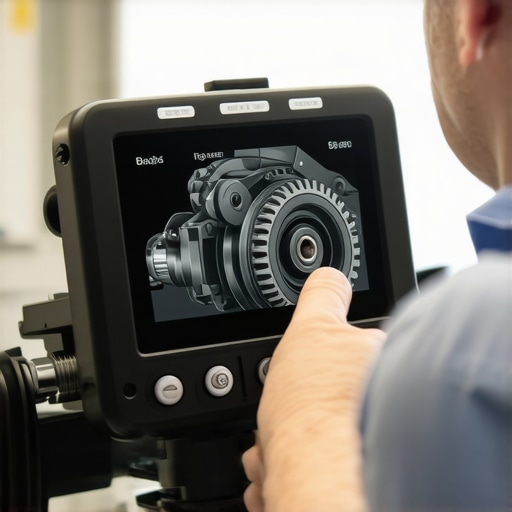
The National Highway Traffic Safety Administration (NHTSA) provides extensive documentation on how environmental factors like flooding contribute to long-term electronic control failure, emphasizing that even ‘dried’ components can fail months later due to latent salt or mineral deposits. To prevent this, professional auto repair shops utilize desiccants and specialized cleaning agents to neutralize the pH of the residue left behind by receding floodwaters. If you want to dive deeper into protecting your car’s vital systems, consider how maximizing your brake service efficiency can prevent these high-cost modules from seizing up entirely.
How Long Does It Take for Saltwater to Permanently Total an ECU?
In saltwater scenarios, the clock is your greatest enemy. Unlike freshwater, which acts as a mild catalyst for rust, saltwater is a powerful electrolyte that triggers rapid galvanic corrosion. Within 24 to 48 hours of submersion, the copper traces on a printed circuit board (PCB) can literally dissolve. If your mechanic finds ‘green crusties’ on the pins of the Engine Control Unit (ECU), the unit is likely beyond repair. In these instances, the focus shifts from cleaning to replacement and reprogramming. However, for freshwater incidents, a prompt rinse with deionized water followed by an isopropyl alcohol bath can often save a multi-thousand-dollar computer if performed before the battery is reconnected.
Pull the Carpet Before the Mold Claims the Chassis
The interior of your car acts like a massive sponge, particularly the heavy sound-deadening foam situated beneath the carpet. Ignoring this during a tune up or recovery process is a recipe for structural rot. This foam can hold gallons of water for weeks, creating a humid microclimate that rots the floor pan from the inside out and fries the floor-mounted wiring harnesses. You must strip the interior to the bare metal. This allows you to inspect the body grommets and ensures that the airbag sensors—which are often located on the floor tunnels—are dry and functional. A thorough cleaning now prevents the ‘musty car’ smell that permanently devalues a vehicle. If you’re tackling this yourself, our guide on mechanic tips for diagnosing common auto problems can help you identify which interior sensors are most vulnerable to moisture-induced short circuits.
Use a Bore-Scope to Reveal Hidden Sludge in the Differential
Your drivetrain’s lowest points, specifically the front and rear differentials, are prone to water ingress through their breather vents. As a hot differential is submerged in cold water, the sudden temperature drop creates a vacuum that sucks water directly through the seals and the vent tube. This water sinks to the bottom of the housing, where the ring and pinion gears sit. Even a small amount of water will cause surface pitting on the gear teeth, leading to a persistent whine and eventual gear howl. A professional tune up for a flooded 4×4 must include a fluid extraction and a visual inspection via a bore-scope to check for early signs of rust on the carrier bearings. If you find that your vehicle is struggling with power delivery after a deep-water crossing, you may need to investigate beyond the engine; it’s possible that the 12-dollar sensor that fixes your rough idle isn’t the culprit, but rather a dragging, water-damaged drivetrain component causing parasitic load.
Purge the Fuel Rails Before the First Fire
Even if you have successfully cleared the cylinders, the fuel system remains a ticking time bomb. Water is heavier than gasoline; it settles at the bottom of the fuel tank, right where the fuel pump pickup is located. Attempting to start the car without a complete fuel system flush is a recipe for disaster. In modern direct-injection engines, the High-Pressure Fuel Pump (HPFP) relies on the lubricating properties of the fuel itself. Introducing water into this component at pressures exceeding 2,000 PSI can cause internal galling instantly. A professional auto repair technician will drop the tank, drain the contaminated fuel, and use pressurized air to clear the fuel lines from the tank to the rails. This ensures that when you finally turn the key, the injectors are misting pure gasoline, not a corrosive water-fuel mixture that could lead to a permanent lean-out condition.

Can Micro-Pitting in Wheel Bearings Be Detected Before Catastrophic Failure?
The most insidious damage occurs in areas where grease is supposed to live. Wheel bearings and CV joints are packed with specialized lubricants that are highly susceptible to water washout. If the vehicle was submerged for more than a few hours, the hydrostatic pressure may have pushed silt-laden water past the seals. This grit acts as an abrasive, creating micro-pitting on the bearing races. While the car might feel smooth during the initial test drive after a tune up, these tiny imperfections will grow into a loud, rhythmic growl within a thousand miles. Experts suggest using a vibration analyzer or an electronic stethoscope while the vehicle is on a lift to listen for the high-frequency ‘chatter’ that signals the beginning of bearing failure. Early detection can save the hub assembly and prevent a wheel from locking up at speed.
Scrubbing the Invisible Bio-Films from Your HVAC Vents
Restoring a vehicle’s mechanical integrity is only part of the equation; you must also address the biological hazards hidden within the HVAC system. Floodwater often carries raw sewage and agricultural runoff. When this moisture enters the evaporator housing, it creates a dark, damp nursery for mold and bacteria. Simply changing the cabin air filter as part of a tune up isn’t enough. You must use a specialized foaming cleanser that expands through the entire heater box and drain tube. If you ignore this, every time you turn on the air conditioning, you are aerosolizing pathogens into the cabin. Professional mechanic teams utilize ozone generators post-cleaning to ensure that every microscopic spore is neutralized, preserving both the vehicle’s resale value and the occupants’ respiratory health.
Tracking Signal Noise in a Damp CAN-bus Network
Modern vehicles operate on a high-speed communication network known as a Controller Area Network (CAN-bus). This system allows the ECU, ABS, and Transmission modules to share data in real-time. When moisture enters the twisted-pair wiring, it changes the capacitance of the lines, leading to ‘packet loss’ or signal noise. This can manifest as ghost codes, where the dashboard lights up like a Christmas tree for no apparent reason. Industry standards from I-CAR highlight that even if a connector looks dry, capillary action can pull moisture deep into the wire insulation, leading to black wire disease. This requires a mechanic with an oscilloscope to verify that the signal square-waves are sharp and within the specified voltage range. If you suspect your vehicle’s logic systems are compromised, schedule a deep-dive diagnostic session with our electrical specialists today to prevent a total system blackout on the road.
Expert Insights & Advanced Considerations
Why Bent Connecting Rods Eventually Shatter
Even if an engine runs after a hydro-lock event, the metal often retains a microscopic “memory” of the stress. A connecting rod that was slightly tweaked—perhaps only by a fraction of a millimeter—will experience uneven loading. This leads to accelerated fatigue that might result in a catastrophic “thrown rod” thousands of miles later. Using mechanic tips for diagnosing common auto problems can help identify subtle vibrations that signal these deep-seated structural issues before they become terminal.
Stop Chasing Electrical Ghosts with Deionized Rinses
Most DIYers stop at drying connectors, but professionals know that mineral deposits left by receding water are conductive. Using the 14-dollar ground strap that fixes ghost shifting is a start, but you must neutralize the residual salts. A deionized water rinse followed by compressed air is the only way to ensure the CAN-bus signal remains clean. If you overlook the grounding points on the chassis, you will be fighting intermittent sensor failures for the rest of the car’s life.
Your VIN is Forever Linked to the High-Water Mark
Modern vehicle history reports are increasingly sophisticated at flagging flood-damaged units. If you are performing a recovery, document every step with photographs and receipts for parts like the the 20-test kit that stops head gasket panic to prove the engine’s internal integrity. Transparency is your best tool for preserving resale value when the time comes to upgrade.
Curated Expert Resources
SAE International Technical Papers: These documents provide the rigorous fluid dynamics data used by OEMs to design intake systems. They are the gold standard for understanding why certain engine geometries are more prone to hydro-lock than others.
I-CAR Flood Remediation Guidelines: These are the industry-standard manuals used by high-end auto repair shops to ensure a vehicle is truly safe to return to the road, covering everything from seatbelt tensioners to airbag control modules.
NHTSA Safety Recall Database: Floods often reveal pre-existing vulnerabilities in weather-sealing. Checking this database helps you identify if your specific model has a known weakness in its electrical housing that needs extra attention during a tune up.
Final Expert Perspective
Recovering a vehicle from deep water is an exercise in meticulous patience. It is a process that moves from the violent physics of the combustion chamber to the invisible chemistry of the wiring harness. While a basic tune up and fluid swap are the necessary first steps, long-term survival depends on your ability to flush out every microscopic trace of silt and salt. To truly master these techniques and ensure your vehicle’s safety, we invite you to test your own brake fluid for water content at home or consult our specialized guides on how to save your transmission after a radiator leak for similar decontamination strategies. Do you have a success story or a unique challenge from a flood recovery? Join the conversation below and help us build a more resilient automotive community.