Harmonic Resonance and the Deceptive Sound of Engine Failure
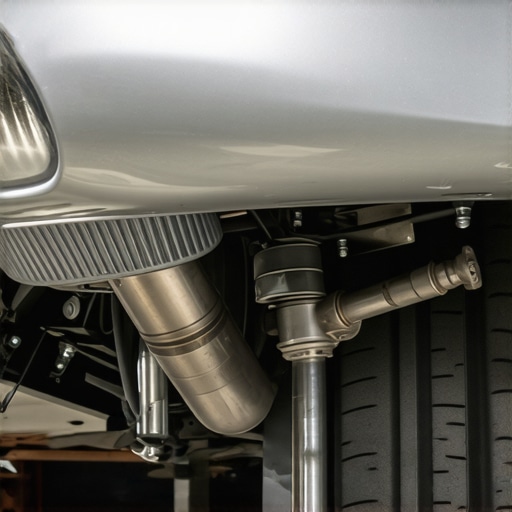
Experienced diagnostic technicians recognize that the auditory profile of a vehicle can be profoundly misleading. A rhythmic, metallic clattering that synchronizes with engine RPM often triggers immediate anxiety regarding internal reciprocating assembly failure. However, a systematic auto repair approach frequently reveals that these ‘death rattles’ are merely the result of a degraded heat shield. These thin aluminum or steel shrouds, designed to manage the immense thermal output of the exhaust system, are prone to mounting point failure due to the constant cycle of thermal expansion and contraction. When the original fasteners succumb to galvanic corrosion, the shield begins to vibrate against the exhaust pipe or catalytic converter, creating a sound that mimics catastrophic mechanical distress.
Distinguishing this noise from a legitimate engine knock requires a keen ear and a tactical tune up mentality. While a failing bearing typically produces a duller, deeper thud, a heat shield rattle is characterized by a higher-frequency ‘tinny’ resonance. Before committing to expensive engine teardowns, it is essential to identify potential exhaust system irregularities that could be contributing to the resonance. Professional-grade diagnostics prioritize these non-invasive inspections to save the vehicle owner thousands in unnecessary labor.
Distinguish Real Engine Damage from Simple Metallic Fatigue
The first step in any high-level diagnostic process is the physical verification of component integrity. A skilled mechanic will often use a rubber mallet to gently tap the exhaust system while the vehicle is on a lift; a loose shield will announce itself immediately with a distinct metallic clang. This type of preventative oversight is a hallmark of finding the right mechanic who understands the nuance of vehicle harmonics and refuses to upsell unnecessary repairs. In many cases, what sounds like internal engine failure is actually a secondary vibration amplified through the vehicle chassis.
Does a Loose Heat Shield Compromise Vehicle Safety or Just Your Sanity?
While the primary irritation of a rattling heat shield is acoustic, the implications for vehicle longevity are more complex than many realize. An unshielded exhaust component can radiate excessive heat toward brake lines, fuel tanks, or transmission housings, leading to premature fluid degradation. If you notice shifting issues alongside the noise, it is critical to investigate further, such as learning how to tell if your transmission fluid is actually burning due to heat soak. Furthermore, if a shield falls off entirely while driving, it poses a significant road hazard. According to technical standards established by specialized automotive engineering journals, maintaining the integrity of thermal barriers is vital for the long-term protection of sensitive electronic sensors located near the exhaust manifold.
Deploy the Stainless Steel Clamp Method for Permanent Silence
Rather than paying for a full exhaust component replacement—which can cost hundreds of dollars—an expert fix involves the use of large stainless steel worm-gear clamps. For less than $15, these clamps can be wrapped around the exhaust pipe and the loose shield, effectively cinching the two together and eliminating the vibration. This is one of those highly effective tune up strategies to save money while maintaining the vehicle’s thermal protection. It is a permanent, professional-grade solution that bypasses the need for welding or total part replacement. If you are performing a comprehensive maintenance routine, including a brake service or fluid check, inspecting these shields should be standard practice. We invite you to share your own field experiences with heat shield diagnostics in a professional setting to help other drivers avoid the ‘engine death’ panic. For more comprehensive maintenance schedules, see why regular tune-ups are key to car longevity.
Eliminate Electrical Interference Before Condemning Hard Components
The transition from physical vibrations to invisible electronic interference marks the difference between a standard mechanic and a master diagnostician. Just as a rattling heat shield mimics engine failure, a degraded electrical ground can simulate catastrophic transmission slippage or persistent misfires. Modern vehicles rely on low-voltage signals that are incredibly sensitive to resistance; when a ground strap becomes frayed or oxidized, the resulting ‘electrical noise’ can corrupt the data sent to the Engine Control Unit (ECU). This often manifests as erratic behavior that lead many owners to waste money on auto repair services for parts that are functioning perfectly. In some instances, specialized technicians have discovered that the simple ground wire move that fixes dim headlights can also stabilize the reference voltage for critical drivetrain sensors.

Why Does Poor Grounding Cause a Transmission to Hunt for Gears?
Voltage drop is the silent enemy of the modern powertrain. If the transmission control module cannot receive a clean signal from the speed sensors due to a compromised ground, it may struggle to decide which gear is appropriate for the current load. This leads to a sensation known as ‘gear hunting,’ where the vehicle shifts back and forth rapidly. Before you agree to a total rebuild, check for the hidden ground bolt that causes transmission false neutrals, as this $0 fix is far more common than mechanical gear failure. According to technical bulletins from the Automotive Maintenance and Repair Association (AMRA), electrical circuit integrity remains the most frequent root cause of ‘unsolvable’ shifting issues in vehicles over five years old. Identifying these bottlenecks is a core component of a high-level tune up and prevents the premature replacement of expensive valve bodies.
Isolate Vacuum Leaks That Sabotage Shift Quality
Beyond electrical interference, the relationship between engine vacuum and transmission behavior is a critical diagnostic frontier. In older vehicles, and even some modern turbocharged platforms, a tiny breach in a rubber hose can drastically alter the line pressure within the gearbox. This often results in ‘hard’ shifts that feel like a physical impact. Instead of assuming the worst, you can employ the 5 dollar soapy water trick for finding intake leaks to pinpoint the source of the atmospheric intrusion. Often, the hidden vacuum leak that makes your transmission shift early is located in a position where visual inspection alone would fail. Mastering these non-invasive techniques ensures that your brake service and engine maintenance routines are backed by empirical data rather than guesswork.
Diagnostic Precision Beyond the OBD-II Scanner
Relying solely on a fault code scanner is a trap that many DIY enthusiasts and inexperienced technicians fall into. A code for a ‘Lean Condition’ or an ‘O2 Sensor Circuit’ does not necessarily mean the sensor is dead; it frequently means the sensor is accurately reporting an environment caused by an upstream mechanical fault. To truly verify the health of your system, you should learn how to test your own o2 sensor using a 15 dollar multimeter. This allows you to see the real-time voltage swings and determine if the response is sluggish or blocked by a bad ground. If you have encountered a ‘ghost’ code that refused to clear after replacing parts, share your story in the comments—we are building a community knowledge base to help everyone find the 20 dollar fix for a transmission that hunts for gears and keep our cars on the road longer without breaking the bank.
Brake Fluid is Spongy Because It’s Drinking Water
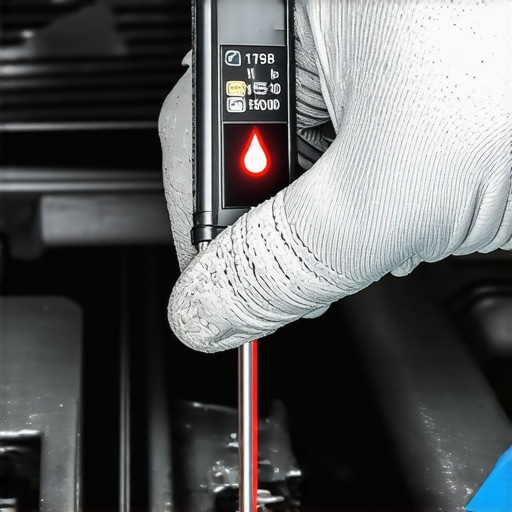
While most drivers associate a brake service with pads and rotors, the true silent killer of hydraulic performance is hygroscopy. Glycol-based brake fluids are designed to absorb moisture to prevent water from pooling and causing localized corrosion; however, this very feature leads to a catastrophic drop in the fluid’s boiling point. Under the high-thermal loads of a mountain descent or heavy stop-and-go traffic, moisture-laden fluid can actually vaporize within the lines. This creates a gas pocket that is compressible, resulting in that terrifying ‘pedal to the floor’ feeling that many mistake for a failing master cylinder. Professional-grade auto repair necessitates testing the fluid with a refractometer or a dedicated electronic moisture pen rather than relying on a visual color check alone.
How Does Moisture Penetrate a Sealed Brake System?
Even though the hydraulic loop is technically sealed, moisture molecules are small enough to permeate through the microscopic pores of rubber brake hoses and past the reservoir cap seal over time. This is a slow, relentless process that degrades the chemical stabilizers within the fluid. According to technical documentation from the Society of Automotive Engineers (SAE), specifically Standard J1703, the ‘wet’ boiling point of DOT 3 fluid can drop from 401°F to as low as 284°F with just 3.7% water content. This significant reduction in thermal overhead is why a high-level tune up should always include a brake fluid clarity and moisture test. If your pedal feels soft after a few hard stops, don’t rush to buy a new master cylinder—you likely just need a comprehensive system flush to restore hydraulic integrity.
Scrub the Sensors to Solve Ghost ABS Activations
Another area where a mechanic can save a client thousands is in the realm of Anti-lock Braking System (ABS) diagnostics. A common complaint involves the ABS ‘kicking in’ during low-speed stops on dry pavement, often accompanied by a vibrating pedal and a temporary loss of stopping power. While many shops will immediately recommend replacing an expensive ABS control module or the entire pump assembly, the culprit is frequently much simpler: magnetic debris. ABS wheel speed sensors are essentially magnets that count the teeth on a reluctor ring. Over time, metallic dust from brake pad wear can accumulate on the sensor tip, distorting the magnetic field and sending ‘false’ speed data to the computer.
Stop Replacing Hubs for Simple Magnetic Interference
Before you commit to replacing a wheel hub assembly, which often houses the integrated sensor, try a targeted cleaning. By removing the sensor and wiping the magnetic tip with a clean cloth, you can often restore the signal’s sine-wave clarity. This is the hallmark of an expert auto repair strategy—fixing the root cause through precision rather than parts-cannon replacement. This level of detail ensures that your brake service actually addresses the nuance of modern electronic integration. If you’ve ever had a shop tell you that a simple cleaning wouldn’t work, we’d love to hear about that experience in the comments. Often, these ‘unsolvable’ electronic glitches are merely physical obstructions that a keen eye can catch during a routine tune up. Beyond the sensors, the physical integrity of the reluctor ring itself must be scrutinized for hairline cracks that expand only when the metal reaches operating temperature, creating a ‘ghost’ fault that disappears once the car cools down.
The modern mechanic must evolve beyond the wrench and embrace the interpretation of live data streams to stay relevant in an era of computerized complexity. While basic scanners provide generic codes, true expertise lies in analyzing Long-Term Fuel Trim (LTFT) percentages. A value consistently exceeding +/- 10% indicates the ECU is compensating for a physical imbalance, such as a microscopic vacuum leak or a failing fuel pump, long before a ‘Lean’ code is ever triggered. This proactive monitoring is the backbone of a high-performance tune up, ensuring the engine operates within its stoichiometric ideal rather than just ‘good enough’ to avoid a warning light. If your short-term trims are jumping wildly while the long-term remains high, you are likely looking at a vacuum leak that the computer is struggling to hide behind the scenes.
Why does my engine stumble only when it reaches operating temperature?
This phenomenon, often referred to as ‘heat soak,’ frequently points to a failing ignition coil or a sensor that develops internal resistance as it expands under thermal load. A standard auto repair shop might just swap parts based on a hunch, but a sophisticated technician will monitor the signal’s ‘dwell time’ on an oscilloscope to see the spark duration in real-time. According to technical documentation and real-world results found in the Pico Technology diagnostic library, visualizing the secondary ignition waveform is the only definitive way to catch a ‘lazy’ coil before it causes a hard misfire. This level of granular detail prevents the common trap of replacing expensive fuel injectors when the culprit is actually a thermal-sensitive electrical breakdown within a primary winding.
When the Digital Network Turns Into a Battleground
Modern vehicle architecture has transitioned into a complex web of Controller Area Network (CAN) nodes, where a single malfunctioning door handle module can theoretically ‘jam’ the communication line, causing the transmission to enter limp mode or the dashboard to light up like a Christmas tree. This is the ultimate test of a technician’s resolve and knowledge of multiplexing. By measuring the resistance across the network—which should ideally be 60 ohms—you can determine if a termination resistor has failed or if a module is bleeding voltage into the data line. This diagnostic precision ensures that your tune up includes the health of the vehicle’s ‘nervous system,’ not just its mechanical components.
Thermal Imaging Reveals What Your Eyes Can Never See
Beyond the oscilloscope, thermal imaging has become a non-negotiable tool for a comprehensive brake service. By scanning the rotors and calipers with an infrared camera after a test drive, you can instantly identify a stuck piston or a restricted brake hose that is causing one corner to run significantly hotter than the others. This heat delta often points to internal hydraulic collapses that visual inspections miss entirely. If you’ve been chasing an intermittent pull to one side or a steering wheel shimmy that only appears after ten miles of driving, stop guessing and look at the thermal signature. 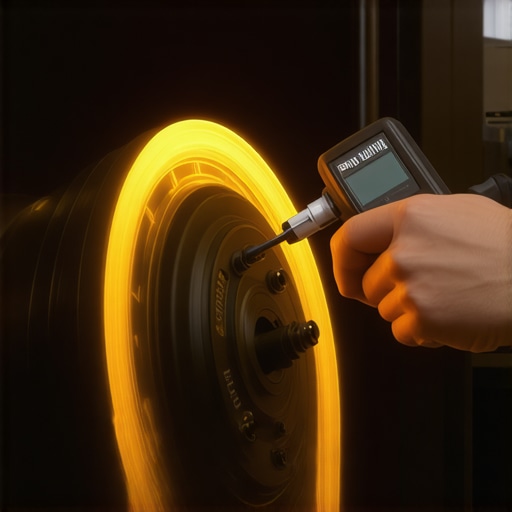 Ensuring that thermal loads are balanced across the axle is what separates a basic pad swap from a professional-grade restoration of stopping power. We invite you to share your most difficult ‘ghost’ diagnostic story in the comments below—have you ever used heat maps to solve a mystery? Your insights help us build a more knowledgeable community of drivers and specialists.
Harmonic Resonance and the Deceptive Sound of Engine Failure
Experienced diagnostic technicians recognize that the auditory profile of a vehicle can be profoundly misleading. A rhythmic, metallic clattering that synchronizes with engine RPM often triggers immediate anxiety regarding internal reciprocating assembly failure. However, a systematic auto repair approach frequently reveals that these ‘death rattles’ are merely the result of a degraded heat shield. These thin aluminum or steel shrouds, designed to manage the immense thermal output of the exhaust system, are prone to mounting point failure due to the constant cycle of thermal expansion and contraction. When the original fasteners succumb to galvanic corrosion, the shield begins to vibrate against the exhaust pipe or catalytic converter, creating a sound that mimics catastrophic mechanical distress.
Distinguishing this noise from a legitimate engine knock requires a keen ear and a tactical tune up mentality. While a failing bearing typically produces a duller, deeper thud, a heat shield rattle is characterized by a higher-frequency ‘tinny’ resonance. Before committing to expensive engine teardowns, it is essential to identify potential exhaust system irregularities that could be contributing to the resonance. Professional-grade diagnostics prioritize these non-invasive inspections to save the vehicle owner thousands in unnecessary labor.
Distinguish Real Engine Damage from Simple Metallic Fatigue
The first step in any high-level diagnostic process is the physical verification of component integrity. A skilled mechanic will often use a rubber mallet to gently tap the exhaust system while the vehicle is on a lift; a loose shield will announce itself immediately with a distinct metallic clang. This type of preventative oversight is a hallmark of finding the right mechanic who understands the nuance of vehicle harmonics and refuses to upsell unnecessary repairs. In many cases, what sounds like internal engine failure is actually a secondary vibration amplified through the vehicle chassis.
Does a Loose Heat Shield Compromise Vehicle Safety or Just Your Sanity?
While the primary irritation of a rattling heat shield is acoustic, the implications for vehicle longevity are more complex than many realize. An unshielded exhaust component can radiate excessive heat toward brake lines, fuel tanks, or transmission housings, leading to premature fluid degradation. If you notice shifting issues alongside the noise, it is critical to investigate further, such as learning how to tell if your transmission fluid is actually burning due to heat soak. Furthermore, if a shield falls off entirely while driving, it poses a significant road hazard. According to technical standards established by specialized automotive engineering journals, maintaining the integrity of thermal barriers is vital for the long-term protection of sensitive electronic sensors located near the exhaust manifold.
Deploy the Stainless Steel Clamp Method for Permanent Silence
Rather than paying for a full exhaust component replacement—which can cost hundreds of dollars—an expert fix involves the use of large stainless steel worm-gear clamps. For less than $15, these clamps can be wrapped around the exhaust pipe and the loose shield, effectively cinching the two together and eliminating the vibration. This is one of those highly effective tune up strategies to save money while maintaining the vehicle’s thermal protection. It is a permanent, professional-grade solution that bypasses the need for welding or total part replacement. If you are performing a comprehensive maintenance routine, including a brake service or fluid check, inspecting these shields should be standard practice. We invite you to share your own field experiences with heat shield diagnostics in a professional setting to help other drivers avoid the ‘engine death’ panic. For more comprehensive maintenance schedules, see why regular tune-ups are key to car longevity.
Eliminate Electrical Interference Before Condemning Hard Components
The transition from physical vibrations to invisible electronic interference marks the difference between a standard mechanic and a master diagnostician. Just as a rattling heat shield mimics engine failure, a degraded electrical ground can simulate catastrophic transmission slippage or persistent misfires. Modern vehicles rely on low-voltage signals that are incredibly sensitive to resistance; when a ground strap becomes frayed or oxidized, the resulting ‘electrical noise’ can corrupt the data sent to the Engine Control Unit (ECU). This often manifests as erratic behavior that lead many owners to waste money on auto repair services for parts that are functioning perfectly. In some instances, specialized technicians have discovered that the simple ground wire move that fixes dim headlights can also stabilize the reference voltage for critical drivetrain sensors.
Why Does Poor Grounding Cause a Transmission to Hunt for Gears?
Voltage drop is the silent enemy of the modern powertrain. If the transmission control module cannot receive a clean signal from the speed sensors due to a compromised ground, it may struggle to decide which gear is appropriate for the current load. This leads to a sensation known as ‘gear hunting,’ where the vehicle shifts back and forth rapidly. Before you agree to a total rebuild, check for the hidden ground bolt that causes transmission false neutrals, as this $0 fix is far more common than mechanical gear failure. According to technical bulletins from the Automotive Maintenance and Repair Association (AMRA), electrical circuit integrity remains the most frequent root cause of ‘unsolvable’ shifting issues in vehicles over five years old. Identifying these bottlenecks is a core component of a high-level tune up and prevents the premature replacement of expensive valve bodies.
Isolate Vacuum Leaks That Sabotage Shift Quality
Beyond electrical interference, the relationship between engine vacuum and transmission behavior is a critical diagnostic frontier. In older vehicles, and even some modern turbocharged platforms, a tiny breach in a rubber hose can drastically alter the line pressure within the gearbox. This often results in ‘hard’ shifts that feel like a physical impact. Instead of assuming the worst, you can employ the 5 dollar soapy water trick for finding intake leaks to pinpoint the source of the atmospheric intrusion. Often, the hidden vacuum leak that makes your transmission shift early is located in a position where visual inspection alone would fail. Mastering these non-invasive techniques ensures that your brake service and engine maintenance routines are backed by empirical data rather than guesswork.
Diagnostic Precision Beyond the OBD-II Scanner
Relying solely on a fault code scanner is a trap that many DIY enthusiasts and inexperienced technicians fall into. A code for a ‘Lean Condition’ or an ‘O2 Sensor Circuit’ does not necessarily mean the sensor is dead; it frequently means the sensor is accurately reporting an environment caused by an upstream mechanical fault. To truly verify the health of your system, you should learn how to test your own o2 sensor using a 15 dollar multimeter. This allows you to see the real-time voltage swings and determine if the response is sluggish or blocked by a bad ground. If you have encountered a ‘ghost’ code that refused to clear after replacing parts, share your story in the comments—we are building a community knowledge base to help everyone find the 20 dollar fix for a transmission that hunts for gears and keep our cars on the road longer without breaking the bank.
Brake Fluid is Spongy Because It’s Drinking Water
While most drivers associate a brake service with pads and rotors, the true silent killer of hydraulic performance is hygroscopy. Glycol-based brake fluids are designed to absorb moisture to prevent water from pooling and causing localized corrosion; however, this very feature leads to a catastrophic drop in the fluid’s boiling point. Under the high-thermal loads of a mountain descent or heavy stop-and-go traffic, moisture-laden fluid can actually vaporize within the lines. This creates a gas pocket that is compressible, resulting in that terrifying ‘pedal to the floor’ feeling that many mistake for a failing master cylinder. Professional-grade auto repair necessitates testing the fluid with a refractometer or a dedicated electronic moisture pen rather than relying on a visual color check alone.
How Does Moisture Penetrate a Sealed Brake System?
Even though the hydraulic loop is technically sealed, moisture molecules are small enough to permeate through the microscopic pores of rubber brake hoses and past the reservoir cap seal over time. This is a slow, relentless process that degrades the chemical stabilizers within the fluid. According to technical documentation from the Society of Automotive Engineers (SAE), specifically Standard J1703, the ‘wet’ boiling point of DOT 3 fluid can drop from 401°F to as low as 284°F with just 3.7% water content. This significant reduction in thermal overhead is why a high-level tune up should always include a brake fluid clarity and moisture test. If your pedal feels soft after a few hard stops, don’t rush to buy a new master cylinder—you likely just need a comprehensive system flush to restore hydraulic integrity.
Scrub the Sensors to Solve Ghost ABS Activations
Another area where a mechanic can save a client thousands is in the realm of Anti-lock Braking System (ABS) diagnostics. A common complaint involves the ABS ‘kicking in’ during low-speed stops on dry pavement, often accompanied by a vibrating pedal and a temporary loss of stopping power. While many shops will immediately recommend replacing an expensive ABS control module or the entire pump assembly, the culprit is frequently much simpler: magnetic debris. ABS wheel speed sensors are essentially magnets that count the teeth on a reluctor ring. Over time, metallic dust from brake pad wear can accumulate on the sensor tip, distorting the magnetic field and sending ‘false’ speed data to the computer.
Stop Replacing Hubs for Simple Magnetic Interference
Before you commit to replacing a wheel hub assembly, which often houses the integrated sensor, try a targeted cleaning. By removing the sensor and wiping the magnetic tip with a clean cloth, you can often restore the signal’s sine-wave clarity. This is the hallmark of an expert auto repair strategy—fixing the root cause through precision rather than parts-cannon replacement. This level of detail ensures that your brake service actually addresses the nuance of modern electronic integration. If you’ve ever had a shop tell you that a simple cleaning wouldn’t work, we’d love to hear about that experience in the comments. Often, these ‘unsolvable’ electronic glitches are merely physical obstructions that a keen eye can catch during a routine tune up. Beyond the sensors, the physical integrity of the reluctor ring itself must be scrutinized for hairline cracks that expand only when the metal reaches operating temperature, creating a ‘ghost’ fault that disappears once the car cools down.
The modern mechanic must evolve beyond the wrench and embrace the interpretation of live data streams to stay relevant in an era of computerized complexity. While basic scanners provide generic codes, true expertise lies in analyzing Long-Term Fuel Trim (LTFT) percentages. A value consistently exceeding +/- 10% indicates the ECU is compensating for a physical imbalance, such as a microscopic vacuum leak or a failing fuel pump, long before a ‘Lean’ code is ever triggered. This proactive monitoring is the backbone of a high-performance tune up, ensuring the engine operates within its stoichiometric ideal rather than just ‘good enough’ to avoid a warning light. If your short-term trims are jumping wildly while the long-term remains high, you are likely looking at a vacuum leak that the computer is struggling to hide behind the scenes.
Why does my engine stumble only when it reaches operating temperature?
This phenomenon, often referred to as ‘heat soak,’ frequently points to a failing ignition coil or a sensor that develops internal resistance as it expands under thermal load. A standard auto repair shop might just swap parts based on a hunch, but a sophisticated technician will monitor the signal’s ‘dwell time’ on an oscilloscope to see the spark duration in real-time. According to technical documentation and real-world results found in the Pico Technology diagnostic library, visualizing the secondary ignition waveform is the only definitive way to catch a ‘lazy’ coil before it causes a hard misfire. This level of granular detail prevents the common trap of replacing expensive fuel injectors when the culprit is actually a thermal-sensitive electrical breakdown within a primary winding.
When the Digital Network Turns Into a Battleground
Modern vehicle architecture has transitioned into a complex web of Controller Area Network (CAN) nodes, where a single malfunctioning door handle module can theoretically ‘jam’ the communication line, causing the transmission to enter limp mode or the dashboard to light up like a Christmas tree. This is the ultimate test of a technician’s resolve and knowledge of multiplexing. By measuring the resistance across the network—which should ideally be 60 ohms—you can determine if a termination resistor has failed or if a module is bleeding voltage into the data line. This diagnostic precision ensures that your tune up includes the health of the vehicle’s ‘nervous system,’ not just its mechanical components.
Thermal Imaging Reveals What Your Eyes Can Never See
Beyond the oscilloscope, thermal imaging has become a non-negotiable tool for a comprehensive brake service. By scanning the rotors and calipers with an infrared camera after a test drive, you can instantly identify a stuck piston or a restricted brake hose that is causing one corner to run significantly hotter than the others. This heat delta often points to internal hydraulic collapses that visual inspections miss entirely. If you’ve been chasing an intermittent pull to one side or a steering wheel shimmy that only appears after ten miles of driving, stop guessing and look at the thermal signature. Ensuring that thermal loads are balanced across the axle is what separates a basic pad swap from a professional-grade restoration of stopping power. We invite you to share your most difficult ‘ghost’ diagnostic story in the comments below—have you ever used heat maps to solve a mystery? Your insights help us build a more knowledgeable community of drivers and specialists.
Expert Insights & Advanced Considerations
Voltage Drop Testing Beats Resistance Checks for Ground Integrity
Many technicians rely on simple ohm tests to check ground wires, but a static resistance test often fails to reveal issues under load. Performing a dynamic voltage drop test while the circuit is active is the only way to identify high resistance caused by a single remaining strand of wire inside a corroded casing. This level of scrutiny prevents ghost codes in high-current systems like the starter or EPS.
Dielectric Grease Prevents Future Communication Failures
While dielectric grease is an insulator, its role in protecting low-voltage data connectors from micro-corrosion is vital. By preventing atmospheric moisture from reaching the terminal pins, you stop the formation of high-resistance oxides that trigger CAN-bus network instability. This proactive step should be integrated into every auto repair involving sensitive electronics.
Frequency Scopes Reveal the Truth Behind Errant Data
Using a digital oscilloscope allows a mechanic to see the ‘square wave’ signals of digital sensors. A multimeter might show a stable average voltage, but the scope can reveal a ‘noisy’ signal or a missing pulse that causes erratic shifting or stalls. Moving beyond binary ‘good/bad’ testing to waveform analysis is the peak of diagnostic strategy.
Curated Expert Resources
To further refine your diagnostic capabilities, consider these high-authority technical repositories: SAE International provides the engineering standards that define modern vehicle architecture; the Pico Technology Library offers thousands of real-world secondary ignition and CAN-bus waveforms for comparative analysis; and ASE Study Guides remain the definitive benchmark for establishing a fundamental understanding of hydraulic and electrical interplay.
Final Expert Perspective
True automotive excellence is found in the transition from component replacement to system-wide forensic analysis. Whether you are seeking a routine tune up or specialized brake service, the objective is to eliminate the root cause rather than just masking the symptoms. By understanding the invisible forces of voltage drop and thermal expansion, we ensure vehicle longevity. We encourage you to review our guide on getting the most from your mechanic or visit our auto repair myths debunked page to stay ahead of the curve. For maximum performance, always maximize your brake service efficiency with data-driven maintenance habits.