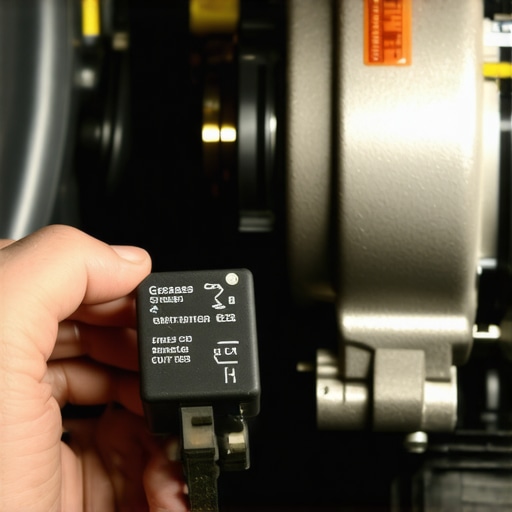
The sudden silence when you turn your ignition key is a universal signal of impending mechanical dread. For the uninitiated, the immediate instinct is to blame the starter motor—a heavy-duty component that often carries a heavy-duty price tag. However, seasoned diagnostic experts know that the architecture of a starting circuit is a chain of command where the weakest link is often a humble, $12 plastic cube known as the starter relay. This component acts as the high-current bridge between your battery and the motor, and when it fails, it can perfectly mimic the symptoms of a catastrophic mechanical failure. High-level auto repair requires looking past the obvious to analyze the electrical logic governing the vehicle.
Stop Wasting Money on Unnecessary Starters
A common pitfall in modern vehicle maintenance is the ‘parts cannon’ approach, where components are replaced based on symptoms rather than verification. The starter relay is an electromagnetic switch that allows a small current from your ignition switch to control the massive amperage required to spin the engine. Over time, the internal copper contacts within the relay can become pitted or carbon-coated, increasing resistance. When resistance rises, the voltage drops, and the starter solenoid may only produce a faint ‘click’ or no sound at all. Before you commit to a three-hour labor charge, utilizing the 12 multi meter test can confirm if power is actually reaching the trigger wire. According to technical standards from Automotive Service Excellence (ASE), electrical resistance is one of the most overlooked causes of ‘no-start’ conditions in aging fleet vehicles.
Is Your Starter Actually Dead or Just Starved for Power?
Distinguishing between a failed motor and a failed relay requires a nuanced understanding of amperage draw. A faulty starter relay may intermittently provide enough current to engage the solenoid but not enough to turn the flywheel, leading many to incorrectly diagnose a ‘weak’ starter. This is why a simple 5-minute battery terminal clean should always precede any major part replacement. If the relay is clicking but the car won’t crank, the problem is often high resistance at the contacts. You can often swap the starter relay with an identical one from the AC compressor or horn circuit to quickly verify the failure without spending a dime at the parts store.
Pinpoint Electrical Resistance Before Buying Parts
Expert-level diagnostics involve tracing the path of least resistance. If you find that swapping relays cures the issue, you have saved yourself hundreds in parts and labor. These auto repair cost saving tips represent the difference between a technician who understands systems and a mechanic who just swaps parts. Always inspect the relay socket for signs of heat or melting, as a loose connection here can create enough heat to mimic a failing starter motor during hot restarts—a phenomenon known as heat soak. If your vehicle struggles only after it has been running for an hour, the relay is a much more likely candidate than the motor itself. For more advanced troubleshooting, share your experiences or ask our experts about specific circuit failures in our community forums.
The ground side of the starting circuit is where most no-start mysteries hide, often masquerading as a failing battery or a seized motor. While most DIYers focus exclusively on the positive cable, the negative return path is equally critical for high-amperage draw. If the ground connection to the engine block is loose, painted over, or oxidized, the current simply cannot complete its loop with enough force to engage the starter. This is the primary reason why you should stop buying new batteries and check this ground connection first. A professional-grade voltage drop test—connecting a multimeter between the battery’s negative post and the starter’s metal casing—will reveal if your cables are acting like a bottleneck. If you see a reading higher than 0.2 volts during a crank attempt, your problem is a $10 wire, not a $200 battery.
The Ground Wire Trap That Mimics a Dead Battery
Corrosion isn’t always visible to the naked eye. In many modern vehicles, the ground strap is located low on the chassis where it is constantly bombarded by road salt and moisture. This leads to internal cable rot where the copper turns to a green powder inside the insulation. This degradation creates massive electrical resistance that chokes the starter motor. By applying mechanic tips for diagnosing common auto problems, you can identify these hidden failures before they leave you stranded. Experts recommend removing the ground bolt entirely, sanding the mating surface to bare metal, and applying a dielectric grease to prevent future oxidation. This simple maintenance step ensures that the starter receives the full cold cranking amps it requires to turn over a frozen engine.
Why Does Your Engine Start Fine When Cold but Refuse to Crank When Hot?
This frustrating phenomenon, known as heat soak, occurs because electrical resistance naturally increases as temperature rises. When your engine is hot, the internal windings of the starter motor expand, and if they are already worn, they may short out or become too resistive to function. However, the starter isn’t always the culprit; the 12 ground wire that fixes stalling issues can also be a victim of heat. As the metal expands, a marginal connection can become a total break. According to technical documentation from the Society of Automotive Engineers (SAE), thermal stress is one of the leading causes of intermittent contact failure in high-load automotive circuits. If you find that your engine won’t turn over when hot, it is vital to test the circuit while the vehicle is at operating temperature rather than letting it cool down first.
Stop Guessing and Start Testing the Solenoid Directly
If you have verified the battery and the ground, the next step is to isolate the starter solenoid from the rest of the car’s electronics. Using a remote starter switch—or even the techniques discussed in how to test your alternator using a simple screwdriver to check for magnetic engagement—you can jump power directly to the solenoid trigger. 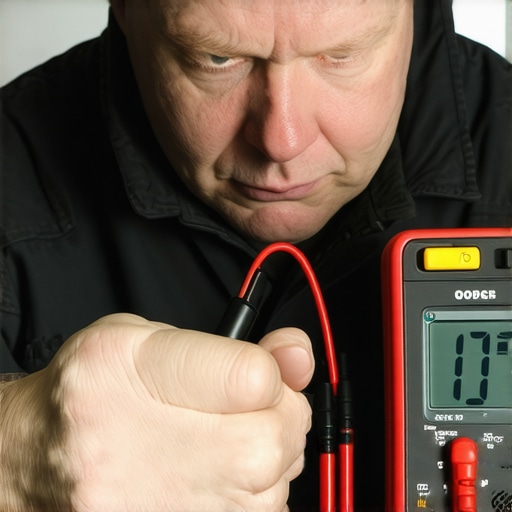 This bypasses the ignition switch, the neutral safety switch, and the starter relay. If the engine cranks immediately during this test, you have definitive proof that the starter and its high-current cables are perfect, and your fault lies somewhere in the thin wires of the control circuit. This methodical approach separates the parts swappers from true diagnostic experts and keeps your repair budget intact. Have you ever spent a fortune on a new starter only to find a loose bolt was the real villain? Share your most frustrating electrical ghost story in the comments below, or tell us which diagnostic tool saved your weekend.
Don’t Forget the Safety Switch Under Your Shifter
When you’ve confirmed that the battery and the heavy cables are healthy, but that solenoid still refuses to dance, the culprit is often a hidden gatekeeper: the Neutral Safety Switch (NSS) or the clutch pedal position sensor. These components are designed to ensure your car doesn’t lunge forward into a garage door or another vehicle during startup. Over years of use, the internal sliders in an automatic transmission’s NSS can become gummed up with old factory grease and road grime. This creates a high-resistance barrier that the low-voltage signal from your ignition cannot penetrate. If you find yourself jiggling the shifter or slamming the clutch just to get a crank, you aren’t dealing with a starter motor failure; you are dealing with a mechanical misalignment or electrical discontinuity in the safety loop.
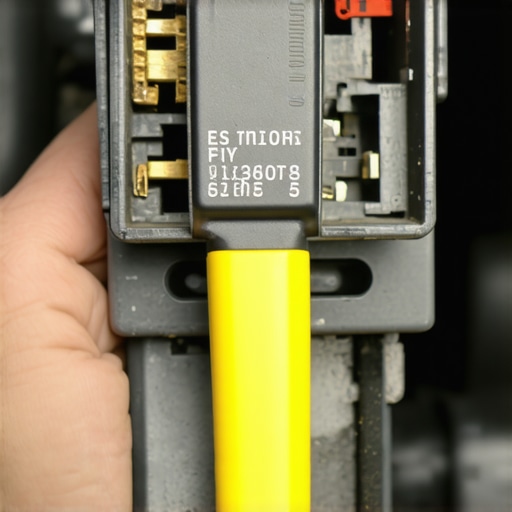
How do you bypass a neutral safety switch for diagnostic purposes?
To determine if the NSS is the bottleneck, professional technicians often use a jumper wire at the connector to complete the circuit manually. By bridging the two ‘signal’ pins—usually identified through a factory wiring diagram—you can see if the engine cranks immediately. If it does, the starter is perfectly fine, and the switch or its linkage is the enemy. However, extreme caution is required: if you perform this test while the vehicle is in gear, the car will move. This level of auto repair expertise requires a controlled environment. According to technical guidelines found in the ISO 16750 standards for automotive electrical equipment, these switches are prone to failure specifically due to thermal cycling and chemical exposure from underbody fluids.
Wear and Tear Inside the Steering Column
While we often focus on the engine bay, the command center for the entire starting sequence is the ignition switch itself—a series of copper contacts buried behind your key cylinder. Every time you turn the key, a small arc occurs. Over 100,000 miles, these micro-arcs create carbon tracking, which acts as an insulator. You might notice that your dashboard lights flicker or the radio cuts out, yet the starter remains silent. This is a classic symptom of an ignition switch that is ‘bleeding’ voltage. A technician will look for a voltage drop of more than 0.5 volts across the switch during the ‘start’ position. If you are seeing 12.6 volts at the battery but only 9 volts reaching the starter relay, your problem is localized in the steering column, not the bell housing.
Watch Out for Phantom Parasitic Drains
Sometimes the starter isn’t failing, and the battery isn’t ‘bad’; rather, something is eating the power while you sleep. A parasitic drain—often caused by a stuck relay, a faulty aftermarket alarm, or a glovebox light that stays on—can lower the battery’s surface charge just enough to prevent the solenoid from holding. This creates a deceptive ‘rapid click’ sound. Utilizing the 12 multi meter test in amperage mode can help you hunt down the fuse responsible for the leak. Professional-grade diagnostics involve monitoring the millivolt drop across each fuse in the panel to find the specific circuit that is refusing to go to sleep. Have you ever tracked down a mysterious drain only to find a $2 bulb was the culprit? Understanding how these small leaks manifest as major mechanical failures is the first step toward mastering your vehicle’s electrical health.
Why does the starter solenoid click but the motor won’t spin?
This specific failure mode usually points to a ‘high-resistance’ fault. The solenoid is essentially a powerful magnet that pulls a heavy copper disc against two large contacts to send power to the motor. If those internal contacts are burnt—a condition common in older high-mileage units—the magnet works (the click), but the power can’t jump the gap to the motor. You can often verify this by tapping the starter casing with a rubber mallet while someone else turns the key. This vibration can sometimes seat the copper disc just enough to make contact. While this ‘hammer trick’ is a great emergency fix, it is a definitive sign that the internal mechanical life of the starter has reached its end. Modern auto repair cost saving tips suggest rebuilding these units rather than buying cheap ‘white box’ replacements that often lack the torque of the original equipment manufacturer (OEM) parts.
Moving beyond the basic mechanical checks requires an appreciation for the ‘digital handshake’ that occurs before a single piston moves. In modern vehicles, the ignition signal is no longer a direct line; it is a request sent to the Body Control Module (BCM) or Engine Control Unit (ECU). If the onboard computer detects a discrepancy in the Controller Area Network (CAN-bus) signals—such as a mismatch in the security code from your key’s transponder—it will effectively ‘ghost’ the starter relay. This software-level lockout is a common reason why a perfectly healthy starter remains silent. High-level auto repair strategies now involve scanning for communication codes (U-codes) that might indicate the computer is intentionally preventing the crank sequence to protect the vehicle from theft or mechanical damage.
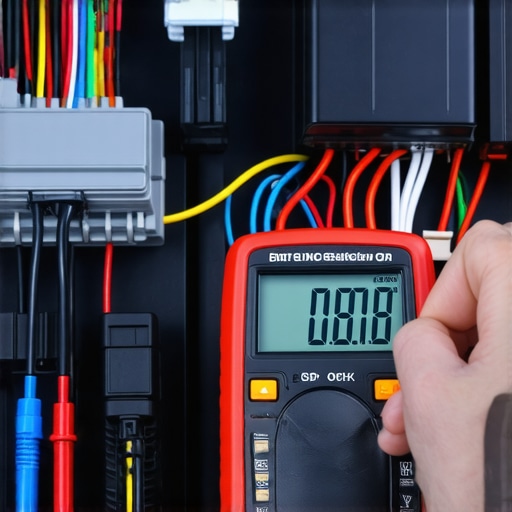
The Digital Handshake That Can Silence Your Engine
When the software approves the start, the electrical heavy lifting begins. While many DIYers check for 12 volts at the battery, experts perform a dynamic voltage drop test on the positive side of the circuit. A cable that looks clean on the outside can have internal strands that have snapped or corroded, limiting its ability to carry the 150+ amps needed during a cold start. By placing one multimeter probe on the positive battery post and the other on the starter’s main B-terminal during a crank attempt, you can measure exactly how much energy is being lost to heat within the wire. Technical bulletins from Bosch Aftermarket emphasize that even a 0.5-volt drop in the main supply line can drastically reduce the torque output of the starter motor, leading to slow cranking speeds that are often misdiagnosed as a weak battery.
Can a damaged security chip prevent your engine from turning over?
Absolutely. Modern immobilizer systems are the most frequent ‘invisible’ cause of no-start conditions. The Passive Anti-Theft System (PATS) or similar RFID-based security protocols must verify the key’s signature before the ECU pulses the ground for the starter relay. If the antenna ring around your ignition cylinder fails, or if the key has been dropped and the internal chip is cracked, the car will stay dead. You can usually identify this by a rapidly flashing security light on the dashboard. This is where the 12 multi meter test shifts from measuring volts to measuring continuity and signal presence, ensuring you don’t replace a $300 starter when you actually need a $50 key reprogramming.
How Modern Stop-Start Systems Change the Diagnostic Game
If you drive a newer vehicle equipped with automatic Stop-Start technology, the starting circuit is significantly more robust but also more complex. These systems utilize Tandem Solenoid starters or reinforced permanent magnet motors designed for ten times the duty cycle of a standard unit. They often rely on an Auxiliary Battery or a massive capacitor to maintain electronics during the crank. A failure in the DC-DC converter can prevent the car from restarting at a stoplight, even if the main battery is healthy. This niche area of auto repair cost saving tips involves checking the health of the secondary power source before condemning the starter itself. Have you ever encountered a ‘phantom’ no-start that disappeared after a simple system reset? Tell us about your most challenging electrical diagnostic win in the comments below, or join our forum to dive deeper into the world of automotive electrical engineering.
Expert Logic for Modern Starting Systems
The ECU Software Shield That Mimics Hardware Failure
In modern multiplexed systems, the starter relay isn’t just waiting for a key turn; it’s waiting for a digital permission slip. If the Body Control Module detects a low-voltage spike during the wake-up cycle, it may cancel the crank request to prevent a data corruption event. This is why mechanic tips for diagnosing common auto problems now involve checking for stored communication codes before checking the actual motor.
Why a Standard Multimeter Often Lies During a Crank
While a standard 12 multi meter test is excellent for static checks, it often misses high-frequency voltage dropouts that occur in milliseconds. An expert diagnostic setup uses a lab scope to watch the amperage ramp as the starter engages. If the waveform is jagged, the internal armature is failing, even if the battery voltage looks perfect on a digital screen.
Avoid the Trap of Budget Remanufactured Components
Not all starters are created equal. Many remanufactured units from big-box retailers only have the brushes and one bearing replaced, leaving the aged solenoid and field coils intact. For long-term reliability, professional auto repair cost saving tips recommend sourcing New Old Stock or units rebuilt by specialized local electrical shops that bench-test for heat soak performance.
#IMAGE_PLACEHOLDER_E#
Professional Tools to Sharpen Your Diagnostic Edge
Mitchell 1 and ALLDATA provide the gold standards for accessing factory wiring diagrams and technical service bulletins. Without these resources, you are just guessing at pinouts in a complex harness.
ASE Test Prep Materials for the A6 certification offer the most condensed, high-level theory on circuit logic available today, even for those not seeking formal credentials.
ScannerDanner Engine Performance manuals and videos represent a masterclass in using logic-driven approaches to solve the electrical ghosts that haunt modern engine bays.
Take Control of Your Automotive Electrical Health
Advanced auto repair is no longer about just turning wrenches; it’s about interpreting the language of electrical resistance and digital handshakes. By shifting your focus from the part to the circuit, you eliminate the guesswork that leads to wasted time and unnecessary expenses. Whether you are dealing with a classic ground strap failure or a complex immobilizer lockout, a methodical approach ensures you stay on the road. If you’ve mastered these techniques and want to refine your vehicle’s maintenance further, check out our essential tune up tips to boost your car’s performance in 2025. We invite you to share your most difficult diagnostic wins in our community forums as your expertise helps keep the whole community moving.