
Why Tight Turns Reveal CV Joint Failures Instantly
The drivetrain is the most stressed mechanical system in a modern vehicle, and a seasoned mechanic knows that symptoms of failure often hide until the vehicle is pushed to its geometric limits. Constant Velocity (CV) axles are designed to transfer torque while allowing for steering and suspension travel, but they are wear items with a finite lifespan. When the protective rubber boot fails, grease escapes and road grit enters, creating a grinding paste that destroys the internal ball bearings and races. While many drivers associate front-end noise with the need for a brake service, the rhythmic, metallic clicking heard during a tight turn is the definitive signature of a compromised outer CV joint. This diagnostic maneuver works because full steering lock forces the joint into its maximum operating angle, exposing any pitting or excessive play in the assembly that wouldn’t be apparent while driving straight.
Does That Rhythmic Clicking Always Mean a Broken Axle?
Experienced technicians often field questions about whether a noise could be a simple loose shield or a failing wheel bearing. However, the ‘circle test’ is highly specific to the CV joint. If you find an empty parking lot and drive in tight circles in both directions, the clicking will typically intensify on the side under the most load. For example, a failing right outer joint will scream during a tight left-hand circle as the vehicle’s weight shifts outward. It is vital to differentiate this from the deep growl of a hub assembly. If you are struggling to pinpoint the sound, you might want to learn how to diagnose a mystery clunk in your front end to ensure you aren’t overlooking a ball joint or tie rod issue. According to technical documentation from GKN Automotive, an industry leader in driveline technology, even microscopic damage to the cage or internal races can lead to catastrophic failure if the joint seizes at highway speeds.
The Invisible Stress Factors That Shorten Axle Life
Beyond the obvious torn boot, high-torque applications and lowered suspensions significantly alter the operating angles of the CV axle, leading to premature wear. During a standard auto repair, we often see axles that look perfectly sealed but suffer from ‘inner joint’ failure, which manifests as a shudder during acceleration rather than a click during turns. If you are performing a routine tune up and notice grease splattered on the inside of your rims or the subframe, the diagnosis is already made for you. Catching a leak early can save the axle, but once the clicking starts, replacement is the only safe path forward. If you suspect your vehicle is struggling with drivetrain issues, take a moment to review these mechanic tips for diagnosing common auto problems to stay ahead of costly repairs. Always ensure you are using high-molybdenum grease and high-quality boots if you attempt a rebooting procedure, though in most modern shops, a full axle replacement is the more cost-effective and reliable solution.
Why Acceleration-Based Shudders Mimic Bad Tire Balance
While the outer CV joint is famous for its clicking, the inner joint—typically a ‘tripod’ design—fails with far more subtlety. Instead of noise, it produces a side-to-side shudder that is most aggressive during hard acceleration or when climbing a steep grade. This happens because the internal rollers have worn divots into the tulip housing. As you apply torque, the rollers struggle to transition smoothly across these pits, creating a harmonic oscillation that resonates through the floorboards. It is a common mistake to assume this vibration stems from the wheels. However, distinguishing these vibrations from a flat spot on a tire or an unbalanced rim is essential for an efficient auto repair strategy. If the shaking disappears the moment you lift your foot off the gas pedal, you are almost certainly dealing with a compromised inner CV joint rather than a rotational balance issue. 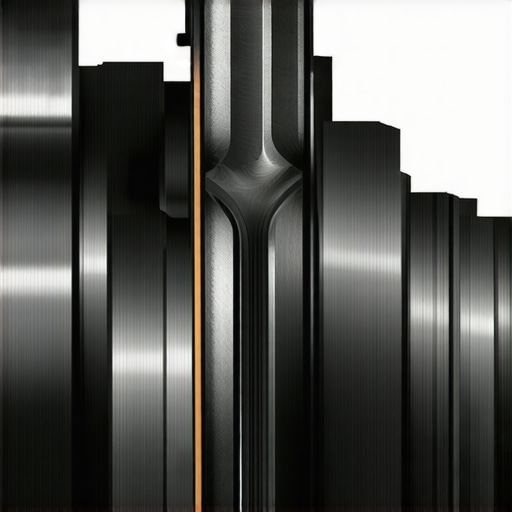
Could Your Shaking Steering Wheel Actually Be an Axle Issue?
Technicians frequently see drivers who have spent hundreds of dollars on multiple alignments and tire balances, yet the vibration persists. The key is to analyze the frequency of the shake. A tire balance issue usually presents as a consistent vibration that worsens as speed increases, regardless of throttle position. Conversely, an axle-related shudder is load-dependent. To verify this, a pro will use the $10 tool that diagnoses a bad wheel bearing at home—which is actually just a simple mechanic’s stethoscope or even a long screwdriver held against the knuckle—to listen for internal binding while the vehicle is on a lift. According to the National Institute for Automotive Service Excellence (ASE), a comprehensive driveline inspection should always include a check of the engine and transmission mounts, as a sagging mount can pull the inner joint out of its neutral ‘plunge’ zone, forcing it to operate at an extreme angle that mimics a failed joint.
Don’t Let Worn Struts Kill Your New CV Axles
There is a symbiotic relationship between your suspension and your drivetrain that many DIYers overlook. The CV axle is designed to operate within a specific geometric window. When your suspension sags or you fail to tell if your struts are actually blown, the ride height of the vehicle drops, which changes the static angle of the axle. This constant ‘off-center’ operation creates excessive heat within the boots and puts localized pressure on the bearing races. If you replace an axle without addressing a collapsed spring or a leaking strut, you are merely treating the symptom rather than the disease. You might find that your new ‘lifetime’ axle starts clicking within six months because the suspension geometry is fighting the drivetrain. Before you dive into your next project, consider how to choose a skilled mechanic you can trust who understands these complex mechanical relationships and can perform a total system analysis. Have you ever noticed a vibration that seems to vanish when you coast? Share your diagnostic stories in the comments below, or let us know which ‘mystery noise’ is currently haunting your daily commute.
Keep Your Transmission Fluid Where It Belongs
The point where the inner CV joint slides into the transaxle is a critical junction that many DIY enthusiasts overlook during a standard auto repair. This interface is protected by a dynamic lip seal, which is designed to keep transmission fluid in and road debris out. However, when an axle begins to vibrate due to internal wear, that high-frequency oscillation can prematurely wallow out the seal, leading to a slow, insidious leak. If you see ‘pink’ fluid on your driveway, don’t just top off the reservoir and assume the best. A failing seal often indicates that the axle’s ‘plunge’ movement is no longer smooth, putting lateral pressure on the transmission’s output shaft bearings. This is a classic case where a simple brake service checkup should also involve a quick peek at the transmission casing for any signs of seepage. According to technical standards published by SAE International, the alignment of the drivetrain components must remain within tight tolerances to prevent radial load on the output seals, which can lead to catastrophic transmission failure if the fluid level drops too low.
Why Cheap Aftermarket Axles Aren’t Always a Bargain
When you’re staring at a $60 ‘new’ axle versus a $300 OEM unit, the temptation is real. But there is a reason professional mechanics often insist on high-quality components. Many budget-friendly axles utilize inferior metallurgy or ‘re-ground’ internal components. In a re-ground axle, the manufacturer simply machines away the pits in the old races and uses oversized ball bearings to fill the gap. While this feels smooth on the bench, the case hardening of the metal is often removed during the grinding process, leaving the soft core of the steel exposed. 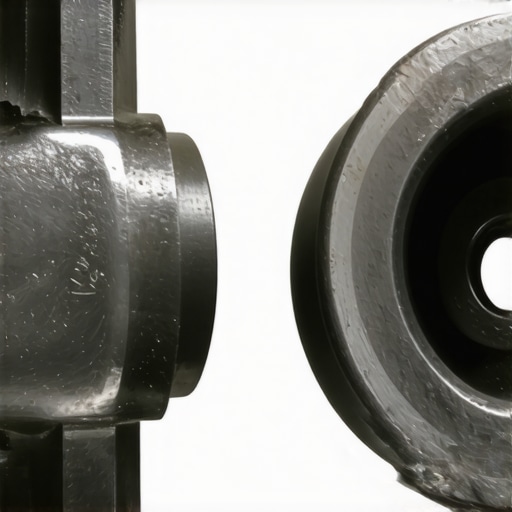 This leads to a part that may only last a few thousand miles before the clicking returns with a vengeance. Furthermore, cheap boots are often made of thin neoprene that lacks the ozone resistance of the thermoplastic used in premium parts. If you are preparing for a major tune up and plan on keeping the vehicle for several years, investing in a brand-name axle with a solid warranty is the only way to avoid doing the same job twice.
Is it safe to keep driving when the clicking starts?
This is one of the most common questions we hear in the shop, and the answer is a firm ‘no’ for long-term safety. While a clicking CV joint won’t usually seize instantly, it is a ticking time bomb. As the internal cage cracks or the ball bearings flatten, the joint loses its ability to transfer power smoothly. In extreme cases, the joint can shatter, causing the axle to spin freely. On a front-wheel-drive car, this means you lose all forward momentum, as the open differential will simply send all power to the broken side. Even worse, if the axle snaps at the outer joint, it can swing wildly, destroying your brake lines, wheel speed sensors, and lower control arms. If you’ve reached this stage, you need to stop searching for mechanic tips and start looking for a tow truck.
The Hidden Link Between Axle Binding and Torque Steer
If your car pulls hard to one side under heavy throttle, you might blame your alignment or tires, but an ‘unhappy’ CV axle is often the silent culprit. When an inner joint becomes dry or pitted, it creates resistance as it tries to plunge in and out of the transmission during acceleration. This resistance creates an imbalance in the torque delivered to the wheels, manifesting as a steering pull that can be dangerous during merging or passing maneuvers. If you have already confirmed your struts aren’t blown and your tire pressures are perfect, pay close attention to the smoothness of your axle’s rotation. A slight bind in the tripod assembly can mimic the feeling of a failing steering rack. Take a moment during your next oil change to manually rotate the axles and feel for any notchiness; catching this subtle sign early could prevent a much more expensive steering system overhaul down the line.
Exhaust Heat Often Cooks the Passenger Side Axle First
While mechanical stress is a primary driver of drivetrain wear, the thermal environment under your hood plays a disproportionate role in auto repair longevity. On many transverse-engine vehicles, the passenger-side CV axle is significantly longer and often passes in close proximity to the exhaust manifold or catalytic converter. This proximity subjects the inboard boot to extreme radiant heat, which eventually bakes the rubber until it becomes brittle and prone to cracking. This isn’t just a physical failure of the boot; the high temperatures can actually lead to the chemical breakdown of the molybdenum disulfide grease. When the grease thins out and loses its shear stability, it no longer provides the protective film needed for the internal tripod rollers. 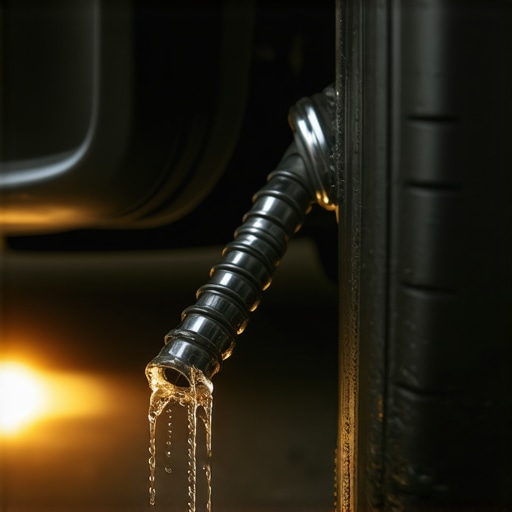
Can High Operating Temperatures Liquefy Your CV Grease?
When the internal temperature of a joint exceeds the drop point of its lubricant, the grease separates into oil and thickener. This process, often accelerated by a failing heat shield or a modified exhaust system, leaves the metal-on-metal contact points vulnerable to micro-pitting. According to engineering data from Schaeffler, a global leader in automotive drivetrain components, maintaining the structural integrity of the lubricant is as vital as the metallurgy of the joint itself. If you are performing a seasonal tune up, check the color and consistency of any grease residue near the inner joints. If it looks watery or has a burnt odor, the joint is already on borrowed time, even if it hasn’t started clicking yet.
The Hub Bearing Deception and How to Spot It
One of the most challenging aspects of a professional auto repair is distinguishing between a failing CV axle and a worn hub bearing. Both can produce rhythmic noises that change with vehicle speed, but a seasoned mechanic looks for the ‘tonal shift.’ A wheel bearing typically produces a low-frequency drone or growl that changes pitch when you swerve slightly to load or unload the bearing. Conversely, CV axle noise is almost always mechanical and rhythmic—a click, a pop, or a shudder under load. However, a seized axle nut or a damaged splined interface can cause a ‘click’ that mimics a bad joint. This is why a thorough brake service should always include a check of the axle nut torque. If that nut is loose, the axle can move slightly within the hub, creating a metallic snap every time you transition from reverse to drive.
Precision Tolerances in High-Output Drivetrains
For those driving high-torque or all-wheel-drive vehicles, the margins for error are razor-thin. A slight imbalance in a replacement axle can cause vibrations that eventually damage the transfer case or the rear differential seals. Always prioritize ‘new’ over ‘remanufactured’ when dealing with high-output applications to ensure the torsional rigidity of the shaft meets the original manufacturer’s specifications. If you’ve been chasing a vibration that just won’t quit, it might be time to look beyond the tires and examine the drivetrain’s harmonic balance. Have you encountered a ‘ghost’ vibration that vanished after an axle swap? Drop your experience in the comments or check out our advanced diagnostic guides to help you master the art of the perfect repair.
Expert Insights & Advanced Considerations
Why Your AWD System Hates Mismatched Axles
When dealing with modern all-wheel-drive systems, the tolerance for rotational variation is incredibly slim. Installing a heavy aftermarket axle on one side while retaining a lighter OEM unit on the other can introduce harmonic imbalances that drive the transfer case computer crazy. If you have been chasing a vibration that feels like a flat spot on a tire but only occurs under specific load conditions, the weight and balance of the axle shafts are the first place to look. Precision is not just about the joint; it is about the entire rotating mass.
The Critical Case for One-Time-Use Hardware
Many professional technicians have seen the aftermath of a reused axle nut—a wheel assembly backed off just enough to destroy the wheel bearing and the axle splines. These are often torque-to-yield components designed to stretch and lock. If you fail to properly torque lug nuts or axle hardware to the exact foot-pound specification, you are inviting mechanical disaster. Always verify if your specific vehicle requires a new ‘stretch bolt’ every time the axle is serviced to maintain the integrity of the hub interface.
Stop Ghost Vibrations with a Hub Clean-Up
It is a common mistake to blame a new axle for a vibration that was actually caused by debris trapped between the rotor and the hub. Before sliding that new axle into place, perform the $15 hub clean-up that fixes steering wheel shake to ensure a perfectly flat mating surface. Even a tenth of a millimeter of runout at the hub can feel like a massive imbalance at 70 mph, often leading drivers to believe they bought a defective CV joint when the issue is actually procedural.
Deep Dives for the Dedicated Professional
For those looking to deepen their technical mastery, these industry-standard resources provide the granular data necessary for high-level diagnostics:
- GKN Automotive Tech Center: As a primary OEM supplier, their technical bulletins provide the specific ‘plunge’ measurements and grease shear rates required for high-performance axle rebuilds.
- Motor Magazine Professional Archives: An invaluable source for case studies on ‘ghost’ vibrations and rare driveline failures that defy standard auto repair flowcharts.
- ASE Drivetrain Certification Study Guides: These provide the theoretical foundation for understanding how torque multiplication and differential angles impact the lifespan of every component in the stack.
- SAE International Technical Papers: The gold standard for understanding the metallurgy and friction coefficients that separate a $60 budget axle from a professional-grade component.
#IMAGE_PLACEHOLDER_E#
A Professional Standard for Driveline Longevity
Mastering the nuances of CV axle health requires moving beyond simply listening for a click. It involves understanding the symbiotic relationship between suspension geometry, thermal environments, and precision torque. A successful auto repair strategy always accounts for the ‘why’ behind a failure—whether it was a heat-soaked passenger-side boot or a collapsed strut that forced the axle into a permanent bind. If you are struggling to diagnose a mystery clunk in your front end, remember that the drivetrain is a holistic system. We invite you to share your most difficult diagnostic wins in the comments or reach out with questions about specific high-torque applications. Your insights help the entire community stay ahead of the curve and keep more vehicles safely on the road.