Steering should be a fluid extension of driver intent, providing a seamless tactile loop between the asphalt and the cockpit. However, when the steering wheel begins to exhibit a ‘stepped’ or ‘indexed’ sensation—commonly referred to as notchiness—it indicates a significant disruption in the mechanical interface. This tactile resistance is rarely a localized annoyance; rather, it is often the precursor to a complete steering failure. As any skilled mechanic understands, diagnosing notchiness requires a systematic approach to identifying friction within the steering column, universal joints, or the rack-and-pinion assembly itself.
Tackle the Friction Points in Your Steering Column
The primary suspect in nearly every case of notchy steering is the intermediate shaft universal joint. These small needle bearings are exposed to the elements, and over time, road salt and moisture penetrate the seals, leading to corrosion. This results in a ‘binding’ effect where the steering feels free for 90 degrees of rotation and then catches. Unlike the symptoms of heavy steering, which suggest a hydraulic pressure loss, notchiness is a purely mechanical resistance. If left unaddressed, the joint can eventually seize, leading to a catastrophic loss of control. In addition to the tactile feedback, you should listen for steering noises that often accompany this type of physical degradation.
Why does my steering feel like it has “indexed” positions?
When a driver experiences ‘indexed’ steering, it often points to a condition known as brinelling within the internal components of the rack or the steering column bearings. This happens when the bearing surfaces are permanently indented due to excessive impact or lack of lubrication. The steering wheel ‘prefers’ to sit in these indents, creating a notched feeling as you force the bearings out of their worn grooves. This loss of precision can also manifest as your car wandering across the lane, as the system lacks the smooth micro-adjustability required for high-speed stability. According to technical standards from the Society of Automotive Engineers (SAE), any deviation in the linear torque required to rotate the steering assembly is a critical safety failure that warrants immediate teardown.
Determine if the Hydraulic System is Mimicking Mechanical Binding
While notchiness is typically mechanical, hydraulic inconsistencies can occasionally mimic the sensation. A failing spool valve within the steering rack can cause ‘stiction,’ where the valve momentarily sticks before opening, causing a jerky or notchy sensation. This is often exacerbated by contaminated fluid or air bubbles trapped in the lines. If the sensation is accompanied by a whining sound, your power steering pump may be dying. Professionals use a pressure gauge to distinguish between a mechanical bind in the rack and a hydraulic pulse from the pump. If you have recently had work done and notice the steering wheel is off-center, the binding may also be related to improperly torqued or aligned steering linkages. If your vehicle is showing these advanced signs of wear, contact a specialist to perform a diagnostic sweep before a simple notch becomes a seized steering rack.
Stop Blaming the Rack and Check Your Ball Joints
Before you commit to an expensive steering rack replacement, you must consider the lower chassis components. A seized or severely degraded ball joint can introduce a ‘memory steer’ effect, where the steering fails to return to center naturally. This physical resistance feels remarkably similar to a notch in the column because the steering rack has to overcome the high breakout friction of a dry socket. When you experience this, it is often wise to spot a leaky shock or check for broader suspension wear, as these systems operate in tandem. If the symptoms of a bad inner tie rod are present alongside notchiness, the combined play and friction can make the vehicle feel unpredictable during low-speed maneuvers.
Why Your Steering Gets Crunchy Only After a Highway Run
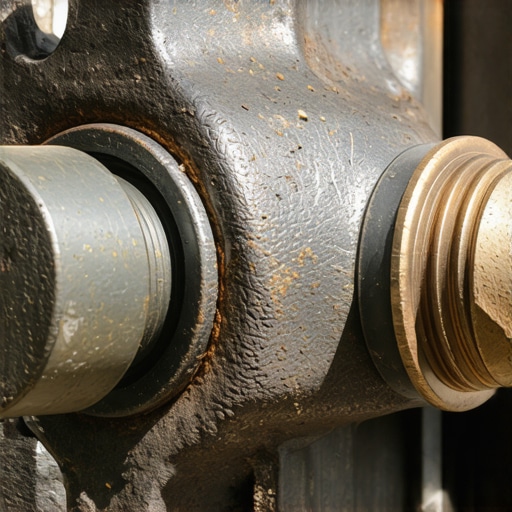
Thermal expansion is a frequently overlooked variable in steering diagnostics. Components like the steering shaft U-joints or the rack’s pinion bearing can exhibit tight tolerances that only become problematic as the engine bay temperatures rise. This heat soak causes metal to expand, potentially narrowing the clearance between moving parts and resulting in a ‘crunchy’ or notched sensation that is absent when the car is cold. This is similar to how engines won’t turn over when hot due to increased internal resistance. If you notice the notchiness correlates strictly with long drives, inspect the heat shielding around the steering column and rack, as a missing shield can lead to premature lubricant breakdown within the joints.
Is your EPS motor fighting against a ghost signal?
In modern vehicles equipped with Electronic Power Steering (EPS), notchiness is often a digital problem rather than a purely mechanical one. The EPS system relies on a torque sensor to detect driver input and a motor to provide assistance. If the torque sensor begins to fail or sends erratic signals, the motor may provide ‘step-like’ assistance, creating a tactile notch as the software compensates for the noisy data. This can sometimes be diagnosed by using the 20 dollar scanner that every modern driver should own to check for steering angle sensor (SAS) calibration errors. According to reports from the National Highway Traffic Safety Administration (NHTSA), several major manufacturers have issued recalls for EPS software glitches that manifest as a ‘sticky’ or notchy steering feel at highway speeds, proving that the solution may be a firmware flash rather than a wrench.
The Critical Link Between Charging Health and Steering Precision
Because EPS systems are massive electrical consumers, a struggling alternator or a dying battery can directly impact steering feel. When the voltage drops, the steering motor may not receive the consistent amperage required for smooth operation, leading to a jerky or notched sensation during rapid wheel movements. It is highly recommended to perform the 12 dollar multi-meter test for your charging system if you notice your steering feel fluctuates when high-draw accessories like the AC or defroster are active. If the mechanical components check out, the issue is likely lurking in the electrical bus. If you are unsure how to interpret these readings, learning how to choose a skilled mechanic who specializes in electrical diagnostics will save you from replacing perfectly good mechanical hardware. Have you checked your steering fluid or EPS codes recently? Share your findings in the comments to help others troubleshoot these complex steering ghosts.
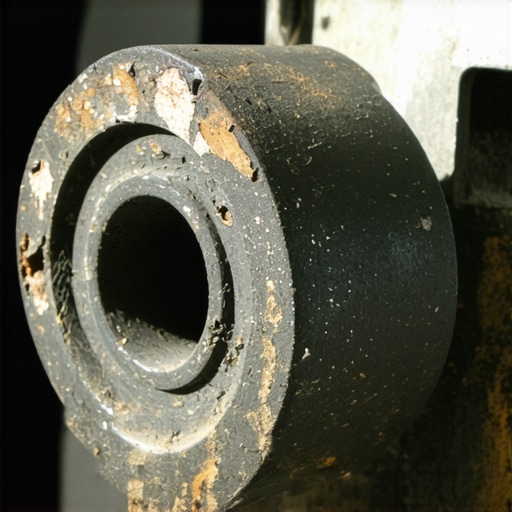
While we often focus on the intricate metal-on-metal connections within the steering assembly, the tires themselves frequently act as a feedback loop for internal structural failures. A shifted internal belt—where the steel or nylon reinforcement layers within the tire casing begin to delaminate—creates a physical ‘hump’ in the tire’s profile. At crawling speeds, this feels like a rhythmic notch as the steering rack struggles to push the wheel over the deformity. This isn’t just a vibration; it’s a transient resistance that mirrors a binding universal joint. If you suspect this, rotate your front tires to the rear. If the notchiness migrates to the back of the car, you’ve just saved yourself a four-figure steering rack bill.
Can internal belt separation actually mimic a mechanical hitch?
Yes, and it is a diagnostic trap for even seasoned technicians. When a tire develops a high-spot due to internal structural failure, the steering geometry must momentarily ‘climb’ over that point. This creates a peak in the required input torque, which the driver perceives as an indexed or notched sensation. According to safety data provided by the Tire Industry Association (TIA), internal delamination can be caused by long-term under-inflation or impact with a pothole, leading to a breakdown of the adhesive bond between the rubber and the steel cord. Unlike a balanced-related vibration, this notch is most prominent during low-speed maneuvers, specifically when the tire is under the highest lateral load during a turn.
How Mounting Bushing Deflection Creates a False Sense of Mechanical Binding
The steering rack is not bolted directly to the subframe; it sits in a bed of rubber or polyurethane bushings designed to isolate the cabin from road harshness. Over a decade of heat cycles and oil leaks, these bushings soften and eventually disintegrate. When you turn the wheel, the rack itself may shift horizontally before it actually begins to move the tie rods. This ‘dead zone’ followed by a sudden catch as the rack hits the limit of its bracket can feel exactly like a notch in the steering column. It is a subtle, yet pervasive issue that often leads to a misdiagnosis of a faulty pinion gear. To check this, have an assistant move the steering wheel back and forth while you observe the rack body; any lateral movement indicates the bushings have lost their structural integrity. High-performance drivers often swap these for solid or high-durometer polyurethane to eliminate this ‘indexed’ lag, though this comes at the cost of increased vibration through the wheel.
The Silent Failure of Internal Rack Lubrication
Steering racks are essentially lifetime-lubricated at the factory, but ‘lifetime’ in the automotive world generally means the duration of the original warranty. The grease packed into the bellows and around the rack teeth eventually dries out, especially in regions with extreme temperature swings. This creates a situation where the pinion gear must grind against dry, oxidized grease. This ‘stiction’—the friction that must be overcome to initiate motion—manifests as a series of micro-notches as you make small steering corrections on the highway. If you have ever felt like you had to ‘break the wheel free’ to move it just a millimeter, you are likely dealing with lubricant starvation within the rack housing itself. While some mechanics suggest ‘re-greasing’ by injecting lubricant into the bellows, this is often a temporary fix for a system that has already begun to gall the internal metal surfaces.
How Extreme Suspension Angles Stress Your Steering Linkage
Vehicle modifications, particularly those involving lift kits or aggressive lowering springs, drastically alter the operating angles of the tie rods and the steering shaft itself. When these components operate outside their intended range, the universal joints are forced to work at high angles, which inherently creates a non-linear velocity in the steering input. This is a geometric reality: the more severe the angle of a U-joint, the more the output shaft fluctuates in speed compared to the input shaft. This ‘pulsing’ resistance is often interpreted as notchiness during full-lock turns. If you’ve modified your ride height and noticed a new ‘indexed’ feeling, you may need a bump steer kit or a steering shaft extension to return the geometry to a more neutral state. The interaction between the strut tower’s top mount and the steering knuckle also plays a role, as a seized strut bearing can…
prevent the smooth rotation of the steering axis. When the bearing at the top of the MacPherson strut seizes due to moisture ingress or cumulative wear, the coil spring is forced to absorb the torsional load. This creates a ‘wind-up’ effect where the steering feels increasingly resistant and then suddenly ‘notches’ as the spring overcomes the friction and jumps to a new position. This is frequently accompanied by a distinct metallic pinging sound that resonates through the chassis. Diagnosing this requires a tactile inspection: have an assistant cycle the steering while you safely place a hand on the coil spring; any vibration or jumping confirms the bearing is the primary failure point. 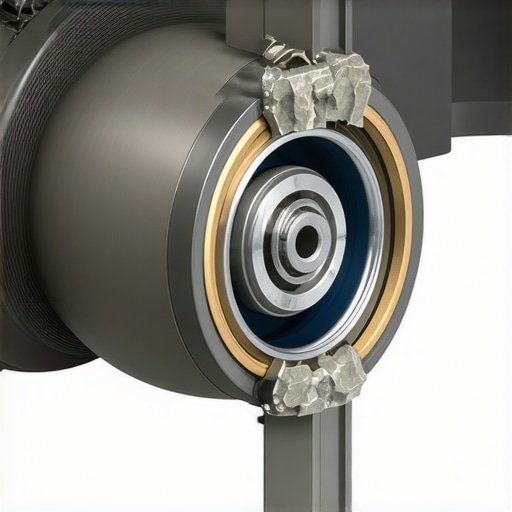
Grease Your Splines to Restore Smooth Column Extension
The intermediate steering shaft often features a splined slip-joint designed to accommodate chassis flex and facilitate safer collapse during an impact. Over time, the factory-applied molybdenum grease can dry out or become contaminated with road grit, leading to a phenomenon known as ‘spline bind.’ This causes the shaft to resist linear movement. As the vehicle encounters uneven terrain or the engine shifts on its mounts, the binding splines transmit a sharp, indexed sensation directly to the driver’s hands. Correcting this involves cleaning the splines and applying a high-pressure lubricant to ensure the shaft can telescope without mechanical hesitation.
Does a faulty clock spring provide enough resistance to feel like a mechanical notch?
While the clock spring is primarily an electrical ribbon cable for the airbag and steering wheel controls, a physically damaged housing can indeed mimic a mechanical hitch. If the internal plastic casing becomes brittle or cracks, the ribbon can snag on jagged edges, manifesting as a light clicking or physical ‘catch’ at specific points of rotation. Unlike hydraulic issues, this resistance remains consistent whether the engine is running or off. According to the National Institute for Automotive Service Excellence (ASE), distinguishing between trim interference and internal steering failures is a hallmark of an expert-level diagnostic process.
Verify Your Steering Knuckle Health Before Tearing Down the Rack
Pivot points at the steering knuckle are the final link in the mechanical chain. If these points are neglected—especially on older trucks with greaseable kingpins or vehicles with dry, non-serviceable ball joints—the ‘breakout torque’ required to initiate movement increases significantly. This creates a ‘memory steer’ condition where the steering refuses to return to center naturally, forcing the driver to ‘step’ the wheel back to a straight line. Before assuming the rack-and-pinion has failed, disconnect the tie rods and ensure the knuckles move freely through their entire range of motion.
Centering the Subframe to Resolve Geometric Binding
Structural misalignment is a frequently overlooked cause of steering friction. If the vehicle has hit a major pothole or undergone a significant suspension overhaul, the subframe housing the steering rack may have shifted. This shift alters the operating angle of the steering shaft, forcing the universal joints to work at extreme angles where they naturally exhibit non-linear resistance. This ‘binding’ is purely geometric; the components are healthy, but their orientation is compromised. A professional four-wheel alignment that includes a subframe centering check is often the only remedy for this specialized brand of steering notchiness. Have you ever felt a ‘ghost’ in your steering wheel that only appeared after a long drive or a specific repair? Share your diagnostic journey in the comments to help the community troubleshoot these complex mechanical hitches.
Steering should be a fluid extension of driver intent, providing a seamless tactile loop between the asphalt and the cockpit. However, when the steering wheel begins to exhibit a ‘stepped’ or ‘indexed’ sensation—commonly referred to as notchiness—it indicates a significant disruption in the mechanical interface. This tactile resistance is rarely a localized annoyance; rather, it is often the precursor to a complete steering failure. As any skilled mechanic understands, diagnosing notchiness requires a systematic approach to identifying friction within the steering column, universal joints, or the rack-and-pinion assembly itself.
Tackle the Friction Points in Your Steering Column
The primary suspect in nearly every case of notchy steering is the intermediate shaft universal joint. These small needle bearings are exposed to the elements, and over time, road salt and moisture penetrate the seals, leading to corrosion. This results in a ‘binding’ effect where the steering feels free for 90 degrees of rotation and then catches. Unlike the symptoms of heavy steering, which suggest a hydraulic pressure loss, notchiness is a purely mechanical resistance. If left unaddressed, the joint can eventually seize, leading to a catastrophic loss of control. In addition to the tactile feedback, you should listen for steering noises that often accompany this type of physical degradation.
Why does my steering feel like it has “indexed” positions?
When a driver experiences ‘indexed’ steering, it often points to a condition known as brinelling within the internal components of the rack or the steering column bearings. This happens when the bearing surfaces are permanently indented due to excessive impact or lack of lubrication. The steering wheel ‘prefers’ to sit in these indents, creating a notched feeling as you force the bearings out of their worn grooves. This loss of precision can also manifest as your car wandering across the lane, as the system lacks the smooth micro-adjustability required for high-speed stability. According to technical standards from the Society of Automotive Engineers (SAE), any deviation in the linear torque required to rotate the steering assembly is a critical safety failure that warrants immediate teardown.
Determine if the Hydraulic System is Mimicking Mechanical Binding
While notchiness is typically mechanical, hydraulic inconsistencies can occasionally mimic the sensation. A failing spool valve within the steering rack can cause ‘stiction,’ where the valve momentarily sticks before opening, causing a jerky or notchy sensation. This is often exacerbated by contaminated fluid or air bubbles trapped in the lines. If the sensation is accompanied by a whining sound, your power steering pump may be dying. Professionals use a pressure gauge to distinguish between a mechanical bind in the rack and a hydraulic pulse from the pump. If you have recently had work done and notice the steering wheel is off-center, the binding may also be related to improperly torqued or aligned steering linkages. If your vehicle is showing these advanced signs of wear, contact a specialist to perform a diagnostic sweep before a simple notch becomes a seized steering rack.
Stop Blaming the Rack and Check Your Ball Joints
Before you commit to an expensive steering rack replacement, you must consider the lower chassis components. A seized or severely degraded ball joint can introduce a ‘memory steer’ effect, where the steering fails to return to center naturally. This physical resistance feels remarkably similar to a notch in the column because the steering rack has to overcome the high breakout friction of a dry socket. When you experience this, it is often wise to spot a leaky shock or check for broader suspension wear, as these systems operate in tandem. If the symptoms of a bad inner tie rod are present alongside notchiness, the combined play and friction can make the vehicle feel unpredictable during low-speed maneuvers.
Why Your Steering Gets Crunchy Only After a Highway Run
Thermal expansion is a frequently overlooked variable in steering diagnostics. Components like the steering shaft U-joints or the rack’s pinion bearing can exhibit tight tolerances that only become problematic as the engine bay temperatures rise. This heat soak causes metal to expand, potentially narrowing the clearance between moving parts and resulting in a ‘crunchy’ or notched sensation that is absent when the car is cold. This is similar to how engines won’t turn over when hot due to increased internal resistance. If you notice the notchiness correlates strictly with long drives, inspect the heat shielding around the steering column and rack, as a missing shield can lead to premature lubricant breakdown within the joints.
Is your EPS motor fighting against a ghost signal?
In modern vehicles equipped with Electronic Power Steering (EPS), notchiness is often a digital problem rather than a purely mechanical one. The EPS system relies on a torque sensor to detect driver input and a motor to provide assistance. If the torque sensor begins to fail or sends erratic signals, the motor may provide ‘step-like’ assistance, creating a tactile notch as the software compensates for the noisy data. This can sometimes be diagnosed by using the 20 dollar scanner that every modern driver should own to check for steering angle sensor (SAS) calibration errors. According to reports from the National Highway Traffic Safety Administration (NHTSA), several major manufacturers have issued recalls for EPS software glitches that manifest as a ‘sticky’ or notchy steering feel at highway speeds, proving that the solution may be a firmware flash rather than a wrench.
The Critical Link Between Charging Health and Steering Precision
Because EPS systems are massive electrical consumers, a struggling alternator or a dying battery can directly impact steering feel. When the voltage drops, the steering motor may not receive the consistent amperage required for smooth operation, leading to a jerky or notched sensation during rapid wheel movements. It is highly recommended to perform the 12 dollar multi-meter test for your charging system if you notice your steering feel fluctuates when high-draw accessories like the AC or defroster are active. If the mechanical components check out, the issue is likely lurking in the electrical bus. If you are unsure how to interpret these readings, learning how to choose a skilled mechanic who specializes in electrical diagnostics will save you from replacing perfectly good mechanical hardware. Have you checked your steering fluid or EPS codes recently? Share your findings in the comments to help others troubleshoot these complex steering ghosts.
While we often focus on the intricate metal-on-metal connections within the steering assembly, the tires themselves frequently act as a feedback loop for internal structural failures. A shifted internal belt—where the steel or nylon reinforcement layers within the tire casing begin to delaminate—creates a physical ‘hump’ in the tire’s profile. At crawling speeds, this feels like a rhythmic notch as the steering rack struggles to push the wheel over the deformity. This isn’t just a vibration; it’s a transient resistance that mirrors a binding universal joint. If you suspect this, rotate your front tires to the rear. If the notchiness migrates to the back of the car, you’ve just saved yourself a four-figure steering rack bill.
Can internal belt separation actually mimic a mechanical hitch?
Yes, and it is a diagnostic trap for even seasoned technicians. When a tire develops a high-spot due to internal structural failure, the steering geometry must momentarily ‘climb’ over that point. This creates a peak in the required input torque, which the driver perceives as an indexed or notched sensation. According to safety data provided by the Tire Industry Association (TIA), internal delamination can be caused by long-term under-inflation or impact with a pothole, leading to a breakdown of the adhesive bond between the rubber and the steel cord. Unlike a balanced-related vibration, this notch is most prominent during low-speed maneuvers, specifically when the tire is under the highest lateral load during a turn.
How Mounting Bushing Deflection Creates a False Sense of Mechanical Binding
The steering rack is not bolted directly to the subframe; it sits in a bed of rubber or polyurethane bushings designed to isolate the cabin from road harshness. Over a decade of heat cycles and oil leaks, these bushings soften and eventually disintegrate. When you turn the wheel, the rack itself may shift horizontally before it actually begins to move the tie rods. This ‘dead zone’ followed by a sudden catch as the rack hits the limit of its bracket can feel exactly like a notch in the steering column. It is a subtle, yet pervasive issue that often leads to a misdiagnosis of a faulty pinion gear. To check this, have an assistant move the steering wheel back and forth while you observe the rack body; any lateral movement indicates the bushings have lost their structural integrity. High-performance drivers often swap these for solid or high-durometer polyurethane to eliminate this ‘indexed’ lag, though this comes at the cost of increased vibration through the wheel.
The Silent Failure of Internal Rack Lubrication
Steering racks are essentially lifetime-lubricated at the factory, but ‘lifetime’ in the automotive world generally means the duration of the original warranty. The grease packed into the bellows and around the rack teeth eventually dries out, especially in regions with extreme temperature swings. This creates a situation where the pinion gear must grind against dry, oxidized grease. This ‘stiction’—the friction that must be overcome to initiate motion—manifests as a series of micro-notches as you make small steering corrections on the highway. If you have ever felt like you had to ‘break the wheel free’ to move it just a millimeter, you are likely dealing with lubricant starvation within the rack housing itself. While some mechanics suggest ‘re-greasing’ by injecting lubricant into the bellows, this is often a temporary fix for a system that has already begun to gall the internal metal surfaces.
How Extreme Suspension Angles Stress Your Steering Linkage
Vehicle modifications, particularly those involving lift kits or aggressive lowering springs, drastically alter the operating angles of the tie rods and the steering shaft itself. When these components operate outside their intended range, the universal joints are forced to work at high angles, which inherently creates a non-linear velocity in the steering input. This is a geometric reality: the more severe the angle of a U-joint, the more the output shaft fluctuates in speed compared to the input shaft. This ‘pulsing’ resistance is often interpreted as notchiness during full-lock turns. If you’ve modified your ride height and noticed a new ‘indexed’ feeling, you may need a bump steer kit or a steering shaft extension to return the geometry to a more neutral state. The interaction between the strut tower’s top mount and the steering knuckle also plays a role, as a seized strut bearing can prevent the smooth rotation of the steering axis. When the bearing at the top of the MacPherson strut seizes due to moisture ingress or cumulative wear, the coil spring is forced to absorb the torsional load. This creates a ‘wind-up’ effect where the steering feels increasingly resistant and then suddenly ‘notches’ as the spring overcomes the friction and jumps to a new position. This is frequently accompanied by a distinct metallic pinging sound that resonates through the chassis. Diagnosing this requires a tactile inspection: have an assistant cycle the steering while you safely place a hand on the coil spring; any vibration or jumping confirms the bearing is the primary failure point.
Grease Your Splines to Restore Smooth Column Extension
The intermediate steering shaft often features a splined slip-joint designed to accommodate chassis flex and facilitate safer collapse during an impact. Over time, the factory-applied molybdenum grease can dry out or become contaminated with road grit, leading to a phenomenon known as ‘spline bind.’ This causes the shaft to resist linear movement. As the vehicle encounters uneven terrain or the engine shifts on its mounts, the binding splines transmit a sharp, indexed sensation directly to the driver’s hands. Correcting this involves cleaning the splines and applying a high-pressure lubricant to ensure the shaft can telescope without mechanical hesitation.
Does a faulty clock spring provide enough resistance to feel like a mechanical notch?
While the clock spring is primarily an electrical ribbon cable for the airbag and steering wheel controls, a physically damaged housing can indeed mimic a mechanical hitch. If the internal plastic casing becomes brittle or cracks, the ribbon can snag on jagged edges, manifesting as a light clicking or physical ‘catch’ at specific points of rotation. Unlike hydraulic issues, this resistance remains consistent whether the engine is running or off. According to the National Institute for Automotive Service Excellence (ASE), distinguishing between trim interference and internal steering failures is a hallmark of an expert-level diagnostic process.
Verify Your Steering Knuckle Health Before Tearing Down the Rack
Pivot points at the steering knuckle are the final link in the mechanical chain. If these points are neglected—especially on older trucks with greaseable kingpins or vehicles with dry, non-serviceable ball joints—the ‘breakout torque’ required to initiate movement increases significantly. This creates a ‘memory steer’ condition where the steering refuses to return to center naturally, forcing the driver to ‘step’ the wheel back to a straight line. Before assuming the rack-and-pinion has failed, disconnect the tie rods and ensure the knuckles move freely through their entire range of motion.
Centering the Subframe to Resolve Geometric Binding
Structural misalignment is a frequently overlooked cause of steering friction. If the vehicle has hit a major pothole or undergone a significant suspension overhaul, the subframe housing the steering rack may have shifted. This shift alters the operating angle of the steering shaft, forcing the universal joints to work at extreme angles where they naturally exhibit non-linear resistance. This ‘binding’ is purely geometric; the components are healthy, but their orientation is compromised. A professional four-wheel alignment that includes a subframe centering check is often the only remedy for this specialized brand of steering notchiness.
Expert Insights & Advanced Considerations
The Digital Ghost of Cold-Start Recalibration
Modern EPS systems often perform a self-check during ignition. If the battery voltage is marginally low—common during winter mornings—the torque sensor may initialize with a biased zero-point. This results in a temporary ‘stepped’ feeling that disappears once the alternator stabilizes the system. Always cross-reference your battery health using a multi-meter test before assuming the rack is toast.
Why You Should Inspect the Intermediate Shaft First
In over 60% of mechanical binding cases, the issue isn’t the expensive rack; it’s the exposed universal joint on the intermediate shaft. Road salt creates a pivot-point resistance that mirrors internal gear failure perfectly. A quick spray of penetrating lubricant on this joint can serve as a diagnostic ‘litmus test’—if the notchiness vanishes, you’ve found your culprit without a teardown. This is one of those mechanic tips that saves hundreds in labor.
The Harmonic Feedback of Hub Corrosion
Sometimes what feels like a steering notch is actually a variation in friction between the wheel hub and the brake rotor. If the mating surfaces are uneven, the lateral force required to turn the wheel changes rhythmically. Performing a 15 dollar hub clean-up can often eliminate these ‘phantom’ notches that appear during low-speed parking maneuvers.
Curated Expert Resources
NHTSA Safety Recall Search
The definitive database for identifying if your specific make and model has a known defect in its electronic power steering software or mechanical linkages.
SAE International Technical Papers
For those who want to understand the physics of ‘stiction’ and breakout torque in automotive steering assemblies, these peer-reviewed documents offer the highest level of engineering detail.
The ASE Advanced Diagnostic Series
Professional-grade training material that outlines the systematic logic required to isolate electrical interference from mechanical binding in modern chassis systems.
Final Expert Perspective
Navigating the causes of notchy steering requires a blend of tactile intuition and systematic data analysis. Whether the resistance stems from a corroded U-joint, a confused EPS torque sensor, or simple lubricant starvation, ignoring these indexed sensations is a gamble with your vehicle’s directional control. By debunking common auto repair myths and focusing on the physical interface between the rack and the road, you can maintain a steering system that remains fluid and predictable. If you have successfully diagnosed a complex steering hitch, or if you’re stuck between a mechanical bind and an electrical ghost, contact us or consult a skilled specialist to ensure your next drive is as smooth as intended.