Stop Chasing Ghost Leaks with This $5 Shop Secret
Professional automotive technicians often rely on sophisticated equipment for diagnostics, but there is a timeless methodology that remains unrivaled in its simplicity and accuracy: the hydrostatic bubble test. When a vehicle enters the shop for a tune up or general maintenance, pneumatic integrity is frequently overlooked until a warning light appears on the dashboard. However, a proactive approach to tire health is just as vital as a regular brake service. By utilizing a simple mixture of dish soap and water, you can pinpoint the exact origin of a pressure drop that might otherwise baffle even an experienced mechanic. This method is the ultimate filter for phantom leaks that occur only under load or at specific rotational angles.
Why Micro-Leaks Are the Silent Killer of Fuel Economy
The relationship between tire pressure and fuel efficiency is well-documented by industry authorities. Maintaining the manufacturer-recommended PSI (pounds per square inch) is essential for reducing rolling resistance. According to the NHTSA, under-inflated tires can significantly compromise vehicle handling and increase the risk of a catastrophic blowout. When you perform your own auto repair diagnostics, you are essentially protecting your investment. A tire that loses just a few pounds of pressure monthly forces the engine to work harder, negating the benefits of other high-end essential tune-up tips you might be following. This soap trick allows you to visualize the invisible, turning a frustration-filled mystery into a five-minute fix.
Is Your Slow Pressure Loss Actually a Bead Sealing Issue?
Many drivers assume a nail or screw is the culprit when a tire goes soft, but the reality is often more nuanced and involves the wheel-to-rubber interface. Corrosion along the alloy rim—especially in regions where road salt is prevalent—can break the bead seal, allowing air to escape through microscopic gaps. If your tire appears fine but still loses air, spray the soapy solution along the edge where the rubber meets the metal. If a cluster of small bubbles begins to form, you aren’t looking at a puncture; you’re looking at a bead failure. This distinction is crucial because it dictates whether you need a simple patch or a professional rim cleaning. If you’re unsure how to handle complex wheel or alignment issues, learning how to choose a skilled mechanic can save you from unnecessary replacement costs.
Integrate Pressure Checks into Your Holistic Auto Repair Routine
True automotive longevity is achieved through a synergy of various maintenance tasks. A car that receives a meticulous tune up but ignores tire health is like a marathon runner with ill-fitting shoes. While you are checking your fluids or inspecting your pads during a brake service, take a moment to spray your valve stems with the soapy solution. Valve core leaks are notoriously difficult to hear but easy to see with bubbles. If your vehicle feels unstable at speed beyond just a tire vibration, investigate further by checking out how to tell if your struts are actually blown. This holistic diagnostic mindset separates the hobbyist from the expert and ensures every auto repair dollar is spent where it matters most.
Don’t Ignore the Signal When Your TPMS Light Stays Active
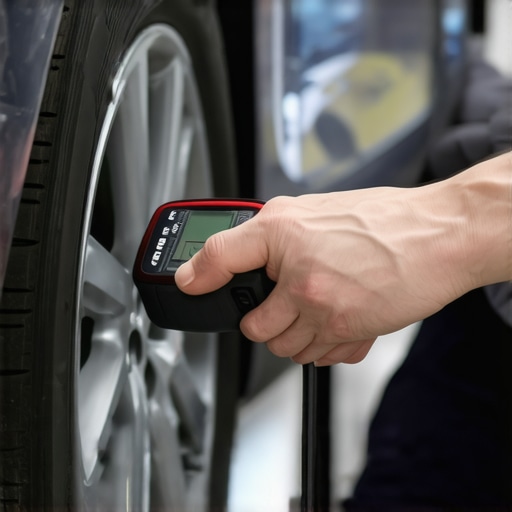
Modern vehicles are equipped with an array of sensors that sometimes create more questions than answers. If you find yourself wondering why your tire pressure light stays on after filling up, you are likely encountering the limits of internal battery life. These wireless transmitters, tucked inside the wheel, have a lifespan of roughly five to ten years. A seasoned mechanic understands that a steady inflation level doesn’t always satisfy a failing sensor. For the proactive owner, investing in the $20 scanner that every modern driver should own can help distinguish between a genuine pressure drop and a hardware malfunction, preventing unnecessary trips to the shop during a routine tune up.
Distinguishing High-Speed Vibration from Brake System Failure
Translating the feedback through your steering wheel is a vital skill in the world of auto repair. Not all shakes are created equal; a vibration that occurs only at highway speeds typically points to a wheel balance issue or a tire that has developed a structural flaw. You must be able to determine if your tire vibration is a flat spot caused by long-term storage or a more serious belt separation. According to the Car Care Council, neglecting these subtle warnings can lead to accelerated wear on your suspension components, turning a minor maintenance task into a major financial burden. If the oscillation only presents itself during deceleration, you aren’t looking at a tire issue, but rather a pulse in the braking system.
Why Does Your Steering Wheel Vibrate Only When You Touch the Brakes?
When the steering wheel dances specifically during deceleration, it usually indicates that your rotors have developed thickness variation. This common issue is often misdiagnosed as a tire balance problem, leading to frustration when a re-balance fails to solve the symptom. This is why why your steering wheel shakes when you brake at high speeds is a critical diagnostic distinction. Furthermore, a dragging sensation might suggest that a mechanical failure is imminent. If a brake component fails to retract, it generates immense heat that can compromise the integrity of your tires. Learning how to rescue a seized brake caliper slide pin is an essential skill for any DIY enthusiast looking to maintain a safe and efficient brake service schedule.
The Simple Plastic Shield That Protects Your Tire Valves
In the hierarchy of automotive components, the valve cap is often viewed as a decorative afterthought, yet its role in air retention is paramount. A missing cap allows road salt, moisture, and grit to migrate into the valve core, leading to corrosion that causes those persistent ‘ghost’ leaks. Utilizing the $4 dust cap that saves your tire valves is perhaps the most cost-effective auto repair you can perform. By sealing out contaminants, you ensure that the internal seal remains airtight, preserving the results of your latest tune up. Integrating these small checks into your routine ensures your vehicle remains reliable between major service intervals. Have you ever been tricked by a phantom vibration or a sensor that wouldn’t clear? Share your diagnostic victories in the comments below, or read our ultimate tune-up checklist to keep your car in peak condition.
Why Traditional Balancing Often Fails at Highway Speeds
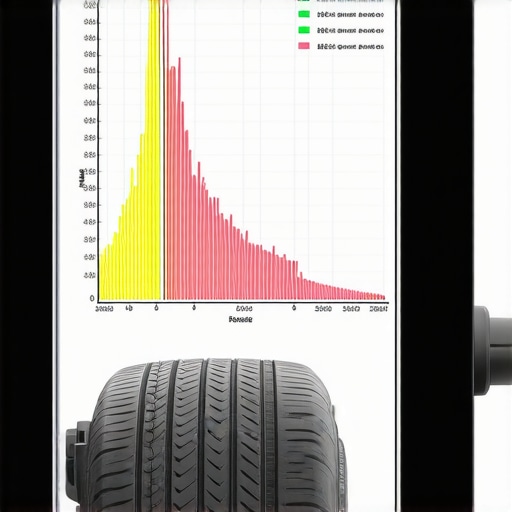
Standard spin balancers are designed to measure heavy spots in a wheel assembly, but they operate under a fundamental flaw: they do not account for the tire’s physical uniformity under the weight of the vehicle. A tire can be perfectly balanced in the air yet vibrate like a jackhammer on the road because of ‘hard spots’ in the sidewall or internal belt variations. This phenomenon is known as Radial Force Variation (RFV). According to the technical experts at Hunter Engineering, radial force variation can simulate the feeling of an unbalanced tire even when the weight distribution is mathematically perfect. For a professional mechanic, diagnosing this requires a Road Force balancer, which uses a load roller to press against the tread, mimicking the pressure of the asphalt. This advanced diagnostic step ensures that a routine tune up results in a luxury-car-smooth ride, rather than a recurring headache for the driver.
Can Nitrogen Inflation Actually Stop Alloy Rim Corrosion?
The debate over nitrogen inflation often centers on pressure stability, but the real benefit for long-term auto repair lies in its lack of moisture. Standard compressed air contains significant humidity, which, when trapped inside a tire, undergoes rapid expansion and contraction as the rubber heats up. More importantly, this moisture contributes to the oxidation of the internal alloy wheel surface. This oxidation leads to the bead leaks mentioned earlier, creating a cycle of frustration for owners. Nitrogen is a dry, inert gas that significantly slows the degradation of the tire’s inner liner and prevents the rim from pitting. While it isn’t a requirement for every vehicle, those who live in coastal or high-humidity regions will find that nitrogen helps maintain a consistent seal, reducing the frequency of emergency brake service visits caused by moisture-related sensor malfunctions.
The Physical Transformation of Rubber Through Heat Cycling
Tires are essentially complex chemical cocktails that change over time through a process called vulcanization. Every time you drive, the friction generates heat, which further ‘cooks’ the rubber compounds. Over several years, this heat cycling causes the tire to lose its elasticity, transforming a once-supple grip into a hard, plastic-like surface. This is why a tire with plenty of tread can still feel dangerous in the rain; the rubber can no longer deform to grip the micro-textures of the road. If your vehicle’s steering feel remains vague even after a comprehensive tune up, the issue might reside in the chemistry of the tire itself. Drivers often mistake this loss of traction for worn suspension components. Before you invest in a major auto repair, check the manufacture date on your sidewall; if they are older than six years, the rubber has likely reached its chemical expiration date regardless of its visual condition.
Stop Chasing Vibrations and Check Your Hub-Centric Clearance
Precision handling relies on a perfect marriage between the wheel and the hub. Many aftermarket wheels are ‘lug-centric,’ meaning they rely on the wheel studs to center the assembly. However, most modern vehicles are designed to be hub-centric, where the center bore of the wheel fits snugly over the hub lip. If there is even a millimeter of play here, you will experience a persistent vibration that no mechanic can balance out. This often happens after a brake service where the technician might not have noticed a missing hub-centric ring. Ensuring a tight, concentric fit is the foundation of any high-speed stability. If you’ve been struggling with a mystery shake that defies logic, take a moment to pull the wheel and inspect that center interface. Small details like these define the difference between a functional repair and a master-level restoration of driving dynamics.
Stop Blaming the Balancer When Flat-Spotting Distorts Your Carcass
Vibrations that dissipate after a few miles of highway driving are frequently misidentified as balancing issues, yet a seasoned mechanic recognizes these as temporary flat spots. This phenomenon occurs when the weight of a stationary vehicle causes the tire’s contact patch to flatten against the cold pavement, essentially ‘memory-setting’ the nylon or polyester cords. While modern radial tires are more resilient, performance-oriented rubber with high nylon content is particularly susceptible to this temporary deformation. If you are preparing your vehicle for a seasonal tune up after it has sat for weeks, these vibrations are a reminder that the viscoelastic properties of rubber require heat to regain their circularity. However, if the vibration persists, the flat-spotting may have become permanent through a process called ‘dead-set,’ often requiring specialized auto repair equipment to rectify or, in extreme cases, total tire replacement.
Does Your Suspension Geometry Sabotage Even the Best New Rubber?
Even a brand-new set of tires cannot compensate for a chassis that is fighting against itself. While many owners focus on tread depth, the actual footprint of the tire is dictated by alignment angles—specifically toe, camber, and caster. A subtle deviation in ‘toe-in’ can cause the tires to constantly scrub against the road surface, generating excessive heat and premature wear that feels like a dragging brake. This is why a comprehensive brake service should always be paired with an inspection of the tie rod ends and control arm bushings. According to the technical guidelines from the Tire Industry Association (TIA), improper alignment geometry is the primary driver of irregular wear patterns that reduce tire life by up to 50%. Ignoring these structural alignment nuances during your tune up essentially ensures that you will be purchasing new tires long before the manufacturer’s mileage warranty expires.
Read Your Tread Like a Forensic Scientist to Predict Failures
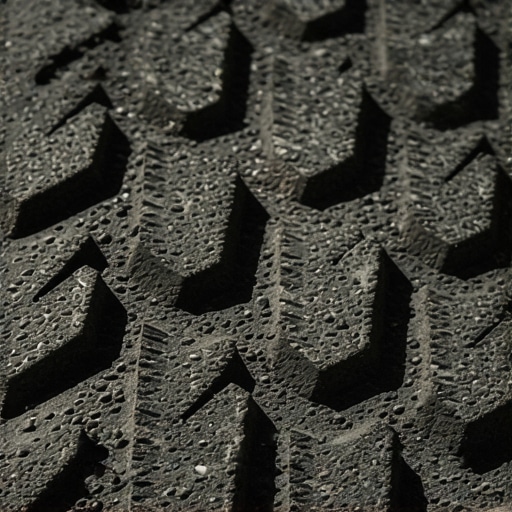
The tread of your tire is a physical record of your vehicle’s dynamic health. ‘Feathering’—where the tread blocks become sharp on one edge and rounded on the other—is a classic symptom of incorrect toe settings, often indicating that the steering linkage is worn. Conversely, ‘cupping’ or ‘scalloping’ suggests that your shock absorbers or struts are no longer controlling the tire’s vertical movement, allowing it to bounce microscopically as it rolls. A skilled mechanic views these patterns as a diagnostic map. If you notice diagonal wear patches, you may be looking at a rear-axle alignment issue or a lack of regular rotation. Integrating these forensic checks into your routine auto repair schedule allows you to intercept mechanical failures before they manifest as a roadside emergency or a compromised brake service outcome.
Lateral Scrub and the Hidden Cost of Performance Bushings
Enthusiasts often upgrade to stiffer polyurethane bushings to sharpen steering response, but these modifications can introduce ‘lateral scrub’ if not tuned correctly. This stiffness prevents the suspension from absorbing minor road imperfections, forcing the tire sidewall to do all the work. Over time, this leads to internal belt fatigue and a loss of lateral grip. When performing a high-level tune up on a modified vehicle, it is vital to balance the desire for handling precision with the reality of tire longevity. Have you inspected your inner tread lately for the tell-tale signs of camber wear? Don’t wait for a steering shake to take action; examine your tires today to see what your suspension is trying to tell you, and then head over to our guide on maximizing chassis stability for more expert-level tips.
Master the Nuances of Dynamic Balancing and Seal Integrity
The Zero-Point Calibration Trap in Modern Shops
Even the most advanced equipment is only as good as its last calibration. Many high-volume shops overlook the weekly ‘zeroing’ required for laser-guided balancers. As an informed owner, asking your mechanic when their machine was last calibrated can prevent the frustration of chasing a vibration that doesn’t exist. This level of scrutiny ensures your next tune up actually delivers the smoothness you pay for. For those looking to optimize every aspect of maintenance, check out these expert tips for optimal performance.
Thermal Expansion vs. True Pressure Loss
The 1-PSI-per-10-degree rule is an industry standard for a reason. Before you assume you have a leak, verify the ambient temperature shift. A car that sits in a heated garage and then hits sub-zero temperatures will trigger a TPMS alert without losing a single molecule of air. Mastering this distinction is a core part of effective auto repair. If your pressure drops are inconsistent with temperature, you might need to maximize your brake service efficiency by checking for caliper heat soak affecting the wheel hub temperature.
Why Valve Core Material Consistency Matters
Mixing brass valve cores with aluminum TPMS stems is a recipe for galvanic corrosion. This chemical reaction ‘welds’ the core to the stem, leading to a slow, unfixable leak. Always ensure your components are material-matched to prevent a simple $2 part from turning into a $200 sensor replacement. Integrating these small checks into your brake service routine prevents future headaches.
#IMAGE_PLACEHOLDER_E#
Professional Knowledge Kits for the Discerning Owner
To go beyond the basics, we recommend these industry-standard resources:
- The Hunter Engineering Training Portal: Offers deep dives into Road Force Variation and why standard spin balancing often misses the mark for performance vehicles.
- Tire Industry Association (TIA) Tech Bulletins: These provide the ‘why’ behind specific mounting and demounting procedures that most quick-lube shops ignore.
- NHTSA Tire Safety & Ratings: A database for understanding the real-world performance of treadwear and traction grades before you buy.
A Holistic View of Your Vehicle’s Contact Patch
Successful auto repair is rarely about fixing one isolated part; it is about managing the relationship between the chassis, the tires, and the braking system. A precise tune up addresses the heartbeat of the engine, but it is the tire integrity that translates that power to the pavement. By moving beyond the ‘visual check’ and adopting the hydrostatic tests and forensic tread analysis discussed today, you ensure a safer, more efficient drive. We invite you to share your most difficult diagnostic challenges with us or explore our cost-saving tips from industry experts to further refine your maintenance strategy. Stay proactive, stay informed, and never settle for a ‘close enough’ vibration.