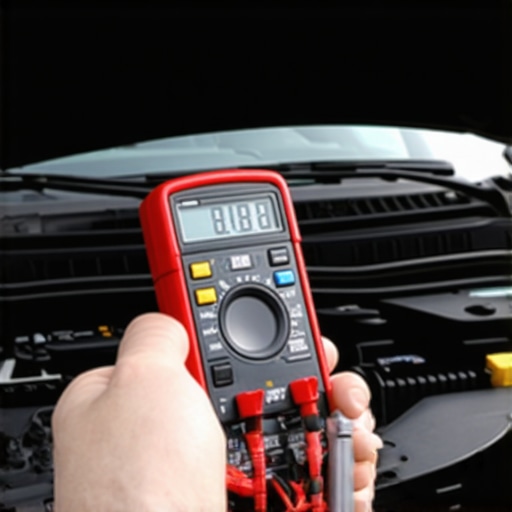
Automotive electrical systems are frequently treated as a ‘black box’ by many vehicle owners, a mysterious tangle of wires that only a seasoned mechanic can decipher. However, the health of your charging system—specifically the alternator—is the primary determinant of whether your vehicle starts tomorrow morning or leaves you stranded in a grocery store parking lot. While a comprehensive tune up typically focuses on ignition components and fluid filtration, the charging system is the backbone of modern vehicle reliability. Expert-level auto repair starts with proactive diagnostics, and you do not need a four-figure scan tool to achieve professional results; a simple ten-dollar digital multimeter is often the most powerful tool in your arsenal for identifying early-stage diode failure or regulator instability.
The Hidden Voltage War Under Your Hood
Modern vehicles are incredibly sensitive to voltage fluctuations, often requiring a precise range to keep the Engine Control Unit (ECU) and various sensors functioning within their design parameters. When an alternator begins to fail, it rarely dies instantly. Instead, it enters a state of slow degradation where it can no longer keep up with the electrical load of headlights, seat heaters, and infotainment systems. A top-rated mechanic understands that an alternator might provide enough current to keep the engine running but fail to provide enough to actually charge the battery, leading to a slow death for your expensive lead-acid or AGM unit. If you have recently experienced brake service or other repairs where the battery was disconnected, ensuring the charging system is robust is a critical next step to avoid computer memory loss or strange dashboard warnings.
Your Ten-Dollar Defense Against Breakdown
To perform this essential diagnostic, set your multimeter to the 20V DC setting. With the engine off, a healthy battery should read approximately 12.6 volts. Once you start the engine, that number should jump to between 13.8 and 14.4 volts. If the voltage stays at 12.6 or begins to drop, your alternator is effectively a paperweight. However, the real expert trick involves testing under load. Turn on the high beams, the heater on full blast, and the rear defroster. If the voltage drops below 13.2V, the alternator is struggling. This is often the precursor to catastrophic failure. For a deeper dive into these electrical nuances, you should study the 12 multi meter test for your charging system to master the art of circuit tracing.
Why does the dashboard battery light fail to warn you in time?
The battery warning light on your instrument cluster is a binary indicator that usually only triggers when the voltage output drops significantly below the battery’s resting state. By the time that red icon illuminates, the vehicle is already running solely on the reserve capacity of the battery. According to the Battery Council International (BCI), running a battery to total discharge can permanently damage its internal chemistry, leading to premature failure even after the alternator is replaced. This is why many owners find themselves wondering why your new alternator failed after one week—it is often because the old, damaged battery was pulling too much current from the new unit.
Don’t Wait for the Tow Truck
Proactive monitoring is the hallmark of a savvy owner who values vehicle longevity. Integrating a quick voltage check into your seasonal maintenance routine ensures that you are never caught off guard by a failing rectifier bridge or worn brushes. If you have mastered the art of electrical diagnostics, you might also be interested in how to maximize your brake service efficiency with these tips to keep the rest of your vehicle in peak condition. Always remember that a mechanic who prioritizes data over guesswork, as explored in our guide on how a top-rated mechanic ensures safe auto repairs every time, is your best ally in maintaining a reliable machine.
While the multimeter check is a solid foundation, the next layer of expert auto repair involves hunting down the silent killers known as parasitic draws. This phenomenon occurs when a control module or electronic component fails to enter sleep mode after the ignition is turned off, slowly siphoning amperage until the battery is depleted. A seasoned mechanic knows that identifying these draws requires patience; simply pulling fuses can sometimes wake up other modules, leading to false readings. Instead, professionals look for voltage drops across fuses while they are still in the panel. A common culprit in these scenarios isn’t the battery itself, but rather the 12 relay that mimics a blown starter motor, which can stick in the closed position and create a continuous circuit that bypasses the ignition switch entirely.
Could a corroded ground wire be masquerading as a transmission failure?
In the world of high-level diagnostics, the ground side of the circuit is often more important than the power side. Because the vehicle chassis serves as the return path to the battery, a single rusted bolt or a frayed strap can cause a digital signal to become ‘noisy.’ This electrical interference can lead to ghost symptoms, such as erratic shifting or sensor errors that disappear and reappear without logic. For instance, you might find yourself investigating why your transmission slips only when cold, only to discover that a high-resistance ground connection is preventing the solenoids from receiving full current. The National Institute for Automotive Service Excellence (ASE) notes that a significant percentage of unnecessary part replacements occur because the technician failed to verify the integrity of the ground-to-chassis connection first.
Smart Alternators and the Myth of the Constant Charge
Modern vehicles have evolved beyond the simple fixed-voltage alternators of the past. Today, many cars utilize ‘smart’ charging systems controlled directly by the ECU to improve fuel economy and reduce engine load. These systems may intentionally drop the charging voltage to 12.5V during cruising or spike it to 15V during deceleration (regenerative braking). If you are performing a tune up and notice these fluctuations, do not immediately assume the alternator is failing. Instead, look at the signals from the battery current sensor. A fault here can cause a rough idle as the engine struggles to compensate for a fluctuating electrical load. Investigating the 12 sensor that fixes your rough idle is often a more effective solution than blindly replacing heavy hardware.

As vehicle electronics become more integrated, the line between mechanical maintenance and software calibration continues to blur. Whether you are performing a routine brake service that requires an electronic parking brake reset or chasing a mystery misfire, always remember that electricity is the lifeblood of the machine. Have you ever replaced a major component only to find the real issue was a simple loose wire? Share your most challenging diagnostic stories in the comments below. If you found this technical breakdown useful, you should also explore our guide on essential tune-up tips to boost your car’s performance in 2025 to ensure every system under your hood is operating at peak efficiency.
Stop the Invisible Noise Killing Your Sensors
While a multimeter is excellent for checking static voltage, it often fails to detect a more insidious problem: AC ripple. An alternator’s job is to produce Alternating Current (AC) and then convert it into Direct Current (DC) using a bridge of diodes. When one of these diodes leaks or fails, it allows ‘dirty’ AC voltage to bleed into your vehicle’s sensitive electrical network. This electrical noise can wreak havoc on the sensors you rely on for a smooth tune up, causing ghost misfires or erratic engine behavior that a standard mechanic might misdiagnose as a mechanical failure. To find this, you must switch your multimeter to the AC millivolt setting while the engine is running; any reading over 50mV AC is a red flag indicating that your alternator’s internal health is compromised, even if the DC output looks perfectly stable at 14 volts.
Why Your Car Needs a Formal Introduction to Its New Battery
In the realm of modern auto repair, the days of ‘drop-in’ battery replacements are rapidly disappearing. Most vehicles manufactured in the last decade utilize a Battery Management System (BMS) that tracks the age and internal resistance of the battery. As a battery ages, the alternator increases its charging profile to compensate for the loss of efficiency. If you install a fresh battery without ‘registering’ it via a diagnostic scan tool, the vehicle will continue to blast the new unit with the high-voltage profile intended for the old, dying one. This oversight can significantly shorten the lifespan of your investment. Whether you are in the shop for a brake service or a seasonal inspection, always ask if your vehicle requires a BMS reset to ensure the charging logic is synchronized with the new hardware. 
How does extreme ambient temperature accelerate chemical degradation?
Many drivers believe that winter is the primary enemy of the battery, but the Society of Automotive Engineers (SAE), specifically in their research regarding standard J537, highlights that heat is actually the silent killer. High under-hood temperatures accelerate the internal chemical reactions, leading to faster plate corrosion and electrolyte evaporation. By the time the first cold snap hits, the battery is already so weakened by summer heat that it lacks the cranking amps to turn over a cold, thickened engine oil. This is why a proactive mechanic will often recommend a conductance test at the end of August rather than waiting for the first freeze of December. If you have noticed your power windows moving slower after a heatwave, your charging system is likely signaling a plea for help.
The Critical Interplay Between Chassis Grounds and Control Modules
Precision auto repair requires acknowledging that every electronic component is only as good as its path back to the battery. We often focus on the ‘hot’ wires, but a high-resistance ground is frequently the culprit behind flickering HID headlamps or erratic ABS engagement during a brake service. A professional technique involves performing a voltage drop test on the ground side of the circuit while it is under load. If you measure more than 0.1V between the battery negative terminal and the engine block, you have found a bottleneck that no new part will fix. These grounding issues are particularly prevalent in regions where road salt accelerates the oxidation of aluminum and steel contact points, effectively creating a layer of insulation where there should be a solid connection.
As we move deeper into the complexities of integrated vehicle networks, understanding the ‘why’ behind these failures becomes more important than just knowing ‘how’ to swap a part. Have you ever encountered a vehicle that seemed possessed by electrical demons, only to find a simple loose ground strap? We would love to hear about your most frustrating diagnostic wins in the comments. To stay ahead of the curve, you might also want to look into how a top-rated mechanic ensures safe auto repairs every time through rigorous data-driven testing protocols.
While the multimeter remains a staple, the frontier of expert auto repair has shifted toward the visualization of electrical signals in real-time. A digital oscilloscope allows a mechanic to see the ‘heartbeat’ of the charging system, revealing micro-glitches that occur in milliseconds—far too fast for a standard handheld meter to register. This level of scrutiny is vital because modern alternators are no longer standalone units; they are nodes on a high-speed communication network. If the Pulse Width Modulation (PWM) signal from the Engine Control Unit is distorted, the alternator may default to a ‘limp home’ charging mode, providing just enough power to prevent a stall but insufficient current to maintain long-term battery health during a heavy load.
The Oscilloscope Advantage Over the Humble Multimeter
Using an oscilloscope to perform a ‘ripple test’ provides a graphical representation of the alternator’s rectifier health. A perfect bridge should show a consistent, repeating ‘humps’ pattern. Any deviation—a missing peak or a jagged edge—indicates a leaky diode that is introducing electrical noise into the vehicle’s sensitive CAN Bus network. This noise can trigger false trouble codes in unrelated systems, leading an amateur to perform an unnecessary brake service on an ABS system that was simply confused by ‘dirty’ power. When you perform a high-level tune up, checking for this electrical cleanliness is what separates a parts-changer from a true diagnostician.

A Seized Pulley Can Deceive Even Savvy Technicians
Mechanical components within the charging system often wear out in ways that masquerade as electrical failures. Many modern vehicles utilize an Overrunning Alternator Decoupler (OAD) or an Alternator Freewheel Pulley (AFP). These specialized pulleys are designed to absorb the torsional vibrations of the engine, protecting the alternator’s internal components and the serpentine belt. However, when these pulleys seize, they can cause significant belt slap and vibration that mimics the sound of a failing bearing or even internal engine noise. A professional mechanic knows that if the belt tensioner is bouncing excessively, the problem likely isn’t the tensioner itself, but a locked OAD pulley. This mechanical failure places immense stress on the alternator’s internal electronics, often leading to premature failure of the regulator.
Is your alternator’s decoupler pulley the real source of that noise?
Detecting a failing OAD requires a specific test: with the belt removed, you should be able to spin the alternator rotor in one direction and see it lock, while in the other direction, it should freewheel smoothly. If it locks in both directions or feels gritty, it is exerting ‘shock loads’ on the entire accessory drive system. According to the ISO 7637-2 standard, which governs electrical disturbances in road vehicles, these sudden mechanical shocks can actually lead to transient voltage spikes as the alternator rotor is jerked at high speeds. These spikes are often the invisible culprits behind fried sensors following what should have been a routine auto repair or belt replacement.
Why Software Calibration Defines Modern Charging Performance
In the current era of automotive engineering, the charging system is a collaborative effort between hardware and software. High-end diagnostic tools are now required to perform ‘Battery Adaptation’ after a replacement, telling the ECU exactly how many amp-hours the new unit is capable of storing. Without this step, the vehicle may undercharge a new battery, assuming it still has the high internal resistance of the old one. This intricate dance between bits and volts is why a modern tune up is as much about software updates as it is about physical inspections. If you have been struggling with a mystery draw or a ‘Battery Low’ warning despite having new parts, it is time to look at the communication lines between the battery sensor and the main gateway module.
Ready to stop guessing and start diagnosing like a pro? Invest in a basic oscilloscope and begin capturing waveforms today—you will be amazed at the ‘ghosts’ you can finally see. Share your most complex electrical wins in the comments below, and don’t forget to check out our latest guide on essential tune-up tips to boost your car’s performance in 2025 to stay ahead of the curve.
Expert Insights & Advanced Considerations
The Ground Side Path Can Make or Break a Repair
Seasoned technicians know that a voltage drop test on the negative side is non-negotiable. If you find more than 100mV of drop between the battery post and the chassis, you have found a bottleneck that causes intermittent sensor errors. Applying mechanic tips diagnosing common auto problems often reveals that the most complex symptoms stem from these simple physical failures. A high-resistance ground effectively raises the floor of the entire circuit, confusing the very sensors meant to regulate engine performance.
Software Handshakes Are the New Physical Connections
In the era of top auto repair trends to watch in 2025, we must acknowledge that the alternator is a slave to the Engine Control Unit (ECU). The communication pulse determines the output, meaning a software glitch can masquerade as a mechanical failure. Never condemn an alternator until you have verified the data communication stream via a high-level scan tool. A professional mechanic looks at the duty cycle of the regulator signal before even reaching for a wrench.
Oscilloscopes Reveal What Meters Simply Cannot See
While a multimeter provides a snapshot, an oscilloscope provides a film. Detecting a single bad diode in a bridge rectifier—which produces the ‘dirty’ power that kills modules—is only possible through waveform analysis. Integrating this into your tune up strategies to save money on auto repairs prevents the downstream destruction of sensitive ignition and fuel components. #IMAGE_PLACEHOLDER_E#
Curated Expert Resources
For those looking to move from DIY enthusiast to diagnostic expert, these resources provide the technical depth required: ASE Training Manuals offer the industry-standard curriculum for electrical systems (A6). The Battery Council International (BCI) technical library provides the definitive word on lead-acid and AGM chemistry limits. Additionally, mastering the 20 scanner that every modern driver should own is the gateway to understanding the Live Data parameters that control modern charging logic and power distribution networks.
Final Expert Perspective
Mastering the complexities of the modern vehicle charging system requires a shift from passive maintenance to active diagnostic monitoring. By utilizing data-driven protocols and high-fidelity testing tools, you can ensure that every auto repair you perform is rooted in technical accuracy rather than guesswork. A professional mechanic understands that a vehicle is an ecosystem where a single weak connection can destabilize the entire network. Implementing auto repair cost saving tips from industry experts starts with getting the diagnosis right the first time. We invite you to dive deeper into our technical library or share your most difficult electrical diagnostic wins with our community of professionals to keep the standard of car care high.