Stop Replacing Parts and Start Inspecting the Caliper Slides
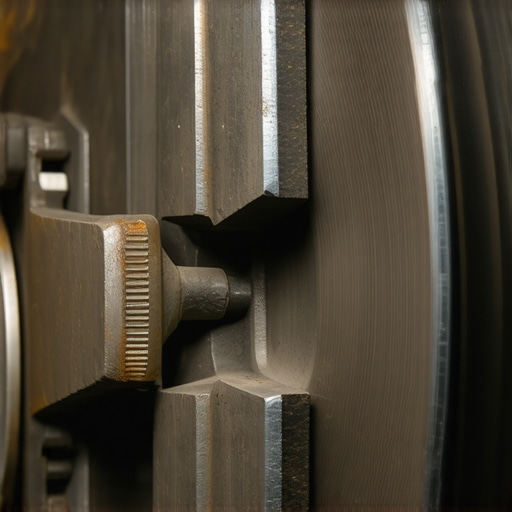
In the world of professional auto repair, precision is the difference between a lasting fix and a recurring headache. Many vehicle owners face the frustration of new brake pads wearing down unevenly just months after a service. While many technicians are quick to blame poor-quality friction materials, the root cause is frequently a neglected $20 component: the caliper slide pin. When these pins seize due to corrosion or improper lubrication, the floating caliper cannot center itself over the rotor, leading to a constant drag on one side and accelerated thermal degradation of the pad material.
A thorough brake service must go beyond the basic pad-slap. It requires a mechanical assessment of the entire kinetic assembly. Neglecting to rescue a seized brake caliper slide pin often leads to localized overheating, which can eventually result in brake rotors warping after only 5000 miles. Professional-grade maintenance involves stripping the hardware, cleaning the bores, and applying high-temperature silicone-based lubricants that can withstand the extreme duty cycles of modern traffic.
Choose the Right Grease or Risk Total Hardware Seizure
Expertise in a tune up or brake overhaul is often revealed in the choice of consumables. Using petroleum-based grease on slide pins is a common amateur error; these lubricants cause the rubber dust boots to swell and tear, allowing moisture to enter the assembly. According to technical standards established by organizations like SAE International, the thermal stability of the lubricant is paramount in maintaining the hydraulic-to-mechanical force distribution. Without this, you may find that your brake pedal goes to the floor after a long drive due to fluid boiling from a dragging pad.
Implementing brake service strategies that save money starts with this $20 preventive measure. A mechanic who prioritizes hardware integrity ensures that the caliper piston pressure is applied equally across the rotor face. This not only extends the life of the pads but also prevents the annoying brake squeal that most shops ignore until it becomes a costly failure.
Why Does My Brake Pedal Feel Spongy Despite Having New Pads?
When slide pins are stuck, the caliper frame flexes under hydraulic pressure to make contact with the rotor. This mechanical deflection is felt by the driver as a ‘spongy’ or ‘soft’ pedal, even if the system has been properly bled. It mimics the symptoms of air in the lines or a failing master cylinder, leading many to waste money on unnecessary parts. Before you commit to heavy repairs, ensure your technician performs a hub clean-up and slide pin verification to rule out hardware binding.
If you suspect your braking system is compromised by inconsistent hardware performance, consult our guide on how to choose a skilled mechanic you can trust to ensure your next service is handled with professional-level precision and care.
Stop Ignoring the Chemical Decay of Your Brake Fluid
While mechanical wear on pads and rotors is easy to spot, the chemical degradation of brake fluid is an invisible threat that many drivers—and even some general repair shops—routinely overlook. Brake fluid is hygroscopic, meaning it actively absorbs moisture from the atmosphere through microscopic pores in rubber hoses and the reservoir cap. Over time, this moisture lowers the fluid’s boiling point and triggers internal corrosion within the expensive Anti-lock Braking System (ABS) and master cylinder. Expert technicians utilize specialized test strips or electronic refractometers to measure the moisture content or copper parts-per-million, rather than relying on a visual inspection alone. For those performing their own checks, referring to the brake fluid color chart can provide a baseline, but remember that dark fluid is often a sign of advanced oxidation that has already begun to compromise internal seals.
According to the American Automobile Association (AAA), failing to flush brake fluid every two to three years can lead to the premature failure of the ABS modulator, a repair that frequently exceeds $1,500. This is why a premium brake service should always include a full system bleed to remove trapped contaminants. If you notice that your brake fluid level keeps dropping slowly, it may not just be a leak; it could be a symptom of extreme pad wear or an internal seal bypass that requires immediate professional auto repair attention.
Modern Braking Demands a Diagnostic Scanner, Not Just a Crowbar
The days of simply using a C-clamp to retract a brake piston are fading as Electronic Parking Brakes (EPB) become the industry standard. Attempting to force a rear caliper piston back on a modern vehicle without engaging ‘Service Mode’ can strip the internal plastic gears of the electric actuator, leading to a costly hardware replacement. A mechanic equipped with the 20-dollar scanner that every modern driver should own can safely command the ECU to retract the parking brake motor, ensuring the mechanical components are not stressed during the tune up or pad replacement process.
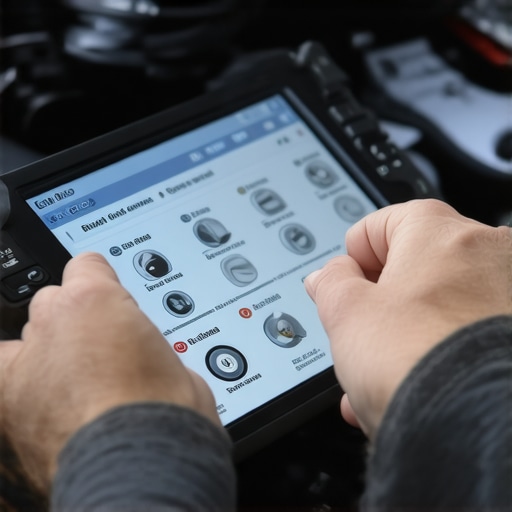
Precision in the workshop also extends to how the hydraulic system is managed during a bleed. To prevent pushing old, contaminated fluid backward into the delicate valves of the ABS unit, experts always open the bleeder screw before compressing the piston. Utilizing the 15-dollar brake bleeder bottle that makes DIY easy ensures that air is kept out of the lines while allowing the old fluid to exit the system cleanly, preserving the integrity of the hydraulic circuits.
Why is Your Modern ABS Unit Acting Like a Faulty Valve?
Internal ABS failures often manifest as a ‘pull’ to one side during hard braking or a pedal that feels inconsistent in its travel. This is rarely a fault of the brake pads themselves but is often caused by micro-debris or moisture-induced sludge settling in the tiny solenoid valves of the ABS hydraulic control unit. When these valves stick, they can no longer pulse the pressure effectively, leading to a loss of threshold braking performance. If you have ever wondered why your brake rotors rust overnight and then cause a pulsation the next morning, it is often due to the high metallic content in the rotor reacting with moisture, which is exacerbated if the calipers are not releasing pressure perfectly due to internal hydraulic restrictions.
Ensuring your vehicle stops safely requires a holistic view of the entire system, from the software in your dashboard to the grease on your slide pins. If you’re unsure whether your current technician is cutting corners, compare their approach to these 3 signs your mechanic found a real suspension problem and not just a dirty part to ensure you are getting the expert care your vehicle deserves. Have you checked your brake fluid’s clarity recently? Let us know in the comments if you’ve ever found a ‘mystery’ leak that turned out to be a simple maintenance oversight.
Don’t Blame the Rotor Until You Measure the Hub’s Lateral Runout
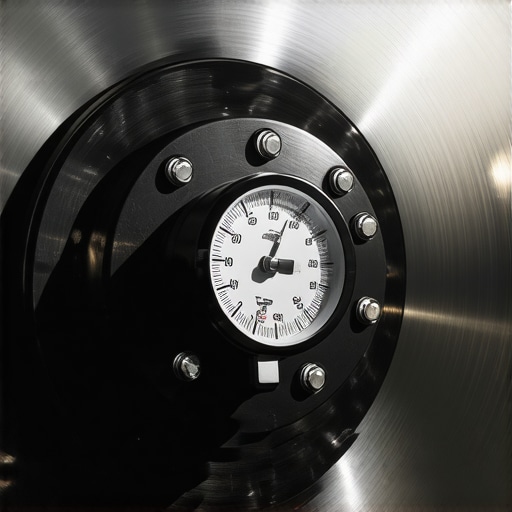
Many drivers complain about a pulsing pedal and immediately assume they have “warped” rotors. In reality, cast iron rotors rarely warp under street conditions; instead, they suffer from Disc Thickness Variation (DTV). This phenomenon is often triggered by lateral runout—a slight wobble in the rotor as it spins. Even a microscopic layer of rust on the hub face can tilt the rotor enough to cause uneven contact with the pads. A professional mechanic knows that cleaning the hub to bare metal and using a dial indicator to measure runout is the only way to ensure a vibration-free brake service. According to technical specifications from Brembo, lateral runout exceeding 0.05mm can lead to significant DTV over just a few thousand miles, rendering new parts useless.
Why High-Performance Ceramic Pads Might Be a Mistake for Your Daily Drive
During a routine tune up, the temptation to upgrade to ceramic or semi-metallic track pads is high. However, these materials require specific operating temperatures to achieve their intended coefficient of friction. If you primarily drive in stop-and-go traffic, these pads never reach their optimal heat range, which can lead to increased rotor wear and a frustrating lack of initial bite when you need it most. Expert auto repair involves matching the friction material to the driver’s environment rather than just the price tag. If you’ve ever noticed your brake pedal is hard to press in the morning, it might not be a booster fault, but rather a friction material that is too cold or too aggressive for low-speed engagement.
Does an Intermittent ABS Light Mean Your Braking Force is Compromised?
When an ABS warning light flickers, the vehicle’s electronic control unit (ECU) often defaults to a standard hydraulic bias, disabling the sophisticated pulse-modulation that prevents wheel lock-up during an emergency. This means that while you still have manual brakes, you no longer have the electronic safety net that allows for steering under heavy deceleration. Often, the culprit isn’t the expensive hydraulic pump but a simple wheel speed sensor fouled by metallic debris or a cracked tone ring. If you are experiencing grinding noise when braking at low speeds, the ABS might be misfiring because it incorrectly perceives a wheel is locking up. Identifying these electrical nuances is a hallmark of high-level diagnostic auto repair that saves owners from replacing entire ABS modules unnecessarily.
The Hidden Link Between Wheel Bearing Play and Inconsistent Pedal Travel
A phenomenon known as piston knock-back occurs when a failing wheel bearing allows the hub—and consequently the rotor—to tilt slightly during cornering. This mechanical tilt physically pushes the brake pistons back into their bores further than intended. The next time you apply the brakes, the first inch of pedal travel is essentially wasted just moving the pistons back into contact with the rotor face. This creates a terrifying momentary loss of braking response that drivers often mistake for air in the lines. Ensuring your mechanic checks for hub assembly play during every tune up can prevent this dangerous mechanical drift. Have you ever felt your pedal get longer after a sharp turn? It’s time to look beyond the pads and inspect the structural integrity of the spindle and bearing housing. Check out our deep dive on reasons your car pulls to one side under braking to see if your suspension geometry is fighting your calipers. Proper torque on the axle nut is just as critical as the pads themselves, as even a slight looseness can translate into a massive headache at the pedal.
Stop Blaming the Caliper for a Collapsing Brake Hose
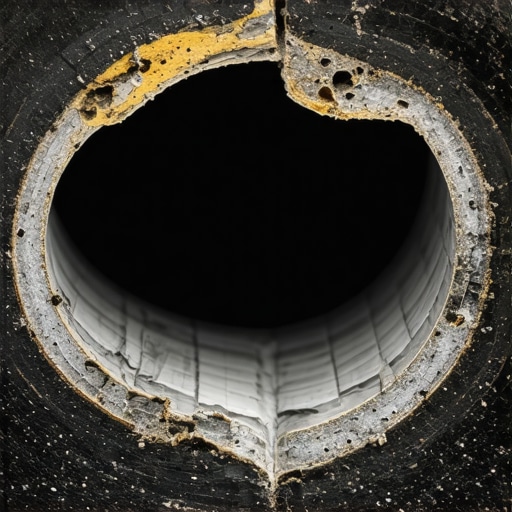
Experienced technicians know that a dragging brake isn’t always a seized piston or stuck slide pin. One of the most elusive failures in an auto repair shop is the internal delamination of a rubber brake hose. Over years of thermal cycling, the inner lining of the hose can collapse or tear, creating a physical flap that acts as a one-way check valve. When you press the pedal, 1,000+ PSI of hydraulic pressure forces fluid past the obstruction to engage the brakes. However, when you release the pedal, the low-pressure return flow is trapped behind the flap, keeping the pads clamped against the rotor. This leads to extreme heat, a ‘pull’ toward the affected side, and the rapid destruction of even the highest-quality pads. If you find a single rotor glowing red while the others remain cool, look beyond the iron and inspect the flexibility and internal integrity of the lines.
Build a Stable Transfer Layer to Stop the Squeal
A common complaint after a brake service is a persistent high-pitched squeal, even when premium parts are used. Often, this is not a hardware defect but a failure to establish a proper transfer layer during the ‘bedding-in’ process. Modern friction materials—especially ceramic and sophisticated semi-metallic compounds—rely on an adherent friction mechanism. This requires a thin, uniform layer of pad material to be chemically bonded to the rotor surface. Without this layer, the pads experience abrasive friction, which generates harmonic vibrations we hear as noise. A professional mechanic will perform a series of controlled decelerations to heat the pads and ‘season’ the rotors. Skipping this step often results in glazed pads and inconsistent stopping power, regardless of how much you spent on the tune up.
Can a Faulty Vacuum Booster Mimic a Spongy Master Cylinder?
Yes, and misdiagnosing this can be a very expensive mistake. While a spongy pedal is typically associated with air in the lines or an internal leak in the master cylinder, a failing vacuum booster or a leaking check valve can create a similar lack of confidence in the pedal feel. If the booster diaphragm has a micro-tear, the assist becomes inconsistent, sometimes requiring massive effort and other times feeling deceptively light. According to safety data and technical guidelines from the National Highway Traffic Safety Administration (NHTSA), vacuum-related failures are a critical check point in hydraulic system diagnostics. A quick way to test this during your next auto repair check is to pump the brakes with the engine off to bleed the vacuum, then hold the pedal while starting the engine; a healthy booster should cause the pedal to drop slightly as the assist engages.
The Hub Face is Your Foundation for a Vibration-Free Ride
Precision in a brake service doesn’t stop at the rotor. The mating surface where the rotor sits against the wheel hub must be perfectly clean. Even a few thousandths of an inch of rust or scale on the hub can cause the rotor to sit slightly askew. As the rotor spins, this misalignment creates a ‘wobble’ that eventually causes the pads to strike the rotor unevenly, leading to Disc Thickness Variation (DTV). High-level shops use specialized hub-cleaning tools to strip the surface to bare metal before applying a microscopic layer of high-temp anti-seize. This attention to detail prevents the ‘warped rotor’ feeling that often returns just weeks after a lower-quality repair. Have you ever had a vibration return shortly after a repair? It’s likely the hub wasn’t prepped correctly. Share your experiences in the comments below, and let’s discuss how to ensure your vehicle gets the precision it deserves.
Stop Replacing Parts and Start Inspecting the Caliper Slides
In the world of professional auto repair, precision is the difference between a lasting fix and a recurring headache. Many vehicle owners face the frustration of new brake pads wearing down unevenly just months after a service. While many technicians are quick to blame poor-quality friction materials, the root cause is frequently a neglected $20 component: the caliper slide pin. When these pins seize due to corrosion or improper lubrication, the floating caliper cannot center itself over the rotor, leading to a constant drag on one side and accelerated thermal degradation of the pad material.
A thorough brake service must go beyond the basic pad-slap. It requires a mechanical assessment of the entire kinetic assembly. Neglecting to rescue a seized brake caliper slide pin often leads to localized overheating, which can eventually result in brake rotors warping after only 5000 miles. Professional-grade maintenance involves stripping the hardware, cleaning the bores, and applying high-temperature silicone-based lubricants that can withstand the extreme duty cycles of modern traffic.
Choose the Right Grease or Risk Total Hardware Seizure
Expertise in a tune up or brake overhaul is often revealed in the choice of consumables. Using petroleum-based grease on slide pins is a common amateur error; these lubricants cause the rubber dust boots to swell and tear, allowing moisture to enter the assembly. According to technical standards established by organizations like SAE International, the thermal stability of the lubricant is paramount in maintaining the hydraulic-to-mechanical force distribution. Without this, you may find that your brake pedal goes to the floor after a long drive due to fluid boiling from a dragging pad.
Implementing brake service strategies that save money starts with this $20 preventive measure. A mechanic who prioritizes hardware integrity ensures that the caliper piston pressure is applied equally across the rotor face. This not only extends the life of the pads but also prevents the annoying brake squeal that most shops ignore until it becomes a costly failure.
Why Does My Brake Pedal Feel Spongy Despite Having New Pads?
When slide pins are stuck, the caliper frame flexes under hydraulic pressure to make contact with the rotor. This mechanical deflection is felt by the driver as a ‘spongy’ or ‘soft’ pedal, even if the system has been properly bled. It mimics the symptoms of air in the lines or a failing master cylinder, leading many to waste money on unnecessary parts. Before you commit to heavy repairs, ensure your technician performs a hub clean-up and slide pin verification to rule out hardware binding.
If you suspect your braking system is compromised by inconsistent hardware performance, consult our guide on how to choose a skilled mechanic you can trust to ensure your next service is handled with professional-level precision and care.
Stop Ignoring the Chemical Decay of Your Brake Fluid
While mechanical wear on pads and rotors is easy to spot, the chemical degradation of brake fluid is an invisible threat that many drivers—and even some general repair shops—routinely overlook. Brake fluid is hygroscopic, meaning it actively absorbs moisture from the atmosphere through microscopic pores in rubber hoses and the reservoir cap. Over time, this moisture lowers the fluid’s boiling point and triggers internal corrosion within the expensive Anti-lock Braking System (ABS) and master cylinder. Expert technicians utilize specialized test strips or electronic refractometers to measure the moisture content or copper parts-per-million, rather than relying on a visual inspection alone. For those performing their own checks, referring to the brake fluid color chart can provide a baseline, but remember that dark fluid is often a sign of advanced oxidation that has already begun to compromise internal seals.
According to the American Automobile Association (AAA), failing to flush brake fluid every two to three years can lead to the premature failure of the ABS modulator, a repair that frequently exceeds $1,500. This is why a premium brake service should always include a full system bleed to remove trapped contaminants. If you notice that your brake fluid level keeps dropping slowly, it may not just be a leak; it could be a symptom of extreme pad wear or an internal seal bypass that requires immediate professional auto repair attention.
Modern Braking Demands a Diagnostic Scanner, Not Just a Crowbar
The days of simply using a C-clamp to retract a brake piston are fading as Electronic Parking Brakes (EPB) become the industry standard. Attempting to force a rear caliper piston back on a modern vehicle without engaging ‘Service Mode’ can strip the internal plastic gears of the electric actuator, leading to a costly hardware replacement. A mechanic equipped with the 20-dollar scanner that every modern driver should own can safely command the ECU to retract the parking brake motor, ensuring the mechanical components are not stressed during the tune up or pad replacement process.
Precision in the workshop also extends to how the hydraulic system is managed during a bleed. To prevent pushing old, contaminated fluid backward into the delicate valves of the ABS unit, experts always open the bleeder screw before compressing the piston. Utilizing the 15-dollar brake bleeder bottle that makes DIY easy ensures that air is kept out of the lines while allowing the old fluid to exit the system cleanly, preserving the integrity of the hydraulic circuits.
Why is Your Modern ABS Unit Acting Like a Faulty Valve?
Internal ABS failures often manifest as a ‘pull’ to one side during hard braking or a pedal that feels inconsistent in its travel. This is rarely a fault of the brake pads themselves but is often caused by micro-debris or moisture-induced sludge settling in the tiny solenoid valves of the ABS hydraulic control unit. When these valves stick, they can no longer pulse the pressure effectively, leading to a loss of threshold braking performance. If you have ever wondered why your brake rotors rust overnight and then cause a pulsation the next morning, it is often due to the high metallic content in the rotor reacting with moisture, which is exacerbated if the calipers are not releasing pressure perfectly due to internal hydraulic restrictions.
Ensuring your vehicle stops safely requires a holistic view of the entire system, from the software in your dashboard to the grease on your slide pins. If you’re unsure whether your current technician is cutting corners, compare their approach to these 3 signs your mechanic found a real suspension problem and not just a dirty part to ensure you are getting the expert care your vehicle deserves. Have you checked your brake fluid’s clarity recently? Let us know in the comments if you’ve ever found a ‘mystery’ leak that turned out to be a simple maintenance oversight.
Don’t Blame the Rotor Until You Measure the Hub’s Lateral Runout
Many drivers complain about a pulsing pedal and immediately assume they have “warped” rotors. In reality, cast iron rotors rarely warp under street conditions; instead, they suffer from Disc Thickness Variation (DTV). This phenomenon is often triggered by lateral runout—a slight wobble in the rotor as it spins. Even a microscopic layer of rust on the hub face can tilt the rotor enough to cause uneven contact with the pads. A professional mechanic knows that cleaning the hub to bare metal and using a dial indicator to measure runout is the only way to ensure a vibration-free brake service. According to technical specifications from Brembo, lateral runout exceeding 0.05mm can lead to significant DTV over just a few thousand miles, rendering new parts useless.
Why High-Performance Ceramic Pads Might Be a Mistake for Your Daily Drive
During a routine tune up, the temptation to upgrade to ceramic or semi-metallic track pads is high. However, these materials require specific operating temperatures to achieve their intended coefficient of friction. If you primarily drive in stop-and-go traffic, these pads never reach their optimal heat range, which can lead to increased rotor wear and a frustrating lack of initial bite when you need it most. Expert auto repair involves matching the friction material to the driver’s environment rather than just the price tag. If you’ve ever noticed your brake pedal is hard to press in the morning, it might not be a booster fault, but rather a friction material that is too cold or too aggressive for low-speed engagement.
Does an Intermittent ABS Light Mean Your Braking Force is Compromised?
When an ABS warning light flickers, the vehicle’s electronic control unit (ECU) often defaults to a standard hydraulic bias, disabling the sophisticated pulse-modulation that prevents wheel lock-up during an emergency. This means that while you still have manual brakes, you no longer have the electronic safety net that allows for steering under heavy deceleration. Often, the culprit isn’t the expensive hydraulic pump but a simple wheel speed sensor fouled by metallic debris or a cracked tone ring. If you are experiencing grinding noise when braking at low speeds, the ABS might be misfiring because it incorrectly perceives a wheel is locking up. Identifying these electrical nuances is a hallmark of high-level diagnostic auto repair that saves owners from replacing entire ABS modules unnecessarily.
The Hidden Link Between Wheel Bearing Play and Inconsistent Pedal Travel
A phenomenon known as piston knock-back occurs when a failing wheel bearing allows the hub—and consequently the rotor—to tilt slightly during cornering. This mechanical tilt physically pushes the brake pistons back into their bores further than intended. The next time you apply the brakes, the first inch of pedal travel is essentially wasted just moving the pistons back into contact with the rotor face. This creates a terrifying momentary loss of braking response that drivers often mistake for air in the lines. Ensuring your mechanic checks for hub assembly play during every tune up can prevent this dangerous mechanical drift. Have you ever felt your pedal get longer after a sharp turn? It’s time to look beyond the pads and inspect the structural integrity of the spindle and bearing housing. Check out our deep dive on reasons your car pulls to one side under braking to see if your suspension geometry is fighting your calipers. Proper torque on the axle nut is just as critical as the pads themselves, as even a slight looseness can translate into a massive headache at the pedal.
Stop Blaming the Caliper for a Collapsing Brake Hose
Experienced technicians know that a dragging brake isn’t always a seized piston or stuck slide pin. One of the most elusive failures in an auto repair shop is the internal delamination of a rubber brake hose. Over years of thermal cycling, the inner lining of the hose can collapse or tear, creating a physical flap that acts as a one-way check valve. When you press the pedal, 1,000+ PSI of hydraulic pressure forces fluid past the obstruction to engage the brakes. However, when you release the pedal, the low-pressure return flow is trapped behind the flap, keeping the pads clamped against the rotor. This leads to extreme heat, a ‘pull’ toward the affected side, and the rapid destruction of even the highest-quality pads. If you find a single rotor glowing red while the others remain cool, look beyond the iron and inspect the flexibility and internal integrity of the lines.
Build a Stable Transfer Layer to Stop the Squeal
A common complaint after a brake service is a persistent high-pitched squeal, even when premium parts are used. Often, this is not a hardware defect but a failure to establish a proper transfer layer during the ‘bedding-in’ process. Modern friction materials—especially ceramic and sophisticated semi-metallic compounds—rely on an adherent friction mechanism. This requires a thin, uniform layer of pad material to be chemically bonded to the rotor surface. Without this layer, the pads experience abrasive friction, which generates harmonic vibrations we hear as noise. A professional mechanic will perform a series of controlled decelerations to heat the pads and ‘season’ the rotors. Skipping this step often results in glazed pads and inconsistent stopping power, regardless of how much you spent on the tune up.
Can a Faulty Vacuum Booster Mimic a Spongy Master Cylinder?
Yes, and misdiagnosing this can be a very expensive mistake. While a spongy pedal is typically associated with air in the lines or an internal leak in the master cylinder, a failing vacuum booster or a leaking check valve can create a similar lack of confidence in the pedal feel. If the booster diaphragm has a micro-tear, the assist becomes inconsistent, sometimes requiring massive effort and other times feeling deceptively light. According to safety data and technical guidelines from the National Highway Traffic Safety Administration (NHTSA), vacuum-related failures are a critical check point in hydraulic system diagnostics. A quick way to test this during your next auto repair check is to pump the brakes with the engine off to bleed the vacuum, then hold the pedal while starting the engine; a healthy booster should cause the pedal to drop slightly as the assist engages.
The Hub Face is Your Foundation for a Vibration-Free Ride
Precision in a brake service doesn’t stop at the rotor. The mating surface where the rotor sits against the wheel hub must be perfectly clean. Even a few thousandths of an inch of rust or scale on the hub can cause the rotor to sit slightly askew. As the rotor spins, this misalignment creates a ‘wobble’ that eventually causes the pads to strike the rotor unevenly, leading to Disc Thickness Variation (DTV). High-level shops use specialized hub-cleaning tools to strip the surface to bare metal before applying a microscopic layer of high-temp anti-seize. This attention to detail prevents the ‘warped rotor’ feeling that often returns just weeks after a lower-quality repair. Have you ever had a vibration return shortly after a repair? It’s likely the hub wasn’t prepped correctly. Share your experiences in the comments below, and let’s discuss how to ensure your vehicle gets the precision it deserves.
Expert Insights & Advanced Considerations
Use Infrared Pyrometers to Spot Hidden Drag
A professional mechanic knows that visual inspections have limits. By using an infrared thermometer after a test drive, you can compare rotor temperatures across the axle. A discrepancy of more than 20 degrees Fahrenheit often points to a sticking caliper or a collapsing hose that hasn’t yet caused a noticeable pull but is already compromising your brake service longevity.
Copper Content Tells the Truth About Your Fluid
While many focus on moisture, copper levels in the brake fluid are the leading indicator of internal corrosion in the ABS valves. When levels exceed 200 ppm, the sacrificial layers in the brake lines are gone. Proactive auto repair means replacing fluid based on these chemical markers to prevent a $2,000 hydraulic control unit failure during your next tune up.
Why Bench Bleeding is Non-Negotiable for Master Cylinders
Air trapped in the bore of a new master cylinder is nearly impossible to purge through the calipers alone. Experts always perform a bench bleed to ensure the primary and secondary pistons are fully primed. Skipping this leads to a permanent spongy pedal that no amount of standard bleeding can fix.
Curated Expert Resources
ASE Certification Standards: The industry gold standard for verifying that your technician possesses the specialized knowledge required for complex hydraulic systems.
NHTSA Safety Portal: An essential database for tracking manufacturer recalls and safety defects related to braking hardware and electronic stability control.
I-CAR Technical Specs: Detailed structural and mechanical data used by top-tier shops to ensure every component meets original equipment manufacturer tolerances.
Final Expert Perspective
True mastery of the braking system requires moving beyond the parts changer mentality and embracing a diagnostic-first approach. Whether you are performing a routine tune up or a comprehensive auto repair, success lies in the details—the cleanliness of the hub, the chemistry of the fluid, and the precision of the hardware lubrication. A high-quality brake service is an investment in safety that pays dividends in vehicle longevity and driver confidence. If you want to ensure your vehicle is handled with this level of care, consult our resource on how to choose a skilled mechanic you can trust to ensure every service is handled with professional-level precision. We invite you to share your toughest braking puzzles or contact us for specialized technical advice.