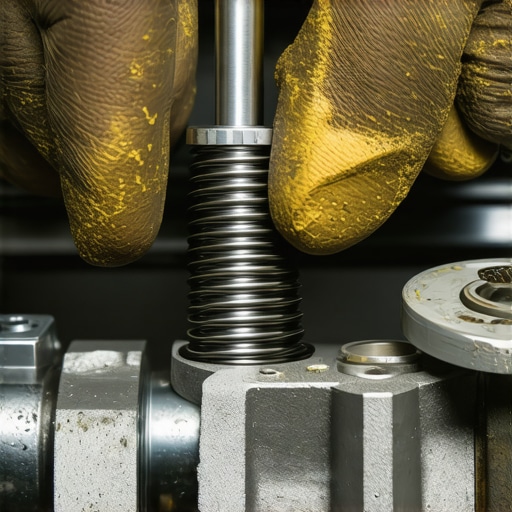
When a modern automatic transmission begins to slam into second gear with the force of a minor collision, the instinctual reaction of many drivers—and unfortunately, some less-than-scrupulous shops—is to condemn the entire unit to a costly rebuild. However, diagnostic precision often reveals that the culprit isn’t a burnt-out clutch pack or a failing planetary gear set, but rather a simple mechanical fatigue within the valve body hydraulics. High-level transmission diagnostics frequently point toward the 1-2 accumulator, a component designed to cushion the application of fluid pressure during gear changes. When the internal spring snaps, that cushioning vanishes, leading to an immediate and violent engagement that feels far more catastrophic than it truly is.
Don’t Junk the Gearbox Just Because of a Harsh 1-2 Shift
In the world of professional auto repair, distinguishing between a mechanical failure and a hydraulic regulation issue is the mark of a true expert. The 1-2 accumulator acts as a temporary reservoir; as the shift solenoid opens, fluid fills this chamber against spring tension to slow down the shift. If you notice the real reason your automatic shifter feels notchy or stuck or shifting with extreme prejudice, you are likely feeling the ‘hard hit’ of unregulated line pressure. This is particularly common in GM 4L60E units, where the stock plastic pistons and steel springs are notorious for fatigue over 100,000 miles. Replacing these with an upgraded aluminum piston and a heavy-duty spring kit can restore factory-smooth operation for less than the cost of a tank of gas.
Can a Broken Spring Mimic a Total Transmission Failure?
Yes, and this is where many DIYers lose heart. A broken accumulator spring creates a ‘bang’ shift that can vibrate the entire chassis, mimicking the symptoms of a failed torque converter or a shredded sun gear. However, a mechanic tips diagnosing common auto problems would suggest checking the pan for debris first. If the fluid is clean but the shift is hard, the issue is almost certainly a pressure regulation fault. According to technical data from SAE International, precise modulation of shift timing is dependent on the linear compression of these springs; once the spring is in multiple pieces, the ‘linear’ aspect disappears, and the transmission defaults to maximum pressure for that circuit.
Stop Paying for Overhauls You Don’t Actually Need
Before you commit to a multi-thousand dollar invoice, insist on a pressure test and an inspection of the accumulator housing. It is a common ‘upsell’ in the industry to suggest a full tune up or a total rebuild when a simple $18 part is the bottleneck. If your vehicle is also due for other maintenance, such as a brake service, consolidating these repairs can save on labor costs. Expert-level maintenance requires looking past the symptoms to find the specific component failure, rather than replacing the whole system out of caution. If you are unsure about the diagnosis, it is vital to choose a skilled mechanic you can trust who understands the specific hydraulic architecture of your vehicle’s transmission. Have you experienced a sudden change in how your vehicle handles gear transitions? Join the discussion below or consult our technical guides to see if your car qualifies for this simple fix.
Moving beyond the physical springs and pistons, we must address the invisible instructions sent by the Transmission Control Module (TCM). Modern gearboxes are no longer purely hydraulic; they are electro-hydraulic hybrids where software-driven solenoids dictate every movement of the fluid. Often, what feels like a catastrophic mechanical failure is actually a software adaptation gone wrong or a ‘lazy’ solenoid. For instance, you might find how to tell if your transmission slip is actually a 15 electrical issue by simply checking the wiring harness for corrosion. When the TCM detects internal wear, it may boost line pressure to compensate, which eventually leads to the very harsh shifts we associate with broken parts. Relying on the 20 scanner that every modern driver should own allows you to monitor these ‘adaptation values’ in real-time, giving you a window into the transmission’s health before the first wrench is ever turned.
Is Your Transmission Slipping or Is the Computer Just Playing Safe?
Many drivers mistake ‘limp mode’ for a total mechanical meltdown. Limp mode is a protective state where the computer locks the transmission into second or third gear to prevent further damage from high heat or erratic sensor data. An expert knows that if your car suddenly refuses to shift into higher gears, you should look for sensor malfunctions rather than mechanical debris. This is particularly relevant if you notice 3 reasons your transmission wont shift into overdrive, which often involves a faulty coolant temperature sensor or a malfunctioning lock-up solenoid.  According to technical insights from the Automatic Transmission Rebuilders Association (ATRA), heat is the primary catalyst for nearly 90% of all automatic transmission failures. By monitoring the fluid temperature through your OBD2 port, you can identify a failing cooling circuit long before it fries your friction plates.
Exposing the Lifetime Fluid Fallacy
One of the most dangerous marketing terms in the automotive industry is ‘lifetime fluid.’ In professional circles, we know that no lubricant is eternal. Over time, the heat-cycles and friction material suspended in the oil turn it into an abrasive slurry. If you notice why your transmission fluid is turning black, the protective additives have already depleted, leaving your valve body vulnerable to sticking valves and clogged passages. This degradation is often the root cause when 3 reasons your transmission jerks into reverse become a daily reality. Investigating the dirty secret about lifetime transmission fluid reveals that manufacturers define ‘lifetime’ as the duration of the powertrain warranty—usually 60,000 to 100,000 miles—not the actual functional life of the vehicle. To truly extend the life of your gearbox, a fluid exchange every 40,000 miles is the cheapest insurance policy you can buy. Have you checked the color of your transmission fluid lately? Share your findings in the comments or read our guide on interpreting fluid health to avoid an unnecessary shop visit.
Moving beyond the interval, we must respect the environment in which the fluid operates. Thermal management is the silent guardian of the clutch packs. When you are towing or driving in stop-and-go traffic, the temperature inside the torque converter can spike well above 220 degrees Fahrenheit—the ‘danger zone’ where transmission fluid begins to oxidize and lose its lubricating properties. 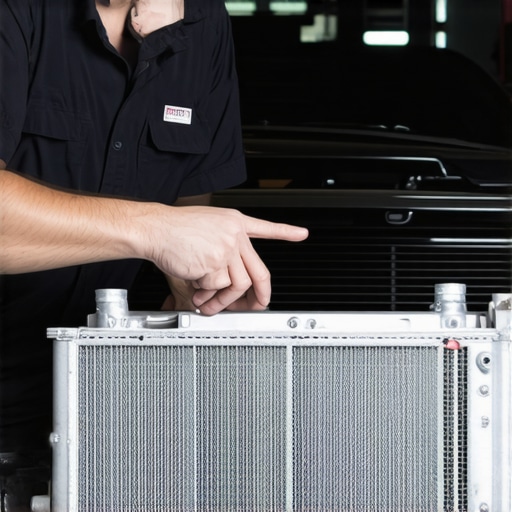 To combat this, many enthusiasts install an auxiliary transmission cooler. This isn’t just an upgrade for heavy-duty trucks; it is a life-extender for any vehicle subjected to extreme climates. By bypassing the standard heat exchanger in the radiator, you isolate the transmission from the engine’s coolant temperature, often dropping the operating heat by 30 degrees or more.
Does Your Radiator Hold the Secret to a Healthy Gearbox?
In many modern vehicles, the transmission cooler is actually a small tank submerged within the radiator. A common but catastrophic failure occurs when the internal walls of this tank corrode, leading to a ‘strawberry milkshake’—a mixture of coolant and transmission fluid. This slurry is lethal to friction material, causing the clutch linings to dissolve almost instantly. If you notice your engine coolant looks oily or your transmission fluid looks like a pink froth, stop driving immediately. According to technical bulletins from ZF Friedrichshafen AG, even a 0.5% water contamination in the fluid is enough to cause permanent damage to the mechatronic unit and clutch plates.
Chemical Warfare Inside Your Valve Body
It isn’t just about keeping things cool; it is about the specific chemistry required for smooth engagement. Modern transmissions require highly specific friction modifiers that allow for a ‘controlled slip’ during the lock-up phase of the torque converter. If you use a generic ‘all-vehicle’ fluid, you risk a condition known as ‘converter shudder,’ which feels like you are driving over rumble strips. This isn’t a mechanical failure yet, but the vibration is a sign that the friction material is grabbing and releasing inconsistently. Have you noticed a strange vibration between 40 and 60 mph? Don’t assume the worst; it might just be time for a specialized fluid flush with the correct OEM-spec lubricant.
Why a Simple Filter Change Outperforms a Machine Flush
Many quick-lube shops offer a machine-based ‘power flush’ that forces fluid through the system. However, transmission experts often prefer a traditional pan-drop and filter replacement. A power flush can dislodge sludge and metal shavings from the bottom of the pan and force them directly into the sensitive valves of the valve body, potentially turning a healthy transmission into a paperweight. By dropping the pan, you can inspect the magnets for ‘fur’—the fine metal particles that tell the story of your transmission’s wear. If the magnet has large chunks or shiny flakes, no amount of new fluid will save the internal components. As we look deeper into the architecture of the valve body itself, we find that…
…the valve body is a labyrinth of precision-machined channels where the real magic—and the most subtle failures—of an automatic transmission occur. While most technicians focus on the clutch packs, true hydraulic experts look for the microscopic wear within the valve bores. Over millions of cycles, the hardened steel valves oscillate within the softer aluminum casting, eventually creating a path for high-pressure fluid to leak into adjacent circuits. This ‘cross-leakage’ is the phantom behind intermittent shift flares and hunting for gears during light acceleration. If you have already addressed the 1-2 accumulator and the fluid looks pristine, you are likely dealing with bore wear that requires more than just a component swap.
Bore Wear Is the Silent Killer of Line Pressure
When the bore of a pressure regulator valve becomes egg-shaped or scarred, the transmission loses its ability to maintain consistent clamping force. This isn’t something you can see with the naked eye; it requires specialized diagnostic equipment to verify. 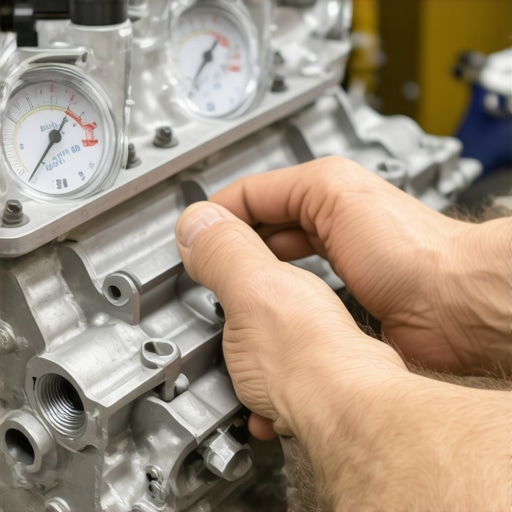 In professional rebuild environments, we utilize vacuum testing to measure the seal between the valve and its bore. If the vacuum gauge drops below a specific threshold, it confirms that the hydraulic integrity is compromised. Addressing this often involves reaming the bore and installing an oversized valve kit. According to the technical experts at Sonnax Industries, these specialized sleeves and valves can effectively ‘zero-out’ the wear, returning the valve body to a better-than-factory state and preventing the premature burn-up of expensive internal clutches.
Can Vacuum Testing Save Your Valve Body from the Scrap Heap?
Absolutely, and it is the only way to avoid the ‘guess and check’ method that plagues amateur repairs. Vacuum testing allows you to isolate a specific circuit—such as the TCC (Torque Converter Clutch) limit valve or the primary pressure regulator—without needing to bench-test the entire unit. If you find a leak, you can fix just that specific bore rather than buying a $600 remanufactured valve body. High-level mechanic tips diagnosing common auto problems frequently emphasize this surgical approach to repair. If your car is experiencing a ‘soft’ shift or a shuddering sensation when the torque converter engages, don’t rush to buy a new gearbox; the solution is likely hidden within these microscopic tolerances.
Stop Chasing Ghosts and Start Testing Circuits
Modern transmissions also rely on Pulse Width Modulation (PWM) solenoids to feather the application of fluid. Unlike older ‘on-off’ solenoids, PWM units cycle hundreds of times per second. They are prone to ‘lazy’ behavior when debris or heat causes the internal pintle to drag. This creates a disconnect between what the TCM commands and what the transmission actually does. Before you assume you need a professional auto repair, check the resistance of your solenoids with a high-quality multimeter. If the resistance is out of spec by even a few ohms, the timing of the shift will be ruined. Remember, a tune up for your car should include a check of the electronic control systems that manage your powertrain. Have you scanned your vehicle for ‘pending’ codes that haven’t yet triggered a check engine light? Leave a comment below with your specific symptoms, and let’s figure out if your transmission issues are hydraulic, electronic, or simply a matter of worn-out software adaptations.
Expert Insights & Advanced Considerations
Reset the Computer After Mechanical Repairs
Replacing a physically damaged component like a 1-2 accumulator spring or a solenoid is only half the battle. Your vehicle’s Transmission Control Module (TCM) has likely ‘learned’ to compensate for the failure by altering internal line pressure and shift timing. To ensure the new hardware functions correctly, you must perform a ‘Fast Learn’ or adaptive reset using the 20 scanner that every modern driver should own. Failing to clear these adaptive values can lead to persistent shift quality issues even with perfect mechanical parts.
Read the Metal to Predict the Future
When you perform a pan service, the debris on the magnets acts as a forensic record of your gearbox’s health. Fine, dark sludge is typical clutch wear, but shiny silver flakes or brass ‘glitter’ signal that a planetary gear or thrust washer is starting to disintegrate. This is a crucial step in mechanic tips diagnosing common auto problems because it allows you to decide whether a valve body fix is a permanent solution or just a temporary bandage on a dying unit.
Respect the Fluid Chemistry
Modern transmissions are incredibly sensitive to friction modifiers. Using a ‘universal’ fluid instead of the manufacturer-specified lubricant can lead to torque converter shudder or glazed clutch plates. If you have noticed why your transmission fluid is turning black, it is a sign that the thermal and chemical properties have been depleted, making a high-quality fluid exchange non-negotiable for system longevity.
Curated Expert Resources
Sonnax Technical Library – This is the industry gold standard for understanding hydraulic flow, vacuum testing procedures, and valve body wear patterns. It is an essential resource for those moving beyond basic part swapping.
ATRA (Automatic Transmission Rebuilders Association) – ATRA provides detailed technical bulletins and seminar materials that cover specific failure points and updated repair procedures for modern high-speed gearboxes.
ZF Service Information Portal – Vital for owners of European vehicles, this portal offers precise fluid specifications and torque sequences directly from the manufacturer of some of the world’s most advanced transmissions.
Final Expert Perspective
Mastering transmission health requires moving past the fear of a ‘bang’ shift and looking into the precision hydraulics and electronics that govern modern gearboxes. By focusing on surgical repairs like accumulator updates and bore sleeving, you avoid the unnecessary costs of a total overhaul. Whether you are attempting a DIY fix or need to choose a skilled mechanic you can trust, having a firm grasp of these hydraulic nuances is your best defense against predatory repair quotes. Effective auto repair is always rooted in diagnostic data rather than guesswork. Have these insights changed how you view your vehicle’s performance? We invite you to share your technical findings or diagnostic questions in the community discussion below.