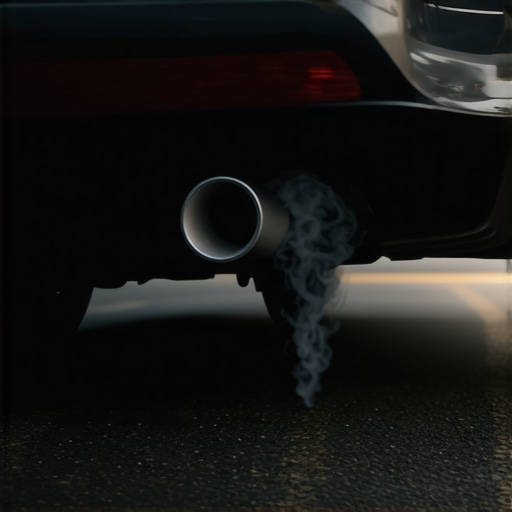
The olfactory sensation of hydrogen sulfide—more commonly recognized as the scent of rotten eggs—emanating from a vehicle’s exhaust is a diagnostic red flag that transcends simple aesthetic discomfort. From a professional automotive engineering perspective, this odor signifies a failure in the chemical reduction-oxidation (redox) process within the catalytic converter. While many drivers immediately fear a massive auto repair bill, a seasoned mechanic knows that the sulfur smell is often a secondary symptom of a primary combustion failure. Effectively, the catalyst is being overwhelmed by unburned fuel, leading to an exothermic reaction that breaks down the ceramic substrate and releases trapped sulfur compounds into the atmosphere. This chemical imbalance is rarely an isolated incident and typically points toward a deeper systemic issue within the engine management loop.
Why Sulfur Escapes Your Tailpipe During Incomplete Combustion
In a perfectly tuned internal combustion engine, the catalytic converter transforms harmful gases into less toxic substances. Hydrogen sulfide (H2S) is a natural byproduct of the trace amounts of sulfur found in gasoline. Under normal operating conditions, the precious metals inside the converter—platinum, palladium, and rhodium—oxidize this H2S into odorless sulfur dioxide (SO2). When your car undergoes a comprehensive tune up, technicians ensure the air-fuel ratio is stoichiometric, preventing the converter from becoming poisoned by excess hydrocarbons. However, if the fuel mixture is too rich, the converter lacks the oxygen required to complete the conversion, resulting in that pungent egg-like smell. Experienced professionals provide mechanic tips diagnosing common auto problems to identify if the sensor feedback loop is compromised before the hardware fails entirely. Thermal stress not only ruins the catalyst but also increases backpressure, which can lead to catastrophic engine failure if left unaddressed. [IMAGE_PLACEHOLDER]
Solve the Fuel Trim Imbalance Before Replacing the Catalyst
A common pitfall in modern auto repair is treating the symptom rather than the disease. Replacing a sulfur-smelling catalytic converter without addressing the engine’s management system is a guaranteed way to destroy the new part within weeks. High-trust industry research, such as findings from the Society of Automotive Engineers (SAE), confirms that thermal degradation is frequently caused by upstream failures that force the engine into a rich-running condition. For instance, a leaking fuel pressure regulator or a stuck-open injector will flood the exhaust with raw fuel. This fuel then ignites inside the catalyst, driving temperatures well above the 1,200°F operating threshold. To prevent this, a proactive tune up should include a look at long-term fuel trims and oxygen sensor responsiveness. Unlike a standard brake service, which is a mechanical wear-and-tear fix, exhaust diagnostics require complex electronic analysis and real-time data logging.
Could a Faulty Fuel Injector Be Killing Your Engine Performance?
Yes, and it is more common than most DIYers realize. When a fuel injector fails to atomize gasoline properly, the resulting heavy fuel droplets do not burn completely during the power stroke. This unburned fuel travels down the exhaust manifold, where it coats the catalytic substrate. You can learn how to diagnose a bad fuel injector at home using an ohmmeter or a stethoscope, potentially saving yourself thousands in unnecessary exhaust replacements. If you notice a drop in MPG alongside the sulfur smell, the engine’s management system is likely trying to compensate for a misfire or a sensor lag. If you are experiencing strange odors or performance lags, consult with an expert technician to perform a full system scan rather than just replacing parts blindly. We invite you to share your diagnostic findings with our community of specialists to help others refine their troubleshooting process.
Stop Blaming the Gas Tank for Vacuum-Driven Over-Fueling
Often, a professional technician will find that a persistent sulfur odor is actually caused by a ruptured fuel pressure regulator diaphragm. When this small rubber component fails, raw fuel is literally sucked through the vacuum line directly into the intake manifold, bypassing the injectors entirely. This creates an uncontrollably rich condition that no engine computer can fully compensate for. If you are hunting for the source of this imbalance, you can use specialized diagnostic techniques like how to find a vacuum leak with a plastic cigar to identify where fuel is entering the system incorrectly. Neglecting these small peripheral components is a common mistake; a five-dollar vacuum line can easily cause a thousand-dollar catalytic failure over time. This is why a seasoned mechanic focuses on the auxiliary systems before recommending a complete replacement of the exhaust tract. High-mileage vehicles are particularly susceptible to these failures as decades of heat cycles degrade the elasticity of rubber diaphragms.
How a Tiny Layer of Dust Tricks Your Engine Into Running Rich
The Mass Air Flow (MAF) sensor serves as the engine’s primary scales, weighing the air entering the system to determine the precise volume of fuel required. If the delicate wire or film on this sensor becomes contaminated with oil or micro-dust, it reports inaccurate data to the ECU. While a dirty sensor often leads to a lean condition, certain European and Japanese fuel management systems can trigger erratic fuel trims that result in a sulfur smell during rapid acceleration. You do not always need a replacement; frequently, you can use how to clean your own MAF sensor and restore lost horsepower to resolve the issue in minutes. If the computer believes there is more air than actually exists, it will dump excess fuel into the cylinders, overwhelming the catalytic converter’s ability to process hydrogen sulfide. This complexity illustrates why a basic tune up is often insufficient for modern cars; you need a strategy that prioritizes sensor data interpretation. Expert organizations like the National Institute for Automotive Service Excellence (ASE) emphasize that professional diagnostic logic should always start with verifying sensor signal integrity.
Is Your Battery Management System Actually Triggering an Exhaust Stench?
It is a frequent diagnostic trap to assume all sulfur smells originate from the tailpipe. If the odor is present even when the engine is cold or occurs immediately after a heavy electrical load, the culprit might be an overcharging battery rather than a failure requiring auto repair for the exhaust. When an alternator’s voltage regulator fails, it sends excessive current to the battery, causing the lead-acid electrolyte to boil. This process releases hydrogen sulfide gas directly into the engine bay, which is then drawn into the cabin. You can verify this by using the 10 multimeter trick for spotting a dying alternator before it strands you. If the battery casing feels hot or appears bloated, you are dealing with a chemical venting issue rather than a combustion problem. 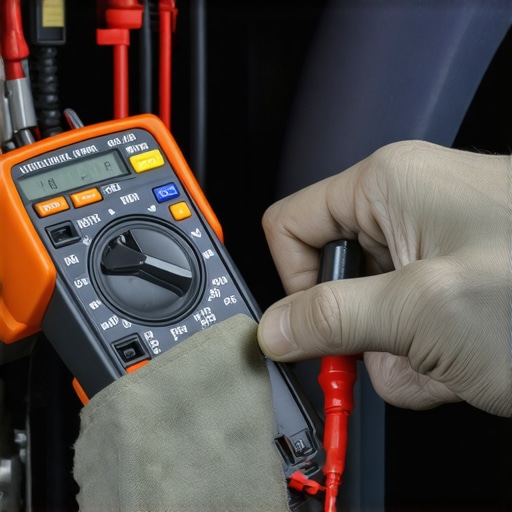
Ignition Misfires and the Premature Death of Your Exhaust
When a spark plug fails to fire, the entire volume of gasoline for that stroke is pushed into the exhaust manifold. This is arguably the fastest way to melt the internal ceramic substrate of your converter. Even a minor ‘hiccup’ at idle can be enough to initiate the chemical breakdown that produces that tell-tale rotten egg odor. Modern coil-on-plug systems can effectively mask these misfires under light loads, so you might not see a flashing dashboard light until the catalyst is already compromised. Every driver should have the 11 tool every driver needs to check their own spark plugs to ensure the ignition system isn’t the hidden root cause. Beyond just the hardware, consider how a mechanic evaluates the health of the entire ignition circuit during a performance inspection. Have you noticed the sulfur smell specifically during heavy acceleration or while the car is idling? Sharing your specific symptoms with our community can help you pinpoint whether the issue is electrical or fuel-related before you spend money on parts.
The Engine Coolant Sensor That Thinks It Is Always Winter
When your vehicle’s Engine Coolant Temperature (ECT) sensor fails internally, it often drifts toward a high-resistance state, signaling to the engine control unit that the block is perpetually freezing. This hardware deception forces the system to stay in “cold start” enrichment mode far longer than necessary. In this state, the air-fuel mixture is intentionally skewed rich to stabilize a cold engine, but once the metal reaches operating temperature, that extra gasoline becomes a liability. The excess hydrocarbons saturate the catalytic converter, stripping away the available oxygen and forcing the reduction of sulfur compounds into the dreaded hydrogen sulfide gas. A quick auto repair for a twenty-dollar sensor can often save a two-thousand-dollar exhaust system. You can verify this by using a scan tool to check if the engine ever enters “Closed Loop” operation; if it stays in “Open Loop – Fault,” the computer is ignoring its sensors and running on a safe, albeit fuel-heavy, map. 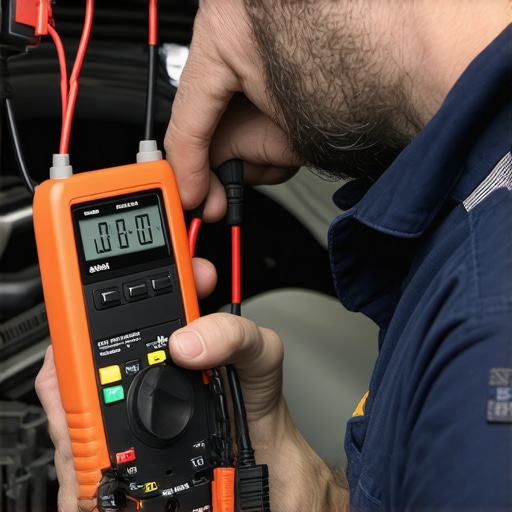
Identify a Lazy Oxygen Sensor Without a Specialized Scope
Not every sensor failure triggers an immediate “check engine” light. A “lazy” oxygen sensor is one of the most frustrating challenges for any mechanic. These sensors still fluctuate between high and low voltage, but their response time has slowed due to silica contamination or carbon soot. Because the sensor is slow to report a rich condition, the ECU continues to add fuel for several milliseconds too long. According to technical documentation from Bosch Mobility, the precision of a switching O2 sensor is critical for maintaining the narrow window of catalyst efficiency. If the sensor takes more than 100 milliseconds to react to a lean-to-rich transition, your fuel trims will oscillate wildly. This instability leads to periodic sulfur smells during gear changes or when lifting off the throttle. Improving your diagnostic speed requires looking at the “cross-counts” of the sensor—the number of times it switches per second—rather than just the raw voltage.
Does High-Sulfur Gasoline Still Exist in Modern Supply Chains?
While the transition to Ultra-Low Sulfur Diesel (ULSD) is well-documented, many drivers wonder if gasoline quality still plays a role in that rotten egg stench. In North America and Europe, sulfur levels are strictly regulated, but “slugs” of high-sulfur fuel can occasionally enter the retail supply chain during terminal transitions or due to regional refining variations. However, a healthy catalytic converter should be able to handle these minor spikes without producing a noticeable odor. If you only smell sulfur after filling up at a specific “no-name” station, try switching to a Top Tier fuel brand for two tanks. If the smell persists, the problem is almost certainly an engine management failure and not a fuel quality issue. This nuanced distinction is why a professional tune up involves more than just swapping parts; it requires a deep dive into the chemical environment of the combustion chamber.
Master the Art of Reading Live Data PIDs
To truly stop the “parts cannon” approach to auto repair, you must become proficient in reading live Parameter IDs (PIDs). The most important values for diagnosing a sulfur smell are Short-Term Fuel Trim (STFT) and Long-Term Fuel Trim (LTFT). Think of STFT as the immediate “breath” of the engine, reacting to every combustion cycle, while LTFT is the “learned” behavior over time. If your LTFT is showing a negative value greater than 10%, the computer is actively trying to cut fuel because it perceives an over-rich condition. This is your smoking gun. When you see these numbers, it’s time to move away from the exhaust pipe and start looking at the intake tract or the high-pressure fuel system. For those performing their own brake service or oil changes, adding a basic OBDII data logger to your toolkit is the single best investment you can make. By recording data during a test drive, you can catch the exact moment the fuel trim spikes and the sulfur smell begins, allowing you to correlate the odor with specific engine loads or throttle positions. We recommend logging the “Commanded Equivalence Ratio” to see if the ECU is intentionally targeting a rich mixture due to a perceived overheating event, a strategy known as component protection…The strategy known as component protection acts as a thermal failsafe for the exhaust valves and the ceramic catalyst substrate. When the engine control unit (ECU) predicts that exhaust gas temperatures are approaching a critical threshold, it intentionally deviates from a stoichiometric air-fuel ratio to an over-rich state. By utilizing the latent heat of vaporization from the excess gasoline to cool the internal components, the system effectively saves the hardware at the cost of a temporary chemical imbalance. This localized enrichment often produces a concentrated burst of hydrogen sulfide, making it easy to mistake a healthy safety override for a terminal auto repair requirement. If you experience this odor exclusively during high-load scenarios like towing or steep ascents, your catalyst may be functioning perfectly, but your cooling system efficiency might be the true root cause forcing the computer into this protective mode.
The Hidden Role of Purge Valve Failure in Exhaust Odors
The Evaporative Emission (EVAP) system is another sophisticated culprit that frequently mimics a failing catalytic converter. A charcoal canister that has become saturated with raw fuel or a purge valve that has failed in the open position allows high concentrations of fuel vapor to be drawn into the intake manifold at unregulated intervals. This creates a massive unmetered fuel source that the ECU cannot compensate for through standard injector pulse-width modulation, resulting in deep negative fuel trims and the dreaded rotten egg smell. Experienced technicians providing mechanic tips diagnosing common auto problems often point out that a common habit like “topping off” the gas tank can flood the EVAP lines and lead directly to these exhaust chemistry issues. 
Secondary Air Injection and the Secret to Odorless Cold Starts
The Secondary Air Injection (SAI) system is the unsprung hero of the “light-off” phase of the catalytic converter. By pumping fresh oxygen directly into the exhaust ports during the first 60 seconds of operation, the SAI system provides the chemical catalyst needed to oxidize sulfur compounds before they leave the tailpipe. If the SAI pump fails or the mechanical check valves become clogged with carbon deposits, the converter remains in a reduced chemical state during its most critical heating window. This results in a heavy sulfur smell specifically during cold starts that often vanishes once the engine reaches a steady operating temperature. Distinguishing between a permanent hardware failure and a localized SAI malfunction can save you a fortune in unnecessary exhaust replacements. Unlike a standard brake service, which relies on visible wear indicators, these systems require a deep understanding of pneumatic and electronic interplay.
Can a Failing Coolant Temperature Sensor Mimic a Blown Catalytic Converter?
The answer is a definitive yes, as the relationship between thermal data and fuel delivery is absolute. If a sensor reports a temperature just 15 degrees cooler than the actual engine block, the ECU may refuse to enter “Closed Loop” operation, where it relies on oxygen sensors for fine-tuning. This perpetual “warm-up” enrichment is a silent killer of modern exhaust systems. According to technical bulletins from the Environmental Protection Agency (EPA), even with high-quality fuels, a persistent rich-running condition will eventually saturate the catalyst and force the emission of hydrogen sulfide. This highlights why a comprehensive tune up must include a verification of the thermostat and cooling system integrity. If you are struggling with a persistent odor despite having no dashboard warning lights, we invite you to document your live fuel trim data in our community forums; our specialists can help you determine if your vehicle is stuck in a programmed logic loop before you commit to expensive hardware replacements.
Expert Insights and Advanced Considerations
The Deception of the No Code Fault
One of the most persistent challenges for a modern mechanic is the absence of a diagnostic trouble code (DTC) when a vehicle is clearly emitting hydrogen sulfide. You must realize that oxygen sensors and the engine control unit often operate within a range of ‘acceptable’ logic even when the fuel trim is skewed enough to cause odor but not enough to trip the MIL (Malfunction Indicator Lamp). Relying solely on a dashboard light is a rookie mistake; instead, a professional mechanic tips diagnosing common auto problems approach involves monitoring live sensor data for sluggish response times that haven’t yet reached a failure threshold.
Why Fuel Trim Numbers Reveal More Than a Visual Inspection
When you perform a high-level tune up, looking at the spark plugs is only half the battle. You must interpret the Long Term Fuel Trim (LTFT). A negative fuel trim indicates the computer is pulling fuel to compensate for a rich condition—often caused by a leaking injector or a restricted intake. This chemical insight allows for a surgical auto repair rather than a ‘parts cannon’ approach that wastes money on a new catalytic converter while the root cause remains active. Understanding these data PIDs is as essential as knowing tune up strategies to save money on auto repairs.
Thermal Stress and the Inevitable Decay of Catalyst Substrates
It is a biological reality for cars that once a catalytic converter has been subjected to enough raw fuel to smell like sulfur, the internal ceramic honeycombs may have already begun to melt. This thermal degradation increases exhaust backpressure, which can eventually mimic transmission slips or engine hesitations. While most drivers focus on a standard brake service for safety, the health of the exhaust tract is equally vital for maintaining the engine’s ability to breathe and perform under load. [IMAGE_PLACEHOLDER]
Curated Expert Resources
For those looking to deepen their technical mastery, I recommend the following authoritative pillars: 1. SAE International (Society of Automotive Engineers) offers white papers on catalyst efficiency and the chemistry of automotive emissions. 2. The National Institute for Automotive Service Excellence (ASE) provides the industry standard for diagnostic logic and professional certification. 3. Bosch Mobility remains the leading source for technical documentation on oxygen sensor waveforms and fuel injection timing. Utilizing these resources ensures your auto repair logic is based on engineering principles rather than forum hearsay.
Final Expert Perspective
Ultimately, the smell of rotten eggs is a chemical signal that your engine’s management loop has lost its stoichiometric balance. Whether the cause is a contaminated MAF sensor, a lazy oxygen sensor, or a ruptured fuel pressure regulator, the goal is to restore the precise air-fuel ratio that prevents the reduction of sulfur compounds. A proactive tune up that includes data logging and sensor cleaning is your best defense against catastrophic exhaust failure. We have seen that many auto repair myths debunked reveal that the most expensive fix is the one that doesn’t address the primary cause. I invite you to share your specific fuel trim readings or diagnostic hurdles with our network of specialists to ensure your vehicle remains as efficient and odorless as the day it left the assembly line.