The internal combustion engine operates on a razor-thin margin between peak efficiency and catastrophic failure, a balance dictated almost entirely by the fuel injection system. In the realm of professional auto repair, we view injectors not just as valves, but as precision instruments capable of cycling thousands of times per minute. When these components begin to fail, the symptoms are often misdiagnosed as ignition issues or vacuum leaks. For the seasoned mechanic, identifying a bad injector at home requires a blend of sensory observation and fundamental electrical testing. It is not merely about whether the car starts; it is about the atomization quality and flow rate balance across all cylinders. A slight deviation in resistance or a microscopic clog can lead to lean-burn conditions that eventually melt piston crowns.
Modern Combustion Demands Millisecond Accuracy
Fuel injectors operate under immense pressure, particularly in direct-injection systems where they must overcome cylinder compression. When an injector fails, it usually manifests in one of three ways: electrical failure of the solenoid, mechanical sticking (open or closed), or a compromised spray pattern due to carbonization. If you notice a persistent hesitation, you may be dealing with an imbalanced fuel-air ratio. Often, a rough idle can be traced back to a single failing sensor or a clogged injector tip. Expert-level diagnostics involve checking the Long Term Fuel Trims (LTFT) using an OBD-II scanner; a positive trim indicates the ECU is trying to compensate for a lean condition, often caused by a restricted injector.
Subtle Indicators That Your Fuel Trims Are Fighting a Losing Battle
Analytical observation is the hallmark of a high-level technician. Before dismantling the fuel rail, observe the exhaust. A scent of unburned fuel suggests an injector stuck open, while a ‘pinging’ sound under load indicates a lean condition. In many cases, performing a comprehensive pro-level tune up can help rule out spark plugs or coils before you focus on the fuel system. According to research published by the Society of Automotive Engineers (SAE), even a 5% deviation in fuel flow can significantly increase NOx emissions and reduce thermal efficiency.
Why Is Your Engine Stumbling During Cold Starts?
This is a frequent inquiry among automotive enthusiasts and professional forums. A cold engine requires a richer mixture for stable combustion. If an injector is partially clogged, it cannot deliver the necessary volume when the engine block is cold, leading to stalls or erratic RPMs. This differs from a warm-start issue, which often points toward fuel pressure regulator failure or heat soak. If you suspect debris is the culprit, you can often utilize the simple way to clean your own fuel injectors before opting for expensive replacements.
Beyond the Scan Tool: Practical Home Diagnostics
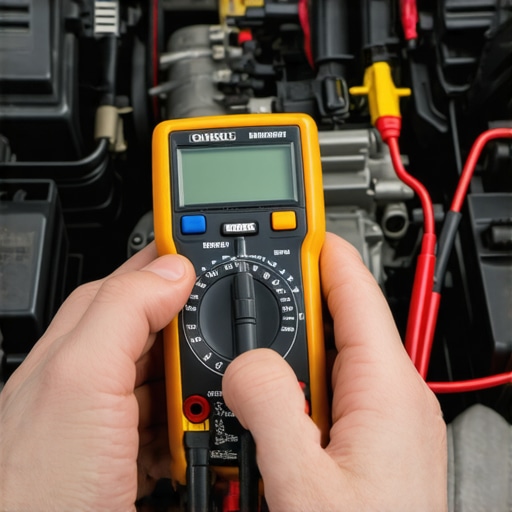
To diagnose the electrical health of an injector, use a digital multimeter to check resistance across the two pins of the injector connector. Most high-impedance injectors should fall between 12 and 17 ohms; an ‘open’ reading or a significant outlier indicates a failing internal solenoid. For mechanical verification, use a long screwdriver as a makeshift stethoscope. Place the tip against the injector body and the handle against your ear while the engine runs. You should hear a rhythmic, sharp clicking. A dull thud or silence means the pintle is seized. If the complexity of the task exceeds your current toolset, finding a skilled mechanic who utilizes oscilloscope diagnostics is the most prudent path forward. If you want to deepen your understanding of automotive maintenance, explore our essential guide to auto repair for more professional insights.
Maintain Rail Pressure or Face the Persistent Misfire
While we often focus on the injector itself, the fluid dynamics of the entire rail are equally critical. A failing fuel pressure regulator can mimic injector failure by providing inconsistent pressure, leading to a rich or lean condition that confuses the ECU. If your fuel economy has plummeted recently, you might find that the hidden valve that causes poor gas mileage is actually a ruptured regulator diaphragm leaking raw fuel into the vacuum line. As a professional mechanic, I always verify rail pressure with a mechanical gauge before condemning a set of injectors. This ensures the auto repair strategy is rooted in data rather than guesswork, preventing the unnecessary replacement of expensive components when a simple vacuum-related fix might suffice.
Could Your ECU Be Lying to You About Fuel Delivery?
In modern vehicles, the Engine Control Unit (ECU) acts as the ultimate mediator, but it is only as good as its inputs. If a ground connection is compromised, the voltage drop can cause the injector pulse width to fluctuate wildly, leading to ‘phantom’ misfires that no amount of cleaning will fix. We often see cases where the 12-dollar ground wire fixes stalling issues that were previously diagnosed as terminal engine failure. Before you invest in a full tune up, inspect the wiring harness for heat-induced brittleness or rodent damage. A high-impedance connection creates electrical noise that can disrupt the precise millisecond timing required for modern lean-burn cycles.
Combatting the Scourge of Carbon in Direct Injection Engines
Gasoline Direct Injection (GDI) has revolutionized efficiency, but it has a significant Achilles’ heel: carbon buildup on the intake valves. Because fuel is sprayed directly into the combustion chamber rather than over the intake valves, the detergent additives in gasoline never touch the valve stems. This leads to ‘coking,’ which restricts airflow and causes turbulence that the injectors cannot compensate for. Industry leaders like Bosch have documented that maintaining fuel system cleanliness is paramount to preventing premature component fatigue. To mitigate this, using the 11-dollar fuel treatment that actually works can keep the internal injector components free of lacquer and varnish, even if it cannot reach the intake valves themselves.
Beyond chemical additives, high-load driving cycles—often referred to as the ‘Italian Tune-up’—can help reach the temperatures necessary to burn off minor deposits. However, for severe cases, manual cleaning or walnut blasting is the only professional-grade solution. Integrating these preventative measures into your tune up strategies to save money ensures you aren’t caught off guard by a multi-thousand-dollar repair bill later. Have you ever dealt with a mysterious misfire that disappeared after a long highway drive? Share your experience in the comments or tell us which diagnostic tool you swear by for fuel system troubleshooting.
Electrical Gremlins Mimicking Mechanical Failure
It is a common pitfall to assume a rhythmic stumble is purely mechanical. In the world of high-end auto repair, we utilize oscilloscopes to view the ‘injector pintle bump’—a tiny blip in the electrical waveform that proves the injector physically moved. If the electrical pulse is clean but the bump is missing, the injector is mechanically seized. This level of granular detail separates a parts-changer from a true diagnostic technician. If you are just starting your DIY journey, our mechanic tips for diagnosing common auto problems provide a roadmap for moving from basic visual inspections to more advanced technical analysis. Remember, a brake service might keep you safe on the road, but a healthy fuel system is what keeps the engine’s heart beating at peak efficiency.
Why Your Noid Light Might Be Lying to You
In the high-stakes environment of auto repair, a noid light is often the first tool a mechanic grabs to verify an injector pulse. However, relying solely on this glowing bulb can lead to a diagnostic dead end. A noid light only confirms that the Engine Control Unit (ECU) is sending a trigger signal and that the wiring harness has basic continuity; it does not measure the actual current flowing through the circuit. If you have a high-resistance connection—perhaps a corroded pin or a partially broken wire—the light will still flicker, but there won’t be enough amperage to overcome the injector spring’s tension. To truly vet the circuit, you must perform a loaded voltage drop test. This level of scrutiny ensures that your tune up efforts aren’t undermined by a harness that looks healthy but performs poorly under load.
Can a Clogged Fuel Filter Mimic a Failed Injector?
This question frequently surfaces when DIYers face lean codes like P0171 or P0174. The short answer is yes, but the diagnostic signature is different. A clogged filter generally creates a systemic pressure drop that affects all cylinders simultaneously, particularly under high-load or high-RPM conditions where fuel demand is greatest. Conversely, a single failing injector typically triggers a specific cylinder misfire (e.g., P0302). If you find your engine’s fuel trims are trending lean across both banks, you should prioritize a pressure test at the rail before suspecting the injectors themselves. This methodical approach is a hallmark of professional auto repair, saving both time and the cost of unnecessary parts. If your pressure is low, investigate the hidden valve that causes poor gas mileage to see if a failing regulator is bypassing fuel back to the tank prematurely.
The Hidden Chemistry of Ethanol-Induced Phase Separation
Modern pump gas contains up to 10-15% ethanol, which is hygroscopic, meaning it actively attracts moisture from the atmosphere. When a vehicle sits for extended periods, this moisture can lead to phase separation, where the water-ethanol mix settles at the bottom of the tank. According to research documented by the American Chemical Society (ACS), this acidic mixture is highly corrosive to the internal needle valves and pintles of your fuel injectors. This corrosion causes the internal components to seize or creates microscopic pitting that ruins the precision-machined spray orifices. To combat this, high-level mechanics recommend using stabilizers if a vehicle will be stationary for more than three weeks. If the damage is already done, you might need more than just a cleaning; you might be looking at a full brake service style overhaul of the fuel delivery system to ensure safety and performance.
Deciphering the Spray Pattern Without a Laboratory
While professional shops use flow benches to visualize atomization, a seasoned mechanic can often spot trouble with a simple bench-test setup using a pulse generator. A healthy injector should produce a fine, conical mist that evaporates almost instantly. If you see ‘streaming’—solid droplets of liquid fuel—it means the pintle is not seating correctly or the orifice is deformed. This liquid fuel does not burn efficiently; instead, it washes the lubricating oil off the cylinder walls, leading to accelerated piston ring wear. This is why a simple tune up must sometimes evolve into a more invasive auto repair. If you are seeing inconsistent patterns, consider if the simple way to clean your own fuel injectors can restore the mist, or if the internal wear has progressed beyond the point of chemical rescue. Have you ever noticed a dark, soot-like buildup on your spark plugs shortly after a cleaning attempt? This often indicates that the spray pattern is still failing to atomize properly under compression.
Mastering the Duty Cycle via Pulse Width Modulation
The ECU controls fuel delivery by varying the ‘on-time’ of the injector, a process known as Pulse Width Modulation (PWM). At idle, the injector might only be open for 2 to 3 milliseconds. Under wide-open throttle, that duty cycle increases significantly. If you are monitoring live data and see a duty cycle exceeding 80% during normal driving, the ECU is desperately overcompensating for a perceived lean condition. This often points to a ‘lazy’ oxygen sensor or a massive vacuum leak rather than the injectors themselves. Understanding this relationship is what separates an expert mechanic from someone just following a YouTube tutorial. Before you commit to an expensive fuel rail replacement, verify that your sensors are providing accurate data to the ECU. If the sensors are lying, the injectors are simply following bad orders, leading to the very stumbles and hesitations you’re trying to fix.
Stop Chasing Ghosts by Testing Voltage Under Real Load
Experienced technicians know that a static voltage reading at the injector harness often hides the true culprit. When an injector fires, it demands a sudden burst of current; if the circuit has high resistance—often due to a corroded connector or a fraying wire deep within the loom—the voltage will collapse exactly when the solenoid needs it most. This intermittent failure is the nightmare of every auto repair professional because it rarely sets a hard code. You might see a ‘random misfire’ (P0300) that refuses to settle on a specific cylinder. By using a current probe and an oscilloscope, you can visualize the ‘amperage ramp.’ A healthy injector shows a clean, steady climb in current until the pintle moves, followed by a distinct signature. If that ramp is jagged or shallow, your mechanic needs to look at the electrical supply, not just the fuel delivery. This level of scrutiny is standard in high-end diagnostics but often overlooked during a routine tune up.
How High-Pressure Vibrations Erase Your Horsepower
In the high-pressure environment of a modern GDI (Gasoline Direct Injection) system, the fuel rail acts like a resonator. As injectors snap shut at high frequencies, they send hydraulic shockwaves back into the rail. Manufacturers install pulse dampeners to neutralize these waves, but these components can fail internally without leaking a drop of fuel. When they do, the resulting pressure oscillations cause some cylinders to run rich and others to run lean, even if the injectors themselves are brand new. This ‘hydraulic noise’ can lead to mysterious stumbles that mimic a failing spark plug. Much like how a neglected brake service leads to pedal vibration, a failed dampener leads to combustion instability that you can feel through the chassis.
Does Your ECU Ignore Fuel Trim Data at Wide Open Throttle?
This is a critical distinction for anyone tuning for performance or diagnosing power loss. In ‘Open Loop’ mode—typically triggered by wide-open throttle—the ECU ignores the oxygen sensors and relies on pre-programmed maps. If your injectors are partially clogged, the ECU won’t ‘know’ to compensate during high-load acceleration because it isn’t looking at the feedback loop. You could be running dangerously lean exactly when the engine is most vulnerable to detonation. According to technical data from the Oak Ridge National Laboratory (ORNL), the precision of fuel-air mixing during these high-velocity events is the primary factor in determining both peak torque and long-term engine durability. If your car pulls hard at low speeds but falls flat on its face when you floor it, your auto repair strategy must include a fuel flow-rate verification.
Thermal Stress and the Hidden Resistance Trap
Engine bay temperatures can soar after the vehicle is turned off, a phenomenon known as heat soak. During this period, the copper windings inside your fuel injectors absorb heat, which naturally increases their electrical resistance. An injector that works perfectly at 70 degrees might fail to open at 200 degrees because the solenoid can no longer generate a strong enough magnetic field. If you experience a ‘no-start’ or a ‘rough-start’ only when the engine is hot, you are likely dealing with this thermal fatigue. Integrating a high-quality fuel system cleaner into your regular tune up schedule can help, but sometimes the internal insulation of the solenoid has simply reached its end of life. If your engine still feels sluggish after trying these advanced checks, it is time to consult a specialist who can perform a dynamic flow test—don’t wait for a lean-out to melt your valves.
Expert Tactics for High-Level Fuel System Diagnostics
Why Resistance Tests Often Mask Terminal Solenoid Fatigue
Static measurements fail to account for the magnetic force required to move a pintle against 50 PSI of fuel pressure. A coil might show 14 ohms at rest but fail to create a sufficient field when the driver demands maximum flow. This is why a high-level mechanic must look at the amperage ramp, not just the static resistance, to confirm if the internal spring is being overcome by the electrical pulse.
Chemical Cleaning vs Mechanical Restoration
While maintenance additives are perfect for preventative care, they cannot repair physical pitting on a pintle seat caused by water contamination. If you find yourself cleaning injectors every month, you are likely treating a symptom of a contaminated fuel tank rather than the cause. At a certain threshold of wear, total component replacement is the only viable path to restoring factory-spec thermal efficiency.
Stop Guessing and Start Using a Pressure Transducer
In-cylinder pressure transducers provide the ultimate data point: the exact moment of combustion. If you see a delayed pressure rise despite a clean spark, your injector is likely ‘lazy’ or late to the party. Integrating these tools into your tune up strategies to save money prevents the cycle of replacing functional coils and plugs while the real culprit remains hidden in the fuel rail.
Essential Literature for Mastering Automotive Engineering
To move beyond basic DIY, consult the Society of Automotive Engineers (SAE) technical library for peer-reviewed studies on GDI carbon accumulation. The Bosch Automotive Handbook remains the industry gold standard for understanding the physics of fuel atomization. For those seeking professional certification, the ASE Test Preparation Manuals provide the structural logic needed to diagnose complex fuel-air interactions without falling into the trap of parts-changing guesswork.
A Final Perspective on Fuel System Integrity
Maintaining a modern engine is a constant battle against heat, ethanol-rich fuel, and carbon buildup. Every successful auto repair decision must be rooted in data, whether you are inspecting the 12-dollar ground wire that fixes stalling issues or performing a high-pressure dynamic rail test. A comprehensive tune up should always include a deep dive into fuel trims to ensure your ECU isn’t quietly masking a developing failure. #IMAGE_PLACEHOLDER_A# If you want to refine your technical skills further, revisit our essential guide to auto repair and join our community of technicians who prioritize precision over generic repairs.