Modern automotive engineering has increasingly embraced the ‘sealed’ transmission, a design choice that prioritizes aerodynamic efficiency and factory precision over traditional user-serviceability. For anyone performing their own auto repair, the absence of a dipstick can feel like a deliberate barrier designed to keep enthusiasts out of the engine bay. However, as any experienced mechanic will testify, ‘sealed’ does not mean ‘immortal.’ Relying on the manufacturer’s ‘lifetime’ claims is often the quickest way to a transmission swap. Understanding the truth about lifetime transmission fluid and when to ignore it is essential for long-term vehicle health. To keep your drivetrain functioning, you must shift your perspective from the engine bay to the undercarriage and master the technical nuances of fluid dynamics.
The Truth About Those Sealed Transmissions
Many modern vehicles from brands like BMW, Ford, and Toyota utilize a standpipe system within the transmission pan. This system maintains the fluid level through gravity and temperature rather than a manual dipstick. While this reduces the risk of contamination from the engine bay, it makes a standard tune up significantly more technical. You cannot simply check the color and smell of the fluid while standing at the fender. According to the Society of Automotive Engineers (SAE), fluid degradation remains a primary factor in automatic transmission failure, regardless of the housing design. If you notice why your transmission slips only when cold, you likely have a level or viscosity issue that requires immediate attention from an expert perspective.
Can You Identify Low Fluid Without a Physical Gauge?
Without a dipstick, the vehicle usually relies on an internal thermistor and the Electronic Control Unit (ECU) to monitor fluid health. However, sensors don’t tell the whole story. Expert drivers and technicians look for ‘shift hunting’ or increased transmission temperatures as early warning signs of cavitation or fluid aeration. If you are already looking into a the ultimate tune up checklist for every car owner, you should also be checking for subtle leaks around the transmission cooler lines. If you aren’t comfortable performing this under-car inspection, it is vital to know how to choose a skilled mechanic you can trust who understands the intricacies of overflow-plug diagnostics and scan tool integration.
Master the Bottom-Plug Level Check
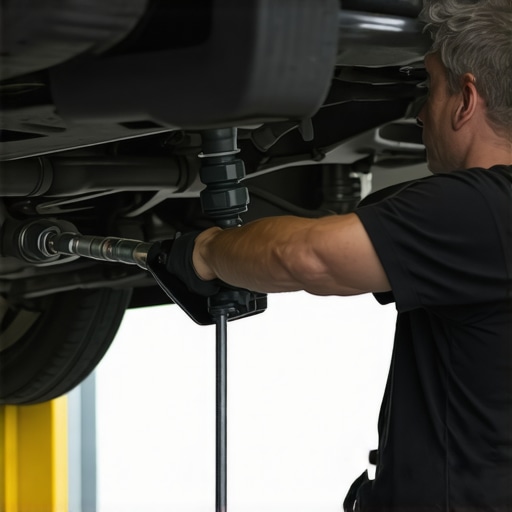
Checking fluid on a sealed unit involves a specific ritual: the car must be perfectly level, and the transmission fluid must be within a narrow temperature window—usually between 95°F and 113°F (35°C–45°C). You remove the check plug (often called the overflow plug) while the engine is running and the transmission is in park. If a small trickle of fluid comes out, the level is correct. If nothing comes out, you are low. If it gushes, it was overfilled. This process is more demanding than a standard brake service, but it is the only way to be certain of your levels. Be wary of shops that suggest a total flush without checking this level first; read up on 3 reasons your transmission flushes are a waste of money before you commit to a service. If you suspect your vehicle’s safety is compromised by drivetrain or braking issues, you can learn why regular brake service is key to car safety and longevity to ensure your entire platform is secure. Check out our latest guides on high-performance maintenance to keep your vehicle in peak condition.
Thermal management is the unsung hero of drivetrain longevity. In dipstick-less systems, fluid expansion is not just a variable; it is the core of the measurement process. Transmission fluid expands at a rate of roughly 1% for every 15-degree rise in temperature. If you check the level when the fluid is at 150°F instead of the specified 100°F window, you will inadvertently underfill the unit, leading to clutch slippage and eventual hydraulic cavitation. This level of precision is why modern auto repair has moved away from the driveway and into the specialized bay, requiring digital pyrometers or OBD-II data streams to confirm the fluid’s state before a single plug is pulled.
Is Your Software Masking a Mechanical Disaster?
Many modern vehicles utilize ‘Adaptive Learning’ software that adjusts line pressure to compensate for worn internal clutches. While this makes the car feel smooth even as the internal components degrade, it can hide the reality of the dirty secret about lifetime transmission fluid. The computer essentially ‘overclocks’ the hydraulic system to maintain shift quality, masking the grit and metal shavings circulating in the system. By the time the software can no longer compensate and you experience why your automatic transmission hunts for gears on the highway, the internal damage is usually terminal. Expert mechanics suggest performing a ‘re-learn’ procedure only after a fluid change to ensure the Transmission Control Unit (TCU) isn’t applying excessive pressure to fresh, high-friction fluid.
Save Your Gears from Electrical Gremlins
Often, what feels like a catastrophic mechanical failure is actually an electrical communication breakdown. In modern multiplexed systems, a lack of chassis grounding can cause ‘ghost shifts’ or trigger a limp-home mode that locks the vehicle in third gear. Before authorizing a multi-thousand dollar rebuild, smart technicians check the 14-ground strap that fixes ghost shifting. Corroded wiring or a failing alternator can send erratic signals to the solenoids, mimicking the symptoms of a burnt-out sun gear. According to the National Institute for Automotive Service Excellence (ASE), nearly 20% of transmission-related complaints can be traced back to electrical or sensor-related issues rather than internal mechanical wear.
The physical act of servicing these units also presents unique risks. The fill and drain plugs on aluminum cases are notoriously prone to seizing and rounding off due to galvanic corrosion. Every home mechanic should invest in the 20-tool every diyer needs to stop stripping drain plugs to avoid turning a simple fluid swap into a nightmare involving extractors. Furthermore, be vigilant about the ‘strawberry milkshake’ effect—a condition where the internal transmission cooler inside the radiator fails, mixing coolant with ATF. If you catch it early, you can learn how to save your transmission after a radiator leak before the glycol-based coolant dissolves the glue holding the clutch friction material together. If you’ve ever had to hunt for a fill plug on a sealed unit or wrestled with a temperature-specific level check, share your tips or frustrations in the comments below; your experience helps our community keep more cars on the road and out of the scrapyard.
Stop Using Universal Fluids in Precision Gearboxes
In the world of auto repair, the temptation to use a ‘one-size-fits-all’ transmission fluid is a dangerous gamble. Modern transmissions are designed with specific friction coefficients and viscosity indexes that a multi-vehicle fluid simply cannot replicate across every platform. For instance, the shear stability requirements for a 10-speed Ford/GM unit differ wildly from a high-torque ZF 8-speed. According to technical documentation from The Lubrizol Corporation, the chemistry of additive packages must balance anti-shudder durability with extreme-pressure protection. Using the wrong fluid can lead to microscopic glazing of the clutch plates, which effectively ruins the unit’s ability to transfer torque smoothly. When you perform a tune up, always verify the specific fluid specification stamped on the transmission case or the fill plug itself, as manufacturer manuals are sometimes updated with superseded fluid codes that provide better thermal protection than the original factory fill.
Can a Clogged Solenoid Mimic Total Mechanical Failure?
Many drivers mistake a sluggish shift or a harsh engagement for a dying clutch pack when the actual culprit is a gummed-up solenoid. These electro-hydraulic valves act as the gatekeepers of fluid pressure. When debris or degraded fluid enters the valve body, it creates stiction, preventing the solenoid from cycling at the precise millisecond required by the TCU. This often triggers a ‘limp mode’ that many inexperienced shops will misdiagnose as a need for a full rebuild. Before you resign yourself to a massive brake service or drivetrain overhaul, a skilled mechanic will use a digital oscilloscope to monitor the current draw of each solenoid. If the amperage spikes, the solenoid is fighting internal resistance. Cleaning the valve body or replacing individual solenoids is a surgical alternative to the ‘shotgun’ approach of replacing the entire transmission, saving thousands of dollars while maintaining the vehicle’s original mechanical integrity.
Beyond the internal valves, the physical layout of modern transaxles adds another layer of complexity for the DIY enthusiast. In many front-wheel-drive and all-wheel-drive configurations, the transmission fluid and the front differential fluid are housed in the same assembly but are often separated by internal seals. If these seals fail, the fluids can mix, or one reservoir can run dry while the other remains full. This is a common failure point in certain European and Japanese crossovers where the ‘lifetime’ fluid philosophy prevents owners from ever inspecting the levels. Always check your service manual to see if your vehicle requires a separate gear oil for the differential portion of the transaxle. Neglecting this distinction is a common reason for premature planetary gear failure, even if the main transmission fluid looks pristine and cherry-red.
Separate the Transaxle from the Differential Case
Identifying the correct fill point for these dual-purpose units requires a keen eye. A common mistake during a standard auto repair session is draining the transmission fluid but accidentally refilling the differential housing, or vice versa. This leaves one system overfilled and under-vented while the other runs bone-dry, leading to catastrophic heat soak within miles of the workshop. To avoid this, always locate the drain plug first and verify its position relative to the axle shafts. If you are unsure which plug serves which cavity, consult a professional-grade service database. For those looking to master their vehicle’s maintenance, checking your specific fluid requirements in your owner’s manual or a manufacturer-specific technical bulletin is the first step toward true automotive self-sufficiency. The interaction between these separate oiling circuits is governed by complex pressure differentials that most drivers never consider until a whine develops under acceleration.
Prevent Fluid Aeration in Heavy-Duty Towing
In the high-stakes environment of heavy-duty towing or spirited mountain driving, the threat of fluid aeration is a silent drivetrain killer. When transmission fluid foams, it becomes compressible—a catastrophic state for a system that relies entirely on hydraulic pressure to hold clutch packs together. Unlike a standard tune up that focuses on the combustion side, managing fluid foam requires a deep understanding of fluid levels under extreme thermal expansion. Aeration occurs most frequently when the fluid level is slightly high, allowing the rotating internal assemblies to whip air into the hot oil. This creates a spongy shift feel and inconsistent line pressures. According to technical bulletins from the Automotive Transmission Rebuilders Association (ATRA), the introduction of air into the hydraulic circuit is often misdiagnosed as mechanical wear, leading many to authorize an unnecessary and expensive auto repair overhaul when a simple, precise level correction was all that was required.
Stop Gasket Blowouts Before the Fluid Dries
High-pressure seals within the transmission housing are the unsung heroes of your vehicle’s mobility. Over time, the repeated cycles of heating and cooling cause these rubber and composite seals to lose their elasticity, a process known as compression set. When this happens, internal leaks develop between the valve body and the transmission case, leading to ‘cross-talk’ where pressure intended for one gear bleeds into another. A skilled mechanic knows that simply changing the fluid isn’t enough if the internal seals are brittle. If you are already performing a brake service, take the extra ten minutes to inspect the exterior of the transmission case for ‘weeping’—a light film of dust-covered oil that signals a seal is nearing its failure point. Catching these leaks early prevents the catastrophic pressure drops that melt friction plates in seconds.
Why Does Your Transmission Surge While Reversing?
Surging in reverse is a hallmark sign of a deteriorating internal boost valve or a worn reverse clutch piston seal. Because reverse gear often requires the highest hydraulic pressure of any range, any microscopic leak in the circuit becomes immediately apparent when the gear is engaged. This isn’t something a standard tune up can fix with a software update. It often points to physical wear in the aluminum bore of the valve body. If you experience this, it is crucial to perform a line-pressure test to confirm whether the pump is producing adequate force or if the pressure is escaping through a worn path. Ignoring a surge can lead to a sudden loss of all gears, as the debris from the struggling reverse clutch can quickly migrate into the main regulator valve, jamming the entire system.
Master the Complexity of AWD Transfer Case Fluids
In modern all-wheel-drive systems, the transmission is often bolted directly to a transfer case that requires an entirely different lubricant—frequently a high-viscosity gear oil or a specific synthetic fluid with unique friction modifiers. A common mistake in DIY auto repair is assuming the transmission fluid lubricates the entire drivetrain. Neglecting the transfer case fluid leads to binding during tight turns and eventual chain stretch within the unit. Ensure you are documenting these fluid changes as part of your comprehensive vehicle history. If you’ve found a clever way to access those cramped fill plugs on a modern crossover, or if you’ve developed a specific diagnostic trick for ‘phantom’ transmission noises, drop a comment below and share your expertise with our growing community of performance enthusiasts.
Expert Insights for Pro-Level Maintenance
Stop resetting adaptations on old fluid
One of the most common mistakes in modern auto repair is forcing a software ‘re-learn’ on a transmission with degraded fluid. The TCU has spent thousands of miles adjusting line pressure to compensate for wear; resetting this while the grit is still in the system can cause the clutches to burn out instantly. Always pair software adjustments with a physical fluid change to ensure the mechanic isn’t fighting a losing battle against physics.
Thermal guns aren’t just for show
Relying on a dashboard gauge isn’t enough when you’re checking levels via an overflow plug. For a successful tune up, you need the precise temperature of the fluid at the bottom of the pan. A digital pyrometer or an OBD-II stream provides the accuracy required to prevent aeration or underfilling. If you’ve ever wondered why your transmission slips only when cold, you’ll understand why that 5-degree temperature window is so critical.
#IMAGE_PLACEHOLDER_E#
Watch out for the valve body weep hole
Often overlooked during a brake service or routine inspection, the weep hole on many modern transaxles is the first indicator of a failing internal seal. A light oil film here means the input shaft seal or the torque converter seal is failing. Catching this early is one of the best auto repair cost-saving tips from industry experts, as it prevents the fluid loss that leads to total gear failure.
Authority Resources for Deeper Research
To move beyond basic DIY and into the realm of master-level diagnostics, consult these specialized sources: ATRA (Automotive Transmission Rebuilders Association) Technical Bulletins offer the most granular data on solenoid failure patterns across specific makes. Lubrizol Driveline Reports provide scientific breakdowns of how specific friction modifiers interact with clutch materials, helping you avoid the trap of 3 reasons your transmission flushes are a waste of money. Finally, SAE International publishes peer-reviewed research on the degradation of ‘lifetime’ lubricants, reinforcing the truth about lifetime transmission fluid and when to ignore it for anyone serious about vehicle longevity.
Final Take on Precision Drivetrain Care
The shift toward sealed transmissions isn’t an invitation to neglect your vehicle; it is a call for higher standards in auto repair. True mastery of your drivetrain involves more than just changing oil; it requires an integrated approach that respects the software, the thermal dynamics, and the chemistry involved. Whether you are performing a rigorous tune up or just ensuring your brake service is part of a holistic maintenance plan, the goal remains the same: reliability. We invite you to share your most difficult transmission diagnostic wins in the comments. For more specialized advice, check out our mechanic tips for diagnosing common auto problems and help keep the community’s gears turning smoothly.