
The Mechanics of Steering Wheel Misalignment Post-Service
Achieving a perfectly centered steering wheel during a professional auto repair session is more than just a matter of tightening bolts; it is an exercise in managing complex suspension geometry. When a vehicle undergoes an alignment, the primary goal is to ensure the wheels are parallel to each other and perpendicular to the road. However, if the technician fails to secure the steering wheel in a perfectly level position before adjusting the front toe settings, the result is a vehicle that tracks straight while the wheel remains tilted. This discrepancy often stems from the interaction between the steering rack’s mechanical center and the tie-rod adjustments. Furthermore, experts often find that subtle variations in tire tread depth or internal belt shifts can cause a ‘radial pull,’ which forces the driver to compensate by turning the wheel slightly, even if the rack itself is perfectly aligned. For those seeking peak drivability, it is essential to tune up your car like a pro by addressing both the mechanical and electronic aspects of the steering system.
Can a Faulty Steering Angle Sensor Override a Physical Alignment?
In the era of modern vehicle architecture, the physical position of the steering wheel is only half of the story. Most vehicles manufactured in the last decade are equipped with Electronic Stability Control (ESC) and a Steering Angle Sensor (SAS). If a mechanic performs a physical alignment but neglects to perform a digital reset of the SAS, the car’s onboard computer may still believe the wheels are pointing in a different direction. This can lead to the computer applying micro-braking forces to individual wheels to ‘correct’ a perceived skid that isn’t actually happening, effectively pulling the car off-center. According to technical standards published by SAE International, the calibration of these electronic sensors is a critical step in any steering-related service to ensure the safety systems operate within their designed parameters. Identifying these digital ghost issues is a core part of professional mechanic tips for diagnosing common auto problems that DIY enthusiasts often overlook.
The Critical Role of Rear Thrust Angle in Front-End Tracking
Many drivers assume that a crooked steering wheel is strictly a front-end problem, but seasoned professionals know to look at the rear axle. The ‘thrust angle’ is an imaginary line drawn perpendicular to the rear axle’s centerline. If the rear wheels are slightly skewed due to worn bushings or a previous impact, the vehicle will ‘crab walk’ down the road. To keep the car moving in a straight line, the driver must turn the front wheels to match the rear’s direction, resulting in a crooked steering wheel. This is why a four-wheel alignment is non-negotiable for modern chassis. During a routine brake service, a technician might notice uneven wear on the rear pads, which can sometimes correlate with these thrust angle issues, as the suspension is under constant lateral stress. Understanding how to tell if your tires are actually balanced correctly can also help rule out secondary vibrations that might be masking a more serious thrust angle deviation.
Why Suspension Memory and Worn Bushings Defy the Rack
Even when the alignment rack shows ‘green’ across all specifications, ‘suspension memory’ can cause the steering wheel to remain off-center. Rubber bushings and ball joints that have developed a specific wear pattern will often try to return to their previous, misaligned state once the car is in motion and under load. This is particularly common in high-mileage vehicles where the rubber has lost its elasticity. If you are experiencing a persistent pull or an off-center wheel despite multiple alignments, it may be time to inspect the control arm bushings and tie-rod ends for microscopic play. A comprehensive auto repair strategy should always include a pry-bar test of all pivot points before the vehicle even touches the alignment rack. If your steering continues to feel vague or disconnected, we encourage you to consult with a specialist to verify the structural integrity of your subframe and steering rack mounting points.
The Invisible Influence of Tire Conicity on Your Steering Feel
Even with a laser-perfect alignment, a phenomenon known as tire conicity can sabotage your driving experience. Tire conicity occurs during the manufacturing process when the internal belts are slightly offset, causing the tire to take on a subtle cone shape rather than a perfect cylinder. This creates a lateral force that naturally pulls the vehicle to one side. A high-end mechanic will often diagnose this by swapping the front tires from left to right; if the pull changes direction, the issue lies in the rubber, not the suspension. Understanding how to tell if your tires are actually balanced correctly is just the first step in identifying these nuanced tire defects, as a balance issue can sometimes vibrate in a way that mimics a steering pull.
Why Does Your Steering Wheel Center Itself Only at High Speeds?
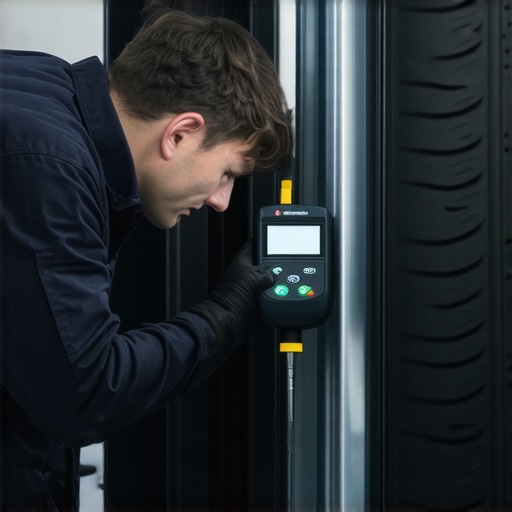
This specific symptom often points toward a ‘dynamic’ alignment issue, where centrifugal forces and aerodynamic loads temporarily mask mechanical play. At low speeds, friction in the steering rack or worn tie-rod ends might hold the wheel off-center due to lack of momentum. However, as the rotational mass of the tires increases, the wheels naturally want to find their own path of least resistance, potentially centering the wheel momentarily. This transition can be confusing for drivers who just received an auto repair for a separate vibration issue. If your vehicle demonstrates this behavior, it is crucial to investigate why your car pulls under braking but not while coasting, as this often indicates a shift in suspension geometry under load that disappears when the vehicle is at a steady cruise.
Stop Chasing Ghosts by Testing for Brake Caliper Drag
A sticky brake caliper is one of the most frequently overlooked causes of a crooked steering wheel. If one caliper fails to fully retract, it creates a constant parasitic drag on that wheel. This drag acts as a pivot point, forcing the vehicle to pull in that direction, which the driver then corrects by holding the steering wheel off-center. During a professional brake service, technicians must verify that the slider pins are lubricated and the pistons move freely. According to the National Institute for Automotive Service Excellence (ASE), a dragging brake can increase rotor temperatures by hundreds of degrees, leading to premature glazing and fluid degradation. In fact, performing the simple move that fixes a sticky brake caliper can often resolve an ‘alignment’ issue that three previous shops could not find, saving you the cost of unnecessary parts.
The Impact of Subframe Shift on Modern Chassis
On unibody vehicles, the engine, transmission, and front suspension are often bolted to a subframe, which is then secured to the main body with large rubber bushings. If these bushings perish or the subframe bolts are loosened during a major auto repair—such as a transmission swap or engine mount replacement—the entire front-end geometry can shift. This shift changes the relationship between the steering column and the steering rack. A technician might get the toe settings perfect on the alignment rack, but because the subframe is skewed relative to the body, the wheel remains crooked. This is a common pitfall when shops don’t follow the proper sequence of checking subframe alignment first. You can learn more about the 10-dollar hub scrub that stops brake vibrations and ensures a clean mating surface for all critical components involved in your steering’s health. Have you ever had an alignment that felt ‘off’ despite a perfect printout? Share your experience in the comments or suggest a topic you want us to dive into next.
Software Overrides Hardware in the Era of Electric Steering
In the transition from hydraulic to Electric Power Steering (EPS), the role of the mechanic has expanded into the digital realm. Unlike traditional systems that relied on fluid pressure, EPS uses a high-torque electric motor mounted on the steering rack or column. This motor is controlled by an ECU that interprets inputs from torque sensors and position sensors. If the system’s zero point is incorrectly calibrated, the motor may provide a constant assist in one direction, mimicking a mechanical pull. This is often referred to as Active Return bias. Even a minor software glitch or an incomplete firmware update during a routine auto repair can leave you fighting the wheel on long highway stretches. To truly master your vehicle’s handling, you must ensure that any hardware adjustment is mirrored by a software handshake, as neglecting the digital side of the rack is a recipe for persistent frustration.

Could a Low Battery Cause Your Steering to Feel Heavy or Off-Center?
It sounds improbable, but a failing battery or a struggling alternator can directly impact steering precision. Modern EPS systems are among the most power-hungry components in a vehicle, often drawing significant current during low-speed maneuvers. When the system detects a voltage drop, it may enter a limp mode or provide inconsistent assistance, which the driver perceives as a heavy or wandering steering wheel. This electrical instability can cause the Steering Angle Sensor to lose its calibration momentarily, leading the computer to miscalculate the center position. If you notice your steering feel changes when you turn on the headlights or the AC, your next auto repair should start with a comprehensive charging system test rather than a trip to the alignment rack. Ensuring stable voltage is a foundational step in modern tune up procedures.
Why the Road Itself Might Be Pushing You Off-Center
Sometimes, the car is perfect, but the environment is not. Most public roads are engineered with a crown—a slight slope toward the shoulder to facilitate water drainage. Because the road is not perfectly flat, gravity naturally pulls the vehicle toward the lower edge of the pavement. To counteract this, alignment technicians often set the vehicle with a slight lead toward the left in right-hand traffic regions. According to technical documentation from Hunter Engineering Company, if a technician aligns a car to be perfectly neutral on a flat rack without accounting for local road crowning, the driver will constantly have to steer up the hill, resulting in a crooked wheel during normal driving. This is why a post-alignment test drive on a variety of road surfaces is the only way to confirm a job well done. Identifying this environmental factor is key for any mechanic who wants to avoid recurring customer complaints.
Catch the Binding Intermediate Shaft Before It Snaps
The physical link between your hands and the road is the steering intermediate shaft, which contains one or more universal joints (U-joints). Over time, these joints are exposed to road salt, heat, and moisture, leading to corrosion and notchy steering. If a U-joint begins to bind, it can prevent the steering wheel from returning to the center after a turn, or it may hold the wheel at a slight angle due to internal friction. This is frequently misdiagnosed as a bad steering rack or a need for a brake service due to the jerky feedback felt through the wheel. Applying a high-quality penetrant might offer a temporary fix, but a binding shaft is a safety hazard that requires immediate auto repair. Have you noticed a dead spot or a clicking sound when turning the wheel at low speeds? This mechanical resistance is often the final clue in solving the mystery of the off-center wheel.
Adjusting the Rack Preload to Eradicate Steering Vagueness
Beyond the simple tie-rod adjustments, a deeper layer of auto repair involves the steering rack’s internal preload. Within the rack-and-pinion assembly, a spring-loaded yoke or ‘plunger’ keeps the pinion gear tightly meshed with the rack teeth. Over time, as components wear, this tension diminishes, creating a ‘dead spot’ in the center of your steering travel. If a technician overtightens this adjustment during a mechanic-led overhaul, the steering wheel will fail to return to center naturally after a turn—a phenomenon known as ‘poor returnability.’ This mechanical binding creates a constant struggle for the driver to maintain a straight line. Finding the ‘Goldilocks’ zone of rack preload requires a nuanced touch and often a specialized torque wrench to ensure the rack is neither loose enough to rattle nor tight enough to bind. This level of precision is why professional steering diagnostics are far superior to a simple ‘alignment-only’ approach.
How Aftermarket Modifications Rewrite Your Alignment Specs
For enthusiasts who have lowered their cars with springs or lifted their trucks with off-road kits, the factory alignment specifications become effectively obsolete. Modifications change the ‘scrub radius’—the distance between where the steering axis intersects the ground and the center of the tire’s footprint. When this radius is significantly altered, the vehicle becomes hyper-sensitive to road imperfections and braking forces. During a standard brake service, you might find that the car darts to one side more aggressively than before. This is because the suspension geometry no longer provides the self-centering leverage designed by the manufacturer. Correcting this requires an auto repair expert who understands roll centers and kinematic divergence. 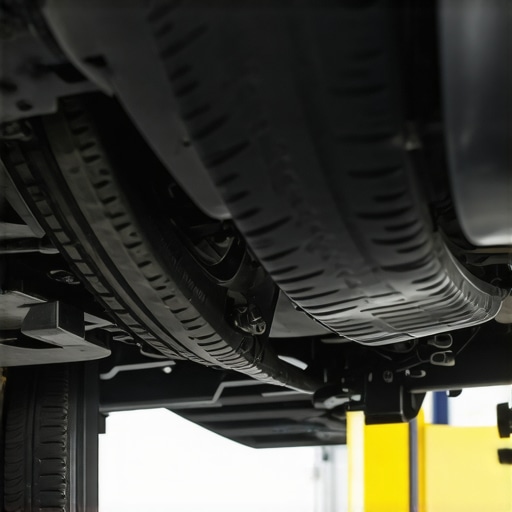 Ensuring your vehicle is tuned up like a pro means going beyond the computer’s ‘green’ range and adjusting for these geometric shifts.
Why Does Your Car Pull Harder After Rotating Tires?
It is a common frustration: a vehicle that drove straight suddenly pulls to the left or right immediately following a tire rotation. This is often caused by ‘radial pull’ or ‘ply steer,’ where the internal belts of the tire have taken a set or possess a manufacturing bias. When a tire is moved to a new position, its existing wear pattern interacts with the road differently, effectively acting like a subtle rudder. If your mechanic confirms the alignment is perfect but the pull remains, the solution is often to swap the two front tires laterally. According to safety mandates and technical advisories from the National Highway Traffic Safety Administration (NHTSA), maintaining consistent tire rotation intervals is vital for long-term chassis stability. If the pull persists even after a rotation, it may indicate internal belt separation, which requires immediate attention to prevent a high-speed blowout.
Don’t Ignore the Impact of Structural Body Flex
In high-mileage vehicles or performance-oriented machines, the chassis itself can flex enough to throw off a precision alignment. Strut towers can migrate over time due to the constant stress of cornering and potholes. This ‘structural migration’ means that even if the wheels are aligned to the subframe, the subframe may be slightly askew relative to the body’s centerline. Installing a strut tower brace can often stabilize this geometry, providing a more consistent steering feel. During your next brake service, have your technician inspect the mounting points for stress cracks or mushrooming. This is a crucial part of diagnosing common auto problems that are often misidentified as simple suspension wear. Audit your vehicle’s structural rigidity today and discover if a simple strut brace or subframe reinforcement is the key to finally reclaiming that elusive, factory-new steering precision.
Expert Insights & Advanced Considerations
Why Your Software Update Just Replaced Your Alignment
In the high-tech landscape of modern auto repair, hardware is often secondary to software. When a vehicle features Lane Keep Assist or Active Steering, the computer constantly monitors the Steering Angle Sensor (SAS) to apply corrective torque. If your mechanic aligns the physical wheels but fails to perform a digital zero-point calibration, the car may ‘self-correct’ into a pull that didn’t exist before. This electronic ghosting is a primary reason why high-end shops now prioritize a digital handshake alongside mechanical adjustments. This is just one of many mechanic tips for diagnosing common auto problems that separate generalists from true specialists.
Stop Blaming the Rack for a Skewed Subframe
Many persistent alignment issues aren’t found on the wheels at all, but in the subframe mounting points. Over years of driving, or following a significant impact, the engine cradle can shift slightly within its oversized mounting holes. While a standard alignment adjust the tie-rods to compensate, it doesn’t fix the underlying geometric mismatch between the chassis and the drivetrain. An expert-level tune up your car like a pro strategy involves verifying subframe centering before the first turn of an alignment bolt, ensuring the entire foundation of the vehicle is square.
High-Performance Chassis Require More Than Factory Specs
Factory alignment specifications are designed for comfort and tire longevity, often leaving a wide ‘tolerance’ range that is ‘green’ on the machine but ‘red’ for driving feel. For drivers who demand precision, a mechanic must often target the narrowest possible window of cross-caster and total toe. This level of detail is especially critical during a comprehensive brake service, as uneven braking forces can amplify even the smallest deviation in front-end geometry. Following brake service secrets how to boost safety and longevity ensures that your stopping power doesn’t compromise your steering stability.
Expert-Approved Documentation for Precision Maintenance
SAE International Technical Papers: These documents provide the foundational physics behind steering roll centers and scrub radius, offering the data needed to understand how aftermarket wheels change your steering feel. Hunter Engineering Alignment Guides: As the industry leader in imaging technology, their resources explain how to interpret complex printouts and identify ‘hidden’ thrust angle issues. ASE Certification Modules: Specifically the A4 (Suspension & Steering) and A5 (Brakes) tracks, which outline the standardized procedures that a top-rated mechanic ensures safe auto repairs every time.
The Synthetic Summary of Modern Steering Mastery
Solving the mystery of a crooked steering wheel requires moving beyond the surface of a standard auto repair. It is a multi-dimensional puzzle involving electronic sensor calibration, structural subframe integrity, and the subtle physics of tire conicity. By integrating digital resets with mechanical precision, a skilled mechanic can transform a vague, wandering vehicle into a laser-focused machine. We invite you to contribute your own experiences with difficult-to-solve alignment issues in the comments below, or reach out to our team for deeper technical insights into your vehicle’s unique suspension architecture.