Why Unmetered Air is the Silent Killer of Modern Engines
In the world of precision diagnostics, a mechanic knows that the stoichiometric ratio is sacred. When unmetered air enters the combustion chamber downstream of the Mass Air Flow (MAF) sensor, it wreaks havoc on the Engine Control Module’s (ECM) ability to manage fuel trims. This often manifests as a lean condition, triggering the dreaded P0171 or P0174 codes. While many shops reach for a $1,000 smoke machine, seasoned experts often rely on more tactile, cost-effective methods to identify the structural failure of an intake manifold gasket or a hairline fracture in a vacuum line. Proper mechanic tips for diagnosing common auto problems often start with these fundamental, high-sensitivity tests before escalating to expensive equipment.
Ditch the Expensive Smoke Machine for This High-Visibility Professional Hack
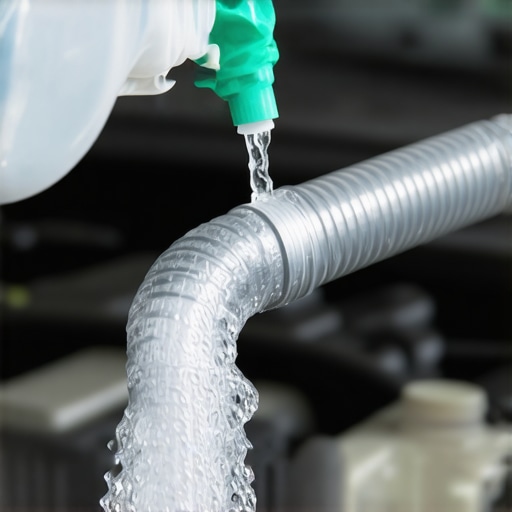
The logic is simple: while a vacuum system normally pulls air in, the pressure differential during a cold start or specific throttle positions can be exploited. By using a highly concentrated solution of dish soap and water, you create a surface tension barrier. When applied to a suspected leak site while the engine is running, the vacuum will often ‘suck’ the bubbles in, or in some cases involving pressurized turbo inlets, blow them out. This method is particularly effective for detecting leaks in hard-to-reach areas where a visual inspection fails. It is a critical skill for any essential auto repair toolkit, allowing you to bypass the guesswork of ‘parts cannon’ methodology. According to technical standards from the Society of Automotive Engineers (SAE), maintaining vacuum integrity is the first step in ensuring secondary emission systems function within their design parameters.
Can You Actually Hear a Lean Condition Before Your Scanner Sees It?
Often, a high-pitched whistle or a rhythmic ‘hiss’ precedes the Check Engine Light. This is the sound of air being forced through a narrow orifice at high velocity. If you notice your engine stumbling at red lights but clearing up at highway speeds, you likely have a vacuum leak that is being compensated for by higher fuel volume at higher RPMs. If your car exhibits these symptoms, it might be time for a comprehensive tune up to reset the baseline of your vehicle’s performance. Using the soapy water trick during this phase can save hours of labor and prevent the misdiagnosis of a failing fuel pump or clogged injectors.
Precise Application is the Key to Avoiding Electrical Gremlins
When performing this diagnostic, precision is paramount. You are not drenching the engine bay; you are surgically applying the solution to gaskets, throttle body seals, and vacuum ports. Avoid sensitive electrical connectors and the alternator. This level of care is what separates a professional auto repair specialist from a backyard amateur. For those dealing with persistent rough idles, combining this test with a look at sensor fixes for rough idles can provide a 360-degree view of the engine’s health. If you find a leak, don’t wait to fix it; uncorrected lean conditions lead to increased combustion temperatures, which can eventually necessitate a full brake service and engine overhaul due to heat-related component fatigue. Have you encountered a vacuum leak that defied traditional smoke testing? Share your most difficult diagnostic wins with us to help build our community of master technicians.
Stop Engine Melt-Down Caused by Persistent Lean Conditions
When an engine runs lean due to unmetered air, it isn’t just a matter of a rough idle or a flashing light on the dash; it is a thermal management crisis. Lean combustion mixtures burn significantly hotter than the ideal 14.7:1 ratio. This localized heat can lead to burnt exhaust valves and cracked cylinder heads if left unaddressed. Often, the root cause is a simple component failure that mimics a major mechanical disaster. For example, why your car stumbles at red lights but runs fine on the highway is usually the smoking gun of a vacuum leak that the computer manages to overcome once the throttle plate opens wide enough to mask the extra air. Integrating specific tune-up strategies to save money on auto repairs into your maintenance schedule ensures these small air-path failures are caught before they turn into a $3,000 engine overhaul.
Why Does Your Scan Tool Claim the Engine Is Lean Even If You Find No Leaks?
In many cases, the ‘lean’ code is a symptom of a lying sensor rather than a physical hole in a hose. If you have sprayed soapy water and used every diagnostic trick in the book without finding a bubble, your Mass Air Flow (MAF) sensor might be contaminated. Dust and oil vapor can coat the sensing wire, causing it to report less air entering the engine than there actually is. The ECM then provides too little fuel, resulting in a lean condition that triggers the P0171 code. Before you start tearing into the intake manifold, try the $10 cleaning move that saves your MAF sensor. This simple chemical cleaning can often restore perfect fuel trims and save you from hours of chasing a vacuum leak that doesn’t exist.
Master the Plastic Cigar Technique for Visual Leak Detection
If the soapy water method proves inconclusive, the next level of expert DIY diagnostics involves a low-tech version of a professional smoke machine. By using a sealed container and a smoke source, you can manually pressurize the intake system. This method is incredibly effective at revealing leaks in the PCV system or the evaporative emission (EVAP) lines that are tucked behind the engine block. Learning how to find a vacuum leak with a plastic cigar allows you to visualize exactly where the integrity of the system has failed without investing in high-end garage equipment. 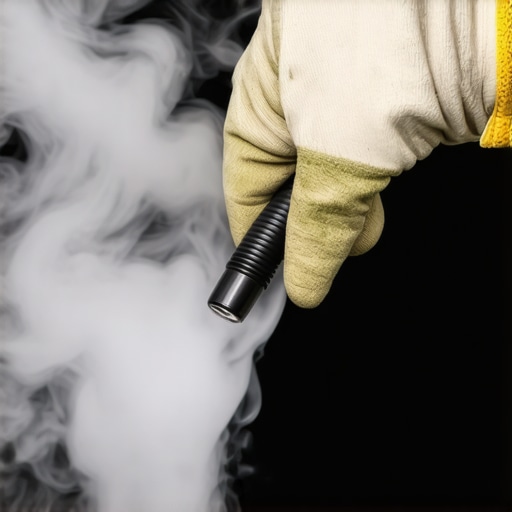 This visual confirmation is vital because it prevents the ‘parts cannon’ approach, where sensors are replaced blindly while the real culprit—a $5 rubber hose—remains broken.
Isolate the Brake Booster to Rule Out Hidden Internal Leaks
One of the most overlooked sources of unmetered air is the internal diaphragm of the brake booster. When this seal fails, air is pulled directly through the brake pedal assembly into the intake manifold. Because this leak is internal, neither soapy water nor external smoke will reveal it. To diagnose this, pinch off the large vacuum supply hose going to the booster; if the engine’s short-term fuel trims suddenly stabilize, you have found your leak. According to technical bulletins from the National Institute for Automotive Service Excellence (ASE), unaddressed vacuum leaks in the braking system are a primary cause of erratic idle and reduced stopping power. If you suspect your booster is compromised, checking why your brake pedal goes to the floor after a long drive can help determine if the entire hydraulic and vacuum system needs a refresh. Have you ever found a leak in a place that didn’t make any sense? Share your story in the comments below to help your fellow gearheads troubleshoot their toughest engine gremlins.
For those looking to deepen their diagnostic repertoire, investing in the $20 scanner that every modern driver should own is the smartest move you can make. This tool allows you to watch live data, such as Long Term Fuel Trim (LTFT). If your LTFT is higher than 10%, your engine is working overtime to compensate for air it isn’t supposed to have. Sometimes, the fix is as simple as the $7 vacuum line fix for a skipping engine, which can restore your fuel economy and smooth out your idle in under five minutes.
Check Your Fuel Trims at Different Speeds to Pinpoint the Leak
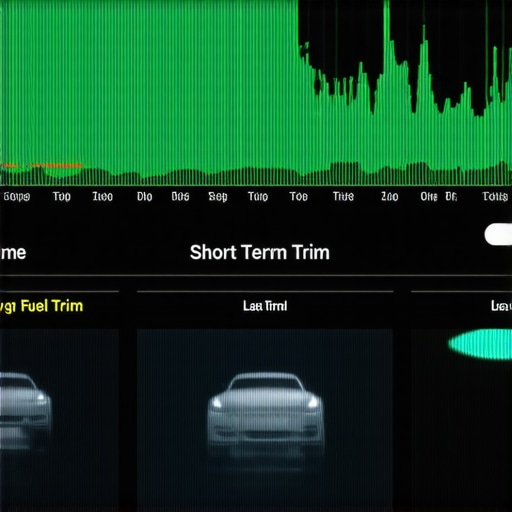
The discrepancy between idle fuel trims and cruise fuel trims is your best diagnostic breadcrumb. When you are plugged in with your scanner, you must look at how the Engine Control Module (ECM) reacts to engine load. If you find that your Short Term Fuel Trim (STFT) is hovering at a staggering +20% while sitting at a stoplight but drops to near 0% the moment you hit 2,500 RPM, you have confirmed a vacuum leak. This happens because, at idle, the throttle plate is nearly closed, creating the highest possible vacuum pressure to pull air through that tiny crack in your intake boot. As you open the throttle, the massive volume of metered air rushing past the butterfly valve makes the small leak statistically insignificant. According to the fuel system experts at Delphi Technologies, fuel trim is the most critical window into the engine’s closed-loop efficiency, and understanding these fluctuations prevents the unnecessary replacement of functional oxygen sensors.
Why Does My Fuel Trim Go Back to Normal While Driving?
This phenomenon is the definitive hallmark of a physical vacuum leak. Because a vacuum leak is a constant volume of unmetered air, its impact on the air-to-fuel ratio diminishes as the total volume of air entering the engine increases. Imagine a single drop of red dye in a glass of water versus a single drop in a swimming pool; the pool (your engine at high RPM) is barely affected. However, if your fuel trims stay high even at highway speeds, you aren’t looking for a leak in a hose. Instead, you are likely dealing with a ‘mass-flow’ issue, such as a contaminated MAF sensor or a fuel delivery problem like a clogged filter or a tired pump. Distinguishing between these two behaviors is what separates a parts-changer from a true mechanic. If your trims are out of whack across the board, it might be time to investigate diagnostic strategies for fuel delivery to see if the problem lies in the tank rather than the intake.
Stop Chasing Ghosts by Testing the PCV Valve First
The Positive Crankcase Ventilation (PCV) system is essentially a controlled vacuum leak designed by the manufacturer. Over time, the internal spring or plunger in the PCV valve can weaken or become gummed up with oil blow-by, causing it to stay stuck in the wide-open position. When this happens, the engine pulls far more air from the crankcase than the ECM expects, leading to a lean condition that is notoriously difficult to find with soapy water because the ‘leak’ is happening inside the engine’s own plumbing. A quick professional test involves removing the valve and shaking it; if it doesn’t rattle, it’s junk. More accurately, you can pinch the PCV hose while the engine is idling. If the idle smooths out and the fuel trims drop immediately, you’ve found your culprit for less than the cost of a lunch. This is a vital component of any comprehensive essential auto repair routine, as a failing PCV can also lead to oil consumption and fouled spark plugs.
The Counter-Intuitive Truth About Pre-Sensor Exhaust Leaks
While we have spent significant time scrutinizing the intake side for unmetered air, the exhaust manifold is equally capable of tricking your ECM into a lean condition panic. This is one of the most advanced ‘gotchas’ in auto repair. If there is a crack in the exhaust manifold or a failed gasket before the upstream oxygen sensor, the ‘venturi effect’ can actually pull outside air into the exhaust stream between exhaust pulses. The oxygen sensor, which only measures oxygen content and not actual fuel, sees this extra fresh air and reports a lean condition to the computer. The ECM, thinking the engine is starving for fuel, dumps extra gasoline into the cylinders. The result is an engine that is actually running rich—smelling of sulfur or unburnt gas—while the computer screams that it is running lean. This scenario is particularly common on vehicles that have recently undergone a tune up where the manifold was disturbed.
Modern Variable Intake Runners Often Hide the Most Stubborn Leaks
Modern engine architecture has moved far beyond simple cast-iron manifolds. Today, auto repair specialists frequently encounter variable intake manifold systems that use plastic swirl flaps or tumble valves to optimize airflow across the RPM range. These systems are prone to internal seal failure. When the bushings on these flaps wear out, they create an intermittent vacuum leak that only appears at specific engine loads or temperatures. Because the leak is at the pivot point of the flap, it may not hiss loudly or show up clearly with a standard smoke test unless the flaps are actuated during the diagnostic. A veteran mechanic knows that these physical mechanical failures mimic electronic sensor glitches, often leading to the unnecessary replacement of expensive oxygen sensors. When you perform a comprehensive tune up, checking the physical movement and sealing of these intake runners is non-negotiable for maintaining stoichiometric balance.
Turbocharged Systems Demand a Pressure-Based Diagnostic Mindset
In forced induction engines, the diagnostic landscape shifts dramatically. While a naturally aspirated engine operates primarily under vacuum, a turbocharged engine spends much of its life under positive pressure. A hairline crack in an intercooler pipe might act as a vacuum leak at idle, pulling in unmetered air and causing a lean code. However, the moment the turbo hits boost, that same crack becomes a boost leak, venting metered air and causing a rich condition. This ‘flip-flop’ in fuel trims is a nightmare for inexperienced technicians but a clear signal for those with advanced expertise. According to technical documentation from Bosch Automotive Technology, precisely calibrated pressure sensors are required to manage these transitions, and even a minor leak in the charge air cooler can drastically reduce turbocharger longevity. 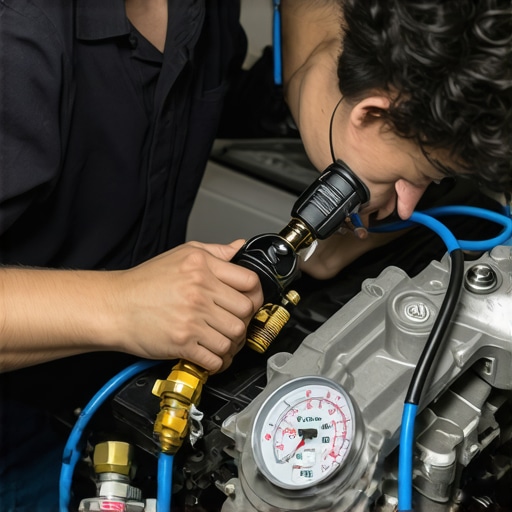 Identifying these leaks requires a dedicated pressure-test adapter that seals the intake tract, allowing you to find the ‘blow-out’ point that a vacuum-only test would never reveal.
Does Your Turbo Wastegate Chatter Signal a Vacuum Circuit Failure?
Many modern turbos rely on vacuum actuators to control the wastegate or variable vane geometry. If the vacuum pump or the solenoid controlling these components is weak, you will hear a distinct chattering or rattling sound during deceleration. This isn’t just an annoying noise; it is a symptom of a vacuum system that can no longer hold the physical load of the actuator. This failure can trick the ECM into thinking there is a boost control error, when in reality, the issue is a simple $2 vacuum line or a leaking reservoir. This level of system-wide thinking is what differentiates a basic essential auto repair from master-level troubleshooting. If you are also experiencing a stiff brake pedal, you should immediately consider a brake service to check if the shared vacuum pump is failing, as this component serves both engine performance and safety systems.
Carbon-Choked Throttle Bodies Sabotage Your Fuel Trims
One of the most deceptive ‘leaks’ isn’t a leak at all, but rather a physical obstruction. Over tens of thousands of miles, oil vapor and carbon build up behind the throttle butterfly plate. This prevents the plate from closing to its intended ‘base’ position. The ECM tries to compensate by adjusting the Idle Air Control (IAC) or the electronic throttle motor, but eventually, the correction factor hits a limit. The computer may interpret the extra air passing through the gap as a vacuum leak. Before you begin tearing down the intake manifold, perform a throttle body cleaning. Log your ‘Throttle Position’ and ‘Idle Air Adapter’ values on your scan tool before and after the cleaning; if you see a significant drop in the percentage required to maintain idle, you have just fixed a ‘ghost’ vacuum leak for the price of a can of solvent. Have you seen your long-term fuel trims improve just by cleaning a physical part? Share your data logs with our community to help others spot this common diagnostic trap.
Expert Insights and Advanced Considerations
Cross-Reference O2 Sensors with Fuel Trim Data
A true mechanic knows that a P0171 code is just the start of the story. To truly master auto repair, you must verify if the oxygen sensor is actually swinging or if it is lazily stuck. By comparing the upstream O2 voltage to your Short Term Fuel Trims, you can distinguish between a physical air leak and a failing sensor. If you have already tried the $10 cleaning move that saves your MAF sensor and the numbers have not moved, your focus must shift to the exhaust manifold or internal engine seals.
Thermal Expansion Often Masks Cold Start Leaks
Have you ever noticed a rough idle that vanishes once the engine reaches operating temperature? This is a classic symptom of a lazy intake gasket. As the engine block heats up, the plastic or metal manifold expands, effectively sealing the very gap that was causing a lean condition. Integrating this observation into your mechanic tips for diagnosing common auto problems allows you to catch failures that smoke machines might miss during a warm-engine test.
Stop Blaming the Fuel Pump First
Too many DIYers reach for the parts cannon and swap out a fuel pump when they see lean codes. Before spending hundreds, look at your freeze frame data. If the lean condition only exists at idle, it is air. If it exists only under load, it is fuel. This simple logic is the foundation of tune-up strategies to save money on auto repairs, ensuring you only replace what is actually broken. #IMAGE_PLACEHOLDER_E#
Curated Expert Resources
Delphi Technologies provides the technical foundation for fuel trim diagnostics. Their documentation is invaluable for those looking to understand the core physics of air-fuel ratios. ASE training materials offer a systematic approach to auto repair that prevents misdiagnosis. For the deepest technical dive, the Bosch Automotive Handbook remains the premier reference for sensor engineering and engine management logic.
Final Expert Perspective
Solving unmetered air issues requires a transition from part swapping to data analysis. By mastering the nuances of fuel trims and utilizing tools like the $20 scanner that every modern driver should own, you can diagnose even the most elusive vacuum leaks with surgical precision. Whether you are performing a routine tune up or chasing a complex P0174 code, remember that the engine data never lies. It only needs a skilled technician to interpret it. Do you have a specialized trick for finding leaks in turbocharged systems? We invite you to share your advanced diagnostic wins in the comments to help push our collective expertise further.