The radiator cap is frequently dismissed as a rudimentary lid, yet in the realm of thermodynamics, it serves as a sophisticated pressure relief valve essential for maintaining the boiling point of your engine’s coolant. A professional mechanic understands that for every pound of pressure applied, the boiling point of water increases by approximately three degrees Fahrenheit. When this seal fails, you risk localized boiling within the cylinder head, leading to micro-cracks and eventual failure. Identifying these issues early is part of a comprehensive tune-up checklist that saves thousands in long-term auto repair costs. While many drivers prioritize regular brake service for safety, the integrity of the cooling system is what preserves the engine’s mechanical lifespan.
The Silent Engine Killer Hiding Under Your Hood
The radiator cap must maintain a specific PSI—usually between 13 and 16 lbs—to function as intended. If the spring inside the cap becomes fatigued or the rubber gasket perishes, the system cannot pressurize. This results in the coolant boiling at a lower temperature, often causing a boil-over into the expansion tank. If you notice that your engine temp spikes only at stoplights, the cap’s inability to maintain pressure is a primary suspect. Modern brake service technicians often see similar neglect in hydraulic systems, but a cooling failure is far more likely to leave you stranded on the shoulder. According to industry standards published by the Society of Automotive Engineers (SAE), cooling system failures remain a leading cause of mechanical breakdown.
Build Your Own Low-Cost Pressure Testing Rig
Professional pressure testers can cost upwards of $100, but a $10 hack involving a T-fitting, a length of vacuum hose, and a basic tire pressure gauge can reveal the truth. By splicing into the overflow line and using a small hand pump, you can observe if the cap holds its rated pressure before the internal valve opens. This diagnostic accuracy is what separates a DIYer from someone who can tune up their car like a pro. If the pressure drops instantly, the cap is junk. Always ensure you follow the correct way to flush your coolant without air pockets after performing these tests to prevent localized hotspots in the block.
Why does my coolant level drop without a visible leak?
This is a common inquiry in expert forums and often points to a cap that is venting too early. If the cap release pressure is too low, coolant is pushed into the reservoir and eventually out the overflow drain as steam, leaving no puddle behind. You should also investigate why your coolant level drops without a visible leak to rule out internal consumption like a failing head gasket. If you found these technical insights helpful, consider contributing your own experiences in our community section or explore more auto repair strategies to keep your vehicle in peak condition.While the radiator cap holds the pressure, the thermostat dictates the rhythm of your engine’s thermal health. A thermostat that sticks in the open position is often ignored because it doesn’t cause an immediate overheat, yet it is a primary reason the hidden valve that causes poor gas mileage remains undetected by casual drivers. When the engine fails to reach its optimal operating temperature, the Engine Control Unit (ECU) stays in ‘open loop’ mode, constantly over-fueling the cylinders. This rich condition eventually coats your catalytic converter in unburned hydrocarbons, explaining why your car smells like rotten eggs when you accelerate. A seasoned mechanic knows that thermal stability is as much about reaching heat as it is about shedding it.
Why Old Coolant Turns Your Engine Into a Battery
Over time, the corrosion inhibitors in your coolant break down, and the fluid undergoes a chemical shift. It becomes an electrolyte, facilitating a process known as galvanic corrosion. This isn’t just theory; you can actually measure this with a digital tool. By performing the 12 multi meter test for your charging system but placing the positive probe directly into the coolant (and the negative on the battery terminal), any reading over 0.3 volts indicates that your engine is literally eating itself from the inside out. This electrical activity accelerates the degradation of aluminum components and can lead to the dreaded scenario why your engine oil looks like a milkshake, a clear sign of internal gasket failure. 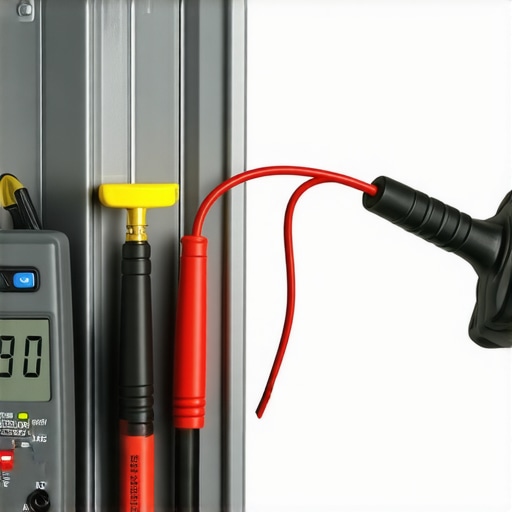
Is your dashboard temperature gauge actually telling the truth?
Most modern vehicles utilize ‘dampened’ gauges. To prevent driver panic over minor fluctuations, the ECU holds the needle perfectly dead-center as long as the temperature is within a broad ‘safe’ range—often between 165°F and 220°F. By the time that needle moves toward the red, the damage may already be occurring. Professionals use an OBD-II scanner to monitor live data, ensuring the cooling fans engage exactly when the manufacturer intended. This level of scrutiny is a cornerstone of essential tune-up tips to boost your cars performance in 2025. According to the Car Care Council, cooling system neglect is the most common cause of roadside breakdowns, yet it is the least expensive system to maintain proactively.
The Dangerous Myth of Lifetime Coolant
Automakers often boast about ‘lifetime’ fluids to lower the perceived cost of ownership, similar to the truth about lifetime transmission fluid and when to ignore it. In reality, no fluid is immortal. Heat cycles eventually shear the molecules, and the pH level drops, turning the liquid acidic. If you haven’t flushed your system in three years, you are gambling with your water pump seals and heater core. If you’ve noticed a sweet smell inside the cabin or a slight haze on the windshield, it’s time to stop guessing and start testing. Have you ever encountered a ‘ghost leak’ that disappeared only to return during a cold snap? Share your diagnostic puzzles in the comments below, or check out our guide on tune-up strategies to save money on auto repairs to stay ahead of the curve.The heater core is often the most neglected component until the smell of maple syrup fills the cabin and your floorboards turn into a swamp. Because it is positioned at one of the highest points in the cooling loop, any air trapped in the system—whether from a botched tune up or a failing seal—tends to migrate there first. This creates an air lock that prevents hot coolant from circulating, leaving you shivering in winter despite the engine being at operating temperature. More importantly, this stagnant pocket of air and moisture accelerates internal oxidation. If you’re performing a diagnosis on a clogged heater core without tearing down the dash, you’re essentially acting as a forensic mechanic looking for the earliest signs of system-wide neglect. Cavitation is another silent destroyer that occurs when the water pump’s impeller creates localized low-pressure zones. In these zones, the coolant can actually boil at ambient temperatures, forming tiny vapor bubbles. As these bubbles move into higher-pressure areas, they implode with enough force to blast microscopic chunks of metal off the pump housing and impeller blades. This erosion eventually leads to a loss of flow efficiency and, ultimately, a catastrophic bearing failure. To prevent this, heavy-duty applications often require Supplemental Coolant Additives (SCAs) to maintain a protective film on metal surfaces, a nuance frequently missed during a standard brake service or oil change interval. #IMAGE_PLACE_HOLDER_C#
Can a faulty head gasket mimic a simple air pocket?
Distinguishing between a stubborn air pocket and a micro-leak in the head gasket is one of the most frustrating challenges in auto repair. Both can cause erratic temperature spikes and a loss of cabin heat. However, a head gasket failure introduces combustion gases into the cooling jacket, which will continuously displace coolant. If you’ve bled the system multiple times and the ‘air’ keeps returning, it’s time to employ a chemical block tester. According to the AERA Engine Builders Association, the thermal expansion rates of aluminum heads on cast-iron blocks (bi-metal engines) make them particularly susceptible to these ‘intermittent’ leaks that only appear under high load. Using a blue-colored detector fluid that turns yellow or green in the presence of CO2 is the only definitive way to confirm if your ‘air pocket’ is actually an exhaust leak. When you move into the realm of high-performance cooling, the standard rules of thumb begin to shift. You might find that increasing the flow rate isn’t always the solution; sometimes, the coolant needs more ‘dwell time’ in the radiator to effectively shed its thermal load. If you’ve ever wondered why some race cars use restrictor plates instead of thermostats, you’re starting to see the complexity of fluid dynamics at play. Do you suspect your performance build is running too hot despite a massive radiator? Join our forum discussion on thermal flow rates or check out our guide on advanced cooling mods for track days to see if your pump is actually working against you. This brings us to the controversial topic of high-flow water pumps and whether they actually improve cooling or simply create more cavitation at high RPMs.The debate over high-flow water pumps often ignores the critical variable of the radiator’s surface-area-to-air-volume ratio. If the fluid velocity exceeds the radiator’s ability to transfer heat to the passing air, you encounter a thermal bottleneck. This is why a professional mechanic focuses heavily on the fan shroud. A shroud is not just a safety guard; it acts as a pressure chamber that ensures 100% of the fan’s pulling power is directed through the cooling fins rather than drawing ambient air from the engine bay. Without this seal, even the most expensive auto repair parts won’t prevent overheating at low speeds. 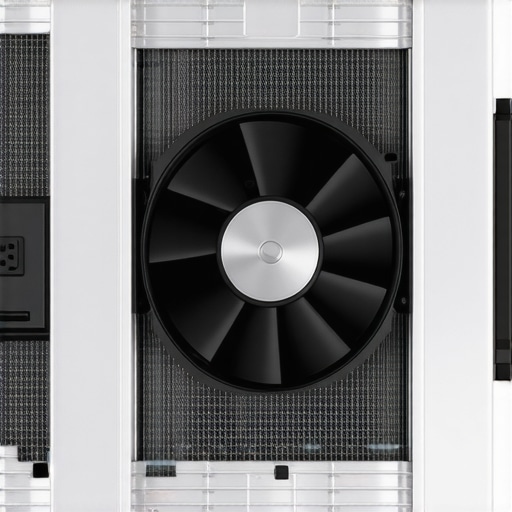
Stop Starving Your Radiator of Vital Airflow
Most DIY enthusiasts install high-performance electric fans but mount them directly to the core using plastic zip-ties, which effectively ‘blinds’ the portion of the radiator covered by the fan motor. A properly engineered shroud creates a plenum, allowing the fan to pull air through the entire surface area of the core. According to technical documentation from the Automotive Maintenance and Repair Association (AMRA), improper airflow management can reduce cooling efficiency by as much as 40%, regardless of pump speed. This is why a comprehensive tune up on a classic car often requires custom-fabricated ducting to bridge the gap between the grille and the radiator support.
Is a 70/30 coolant mix actually hurting your thermal efficiency?
While it is tempting to run a higher concentration of antifreeze for ‘extra protection,’ glycol is actually a poor conductor of heat compared to distilled water. A 70% glycol mix has a much lower specific heat capacity than a 50/50 or 30/70 mix. In high-load scenarios, this means the coolant cannot ‘pick up’ heat from the cylinder heads as effectively, leading to localized overheating even if the gauge looks normal. For track-focused builds, many professionals use a 20/80 mix supplemented with a surfactant wetting agent to maximize the thermal transfer coefficient. This technical nuance is a staple of advanced brake service shops that also handle high-performance engine builds.
The Hidden Physics of the Expansion Tank Pressure-Neutral Zone
The placement of your expansion tank—specifically whether it is a ‘self-bleeding’ system or a simple overflow bottle—dictates how the system handles steam pockets. In a pressurized expansion tank (degas bottle), the tank is located at the highest point of the cooling circuit and integrated into the suction side of the water pump. This creates a ‘pressure-neutral zone’ where air can naturally separate from the fluid and be vented without losing system pressure. If you are struggling with a persistent ‘gurgling’ sound behind the dash, it’s possible your expansion tank is mounted too low, or the small-diameter bleed lines are restricted by sediment. This level of system analysis is what differentiates a standard auto repair from a true performance optimization. Have you analyzed your system’s pressure-neutral zone lately? Share your cooling layout photos in our forum or dive into our specialized guide on optimizing degas bottles for custom cooling loops to ensure your build stays frost-free under pressure.
Expert Insights & Advanced Considerations
Stray Voltage Secretly Eats Your Engine Block
Electrolysis is a silent engine killer that effectively transforms your cooling system into a galvanic battery. When ground straps degrade or coolant chemistry shifts, stray electrical currents travel through the fluid, physically stripping metal atoms from the aluminum cylinder heads. If you are not performing the 12 multi meter test for your charging system specifically within the coolant reservoir, you may miss this degradation. A reading above 0.3 volts indicates that internal components are literally dissolving, a technical nuance that a standard tune up rarely covers until catastrophic failure occurs.
High-Performance Fans Require a Plenum for Peak Efficiency
Installing high-CFM electric fans directly against the radiator core often creates significant dead zones behind the fan motor where airflow is blocked. A professional mechanic understands that a properly engineered shroud acts as a pressure-equalizing plenum, ensuring air is pulled across 100% of the radiator’s surface area. Without this critical piece of ducting, cooling efficiency can drop by nearly 40%, regardless of the fan’s power. This attention to fluid dynamics is just as vital to vehicle health as regular brake service is to safety.
Thermal Dwell Time Outweighs Raw Flow Velocity
The assumption that a faster water pump always yields better cooling is a common auto repair myth. If coolant velocity is too high, the fluid does not spend sufficient time in the radiator to effectively shed its thermal load, leading to a steady climb in operating temperatures. Master technicians often use the 20 scanner that every modern driver should own to monitor temperature deltas and ensure the thermostat provides enough resistance to maintain proper dwell time.
Curated Expert Resources
SAE International (Society of Automotive Engineers): This organization provides the definitive technical papers on automotive thermal management and cooling system architecture used by manufacturers globally.
AERA Engine Builders Association: This resource offers specialized technical bulletins regarding head gasket failures and thermal expansion issues in modern bi-metal engines, perfect for those who want to tune up their car like a pro.
The Car Care Council: An authoritative source for statistical data on the most frequent causes of mechanical breakdowns, emphasizing why proactive cooling maintenance is the ultimate auto repair cost-saving strategy.
Final Expert Perspective
True engine longevity is the result of balancing chemical stability with thermal efficiency. As we have explored, every component from the pressurized expansion tank to the water pump impeller plays a critical role in preventing catastrophic overheating. A proactive mechanic looks beyond the dashboard gauge, using electrical and chemical tests to verify system integrity before a leak ever appears. By integrating these advanced cooling checks into your standard tune up routine and maintaining regular brake service, you ensure your vehicle remains reliable under the most demanding conditions. If you have encountered a complex thermal puzzle or want to share your own custom cooling modifications, we invite you to reach out through our contact page or explore more auto repair cost saving tips from industry experts to refine your diagnostic skills.
#IMAGE_PLACEHOLDER_E#