Eliminate the Mess with Specialized Fluid Containment
In the realm of automotive maintenance, the transition from a novice DIY enthusiast to a seasoned home mechanic is often marked not by the complexity of the repairs, but by the cleanliness and efficiency of the execution. Professional-grade auto repair demands more than just mechanical aptitude; it requires a deep understanding of fluid dynamics and environmental control. When performing a standard oil change, the primary challenge isn’t removing the drain plug—it’s managing the sudden, high-velocity release of hot lubricant that often bypasses shallow, generic pans. This is where a strategic, low-cost modification can transform a messy chore into a precise procedure.
The Structural Advantage of High-Wall Drain Pans
Most entry-level drain pans sold at big-box retailers are designed for volume, not flow control. When you pull that plug, the oil doesn’t just fall; it surges due to the pressure head within the oil pan. Using a $14 high-walled, anti-splash pan—or modifying a standard one with a strategic baffle—drastically reduces the risk of driveway stains. For those dealing with neglected vehicles, the 5 hack for removing a stripped oil drain bolt is a vital precursor to this process. By focusing on containment, you mirror the standards of an ASE-certified shop, where cleanliness is a prerequisite for safety.
A clean workspace allows for better diagnostic observation. When the floor isn’t covered in oil, you can easily spot other issues, such as a weeping water pump or a cracked CV boot. This level of attention is what separates a basic service from a comprehensive tune up. According to technical guidelines from Machinery Lubrication at Machinery Lubrication, maintaining a pristine environment during fluid exchanges is essential to prevent cross-contamination, which can degrade the chemical integrity of new lubricants and lead to premature component wear.
How Does Oil Temperature Influence Drain Path Accuracy?
Physics dictates that as oil reaches operating temperature, its viscosity drops, significantly increasing its flow rate. This higher velocity often causes the stream to “overshoot” the center of traditional pans, creating a mess that ruins a garage floor. By utilizing a wide-mouth $14 pan with integrated splash guards, you account for this thermal expansion and kinetic energy. While you are under the vehicle, it is the perfect time to check your own brake pads without taking off the wheel, ensuring your safety systems are as reliable as your engine lubrication.
Master the Professional Approach to Brake and Engine Care
Refining your oil change process is just the first step in a holistic approach to vehicle longevity. Experienced owners know that brake service secrets often involve similar low-cost, high-impact strategies, such as proper slide pin lubrication and rotor indexing. If you find yourself questioning the work done by others, learning how to tell if your mechanic actually changed the oil filter provides the peace of mind necessary for long-term ownership. To further elevate your garage game, consider exploring our expert guide on testing your alternator using a simple screwdriver to master electrical diagnostics with minimal investment.
Stop Chasing Ghosts in Your Electrical System
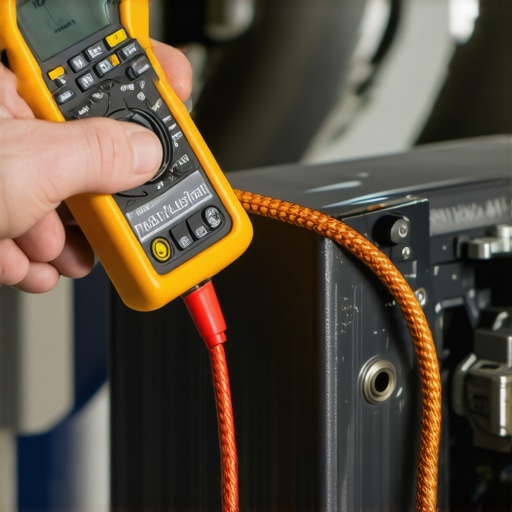
Modern vehicles are essentially rolling computers, which means the integrity of your electrical path is as crucial as the fuel in your tank. Many DIYers spend hundreds on sensors and alternators when the culprit is a corroded or loose connection to the chassis. A degraded engine ground can manifest as ‘ghost’ symptoms—sporadic shifting, dimming lights, or even a radio that resets itself when you hit a bump. To diagnose this with precision, the 12 multi-meter test for your charging system is the gold standard for identifying voltage drops that hide in plain sight.
Is a $14 Ground Strap Really the Cure for Mystery Stalling?
In many cases, the answer is a resounding yes. High-impedance connections create electrical noise that confuses the Engine Control Module (ECM), leading to poor combustion and erratic idle. Often, the 14 ground strap that fixes ghost shifting is the most cost-effective repair in a mechanic’s arsenal. By cleaning the contact points on the frame and engine block until they shine, you ensure that every milliamp has a clear path back to the battery. This simple maintenance step prevents the ECM from ‘hunting’ for a baseline signal, which often mimics a failing transmission or a bad throttle body.
Rescuing Engine Performance from Invisible Vacuum Leaks
Beyond the electrical system, the intake manifold’s airtight integrity is paramount for a smooth-running engine. A tiny breach in a rubber hose can lead to a lean condition, triggering a check engine light and causing a rough idle that feels like a major mechanical failure. While many reach for a new Idle Air Control valve, the 12 sensor that fixes your rough idle might just be reacting to unmetered air entering the system. Identifying these leaks requires a methodical approach, often involving a simple smoke test or using a spray bottle to listen for changes in RPM.
Ignoring these minor leaks can lead to catastrophic results over time. For instance, the 14 pcv valve fix that stops engine oil consumption targets a component that, when clogged, increases crankcase pressure until seals begin to fail. According to technical papers from SAE International at SAE International, uncontrolled crankcase pressure is a leading cause of premature gasket failure in modern turbocharged engines. Proactive replacement of these plastic and rubber components is a hallmark of expert-level maintenance that preserves the vehicle’s structural integrity.
Break the Cycle of the Lifetime Fluid Fallacy
Perhaps the most controversial topic in professional circles is the manufacturer’s claim of ‘lifetime’ transmission fluid. To a mechanical engineer, ‘lifetime’ often refers to the duration of the powertrain warranty, not the 200,000-mile target most owners hope for. Heat is the ultimate enemy of transmission health, breaking down the friction modifiers and detergents within the fluid. Diving into the dirty secret about lifetime transmission fluid reveals that regular drain-and-fill intervals are far cheaper than a $4,000 rebuild. If you have noticed your car struggling to find the right gear on the highway, it might be that your automatic transmission hunts for gears due to fluid that has lost its hydraulic efficiency. Have you ever performed your own fluid analysis or noticed a change in shifting after a simple service? Share your experiences in the comments below or let us know which diagnostic tool you can’t live without in your home garage.
The delicate dance of thermal management determines whether your engine lives to see 300,000 miles or ends up in a scrap heap far sooner. While most drivers only glance at the temperature gauge when steam is billowing from the hood, the real damage often occurs in the margins—micro-boiling events around the cylinder heads that remain invisible to the dashboard until it is too late. The cooling system is far more than a simple radiator; it is a pressurized thermal circuit that must maintain a precise equilibrium under varying loads. When you switch to a high-performance coolant or adjust your water-to-antifreeze ratio for local climates, you are essentially recalibrating the engine’s ability to shed waste heat effectively. According to technical bulletins from the AERA Engine Builders Association at AERA, improper thermal cycling is a primary contributor to localized stress fractures in aluminum alloy heads, a condition often exacerbated by microscopic air pockets trapped during a standard coolant refill. #IMAGE_PLACE_HOLDER_C#
Can a Faulty Radiator Cap Destroy Your Automatic Transmission?
It sounds like a stretch, but the internal architecture of most modern radiators includes a dedicated heat exchanger for transmission fluid. When a radiator cap fails to maintain its rated pressure—usually between 13 and 16 PSI—the boiling point of the coolant drops significantly. This creates a cascade effect where the transmission fluid, which relies on the radiator to shed its own heat, begins to oxidize at an accelerated rate. If you have ever seen the ‘strawberry milkshake’ of death on a dipstick, you know the catastrophic results of a breach between these two systems. Maintaining a fresh, pressure-tested cap is a $10 insurance policy against a $5,000 transmission overhaul. This level of preventative care is as critical as mastering brake service secrets to ensure your vehicle handles the stresses of daily driving.
Decode Your Engine’s Brain via Real-Time Data Streams
Moving from mechanical hardware to digital signals, the next level of expertise involves interpreting ‘Live Data’ rather than just reading generic trouble codes. A P0300 random misfire code is merely a generic scream for help, but looking at Short Term Fuel Trims (STFT) tells the actual story. If your fuel trims are positive 20% at idle but return to normal at 2,500 RPM, you aren’t looking at a failing fuel pump—you’ve successfully identified a classic vacuum leak. This level of digital sleuthing is what defines a top-tier technician in the modern era. If you are ready to stop being a ‘parts-changer’ and start being a diagnostic expert, it is time to invest in a scan tool that graphs PIDs (Parameter IDs) in real-time. Have you ever caught a failing oxygen sensor before it threw a code? Join the conversation in our community or let us know your favorite diagnostic ‘save’ in the comments. The real challenge begins when the digital data doesn’t match the mechanical symptoms, such as when a knock sensor pulls timing even when the engine sounds perfectly healthy. This often happens when the sensor registers a phantom vibration from a loose accessory bracket as a legitimate engine ping, causing the ECM to retard ignition timing and sap your fuel economy. This is where the ‘screwdriver-as-a-stethoscope’ trick—one of the many electrical diagnostics hacks we recommend—proves its worth in differentiating mechanical clatter from internal detonation. By observing how the ignition advance responds to external vibrations, you can isolate whether the issue is a simple sensor replacement or a more concerning internal rotating assembly failure. This systematic elimination of variables is the hallmark of a professional who understands that the computer is only as smart as the sensors providing its input, and often, the most complex issues have the most mechanical origins.
Master the Chemistry of Engine Lubrication
While digital diagnostics provide the ‘what,’ the physical chemistry of your vehicle’s fluids explains the ‘why’ behind long-term degradation. Beyond the simple weight of an oil, the High Viscosity Index (HVI) represents a lubricant’s resistance to thinning as temperatures soar. In high-stress environments, such as towing through a mountain pass or idling in heavy summer traffic, a standard oil can shear down to a dangerous level, leaving critical bearings vulnerable to metal-on-metal contact. Expert-level maintenance involves selecting synthetic bases that prioritize shear stability over mere price. According to technical standards set by ASTM International at ASTM International, these chemical properties are the primary defense against the micro-welding of piston rings to cylinder walls under extreme thermal loads. Maintaining this chemical barrier is as essential as any mechanical fix, serving as a silent guardian for your engine’s internal rotating assembly.
The Hidden Hazard of Brake Fluid Copper Content
Many DIY enthusiasts overlook the hygroscopic nature of brake fluid, which acts like a sponge for atmospheric moisture. Once water content exceeds 3%, the boiling point of the fluid drops precipitously, leading to a ‘spongy’ pedal during heavy braking maneuvers. However, the true expert monitors more than just moisture; the accumulation of dissolved copper from the internal lining of brake lines serves as a primary catalyst for ABS modulator failure. Monitoring these chemical shifts is far more predictive of system health than a simple visual inspection of fluid color. Using professional-grade test strips to identify copper parts-per-million allows you to perform a flush before the corrosion-inhibitor package is fully depleted. This proactive approach prevents the internal pitting of expensive calipers and master cylinders, ensuring your brake service secrets lead to true long-term reliability.
#IMAGE_PLACE_HOLDER_D#
Solve the Carbon Buildup Puzzle in Modern GDI Engines
Transitioning to the engine’s internal health, the rise of Gasoline Direct Injection (GDI) has introduced a unique maintenance hurdle: intake valve carbonization. Because fuel is injected directly into the combustion chamber, the intake valves never receive the ‘cleaning bath’ of gasoline found in traditional port-injected engines. Over time, this leads to a thick, tar-like buildup that restricts airflow and causes persistent misfires that a standard tune up won’t solve. While some shops resort to expensive walnut blasting, a proactive regimen of specialized PEA (Polyetheramine) cleaners formulated for GDI systems can mitigate this buildup if caught early. This process ensures your volumetric efficiency remains peak for the life of the vehicle, preventing the ‘choked’ engine feel that often mimics a failing turbocharger or a clogged catalytic converter.
Can Your Torque Wrench Lie to You at Low Settings?
Even the most seasoned mechanics can fall victim to the ‘click’ of a poorly calibrated torque wrench. When working on aluminum valve covers or plastic intake manifolds, the margin between a perfect seal and a cracked housing is razor-thin. Most 1/2-inch drive wrenches are notoriously inaccurate at the bottom 20% of their scale. For these delicate tasks, switching to a dedicated 1/4-inch drive ‘inch-pound’ wrench is non-negotiable. This precision prevents the common headache of a stripped bolt, which often requires time-consuming heli-coil repairs that could have been avoided with the right tool for the scale. Mastering these nuances requires a shift in perspective from merely ‘fixing’ to ‘preserving.’ Have you ever noticed a specific tool that changed your success rate in the garage? Dive into our community discussions below and share your most technical ‘save’ to help fellow enthusiasts elevate their craft.
Go Beyond the Basics with Pro-Level Maintenance
Stop Treating Your Torque Wrench Like a Standard Ratchet
Precision in auto repair is often lost in the final few foot-pounds of tightening. Many enthusiasts rely on feel, but when dealing with aluminum cylinder heads or plastic intake plenums, “tight enough” is a recipe for a cracked housing. Professional technicians understand that calibration drift is real; a tool that is accurate at 100 ft-lbs may be wildly off at 15. To avoid the nightmare of a stripped bolt, always utilize a dedicated inch-pound wrench for delicate fasteners. This level of precision ensures that gaskets compress evenly, preventing the very leaks you are trying to fix.
Why Visual Inspections Fail the Brake Fluid Test
Checking the color of your brake fluid is an amateur’s metric that often leads to false confidence. The real enemy is dissolved copper and moisture content, neither of which are always visible to the naked eye. To truly ensure safety, you must test your own brake fluid for water content at home using electronic testers or chemical strips. This proactive step prevents internal ABS modulator corrosion long before the pedal feels soft or the fluid turns dark. #IMAGE_PLACEHOLDER_E#
Thermal Expansion Matters When Measuring Modern Lubricants
Checking your oil or transmission fluid while the engine is stone-cold can lead to significant overfilling errors. Most modern systems are engineered to be measured at operating temperature to account for fluid expansion and aeration. This nuance is critical for maintaining correct hydraulic pressure within the valve body. If you find your car behaves strangely, consider if your transmission flushes are a waste of money simply because the fluid level was never correctly set to begin with.
Technical Data Sources for the Serious Mechanic
For those looking to transition from hobbyist to expert, these resources provide the technical foundation required for high-level diagnostics and engineering understanding.
- AERA Engine Builders Association: The gold standard for technical specifications regarding engine machining, assembly clearances, and localized thermal stress bulletins.
- ASTM International: Provides the rigorous chemical benchmarks for lubricant performance, shear stability, and material stress testing.
- SAE International: The primary source for the engineering standards that dictate how every component in your vehicle—from the ground strap to the ECM—is designed and tested.
Shift Your Strategy from Reactive to Proactive
Mastering auto repair isn’t about having the biggest toolbox; it’s about developing a diagnostic mindset that identifies failures before they manifest as a breakdown. Whether you are applying essential tune-up tips to boost your car’s performance in 2025 or deep-diving into the chemistry of your coolant, the goal remains the same: the preservation of the machine. True expertise lies in the details, from the hub scrub that stops brake vibrations to the systematic testing of every ground circuit. What advanced diagnostic trick has saved your vehicle from the scrap heap? Join our community of professional-grade DIYers below and share your insights to help others refine their craft.