
In the specialized world of high-mileage vehicle maintenance, the distinction between a worn-out vehicle and one that requires surgical intervention is often found in the smallest details. Experienced automotive technicians understand that tactile feedback is the primary communicator between the machine and the operator. When a gear shifter loses its crisp, gated feel, many owners immediately fear the financial burden of a full transmission overhaul. However, the reality of auto repair often reveals that the culprit is not internal gear failure, but the degradation of a simple polymer component. For less than the cost of a lunch, an $8 bushing can restore the kinetic precision of a vehicle, highlighting why a nuanced approach to diagnostics is superior to the parts-cannon method frequently seen in less experienced shops.
The Diagnostic Gap Between a Loose Lever and a Blown Gearbox
A comprehensive tune up typically focuses on the engine’s internal combustion efficiency—spark plugs, filters, and fluid health—but a true expert looks at the holistic performance of the drivetrain. If you find your shifter vibrating or struggling to find third gear, the issue is likely localized in the shift linkage rather than the transmission’s internal synchros. Experienced mechanics often find that these rubber or plastic bushings perish due to heat cycles and oil contamination, leading to a disconnect between driver input and mechanical execution. You can learn more about this specific repair in our guide on how to fix a loose shifter with a 6-bushing, which demonstrates how minor hardware can solve major drivability complaints.
What Are the Structural Consequences of Driving with Excessive Shifter Play?
Beyond the annoyance of a sloppy feel, excessive play in the linkage can lead to improper gear engagement. This misalignment causes premature wear on the synchronizer rings, eventually necessitating the very transmission rebuild you were trying to avoid. When a gear does not fully seat because the linkage is vague, it can ‘pop’ out under load, damaging the gear teeth. Professional technicians emphasize that addressing these small tolerances early is what separates a long-lasting vehicle from a salvage yard candidate. According to technical standards maintained by the Society of Automotive Engineers (SAE), maintaining original equipment manufacturer tolerances in control interfaces is vital for both vehicle safety and driver response times.
Integrate Your Shift Repairs with Critical Brake Service
While you are addressing the shifter linkage, it is the perfect time to evaluate your stopping power. A thorough brake service is not just about replacing pads; it involves inspecting the entire hydraulic and mechanical interface to ensure consistent pedal feel and heat dissipation. Just as a new bushing restores shifting feel, high-quality brake maintenance ensures the vehicle reacts predictably under stress. Combining these tactile repairs ensures that your car responds exactly as intended during emergency maneuvers. We recommend reviewing our brake service secrets to understand how to boost both safety and component longevity. If you are unsure which professional to trust with these intricate tasks, finding the right mechanic who prioritizes precision over profit is your first step toward automotive reliability. Explore our diagnostic library to further refine your vehicle’s performance and catch minor issues before they become catastrophic failures.
Stop Chasing Ghost Shifts with Simple Electrical Fixes
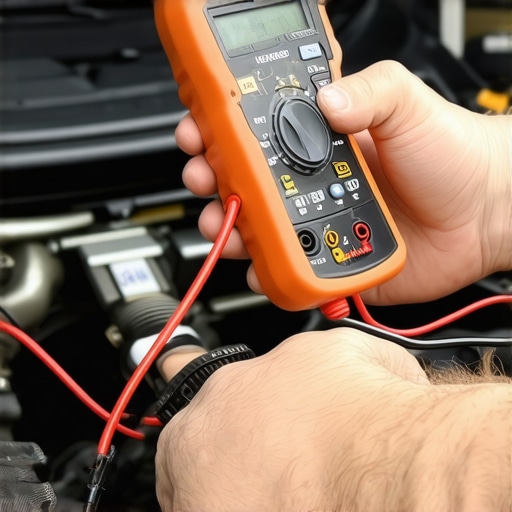
Modern drivetrains rely on a delicate web of sensors and actuators that communicate via low-voltage signals. Even a minor increase in electrical resistance—caused by a corroded grounding point—can distort the data sent to the Transmission Control Module (TCM). When this occurs, you might experience erratic gear changes or “ghost shifting,” where the car seems to shift for no reason. Many vehicle owners assume the worst, but an expert mechanic will often look for a 14-dollar ground strap that has succumbed to road salt and oxidation. Addressing these electrical bottlenecks is a fundamental part of a modern tune up, as it restores the clean signal necessary for the vehicle’s computer to make precise shift decisions. In some extreme cases, a hidden fuse can be the sole reason for a complete TCM failure, mimicking a total transmission meltdown.
Why Does Your Transmission Hunt for Gears on the Open Highway?
When you are cruising at a steady speed and the RPMs begin to oscillate slightly, your vehicle is “hunting” for the correct gear or struggling to keep the torque converter clutch engaged. This phenomenon is rarely a sign of a mechanical internal failure; instead, it is often a response to inaccurate engine load data. A faulty 12-dollar sensor, such as a mass airflow or throttle position sensor, can feed the computer conflicting information, causing it to rapidly switch between gears to compensate for perceived power loss. Furthermore, a transmission that hunts for gears on the highway is frequently battling a small vacuum leak that affects the transmission’s pressure regulator. According to the National Institute for Automotive Service Excellence (ASE), diagnosing the root cause of drivability issues requires a systematic approach to engine management systems rather than simply looking at the transmission in isolation.
Identify the Hidden Vacuum Leak Sabotaging Your Drive
Vacuum leaks are the silent killers of fuel economy and shifting smoothness. A hidden vacuum leak can trick the transmission into shifting early or late, creating a harsh driving experience. These leaks are often found in aged rubber hoses or even a failing 12-dollar plastic connector that has become brittle over time. If you notice your engine temperature spikes only while idling, it could be a related cooling system failure where the fan is not receiving the correct signal to engage, further complicating the vehicle’s thermal and mechanical health. We invite you to join the conversation in our community forums below; have you ever saved a transmission with a simple sensor swap? Your insights could help a fellow owner avoid a massive repair bill.
Mastering Thermal Management Beyond the Radiator Cap
Experienced technicians know that cooling system health extends far beyond the radiator. A car that maintains perfect temperature on the highway but begins to overheat the moment you stop is a classic symptom of airflow restriction or a failing fan clutch. This thermal stress doesn’t just affect the engine; it thins out the transmission fluid, reducing its lubricating properties and leading to long-term damage. Integrating these thermal checks into your regular auto repair routine ensures that small issues like a clogged radiator fin don’t escalate into a head gasket failure. Check out our latest guide on keeping your vehicle running smoothly to build a maintenance schedule that accounts for these often-ignored variables.
In the realm of advanced auto repair, few topics spark as much debate as the trans-flush on a vehicle with over 150,000 miles. While a standard tune up emphasizes fresh fluids, a seasoned mechanic knows that old transmission fluid often carries suspended friction material necessary for worn clutch packs to engage. When you replace this gritty, high-viscosity fluid with slick, detergent-rich new oil, you risk the slipping phenomenon. This happens because the detergents wash away the very particulates that were providing the necessary friction. The key is a gradual drain-and-fill strategy rather than a high-pressure flush, allowing the system to acclimate to new chemistry without shocking the internal seals or dislodging sludge into the valve body. Expert consensus from the Automatic Transmission Rebuilders Association (ATRA) suggests that maintaining fluid cleanliness is a proactive measure, but reactive flushes on a failing unit can often accelerate its demise.
Can Contaminated Fluid Trigger a Persistent Limp Mode?
A vehicle entering limp mode is a protective software state designed to prevent catastrophic internal damage. While many owners look toward major hardware failure, a sophisticated diagnostic scan often reveals that the culprit is a pulse-width modulated (PWM) solenoid struggling with fluid varnish. When fluid breaks down thermally, it leaves behind a sticky residue that prevents these tiny valves from cycling at the microsecond speeds required by the Transmission Control Module (TCM). This creates a pressure mismatch, which the computer interprets as a slip, immediately locking the transmission into a single gear to protect the drivetrain. Identifying the specific solenoid through live data streaming, rather than blindly replacing the entire valve body, is what separates a master technician from a parts swapper. 
Stop the Kinetic Shake: Why Engine Mounts Are Critical for Shifting
Often overlooked during a standard brake service or oil change, the physical mounting points of the powertrain dictate the alignment of every moving part. If your engine or transmission mounts have collapsed, the entire assembly shifts under torque. This movement puts immense strain on the shift cables, coolant hoses, and CV axles. In manual vehicles, a bad mount can make it nearly impossible to engage certain gears during hard acceleration, as the engine tilts away from its intended geometry. High-performance mechanics often upgrade to stiffer polyurethane bushings to eliminate this engine rock, ensuring that every ounce of power reaches the wheels rather than being absorbed by failing rubber. If you have noticed a clunking sound when shifting from Park to Drive, your mounts are likely begging for attention. We encourage you to dive deeper into our engine mount failure guide to learn how to spot these issues before they snap a brittle plastic connector or a radiator hose.
Why Do Drive Axle Vibrations Mimic Transmission Failure?
A common misdiagnosis in high-mileage cars is attributing a rhythmic shudder to the torque converter when it is actually a dry CV joint. As the grease inside an axle boot dries out or escapes through a tiny tear, the metal-on-metal friction creates a vibration that resonates through the entire subframe. This vibration is most noticeable under load—specifically between 40 and 60 MPH—leading many to believe the transmission is failing to lock up correctly. A sharp tune up should always include a physical inspection of the boots; a 20-dollar boot kit can save a 500-dollar axle. By isolating the frequency of the vibration, you can determine if the issue is rotational or engine-speed dependent, which is vital for an accurate auto repair plan. When a vibration persists only during acceleration, it almost always points to the inner tripod joint of the axle rather than an internal gearbox catastrophe.
The transition from a standard tune up to an advanced diagnostic approach requires a shift in perspective—moving from checking parts to analyzing data streams. One of the most insidious issues in high-mileage vehicles is “sensor laziness.” Unlike a hard failure that triggers a Check Engine Light, a lazy oxygen sensor or Mass Airflow (MAF) sensor might still operate within a wide, acceptable range but react too slowly to transient throttle changes. This latency causes a mismatch between the engine’s actual load and the load reported to the transmission. A lazy sensor forces the engine to operate in a “limp-rich” or “limp-lean” state momentarily, which creates a torque spike that the transmission struggles to smooth out. A master mechanic uses a graphing multimeter or scan tool to look for these slow response times. This data-driven approach is a core principle advocated by professional organizations like the Automotive Service Association (ASA), ensuring that technicians address the source of a driveability complaint rather than just the symptom.

Why Your Old Brake Fluid Is Confusing the Traction Control System
It is a common misconception that a brake service is only about stopping distance. In modern vehicles, the Anti-lock Braking System (ABS) and Traction Control System (TCS) are intimately linked to the transmission’s shift logic. When brake fluid becomes contaminated with moisture—a natural process known as hygroscopy—it changes the fluid’s boiling point and compressibility. During a traction-loss event, the computer may attempt to feather the brakes while simultaneously requesting a transmission downshift to maintain stability. If the hydraulic response is sluggish due to degraded fluid, the synchronization between the engine, brakes, and gearbox fails, often resulting in a harsh “thump” or an unexpected shift delay. During a comprehensive brake service, technicians should also check the ABS modulator for internal debris that can cause the very same erratic behavior. This mechanical disharmony highlights why a fluid flush is a vital component of holistic auto repair.
Can a Corroded Battery Ground Actually Trigger a Faulty Transmission Code?
The short answer is a resounding yes. Modern transmission solenoids are extremely sensitive to voltage drops. If the main engine ground or the battery terminals are even slightly oxidized, the high current draw from the starter or cooling fans can momentarily “starve” the Transmission Control Module (TCM). This momentary drop in voltage can cause the solenoids to chatter or lose their commanded position, prompting the computer to throw a “solenoid circuit” error. Before you let a shop sell you a new valve body, insist on a voltage drop test across the main power and ground circuits. This five-minute test is the hallmark of an elite mechanic who values precision over profit. Often, cleaning a single mounting point can restore factory-spec shifting in under an hour.
Final Drive Maintenance Keeps Your Power at the Pavement
While the engine and transmission get all the glory, the differential (or final drive) is the component that actually translates rotational force into forward motion. Over time, the gear oil inside the differential shears down, losing its ability to protect the ring and pinion gears from extreme pressure. Many owners forget this critical fluid during a standard tune up, only realizing there is an issue when they hear a high-pitched whine at highway speeds. Replacing this fluid with the correct synthetic weight—and ensuring the breather vent is clear of debris—prevents internal pressure buildup that could blow out the axle seals. Take control of your vehicle’s longevity today by scheduling a comprehensive drivetrain evaluation that goes beyond the surface. Have you checked your transmission’s live data recently? Share your diagnostic victories in the comments below!
In the specialized world of high-mileage vehicle maintenance, the distinction between a worn-out vehicle and one that requires surgical intervention is often found in the smallest details. Experienced automotive technicians understand that tactile feedback is the primary communicator between the machine and the operator. When a gear shifter loses its crisp, gated feel, many owners immediately fear the financial burden of a full transmission overhaul. However, the reality of auto repair often reveals that the culprit is not internal gear failure, but the degradation of a simple polymer component. For less than the cost of a lunch, an $8 bushing can restore the kinetic precision of a vehicle, highlighting why a nuanced approach to diagnostics is superior to the parts-cannon method frequently seen in less experienced shops.
The Diagnostic Gap Between a Loose Lever and a Blown Gearbox
A comprehensive tune up typically focuses on the engine’s internal combustion efficiency—spark plugs, filters, and fluid health—but a true expert looks at the holistic performance of the drivetrain. If you find your shifter vibrating or struggling to find third gear, the issue is likely localized in the shift linkage rather than the transmission’s internal synchros. Experienced mechanics often find that these rubber or plastic bushings perish due to heat cycles and oil contamination, leading to a disconnect between driver input and mechanical execution. You can learn more about this specific repair in our guide on how to fix a loose shifter with a 6-bushing, which demonstrates how minor hardware can solve major drivability complaints.
What Are the Structural Consequences of Driving with Excessive Shifter Play?
Beyond the annoyance of a sloppy feel, excessive play in the linkage can lead to improper gear engagement. This misalignment causes premature wear on the synchronizer rings, eventually necessitating the very transmission rebuild you were trying to avoid. When a gear does not fully seat because the linkage is vague, it can ‘pop’ out under load, damaging the gear teeth. Professional technicians emphasize that addressing these small tolerances early is what separates a long-lasting vehicle from a salvage yard candidate. According to technical standards maintained by the Society of Automotive Engineers (SAE), maintaining original equipment manufacturer tolerances in control interfaces is vital for both vehicle safety and driver response times.
Integrate Your Shift Repairs with Critical Brake Service
While you are addressing the shifter linkage, it is the perfect time to evaluate your stopping power. A thorough brake service is not just about replacing pads; it involves inspecting the entire hydraulic and mechanical interface to ensure consistent pedal feel and heat dissipation. Just as a new bushing restores shifting feel, high-quality brake maintenance ensures the vehicle reacts predictably under stress. Combining these tactile repairs ensures that your car responds exactly as intended during emergency maneuvers. We recommend reviewing our brake service secrets to understand how to boost both safety and component longevity. If you are unsure which professional to trust with these intricate tasks, finding the right mechanic who prioritizes precision over profit is your first step toward automotive reliability. Explore our diagnostic library to further refine your vehicle’s performance and catch minor issues before they become catastrophic failures.
Stop Chasing Ghost Shifts with Simple Electrical Fixes
Modern drivetrains rely on a delicate web of sensors and actuators that communicate via low-voltage signals. Even a minor increase in electrical resistance—caused by a corroded grounding point—can distort the data sent to the Transmission Control Module (TCM). When this occurs, you might experience erratic gear changes or “ghost shifting,” where the car seems to shift for no reason. Many vehicle owners assume the worst, but an expert mechanic will often look for a 14-dollar ground strap that has succumbed to road salt and oxidation. Addressing these electrical bottlenecks is a fundamental part of a modern tune up, as it restores the clean signal necessary for the vehicle’s computer to make precise shift decisions. In some extreme cases, a hidden fuse can be the sole reason for a complete TCM failure, mimicking a total transmission meltdown.
Why Does Your Transmission Hunt for Gears on the Open Highway?
When you are cruising at a steady speed and the RPMs begin to oscillate slightly, your vehicle is “hunting” for the correct gear or struggling to keep the torque converter clutch engaged. This phenomenon is rarely a sign of a mechanical internal failure; instead, it is often a response to inaccurate engine load data. A faulty 12-dollar sensor, such as a mass airflow or throttle position sensor, can feed the computer conflicting information, causing it to rapidly switch between gears to compensate for perceived power loss. Furthermore, a transmission that hunts for gears on the highway is frequently battling a small vacuum leak that affects the transmission’s pressure regulator. According to the National Institute for Automotive Service Excellence (ASE), diagnosing the root cause of drivability issues requires a systematic approach to engine management systems rather than simply looking at the transmission in isolation.
Identify the Hidden Vacuum Leak Sabotaging Your Drive
Vacuum leaks are the silent killers of fuel economy and shifting smoothness. A hidden vacuum leak can trick the transmission into shifting early or late, creating a harsh driving experience. These leaks are often found in aged rubber hoses or even a failing 12-dollar plastic connector that has become brittle over time. If you notice your engine temperature spikes only while idling, it could be a related cooling system failure where the fan is not receiving the correct signal to engage, further complicating the vehicle’s thermal and mechanical health. We invite you to join the conversation in our community forums below; have you ever saved a transmission with a simple sensor swap? Your insights could help a fellow owner avoid a massive repair bill.
Mastering Thermal Management Beyond the Radiator Cap
Experienced technicians know that cooling system health extends far beyond the radiator. A car that maintains perfect temperature on the highway but begins to overheat the moment you stop is a classic symptom of airflow restriction or a failing fan clutch. This thermal stress doesn’t just affect the engine; it thins out the transmission fluid, reducing its lubricating properties and leading to long-term damage. Integrating these thermal checks into your regular auto repair routine ensures that small issues like a clogged radiator fin don’t escalate into a head gasket failure. Check out our latest guide on keeping your vehicle running smoothly to build a maintenance schedule that accounts for these often-ignored variables.
In the realm of advanced auto repair, few topics spark as much debate as the trans-flush on a vehicle with over 150,000 miles. While a standard tune up emphasizes fresh fluids, a seasoned mechanic knows that old transmission fluid often carries suspended friction material necessary for worn clutch packs to engage. When you replace this gritty, high-viscosity fluid with slick, detergent-rich new oil, you risk the slipping phenomenon. This happens because the detergents wash away the very particulates that were providing the necessary friction. The key is a gradual drain-and-fill strategy rather than a high-pressure flush, allowing the system to acclimate to new chemistry without shocking the internal seals or dislodging sludge into the valve body. Expert consensus from the Automatic Transmission Rebuilders Association (ATRA) suggests that maintaining fluid cleanliness is a proactive measure, but reactive flushes on a failing unit can often accelerate its demise.
Can Contaminated Fluid Trigger a Persistent Limp Mode?
A vehicle entering limp mode is a protective software state designed to prevent catastrophic internal damage. While many owners look toward major hardware failure, a sophisticated diagnostic scan often reveals that the culprit is a pulse-width modulated (PWM) solenoid struggling with fluid varnish. When fluid breaks down thermally, it leaves behind a sticky residue that prevents these tiny valves from cycling at the microsecond speeds required by the Transmission Control Module (TCM). This creates a pressure mismatch, which the computer interprets as a slip, immediately locking the transmission into a single gear to protect the drivetrain. Identifying the specific solenoid through live data streaming, rather than blindly replacing the entire valve body, is what separates a master technician from a parts swapper.
Stop the Kinetic Shake: Why Engine Mounts Are Critical for Shifting
Often overlooked during a standard brake service or oil change, the physical mounting points of the powertrain dictate the alignment of every moving part. If your engine or transmission mounts have collapsed, the entire assembly shifts under torque. This movement puts immense strain on the shift cables, coolant hoses, and CV axles. In manual vehicles, a bad mount can make it nearly impossible to engage certain gears during hard acceleration, as the engine tilts away from its intended geometry. High-performance mechanics often upgrade to stiffer polyurethane bushings to eliminate this engine rock, ensuring that every ounce of power reaches the wheels rather than being absorbed by failing rubber. If you have noticed a clunking sound when shifting from Park to Drive, your mounts are likely begging for attention. We encourage you to dive deeper into our engine mount failure guide to learn how to spot these issues before they snap a brittle plastic connector or a radiator hose.
Why Do Drive Axle Vibrations Mimic Transmission Failure?
A common misdiagnosis in high-mileage cars is attributing a rhythmic shudder to the torque converter when it is actually a dry CV joint. As the grease inside an axle boot dries out or escapes through a tiny tear, the metal-on-metal friction creates a vibration that resonates through the entire subframe. This vibration is most noticeable under load—specifically between 40 and 60 MPH—leading many to believe the transmission is failing to lock up correctly. A sharp tune up should always include a physical inspection of the boots; a 20-dollar boot kit can save a 500-dollar axle. By isolating the frequency of the vibration, you can determine if the issue is rotational or engine-speed dependent, which is vital for an accurate auto repair plan. When a vibration persists only during acceleration, it almost always points to the inner tripod joint of the axle rather than an internal gearbox catastrophe.
The transition from a standard tune up to an advanced diagnostic approach requires a shift in perspective—moving from checking parts to analyzing data streams. One of the most insidious issues in high-mileage vehicles is “sensor laziness.” Unlike a hard failure that triggers a Check Engine Light, a lazy oxygen sensor or Mass Airflow (MAF) sensor might still operate within a wide, acceptable range but react too slowly to transient throttle changes. This latency causes a mismatch between the engine’s actual load and the load reported to the transmission. A lazy sensor forces the engine to operate in a “limp-rich” or “limp-lean” state momentarily, which creates a torque spike that the transmission struggles to smooth out. A master mechanic uses a graphing multimeter or scan tool to look for these slow response times. This data-driven approach is a core principle advocated by professional organizations like the Automotive Service Association (ASA), ensuring that technicians address the source of a driveability complaint rather than just the symptom.
Why Your Old Brake Fluid Is Confusing the Traction Control System
It is a common misconception that a brake service is only about stopping distance. In modern vehicles, the Anti-lock Braking System (ABS) and Traction Control System (TCS) are intimately linked to the transmission’s shift logic. When brake fluid becomes contaminated with moisture—a natural process known as hygroscopy—it changes the fluid’s boiling point and compressibility. During a traction-loss event, the computer may attempt to feather the brakes while simultaneously requesting a transmission downshift to maintain stability. If the hydraulic response is sluggish due to degraded fluid, the synchronization between the engine, brakes, and gearbox fails, often resulting in a harsh “thump” or an unexpected shift delay. During a comprehensive brake service, technicians should also check the ABS modulator for internal debris that can cause the very same erratic behavior. This mechanical disharmony highlights why a fluid flush is a vital component of holistic auto repair.
Can a Corroded Battery Ground Actually Trigger a Faulty Transmission Code?
The short answer is a resounding yes. Modern transmission solenoids are extremely sensitive to voltage drops. If the main engine ground or the battery terminals are even slightly oxidized, the high current draw from the starter or cooling fans can momentarily “starve” the Transmission Control Module (TCM). This momentary drop in voltage can cause the solenoids to chatter or lose their commanded position, prompting the computer to throw a “solenoid circuit” error. Before you let a shop sell you a new valve body, insist on a voltage drop test across the main power and ground circuits. This five-minute test is the hallmark of an elite mechanic who values precision over profit. Often, cleaning a single mounting point can restore factory-spec shifting in under an hour.
Final Drive Maintenance Keeps Your Power at the Pavement
While the engine and transmission get all the glory, the differential (or final drive) is the component that actually translates rotational force into forward motion. Over time, the gear oil inside the differential shears down, losing its ability to protect the ring and pinion gears from extreme pressure. Many owners forget this critical fluid during a standard tune up, only realizing there is an issue when they hear a high-pitched whine at highway speeds. Replacing this fluid with the correct synthetic weight—and ensuring the breather vent is clear of debris—prevents internal pressure buildup that could blow out the axle seals. Take control of your vehicle’s longevity today by scheduling a comprehensive drivetrain evaluation that goes beyond the surface. Have you checked your transmission’s live data recently? Share your diagnostic victories in the comments below!
Expert Insights & Advanced Considerations
Voltage Drops Mimic Total Gearbox Failure
In the landscape of modern CAN-bus vehicle architecture, a mere 0.5-volt drop across a corroded ground strap can induce ghost shifting or false neutral codes. An elite mechanic knows to start with a multimeter rather than a wrench, ensuring the Transmission Control Module receives clean power before recommending costly hardware replacements. Checking the 14-dollar ground strap is a diagnostic fundamental that separates masters from apprentices.
Thermal Runaway Kills Clutch Packs Silently
Engine temperature is a standard metric, but transmission fluid thermal latency remains a silent killer. Once ATF exceeds its breakdown threshold, its viscosity properties change permanently, leading to sticking solenoids. Integrating thermal management into your auto repair routine is the only way to prevent the fluid from oxidizing into a destructive varnish.
Brake Fluid Quality Dictates Downshift Timing
Stability control systems rely on the millisecond response of hydraulic circuits. If you use moisture-heavy fluid, the ABS pump reaction time slows, causing the computer to delay transmission downshifts during emergency braking. A comprehensive brake service that includes a moisture-content test ensures your entire safety suite remains synchronized. You can find more detail in our guide on brake service strategies to maximize safety.
Curated Expert Resources
SAE International (Society of Automotive Engineers): Provides the global technical standards for drivetrain fluid dynamics and component engineering tolerances.
ATRA (Automatic Transmission Rebuilders Association): The premier database for tracking pattern failures and specialized diagnostic procedures for electronic gearboxes.
ASE Training Portals: Essential for understanding the intersection of sensor latency and data stream analysis in modern vehicle maintenance.
Final Expert Perspective
Advancing from a standard tune up to a data-driven diagnostic approach is the most effective way to ensure vehicle longevity. By analyzing data streams and looking for sensor latency, you can address the root cause of transmission issues without resorting to the parts-cannon. Utilizing proven tune up strategies often proves that the most daunting mechanical symptoms have surprisingly simple solutions. Have you ever rescued a transmission with a simple electrical fix? Share your technical victories below or explore our advanced resources to keep your vehicle performing at its peak.