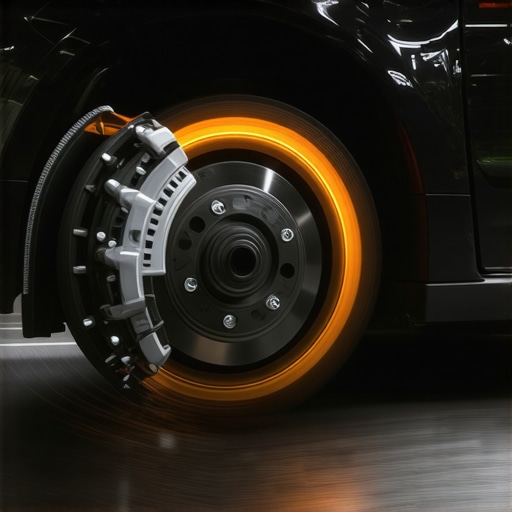
A sudden, violent vibration pulsing through your steering wheel or brake pedal at highway speeds is more than an annoyance; it is a critical diagnostic indicator of compromised vehicle dynamics. When a driver applies decelerating force, the kinetic energy of a two-ton vehicle must be rapidly converted into thermal energy through friction. Any interruption in this energy transfer manifests as a high-frequency shake. Experiencing this phenomenon requires immediate, systematic analysis to isolate whether the root cause lies within your friction material, rotational geometry, or steering linkages.
The Thermal Dynamics of High-Speed Braking Failures
When decelerating from high speeds, the surface temperature of your braking components can rapidly exceed 600 degrees Fahrenheit. Under these extreme conditions, systemic vulnerabilities are magnified. A common misconception among drivers is that brake discs physically warp, bending out of shape like a cheap frying pan. In reality, modern metallurgy rarely warps under normal street conditions. Instead, the vibration you feel is typically caused by Disc Thickness Variation (DTV), which occurs due to uneven transfer of friction material from the brake pad to the rotor face.
When pads are improperly bedded or subjected to extreme heat spikes, microscopic layers of pad material adhere unevenly to the rotor. As the brake pad passes over these high spots, it causes the caliper piston to pulse, pushing hydraulic fluid back through the lines and creating that distinct shaking sensation in your foot. To mitigate this pattern, implementing structured brake maintenance hacks to prevent costly failures can preserve the flat surface of your rotors and maintain predictable stopping power.
How Lateral Runout Mimics Warped Rotors
Even if your rotors have no thickness variation, a minute deviation in how the rotor sits on the wheel hub can cause catastrophic high-speed vibration. This deviation is known as lateral runout. Measured with a dial indicator, even a runout of more than 0.002 inches can create noticeable pedal pulsation at 70 mph. Often, this is not a defect in the rotor itself, but rather a build-up of rust, scale, or road debris on the face of the hub flange.
If a technician installs brand-new rotors over a dirty hub face, the rotor will sit at a microscopic angle. Over several thousand miles, this slight wobble causes the brake pads to make uneven contact with the spinning disc, eventually wearing away specific sections of the metal and inducing DTV. For a deeper look at this specific installation oversight, read about why your brake rotors warp after only 5000 miles to understand how subtle assembly errors yield major mechanical failures.
Is Your Vibration Caused by the Brakes or Your Suspension?
Determining whether your high-speed shake originates in the brake assembly or the steering geometry is essential for a cost-effective repair. If the shaking occurs exclusively when you depress the brake pedal, the fault lies within the braking system. However, if the vibration is persistent at high speeds and merely intensifies under braking, you are likely dealing with worn control arm bushings, bad tie rod ends, or a failing wheel bearing. According to research published by the Society of Automotive Engineers (SAE), degraded rubber bushings in the front suspension lose their damping capacity, allowing normal, minor brake forces to resonate violently through the passenger cabin.
If you suspect the issue extends beyond the calipers, you can learn how to tell if your struts are shot without going to a shop to isolate dampening issues from mechanical runout. Have you observed similar diagnostic puzzles under heavy deceleration? Head over to our diagnostic archives to share your experiences and read detailed teardowns from certified master technicians.
The Costly Consequence of Uneven Torque on Wheel Studs
Many vehicle owners overlook the impact of wheel installation on high-speed braking stability. When a wheel is mounted using an impact wrench without a calibrated torque stick, the studs are tightened unevenly. This uneven clamping force distorts the rotor hat, warping the friction surface under thermal load. Always ensure your wheels are hand-torqued in a star pattern to the exact manufacturer specification. For a deeper understanding of how subtle installation mistakes can compromise your brakes, explore the details on the 20 brake slide pin error that causes uneven pad wear.
How Road Debris and Rust scale Ruin Rotor Seating
A clean mounting surface is critical for maintaining lateral runout tolerances. Even a tiny flake of rust between the hub and the rotor can cause a measurable wobble. During a standard brake job, technicians should thoroughly clean the hub face with a wire brush or hub-cleaning kit before installing the new rotor. Skipping this step often leads to premature vibrations that mimic warped discs. If you want to learn how to keep your braking system operating silently without costly professional machinery, read our guide on the simple hub scrub that ends persistent brake squeal.
Why Does Your Steering Wheel Shake Specifically at 65 MPH?
A vibration that peaks at a specific highway speed is almost always linked to a rotational harmonic imbalance. When tires are slightly out of balance, they develop a heavy spot that forces the wheel assembly to oscillate. At lower speeds, the suspension dampens this movement, but at highway speeds, the frequency matches the natural resonant frequency of your front steering components, resulting in a violent shake. To pinpoint whether your issue is a simple balancing fix or a structural tire defect, check out our diagnostic breakdown on why your steering wheel shakes specifically at 65 mph.
The Role of Seized Caliper Pins in Accelerated Rotor Wear
When caliper slide pins lose their lubrication, they seize in place, preventing the brake caliper from centering over the rotor. This lockup forces one brake pad to press constantly against the spinning disc, generating localized hotspots. This localized heat alters the metal structure of the rotor, creating hard spots of cementite that do not wear down at the same rate as the surrounding iron. Over time, this leads to significant thickness variation and pedal pulsation. For practical advice on diagnosing this issue before buying expensive new components, read our expert analysis on how to stop overpaying for brake pads when the real issue is a frozen pin.
According to the National Institute for Automotive Service Excellence (ASE), routine inspection of slide pin boots and the use of high-temperature silicone grease are the most effective ways to prevent caliper binding and subsequent rotor damage. If you have experienced a mystery vibration that stumped your local shop, or if you want to share your own diagnostic tips, leave a comment below or join our active community forum to help other drivers keep their vehicles safe and smooth on the road.
Micro-Metallurgical Transformations and the Cementite Problem
When high-speed braking events elevate localized rotor temperatures beyond 1,200 degrees Fahrenheit, the chemical structure of the cast iron itself undergoes a permanent phase transformation. At these extreme temperatures, the carbon dissolved in the iron combines to form a compound known as cementite. This substance is exceptionally hard and brittle, far more resilient to abrasive wear than the surrounding gray iron matrix. As the softer iron around these microscopic cementite islands naturally wears away during daily driving, the hard spots begin to protrude. This results in localized high points that directly cause catastrophic thickness variation. This metallurgical alteration cannot be turned off on a standard brake lathe, as the cutting bit will simply bounce over the ultra-hard cementite regions, guaranteeing the vibration returns within a few thousand miles.
Can You Machining Away High-Speed Brake Pulsation?
While minor thickness variations resulting from friction material transfer can sometimes be cleaned up with an on-car brake lathe, actual metallurgical changes like cementite formation make rotor resurfacing a temporary fix at best. Machining reduces the overall mass of the rotor, lowering its thermal capacity and making it even more susceptible to rapid heat spikes in the future. To understand the physics behind how mass reduction accelerates thermal fatigue, reference the technical standards provided by the International Organization for Standardization (ISO) regarding passenger car braking safety. If the rotor thickness is close to the minimum cast specification stamped on the hub, complete replacement is the only reliable way to eliminate high-frequency harmonics.
Why Cheap Brake Pads Accelerate Thermal Distress
The formulation of your friction material plays a pivotal role in thermal management. Budget-tier brake pads often rely on low-grade organic binders and inconsistent metallic fills that break down rapidly under sustained thermal load. When these binders melt, they gas out unevenly, causing a phenomenon known as brake fade, while simultaneously leaving thick, patchy resins burned onto the rotor face. High-performance ceramic or semi-metallic pads, by contrast, utilize sophisticated matrix structures designed to distribute heat evenly across the entire contact patch. Investing in high-quality friction compounds ensures predictable friction coefficients and prevents the hot spots that initiate rotor thickness variations.
Isolate Caliper Flex and Structural Yield
In high-stress deceleration scenarios, the mechanical forces applied to your braking system are immense. Often overlooked is the physical deflection of the brake caliper itself. Single-piston sliding calipers can flex under extreme hydraulic pressures, causing uneven clamping force across the pad surface. This angular loading forces the leading edge of the brake pad to run significantly hotter than the trailing edge, compounding localized heat spikes. Upgrading to rigid, multi-piston fixed calipers or ensuring that your existing caliper bracket bolts are torqued to precise wet or dry specifications is crucial to maintaining parallel pad contact and eliminating structural vibration pathways.
When diagnosing persistent high-speed cabin vibrations, focusing solely on mechanical components like rotors and pads can lead to a diagnostic dead end. Modern vehicles are complex, integrated electro-mechanical systems. Often, the root cause of high-frequency brake feedback is not physical wear on the friction surfaces, but rather a micro-failure within the electronic control systems or hydraulic distribution lines. A subtle pressure imbalance within your braking system can easily mimic the classic symptoms of a warped rotor.
How Micro-Cavitation in Hydraulic Lines Mimics Mechanical Wobble
Over time, brake fluid absorbs moisture from the atmosphere due to the hygroscopic nature of glycol-ether compounds. Under the intense thermal stress of high-speed deceleration, this trapped water reaches its boiling point, transforming into pockets of compressible gas. When you depress the pedal, these vapor bubbles compress unevenly within the caliper lines. This localized micro-cavitation prevents uniform hydraulic force distribution across the caliper pistons, leading to rapid, high-frequency pressure fluctuations that feel identical to physical lateral runout.
To confirm if contaminated fluid is the culprit, technicians perform a specialized moisture test. According to strict safety standards published by the United States Department of Transportation (DOT), any brake fluid containing more than 3.7% water content has its boiling point lowered by up to 150 degrees Fahrenheit, severely compromising system integrity and inducing hydraulic pulsation under moderate thermal loads.
Could a Malfunctioning ABS Modulator Valve Cause Fake Rotor Pulsation?
Yes, a sticky solenoid valve inside the Anti-lock Braking System (ABS) modulator assembly can cause persistent pedal feedback that feels exactly like a damaged rotor. The ABS system relies on rapid pressure modulation to prevent wheel lockup, pulsing the brakes dozens of times per second. If a valve fails to seat fully or suffers from internal debris buildup, it can restrict fluid return flow. This causes a residual hydraulic pulse to travel back up the brake lines to your foot, even during light, dry-weather braking. Pinpointing this requires advanced bidirectional scan tools that can cycle individual ABS solenoids manually to isolate mechanical stickiness from electrical control anomalies.
The Critical Role of Rear Brake Bias in Front-End Stability
Many drivers overlook the rear brake assembly when attempting to cure a steering wheel shake. Modern vehicles utilize Electronic Brakeforce Distribution (EBD) to dynamically adjust how much stopping power is sent to the rear wheels. If your rear calipers are binding, or if the rear pads are glazed, the front brakes must work significantly harder to stop the vehicle. This excessive load causes the front rotors to overheat rapidly, initiating the thermal transformations and cementite formation discussed earlier. Maintaining your rear braking system is therefore vital to preventing front-end thermal overload.
Have you been fighting a persistent highway shake that new rotors and pads failed to cure? Check out our expert diagnostic database to share your diagnostic steps, read case studies from master technicians, and find specialized tips for resolving complex hydraulic issues.
Expert Insights & Advanced Considerations
Look Beyond the Front Axle to Solve Steering Shakes
While a steering wheel shake during high-speed deceleration typically points to front-end components, rear axle dynamics play a critical, underdiagnosed role. A binding rear caliper or warped rear rotor can transfer resonant energy through the driveshaft or subframe, which then travels forward through the vehicle’s unibody structure to mimic a front-end shake. Professional diagnosticians should always perform a secondary infrared temperature sweep of the rear rotors after a test drive. If you suspect your diagnostics are missing a hidden structural issue, learning how to tell if your mechanic found a real suspension problem can save hours of fruitless component-swapping.
The Silent Influence of Hub Flange Runout
Even a brand-new rotor can exhibit extreme lateral runout if the wheel hub flange itself is bent. Hub runout can occur from hitting potholes or curb impacts and is often overlooked during routine brake service. Before installing new rotors, mount a dial indicator to the knuckle and measure the bare hub face; anything exceeding 0.0005 inches of runout warrants hub replacement. To optimize your servicing protocols and eliminate these subtle variables, consider adopting comprehensive brake service strategies that save money and extend brake life.
Why Hub-Centric Spacers Can Compromise Caliper Alignment
Aftermarket wheels or hub spacers frequently introduce minute deviations in the wheel assembly’s centerline. When the wheel does not sit perfectly hub-centric, the clamping pressure of the lug nuts becomes uneven, distorting the rotor hat under thermal expansion. When dealing with custom wheel setups, always verify clearance tolerances and use high-quality billet aluminum hub-centric rings to ensure the rotor remains perpendicular to the caliper pistons under heavy thermal loads.
Curated Expert Resources
For technicians and advanced DIYers seeking to deepen their technical mastery of braking systems and thermal dynamics, these curated resources offer unmatched industry value:
- Society of Automotive Engineers (SAE) Technical Papers: Unrivaled research detailing the metallurgical behavior of gray iron under thermal fatigue, specifically regarding cementite formation and localized rotor hot-spotting.
- The Radial Runout Diagnostic Index: A specialized manual for precision alignment, detailing dial indicator placement and hub cleaning procedures essential for resolving stubborn lateral runout.
- The Ultimate Brake System Diagnostics Portal: For a comprehensive approach to tracking down difficult hydraulic and mechanical feedback loops, read mechanic tips for diagnosing common auto problems to align your workshop processes with elite trade standards.
The Final Verdict on Curing High-Speed Vibration
Resolving persistent high-speed vibration requires moving away from simple component replacement toward an integrated, systematic approach. Every variable—from the micro-metallurgical changes within the cast iron to the precise torque distribution on the wheel studs—directly influences vehicle stability under load. To eliminate these issues permanently without wasted diagnostic hours, drivers must prioritize meticulous assembly hygiene, perform systematic hub cleaning, and choose high-quality friction materials. If you are ready to tackle your vehicle’s braking quirks with professional-grade precision, explore how to stop your brakes from pulsing without buying new rotors. What diagnostic hurdles have you encountered on your vehicle? Drop a comment below, share your troubleshooting victories, or ask our community of diagnostic specialists for guidance on your current project.