
The Diagnostic Trap of Clearing Trouble Codes
For many drivers, the instinctual reaction to a glowing amber ‘Check Engine’ icon is to reach for a scanner and hit the ‘clear’ button. However, any seasoned mechanic will tell you that erasing a Diagnostic Trouble Code (DTC) is merely silencing the alarm without addressing the root cause. The Powertrain Control Module (PCM) is a highly sophisticated computer that manages complex variables from fuel trim to ignition timing. When you clear a code, you are resetting the software logic, but you aren’t resetting the mechanical reality of your engine’s performance. Using the $20 scanner that every modern driver should own is a vital first step, but it represents the beginning of the investigation, not the resolution of the problem.
Why Readiness Monitors Are the Real Gatekeepers
The reason your light often returns after twenty miles or three days lies in the vehicle’s readiness monitors. These are internal self-tests the PCM runs on specific emission systems, such as the EVAP system or the catalytic converter. According to the Environmental Protection Agency (EPA), these monitors ensure that a vehicle is operating within federal emission standards during real-world driving. A light stays off until the specific ‘drive cycle’ conditions are met—usually involving a precise mix of city and highway speeds—at which point the PCM re-evaluates the faulty circuit. If the sensor data still violates pre-set parameters, the light returns with clinical precision, often frustrating those who hoped for a ‘glitch.’
Stop Chasing Codes and Start Fixing Systems
When a code points to an O2 sensor, the novice assumes the sensor itself is dead. The expert auto repair specialist considers why the sensor is reading out of range. Is there an unmetered vacuum leak? Is a fuel injector partially clogged? This is where high-level diagnostics transition from simple part-swapping to true mechanical engineering. If you are constantly clearing codes related to misfires or lean conditions, it might be time to look at essential tune-up tips to boost your car’s performance. A comprehensive tune up involving spark plug indexing or coil pack testing can often resolve the ‘ghost’ codes that haunt older high-mileage PCMs. Relying on mechanic tips for diagnosing common auto problems can help you differentiate between a failing component and a simple wiring harness issue.
Can a standard tune-up fix an intermittent P0420 code?
While a P0420 specifically flags ‘catalyst efficiency below threshold,’ it is frequently triggered by upstream ignition or fuel delivery issues. Worn plugs or a vacuum leak can cause the engine to run ‘rich,’ dumping raw fuel into the exhaust and overwhelming the converter. In these cases, a proper ignition service can actually save the expensive catalytic converter from permanent thermal damage. This holistic approach to vehicle health is just as important as knowing when to know you need brake service now; neglect in one system often cascades into others. If your brake service needs are met but your engine continues to struggle, you must look at the data streams, not just the codes. If you’re struggling with a recurring fault that defies basic logic, get in touch with our expert team for a deep-dive diagnostic consultation.
Trust the Data Streams Over the Dashboard Light
Modern fuel injection systems rely on a continuous feedback loop that far exceeds the simplicity of an on/off switch. While a basic scanner tells you a code exists, the ‘Live Data’ function reveals the engine’s heartbeat in real-time. Professional-grade diagnostics focus on Short Term Fuel Trim (STFT) and Long Term Fuel Trim (LTFT) to identify air-fuel imbalances before they even trigger a MIL (Malfunction Indicator Lamp). If your engine is struggling, you might notice why your engine surges while stopped at a light by watching the RPM PIDs oscillate against the spark advance. By analyzing these streams, you move from guessing to knowing, ensuring your auto repair efforts are surgical rather than speculative.
Why do fuel trims tell a more honest story than a trouble code?
A trouble code like P0171 (Lean Bank 1) is merely a symptom; the fuel trim is the evidence. When the LTFT climbs above 10%, the PCM is compensating for an lean condition—usually an unmetered air leak or a fuel delivery restriction. Instead of immediately replacing a sensor, an expert uses the simple trick to find a vacuum leak with a plastic cigar to physically locate the breach. This level of scrutiny prevents the ‘parts-cannon’ approach, where sensors are replaced in a vain attempt to fix a mechanical vacuum leak or a torn intake boot. According to the Society of Automotive Engineers (SAE) in their J1979 standards, verifying these PIDs is the only way to ensure a vehicle meets the original manufacturer’s efficiency mapping.
Solve the Mystery of the Misfire Without Buying Coils
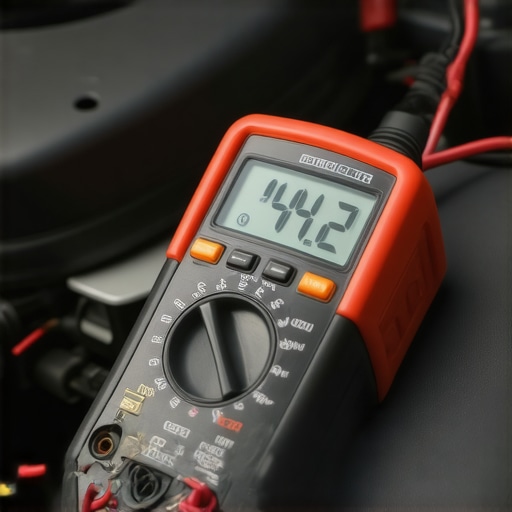
Misfires are often the most elusive ‘ghosts’ in the machine because they can be ignition, fuel, or compression-based. Before you spend hundreds on a new set of ignition coils, consider the health of the signal arriving at the coil. A high-impedance multimeter is your best friend here; using the $12 multi-meter test for your charging system can reveal if a failing alternator is creating electrical ‘noise’ that confuses the PCM. Furthermore, a dirty intake can cause turbulence that mimics a misfire. Sometimes, the solution is as simple as the $10 cleaning move that saves your MAF sensor, restoring the laminar airflow necessary for accurate air-mass calculations. This methodical tune up philosophy ensures every component works in harmony.
Stop the Parts-Cannon and Test Your Ground Points
In the world of auto repair, many ‘bad’ sensors are actually victims of poor grounding or corroded connectors. A sensor can only report accurately if it has a clean 5-volt reference and a solid ground. If you find your car behaves differently when it rains or after a long drive, you are likely dealing with resistance issues rather than component failure. This is especially true for systems that require high current, where a weak ground can cause erratic sensor feedback. Just as you would check for the brake fluid color chart during a brake service, you must visually inspect the wiring harness for fraying or heat damage. Have you ever spent weeks chasing a code only to find a loose bolt was the culprit? Share your most frustrating diagnostic wins in the comments, or read our guide on getting the most from your mechanic to sharpen your technical vocabulary before your next shop visit.
Why Electronics Can’t Fix a Mechanical Heart
Even the most expensive scanner is essentially a translator, not a magic wand. It interprets electrical signals, but it cannot measure the physical integrity of a piston ring or the seal of a valve seat. Before you dive into complex auto repair sensor swaps, you must ensure the engine’s mechanical foundation is sound. A mechanic who relies solely on the OBD-II port without performing a physical compression test is only seeing half the picture. If a cylinder has low compression, no amount of software recalibration or tune up will resolve a misfire code. Physical wear and tear create ‘noise’ in the data that the PCM attempts to compensate for, often leading to skewed fuel trims that look like sensor failure but are actually evidence of mechanical fatigue.
Find the Invisible Air Leaks with a Smoke Machine
While the ‘cigar trick’ is a classic DIY move, professional-grade diagnostics often require a dedicated smoke machine to find microscopic breaches in the intake tract or EVAP system. These leaks introduce ‘unmetered air’—oxygen that enters the engine without being weighed by the Mass Air Flow (MAF) sensor. This imbalance forces the computer to add more fuel, driving up your Long Term Fuel Trim. According to the National Institute for Automotive Service Excellence (ASE), identifying these parasitic leaks is the single most effective way to solve persistent lean codes (P0171/P0174). A smoke test doesn’t just find the leak; it proves the integrity of the entire sealed system, ensuring your tune up results in a smooth, factory-spec idle.

Is it possible for a clogged fuel filter to mimic a faulty MAF sensor?
Absolutely. A clogged fuel filter restricts the volume of fuel reaching the injectors, especially under high-load conditions. When the PCM detects a lean condition via the O2 sensors, it may incorrectly assume the MAF sensor is under-reporting the air intake. This is why cross-referencing ‘calculated load’ against ‘actual airflow’ is critical. If your car feels sluggish or why your car shakes at high speeds under acceleration, the issue might be fuel starvation rather than an electronic sensor glitch. Diagnosing this requires a mechanical fuel pressure gauge, reinforcing the idea that digital tools must be paired with analog verification for a successful auto repair.
Stop Blaming the Sensors for a Sticky PCV Valve
The Positive Crankcase Ventilation (PCV) system is frequently ignored during a standard tune up, yet it plays a massive role in idle stability and fuel trim accuracy. A PCV valve that is stuck open acts like a massive vacuum leak, while one that is stuck closed can cause crankcase pressure to blow out seals and gaskets. If you are noticing oil consumption or an erratic idle, don’t immediately assume you need a brake service or a new throttle body. A simple check of the PCV hose for cracks or oil saturation can save hours of diagnostic time. Integrating this check into your regular maintenance, much like following the definitive guide to oil changes in 2025, prevents the slow degradation of engine performance that leads to ‘check engine’ lights. If you are tired of the guesswork, book a technical consultation with our master techs to get your vehicle back to peak efficiency.
The Critical Link Between Voltage Stability and Sensor Accuracy
In the digital architecture of a modern vehicle, sensors operate on a 5-volt reference circuit. If your alternator is failing or your battery terminals are corroded, that 5-volt signal can fluctuate. This ‘dirty power’ causes sensors to report erratic data, triggering a cascade of unrelated trouble codes. Just as a brake service technician looks for uneven pad wear as a symptom of a sticking caliper, a diagnostic expert looks for ‘voltage ripple’ as a symptom of a failing diode in the charging system. High resistance in a ground wire can make a perfectly good oxygen sensor look like it’s dead on a graphing scanner. Always verify your electrical backbone before condemning expensive modules.
Don’t Let Thermal Heat Soak Sabotage Your New Sensors
Thermal expansion remains the silent enemy of a successful tune up. A crankshaft position sensor might pass a cold resistance test in your driveway, but as the engine reaches operating temperature, internal microscopic cracks in the copper windings expand, breaking the circuit. This ‘heat soak’ phenomenon often leads to stalling that vanishes once the car cools down, leaving an amateur mechanic scratching their head while the computer logs a generic ‘no signal’ fault. To truly verify these intermittent failures, you need to transition from reading static digits to observing live waveforms. The digital representation of a signal on a screen is a processed interpretation; the actual electrical pulse is where the truth resides.
Stop Chasing Ghosts in the CAN-Bus Communication Lines
Modern vehicles are essentially rolling computer networks where modules must constantly ‘handshake’ via Controller Area Network (CAN) bus lines. When a high-resistance connection occurs—perhaps due to a pin being backed out of a connector or a tiny drop of corrosion—the entire network can crash. This results in ‘U’ prefix codes (Network Communication Codes) that can disable the dashboard or cause the transmission to enter ‘Limp Mode.’ According to technical data from the National Highway Traffic Safety Administration (NHTSA), many seemingly catastrophic electronic failures are actually the result of Technical Service Bulletins (TSBs) regarding harness routing or software conflicts rather than actual hardware death. A savvy auto repair specialist always checks for manufacturer-specific communication protocols before condemning a module.
Does a faulty wheel speed sensor always mean your ABS module is fried?
It is a common misconception that a ‘No Communication’ error with an ABS module necessitates a replacement of the entire expensive unit. Often, the failure lies in the reluctor ring or the wheel speed sensor harness. During a comprehensive brake service, an expert technician will verify the integrity of the tone ring—the notched wheel the sensor ‘reads.’ If the notches are filled with debris or rusted away, the sensor produces a ‘flat’ signal, causing the module to shut down the system for safety. Before you authorize a thousand-dollar auto repair, ensure your tech has performed a simple ‘glitch test’ on the sensor’s wiring to check for signal dropouts during suspension travel.
See the Pulse of Your Engine with an Oscilloscope
While a standard OBD-II scanner updates a few times per second, a lab oscilloscope captures thousands of data points every millisecond. This allows you to see the ‘signature’ of a fuel injector or the firing line of an ignition coil in real-time. If your tune up didn’t fix that pesky stumble, an oscilloscope can reveal a ‘short-to-ground’ within a wiring harness that only occurs for a microsecond—far too fast for the PCM to name, but long enough to cause a misfire. This level of forensic diagnostics is what separates a part-swapper from a diagnostic master, allowing for surgical precision in locating frayed wires inside loom covers that look perfectly healthy from the outside.

Stop Guessing and Map Your Ground Offsets
Grounding issues are the most frequent cause of ‘comebacks’ in the professional shop. A ground offset occurs when a ground point has just enough resistance to shift the sensor’s baseline voltage. If a sensor expects a 0-volt ground but receives 0.5 volts due to a corroded chassis bolt, every single reading it sends to the computer will be skewed. This often leads to unnecessary oxygen sensor or throttle position sensor replacements because the PCM interprets the offset voltage as a ‘lean’ or ‘rich’ condition. If you find yourself in a cycle of failing parts, schedule a diagnostic strategy session with our team to perform a voltage drop test on your primary ground circuits before you buy another component. This systematic approach ensures that the foundation of your vehicle’s electrical system is capable of supporting its complex digital architecture.
Expert Insights & Advanced Considerations
Master the Logic Behind Adaptive Fuel Strategies
A professional mechanic views fuel trims not as static numbers, but as a window into the PCM’s learning behavior. Adaptive strategy allows the vehicle to compensate for minor wear over thousands of miles. When you replace a critical component like a Mass Air Flow sensor during a tune up, you must reset these ‘learned’ values. Failing to do so forces the computer to apply old compensation data to a new sensor, often resulting in poor drivability until the logic re-learns. Properly gapping your electrodes with the $10 spark plug gap tool most DIYers skip is a prerequisite for stabilizing these trims.
Stop Ignoring Your Five-Volt Reference Signal
Every sensor on a modern 5-volt rail depends on the stability of the PCM’s internal voltage regulator. If a single sensor—like a shorted A/C pressure switch—drags that 5-volt rail down to 4.2 volts, every other sensor on that circuit will report erroneous data. Before committing to heavy auto repair, back-probe the reference wire at the throttle body or MAP sensor. This systemic approach is often highlighted in auto repair myths debunked because it reveals how one minor component can paralyze the entire engine management network. Sometimes the hidden fuse that controls your entire dashboard or specific sensor sub-circuits is the culprit.
Why Your Shop Manual is Still the Most Dangerous Tool
Technical data is only as good as the diagnostic tree you follow. Experienced technicians use factory service manuals to identify ‘pin-out’ values, ensuring they don’t accidentally fry a sensitive driver circuit inside the computer. Whether you are performing a brake service or a deep-engine teardown, having the correct wiring diagram is non-negotiable. Following expert tips for optimal performance means moving away from generic troubleshooting and into vehicle-specific logic.
Curated Expert Resources
Mitchell 1 and ALLDATA: These industry-standard databases provide the exact wiring diagrams and TSBs used by professional shops. Accessing these is the difference between guessing and knowing. ScannerDanner (Paul Danner): His technical training materials are the gold standard for learning how to use an oscilloscope to diagnose electrical failures without replacing parts. ASE Certification Training: Even for DIYers, the L1 Advanced Engine Performance Specialist study guides offer a profound look into high-level diagnostic theory. The NHTSA Safety Database: An essential resource for identifying if your recurring ‘ghost code’ is actually a known manufacturing defect or a safety recall.
#IMAGE_PLACEHOLDER_E#
Final Expert Perspective
Solving complex drivability issues requires a shift in mindset: you are no longer just a mechanic, you are a forensic data analyst. Modern auto repair is about validating the inputs before you blame the outputs. By focusing on live data, verifying electrical grounds, and ensuring mechanical integrity, you eliminate the ‘parts-cannon’ and replace it with surgical precision. Whether you are performing a routine tune up or a complex brake service, let the data dictate the repair. If you want to ensure your vehicle stays in peak condition, learn how a top-rated mechanic ensures safe repairs every time or reach out to us for a professional consultation.