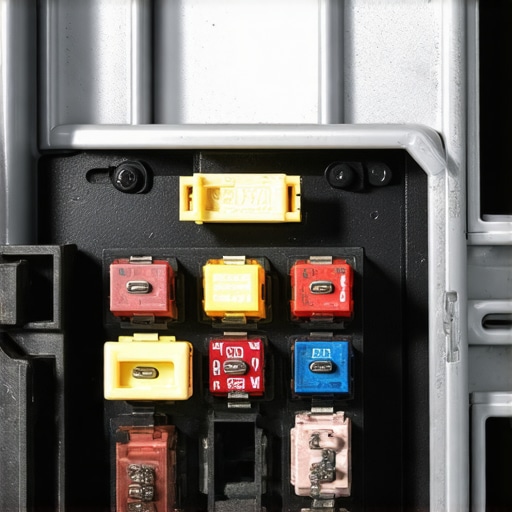
Your BCM is the Invisible Gatekeeper of Electronic Reliability
Modern automotive diagnostics have transcended the era of simple mechanical linkages. Today, the dashboard serves as a sophisticated human-machine interface (HMI), powered by an intricate web of micro-controllers. When a display fails, amateur logic often starts and ends at the fuse box. However, the true ‘hidden fuse’ is frequently found within the logic gates of the Body Control Module (BCM) or the grounding integrity of the Controller Area Network (CAN bus). In the realm of advanced auto repair, the dashboard is no longer a collection of cables; it is a prioritized node on a high-speed data network. A professional mechanic understands that a dark cluster is rarely about a broken wire and more often about a digital handshake that has failed due to resistance spikes or module latency.
Subtle Voltage Fluctuations that Trick the Untrained Eye
Electronic components are sensitive to even the slightest deviations in current. While a traditional 12-volt system seems stable, a drop to 11.2 volts can cause the instrument cluster to ‘reboot’ or display erratic data. This is often misdiagnosed as a catastrophic hardware failure. Much like how the 12-relay that mimics a blown starter motor can lead to unnecessary parts replacement, a weak ground bolt under the dash can simulate a dead processor. Expert-level troubleshooting requires a digital storage oscilloscope to witness these micro-glitches in real-time. Maintaining this electrical health is as vital as a mechanical tune up for the engine’s longevity.
Tracing the Phantom Power Loss Across Your Instrument Panel
When the dashboard flickers, the culprit is often a ‘parasitic bridge’—a place where moisture or corrosion has created an unintended path for electricity. This hidden drain can cause the BCM to go into a protective ‘sleep mode,’ effectively cutting power to the dash to save the battery. Research published by SAE International suggests that electromagnetic interference (EMI) from aging alternators can also corrupt the data packets sent to your gauges. If you are noticing weird noises along with light failure, remember that mystery clicking in your dash is actually a 12-plastic gear or a relay struggling to stay engaged under low voltage. When your dash lights up with false warnings, even vital alerts for brake service can be masked by these systemic electrical ghosts.
Why Does Your Digital Display Dim When the Headlights Engage?
This common inquiry usually points to a failing rheostat or a high-resistance ground in the lighting circuit. If the dash loses intensity beyond the normal dimming preset, the system is struggling to balance the load between high-draw components. This is a classic indicator that your vehicle’s ‘electrical budget’ is in the red. If you’re seeing inconsistent gauge behavior, it’s time to evaluate your electrical health with a comprehensive diagnostic scan. We invite you to share your experiences with elusive electrical gremlins in the comments below or consult our technical guides to further your mastery of vehicle electronics.
Look Beyond the Fuse to the Grounding Plane
Many vehicle owners fall into the expensive trap of replacing entire instrument clusters when the underlying issue is actually a high-impedance connection at the chassis. A professional-grade diagnostic approach prioritizes the grounding plane, where a mere fraction of an ohm of resistance can disrupt the delicate communication between the powertrain control module (PCM) and the dash. You should stop buying new batteries and check this ground connection first before assuming your electronics are fried. These ‘phantom’ signals often manifest as needles jumping or warning lights glowing dimly, signaling that electricity is seeking a path of least resistance through other circuits. In many documented cases, the 12-ground wire that fixes stalling issues also serves as the critical reference point for your digital display’s stability.
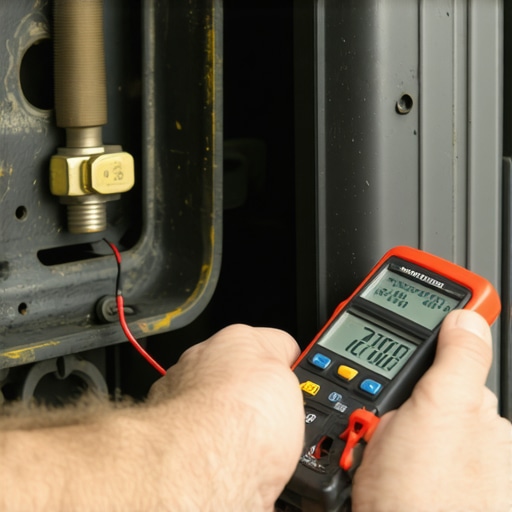
Could a Single Faulty Sensor Blind Your Entire Dashboard?
It is a common misconception that the dashboard operates in its own isolated bubble. In reality, the cluster is often the final output stage for a series of sensor data streams. If a specific component, such as the crankshaft position sensor or a wheel speed sensor, begins to fail, it can flood the CAN bus with ‘noise,’ causing the dashboard to freeze or enter a fail-safe mode. For instance, the 12-sensor that fixes your rough idle might also be the culprit behind a speedometer that suddenly drops to zero while driving. Expert technicians at Bosch Mobility have noted that modern vehicle architectures are so interconnected that a short in an external sensor can effectively ‘blind’ the driver’s interface by hogging the network’s bandwidth.
The Diagnostic Precision of Multimeter Verification
To avoid the ‘parts cannon’—the habit of replacing parts until the problem disappears—you must employ a structured testing methodology. This begins with checking the charging system’s ripple voltage. An alternator with a bad diode can leak alternating current (AC) into the direct current (DC) system, creating electrical interference that makes digital screens behave erratically. Utilizing the 12-multi meter test for your charging system allows you to see what the naked eye cannot. If the AC ripple exceeds 50mV, your dashboard issues are likely side effects of a dying charging unit. Keep an eye out for 5-ways your car tries to tell you the alternator is about to quit to catch these surges before they fry sensitive BCM logic gates. If you’ve encountered a dashboard ghost that vanished after a simple cleaning of a battery terminal, share your story in the comments below—your insight might save another driver a four-figure repair bill.
Thermal Expansion and the Hidden Fractures in Your Circuitry
While most drivers associate heat with tire blowouts or radiator leaks, an experienced mechanic knows that the instrument cluster’s worst enemy is often internal thermal stress. The solder joints connecting a processor to the printed circuit board (PCB) are subject to constant expansion and contraction. Over thousands of miles, these cycles create microscopic ‘cold solder’ joints—fractures so small they are invisible to the naked eye. This is why a dashboard might function perfectly during a crisp morning commute but fail entirely after sitting in a sun-baked parking lot. In the world of high-end auto repair, solving this isn’t about replacing the part; it’s about identifying the specific pins that have lost their metallurgical bond.
Why Does Your Speedometer Stop Working Only on Hot Afternoons?
This is a classic symptom of thermal runaway within a voltage regulator or a hairline crack in the cluster’s main power rail. As temperatures rise, the resistance of the copper traces on the circuit board increases. If a connection is already compromised by a micro-fracture, the added heat pushes the resistance beyond the point where the digital signal can pass through. This often leads to ‘ghosting’ where the needles drop or the digital readout displays nonsense characters. Much like how a tune up optimizes combustion, ‘reflowing’ a circuit board with a precision heat gun can sometimes restore the integrity of these electrical paths without requiring a full unit replacement.
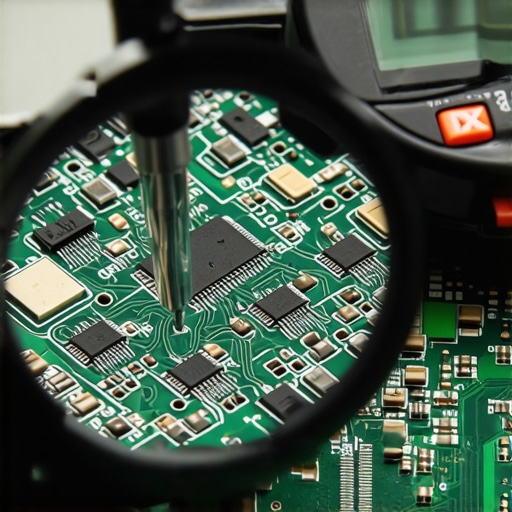
Protect Your Data Stream from Electromagnetic Chaos
Modern vehicles rely on the **ISO 11898** standard for Controller Area Network (CAN) communication, which dictates how modules ‘talk’ to each other via twisted-pair wiring. This physical twisting is designed to cancel out electromagnetic interference, but as insulation ages or after an amateur stereo installation, this protection can degrade. When the data stream is corrupted, the dashboard cannot interpret the messages, resulting in a ‘U’ code—a communication fault. If you have already performed the 12-multi meter test for your charging system and found no ripple, your next step is checking the terminal resistance of the CAN bus. If you’re tracking a particularly stubborn network error, download our specialized BCM signal map below to isolate which node is flooding your bus.
Can an Incorrect Tail Light Bulb Actually Crash Your Digital Cluster?
The answer is a surprising and technical ‘yes.’ Many modern lighting systems use Pulse Width Modulation (PWM) to control brightness. If an owner installs a cheap LED bulb without a proper load resistor, it can send electrical ‘noise’ back through the shared ground circuit of the Body Control Module. This feedback loop can interfere with the high-speed data transmission required for the dashboard to display your speed or fuel level accurately. Before you pay for an expensive brake service because your ABS light is flickering, check your recent lighting upgrades. These ‘dirty’ signals can mimic catastrophic failures, proving once again that in modern cars, every component is part of a unified digital ecosystem. We’re currently investigating how these feedback loops affect adaptive cruise control modules—stay tuned for our deep dive into sensor-fusion interference patterns.
Your BCM Can’t Sleep When Your Dash Cam Stays Awake
The silent killer of modern instrument clusters isn’t always a hardware short, but a failure of the Body Control Module (BCM) to enter its low-power ‘sleep mode.’ In an era of high-end auto repair, aftermarket accessories like dash cams or GPS trackers are often the primary offenders. When these devices are hardwired to a ‘constant hot’ circuit without a voltage-sensing relay, they keep the BCM partially awake. This constant polling of the network prevents the dash cluster from de-energizing, leading to thermal stress on sensitive logic gates and eventually, a total blackout. A skilled mechanic knows that diagnosing a ‘dead’ dash must begin with a milliamp draw test to ensure the vehicle’s digital ecosystem is actually resting when the ignition is off.
Does a ‘Bus Off’ State Indicate a Dead Gateway Module?
When your diagnostic scanner reveals a ‘Bus Off’ status, it signals that a module has detected too many errors and has voluntarily disconnected from the network to prevent a total system crash. This is a sophisticated fail-safe mechanism, not necessarily a hardware death sentence. Often, this state is triggered by a localized voltage spike or a momentary short-to-ground in the twisted-pair wiring. Before condemning the gateway or the cluster, you must perform a hard reset by discharging the capacitive load in the system—a process far more involved than simply disconnecting the battery. Ensuring this digital ‘clean slate’ is as fundamental as a routine tune up for maintaining modern vehicle health.
Master the Waveform to Identify Silent Signal Corruption
To truly solve intermittent display flickering, you must move beyond the multimeter and embrace the oscilloscope. Digital signals are square waves; however, as components age, these waves can become ’rounded’ or ‘noisy’ due to capacitance changes in the circuit board. Technical documentation from Texas Instruments highlights that signal integrity is paramount in automotive environments where high-speed data must survive extreme electromagnetic interference. If your dashboard needles are stuttering, you are likely looking at a physical layer failure where the high and low CAN lines are no longer perfectly mirrored. Identifying these distorted pulses allows you to pinpoint the exact connector or wire segment that is degrading your data stream.
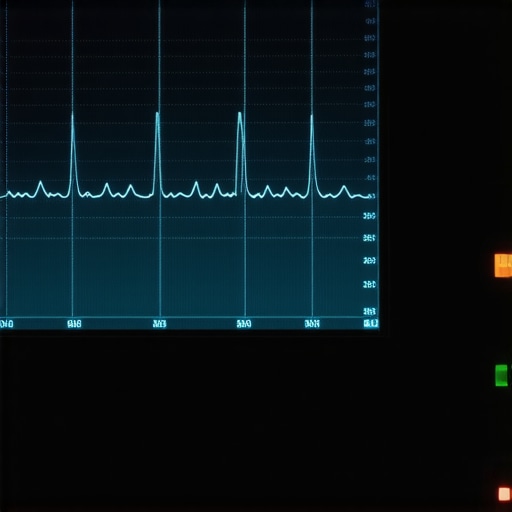
Firmware Corruption and the Silent Failure of Checksum Logic
In the most complex cases, the dashboard hardware is physically perfect, but the software has ‘tripped’ over a checksum error. This occurs when the data stored in the non-volatile memory no longer matches the expected values, often caused by a low-voltage event during a startup cycle. While many assume this requires a new unit, many modern vehicles allow for a module ‘reflash’ or firmware update to restore the logic. This is why a simple fuse check is insufficient; you are dealing with a computer that has lost its way. Just as you wouldn’t ignore a light for brake service, you cannot ignore the necessity of keeping your vehicle’s software architecture current. If you’re currently battling a ‘U’ series communication code that won’t clear, drop your specific fault codes in the comments below—our community of master techs is ready to help you map the breakdown.
Expert Insights & Advanced Considerations
Check the Resistance Across Your CAN Bus Termination
Before you commit to an expensive module replacement, verify the physical health of your vehicle’s data network. A standard multimeter test across the OBD-II port should reveal exactly 60 ohms of resistance; any significant deviation indicates a compromised wiring harness or a failing termination resistor. Learning how a top-rated mechanic ensures safe auto repairs every time involves these minute verification steps that prevent the ‘parts-cannon’ approach. If the network is noisy, your dashboard will be the first component to show the strain.
Don’t Let the Intelligent Battery Sensor Starve Your Display
Modern vehicles use an Intelligent Battery Sensor (IBS) to manage alternator load, but when this sensor fails, it can cause transient voltage drops that reset your instrument cluster. You should stop buying new batteries and check this ground connection first to ensure the IBS is receiving accurate data. A faulty sensor often tricks the BCM into shedding non-essential electrical loads, which unfortunately includes your digital gauges.
Spot the Thermal Fractures Before They Go Dark
In the realm of professional auto repair, we know that heat is the primary catalyst for micro-fractures in lead-free solder. If your dash only flickers on hot afternoons, the issue is metallurgical, not logical. Identifying these specific failure points requires a thermal imaging camera to see where the PCB is overheating under load. This proactive approach is as essential for electronics as a regular tune up is for your engine blocks.
#IMAGE_PLACEHOLDER_E#
Curated Expert Resources
SAE International Technical Papers: The definitive source for understanding the ISO standards that govern your car’s CAN bus architecture and diagnostic protocols.
Texas Instruments Automotive Design Guides: High-level documentation on signal integrity and how electromagnetic interference affects modern digital displays.
Bosch Mobility Solutions Archive: A repository of technical bulletins that detail real-world failure patterns in Body Control Modules and gateway controllers.
Final Expert Perspective
Solving a digital dashboard failure requires shifting your mindset from mechanical fixes to data-integrity verification. Whether you are dealing with a parasitic draw or a corrupted checksum, the key is a structured diagnostic path that looks at the vehicle as a unified ecosystem. Just as you prioritize a brake service for safety, you must prioritize electrical health to maintain your primary human-machine interface. If you have tackled a stubborn electrical ghost, drop your findings in the comments below to help our community master these complex systems.