The Analytical Shift from Reactive Maintenance to Preventive Mastery
Modern automotive engineering has reached a level of complexity where simple visual inspections are no longer sufficient to guarantee vehicle longevity. For the discerning driver, the procurement of new tires is not merely a transaction but the first step in a broader technical strategy. As a professional mechanic, I have observed that the difference between a tire lasting 30,000 miles and 60,000 miles often has nothing to do with the rubber compound itself and everything to do with the mechanical ecosystem it inhabits. An effective auto repair philosophy dictates that we must view the tire as the final output of the suspension, braking, and drivetrain systems. If any of these interconnected components are out of spec, even the most expensive premium tires will succumb to premature failure. High-performance vehicle ownership requires an advanced understanding of how lateral forces and heat dissipation affect component degradation.
Tire Tread Integrity Depends on Suspension Geometry
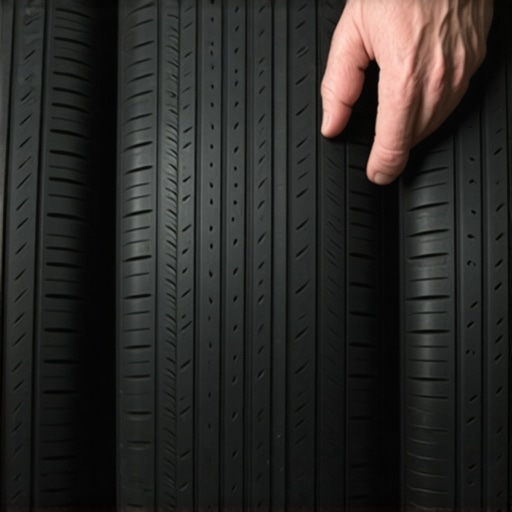
The most common error in tire maintenance is the assumption that a new set of tires solves a vibration or pull. In reality, irregular wear patterns are often symptomatic of deeper issues within the steering rack or control arm bushings. Before investing in fresh rubber, you must determine if your tires are actually balanced correctly and if your alignment angles meet the manufacturer’s precise specifications. According to research published by the National Highway Traffic Safety Administration (NHTSA), proper maintenance of tire pressure and alignment is critical not only for safety but for maximizing the structural life of the tire casing. Professionals look for ‘feathering’ or ‘cupping,’ which are tell-tale signs that your dampers are no longer controlling the wheel’s vertical movement. Addressing these auto repair needs concurrently with tire replacement ensures that you are not simply throwing good money after bad.
When was the last time you checked your hydraulic brake fluid saturation?
Many drivers fail to realize that the heat generated by a malfunctioning brake service can migrate through the wheel hub and into the tire bead, causing internal degradation. Moist or contaminated brake fluid lowers the boiling point of the hydraulic system, leading to brake fade and uneven pressure distribution. When pads do not retract fully, the resulting friction creates a thermal load that the tire is not designed to handle. Integrating comprehensive brake service strategies that save you money involves more than just swapping pads; it requires a full system flush and an inspection of the caliper slide pins to ensure symmetrical force application across the axle.
Precision Electronic Calibration and Engine Efficiency
A vehicle’s power delivery directly impacts how tread meets the pavement. A failing tune up—characterized by misfires or a hunting idle—creates erratic torque delivery that can lead to micro-slippage of the drive tires. This phenomenon is particularly prevalent in modern front-wheel-drive vehicles where the tires are responsible for both steering and propulsion. Sophisticated engine management systems rely on a plethora of sensors to maintain the stoichiometric ratio; when these sensors drift, the resulting loss in efficiency translates to more than just poor fuel economy. Understanding why regular tune ups are key to car longevity allows you to maintain the smooth power curve necessary to protect your drivetrain from the shock loads that accelerate mechanical wear. If you suspect your vehicle’s performance is lagging, consider mechanic tips for diagnosing common auto problems to pinpoint whether the issue is electronic or mechanical before it affects your new tire investment.
How Transmission Slip Sabotages Your Traction
The fluid dynamics within your gearbox are just as vital to tire health as the air pressure in the tires themselves. When a transmission begins to ‘hunt’ for gears or exhibits a slight shudder during upshifts, it introduces non-linear torque loads to the drive wheels. This erratic power delivery causes the tire to micro-slip against the asphalt, leading to accelerated tread wear that often looks like a balance issue. Smart owners realize that a fluid swap can save a slipping transmission before it compromises the structural integrity of your drivetrain. Furthermore, if you notice that your transmission shifts hard only when the engine is cold, it is a signal that the hydraulic viscosity is no longer meeting design parameters, which puts unnecessary stress on every rotating component between the flywheel and the road.
Stop Overlooking the Power Steering Pump
Steering feedback is the primary channel through which a driver communicates with the road, yet the hydraulic or electronic assist systems are frequently neglected during routine maintenance. A steering system that feels lethargic or heavy can prevent a driver from making the subtle corrections needed to keep a vehicle perfectly centered in its lane, leading to uneven lateral wear on the tire shoulders. If you find that your steering feels heavy only when you first start the car, you may be dealing with a failing pump or a degrading seal that is allowing air into the system. Addressing these leaks promptly prevents the pump from cavitating, which would otherwise send metallic debris through the rack and pinion, necessitating a far more expensive auto repair bill later on.

Could a faulty sensor really compromise your vehicle’s mechanical stability?
It is a common misconception that electronic sensors only affect fuel economy or emissions. In reality, the data provided by the Mass Air Flow (MAF) or Oxygen (O2) sensors dictates how the engine manages load transitions. A ‘lazy’ sensor that hasn’t yet triggered a check engine light can still cause the engine to stumble during acceleration, particularly when you turn the AC on or enter a steep grade. These subtle performance dips create a rhythmic vibration through the drivetrain that can be mistaken for a tire flat spot. Savvy DIYers can use a 15-dollar multimeter to test an O2 sensor, identifying a bottleneck in performance before it ruins a fresh set of rubber. Even a simple 14-dollar PCV valve fix can stabilize engine vacuum and smooth out the idle, ensuring that the tires are not subjected to the constant ‘chatter’ of a poorly tuned engine.
Trust Your Multimeter for Complex Drivetrain Diagnostics
Modern diagnostics require a shift from guesswork to precise electrical measurement. Whether you are chasing a ghost in the transmission or trying to understand why your headlights dim during gear shifts, the answers usually lie in the vehicle’s grounding and voltage stability. According to the National Institute for Automotive Service Excellence (ASE), today’s technicians must integrate advanced electrical theory with mechanical proficiency to solve the ‘intermittent’ issues that plague high-mileage vehicles. For instance, an 18-dollar ground wire fix can often resolve random transmission slips that a less experienced shop might misdiagnose as a total gearbox failure. If you have recently encountered a vibration that your local shop couldn’t find, I encourage you to share your symptoms in the comments below—identifying these patterns is the first step toward preventive mastery.
Stop the Silent Vibrations Coming from Your Wheel Hubs
While most owners focus on the rubber and the rim, the mechanical integrity of the wheel hub assembly is the literal pivot point of vehicle safety. A wheel bearing that has developed even a marginal amount of axial play—often less than a few thousandths of an inch—can throw the entire steering geometry into a state of flux. This microscopic instability causes the tire to ‘scrub’ across the pavement rather than rolling purely. As a mechanic, I often see cases where a customer complains of a persistent pull that multiple alignments couldn’t fix; the culprit is almost always a hub that allows the wheel to tilt under cornering loads. Beyond the noise, a failing bearing increases rolling resistance, which generates heat that bleeds into the tire’s inner liner, potentially leading to catastrophic delamination at highway speeds. Proper torque during a brake service is essential to prevent premature hub failure.
Why Dampers Do More Than Just Smooth the Ride
The term ‘shock absorber’ is a bit of a misnomer; these components are actually dampers designed to control the kinetic energy of the springs. When a damper loses its ability to control the ‘rebound’ stroke, the tire begins to experience a phenomenon known as harmonic oscillation. Instead of staying glued to the road, the wheel undergoes rapid, minute bounces. Each time the tire loses full contact and then slams back down, it creates a ‘cupped’ wear pattern—a series of hills and valleys around the circumference of the tread. According to technical standards established by SAE International, the dampening ratio of a suspension system is paramount to maintaining the ‘contact patch’ consistency required for modern electronic stability control systems to function effectively. If your car feels ‘floaty’ over crests or nose-dives during a brake service evaluation, your tires are likely paying the price in accelerated wear.

Can a worn wheel bearing trigger a false ABS activation?
This is a question that frequently puzzles even seasoned DIY enthusiasts. The answer is a resounding yes. Most modern vehicles utilize an integrated tone ring on the wheel hub that spins past a magnetic speed sensor. If the bearing is worn, the hub can wobble just enough to vary the air gap between the sensor and the ring. This variance creates an erratic signal that the ABS computer interprets as a wheel lock-up, causing the system to pulse the brakes unnecessarily. This not only increases your stopping distance but also creates flat spots on your tires from the intermittent, high-frequency braking force. Before you assume you need a new auto repair of the entire ABS module, perform a manual ‘shake test’ on your wheels to ensure the hubs are seated with zero play. If you’ve felt a strange vibration in the pedal during light braking, let me know in the comments—it might be your hubs, not your rotors.
The Differential Truth About All-Wheel Drive Tire Wear
In All-Wheel Drive (AWD) systems, the relationship between tire diameter and drivetrain health is unforgiving. A difference of just 2/32nds of an inch in tread depth between the front and rear axles can force the center differential to work overtime to compensate for the different rotational speeds. This constant mechanical friction leads to fluid shear and excessive heat buildup within the transfer case. Over time, this ‘driveline wind-up’ manifests as a jerking sensation during tight turns, which many drivers mistake for a power steering issue. To protect these sensitive components, you must ensure that your tune up schedule includes a meticulous tire rotation every 5,000 miles to keep wear even across all four corners. If you are replacing only two tires on an AWD vehicle, you are likely setting yourself up for a multi-thousand-dollar gearbox failure that no simple mechanic‘s trick can reverse.
Why Your High-Tech Safety Sensors Need a Mechanical Reset
In the contemporary auto repair landscape, a simple mechanical alignment is no longer the final word in vehicle stability. Modern cars are equipped with Advanced Driver Assistance Systems (ADAS) that rely on cameras, radar, and ultrasonic sensors to keep you in your lane and provide emergency braking. When a mechanic alters the suspension geometry or even changes the ride height with new tires, the ‘field of vision’ for these sensors shifts. Even a fraction of a degree in deviation can result in a parallax error, causing your lane-keep assist to make micro-corrections that scrub the tread off your tires prematurely. Failing to perform an electronic recalibration alongside your tire service means your car is essentially fighting itself on every highway curve.

Stop Ignoring the Thrust Angle During Alignments
Most basic alignment services focus exclusively on the front wheels, but expert-level maintenance requires a deep dive into the thrust angle. This is the relationship between the rear axle’s centerline and the vehicle’s longitudinal axis. If the rear axle is even slightly skewed, the car will ‘dog-track,’ forcing the driver to turn the steering wheel off-center just to travel straight. This creates a constant lateral drag on all four tires. According to technical bulletins from the Car Care Council, neglecting the rear-end geometry is a primary cause of ‘phantom’ steering pulls that frustrate owners after they have already paid for an auto repair. Precision alignment is a 360-degree discipline; ignoring the rear bushings and toe-links effectively negates the benefits of any premium tire purchase.
When did an alignment become a computer software update?
The transition occurred the moment steering racks moved from purely hydraulic to Electric Power Steering (EPS). These systems use a steering angle sensor to tell the computer exactly where ‘center’ is. If a mechanic performs a physical alignment but fails to reset the steering angle sensor software, the EPS motor may apply a continuous, subtle torque to return to what it *thinks* is center. This constant electronic tension leads to heat buildup in the steering motor and uneven scalloping on the tire shoulders. This is why a modern tune up must now include a scan tool interrogation of the chassis control module to ensure all electronic offsets are zeroed out after mechanical changes.
Deep-Clean Your Injectors to Protect Your Drive Wheels
It may seem counterintuitive, but the chemistry of your fuel system directly impacts the physical wear of your tires. A tune up that overlooks carbon buildup on intake valves or clogged fuel injectors results in inconsistent combustion cycles. This creates ‘engine surge’—a subtle, high-frequency pulsing of torque delivered to the drive wheels. While you might not feel it through the seat, the tires feel it as thousands of micro-slips per mile. These microscopic abrasions accelerate tread loss and can even lead to premature sidewall fatigue in high-torque turbocharged engines. Integrating a professional-grade fuel system cleaning into your brake service and maintenance routine ensures that power delivery remains linear, preserving the contact patch and maximizing the ROI of your rubber.
The Critical Role of Bushing Durometer in Steering Precision
We often focus on the metal components, but the rubber bushings are the unsung heroes of the suspension ecosystem. Over time, these components soften—a process known as ‘setting’—which allows the control arms to deflect under heavy braking or acceleration. This dynamic change in geometry means that your alignment might be perfect on the rack, but completely out of spec the moment you hit the brakes. If you notice a ‘clunk’ or a shimmy during a brake service, it is likely the bushings reaching the end of their service life. Upgrading to high-durometer or polyurethane bushings can provide the structural rigidity needed to maintain the tire’s vertical orientation, ensuring that the tread stays flat against the tarmac regardless of the load. If your car feels imprecise despite having new tires, I want to hear about it in the comments; let’s diagnose whether your soft bushings are sabotaging your handling.
Expert Insights & Advanced Considerations
Static Alignments Don’t Tell the Whole Story
A vehicle sitting on an alignment rack is under zero load. The real test happens at highway speeds when aerodynamic downforce and braking torque compress the suspension. If you are struggling to figure out why your car drifts right even with brand new tires, the culprit is often dynamic toe change caused by aged bushings that pass a static inspection but fail under stress. This is why a professional auto repair technician should always perform a test drive to feel for lateral shift during weight transfer.
Wheel Speed Sensors Are Secret Tire Killers
Modern traction control systems rely on millisecond-accurate data from each wheel. A slightly fouled sensor can cause the computer to apply micro-braking pulses to a single wheel without lighting up the dashboard. This creates heat and uneven wear that looks like a mechanical alignment issue. Recognizing 3 tire wear patterns that prove your alignment shop is lazy helps you identify when a technician missed these electronic nuances during your last tune up.
Hub Mating Surfaces Dictate Rotational Stability
Even a microscopic layer of rust between the wheel and the hub can induce runout that feels like a balance issue. A quick 10-dollar hub scrub that stops brake vibrations is often the missing step in high-end tire mounting. Ensuring these surfaces are surgically clean is paramount before concluding that your new tires still vibrate after a high speed shop balance. A clean mount is the only way to guarantee the tire is truly centered on the axle centerline.
Curated Expert Resources
Tire Rack Technical Library: This is an essential repository for understanding the specific heat-cycling characteristics of different rubber compounds and how they interact with varied road temperatures.
SAE International Technical Papers: For the driver who wants to dive deep into the fluid dynamics of hydraulic dampers and the math behind lateral G-force tire deformation during high-speed cornering.
ASE Professional Case Studies: A high-level look at real-world diagnostic puzzles that highlight the intersection of electronic sensors and mechanical failures in modern chassis systems.
Final Expert Perspective
Mastering vehicle longevity requires moving past the part-replacement mindset and adopting a holistic view of the machine. Whether it is a routine tune up or a complex auto repair, every adjustment affects the contact patch where the rubber meets the road. By addressing the subtle vibrations and electronic drifts mentioned today, you protect both your safety and your financial investment from the silent killers of tread life. If you have faced a persistent vibration or a pull that seems to defy logic even after multiple shop visits, share your diagnostic journey in the comments below—I review these daily to help our community bridge the gap between basic maintenance and true mechanical mastery.