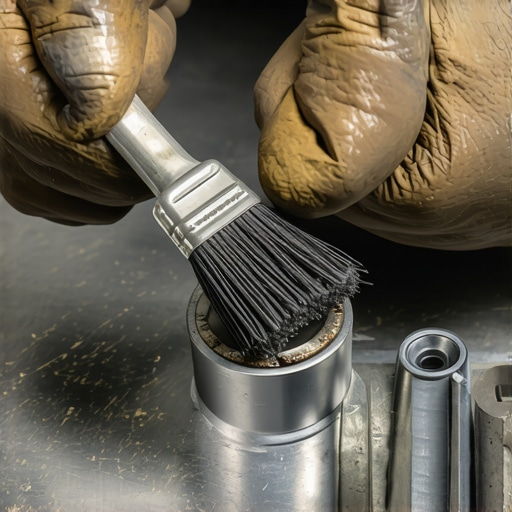
The Exhaust Gas Recirculation (EGR) valve is often the most unfairly maligned component in modern auto repair. While it is frequently blamed for rough idles and decreased fuel economy, the reality is that these valves are built for longevity. They do not usually break in a mechanical sense; instead, they simply choke on the very carbon soot they are designed to manage. From an expert perspective, the rush to replace this component is often a failure of diagnostic nuance. A deep understanding of the carbon lifecycle in high-mileage engines reveals that most EGR issues can be resolved with localized chemical intervention rather than a total hardware swap. This not only keeps your tune up costs manageable but also preserves the original equipment manufacturer (OEM) quality of your vehicle emissions system.
Stop Buying Replacement Parts You Can Easily Clean
The economic logic of replacing an EGR valve at the first sign of trouble is flawed. A professional-grade mechanic knows that carbon buildup is an inevitable byproduct of internal combustion, especially in direct-injection engines. According to technical documentation from the Society of Automotive Engineers (SAE), EGR systems are paramount for controlling combustion temperatures and reducing NOx emissions, but they are also prone to fouling. By opting for a thorough cleaning, you address the root cause—carbon occlusion—without the $300 to $600 price tag of a new assembly. If your vehicle is experiencing a check engine light that blinks at highway speeds, it is often a sign that the EGR is struggling to actuate, not that the solenoid has failed.
How Do You Identify a Stuck Valve Without a Diagnostic Scanner?
Seasoned experts look for specific behavioral cues from the engine that suggest an EGR fault. If your car stumbles during a cold start or exhibits a ‘hunting’ idle, the valve may be stuck open, allowing too much exhaust into the intake manifold at the wrong time. Conversely, if you notice an increase in engine knock or ‘pinging’ under load, the valve is likely stuck closed. You can often verify this by monitoring your fuel efficiency; a fouled system can significantly degrade your thermal efficiency. Learning how to recover your mpg through simple component maintenance is a hallmark of an advanced DIYer. This level of self-sufficiency is what separates a car owner from a true automotive enthusiast who understands the mechanical synergy of their vehicle.
Precision Solvent Selection for Carbon Dissolution
Successfully cleaning an EGR valve requires more than just a wire brush; it requires the right chemical profile. Standard brake cleaners can be too harsh for the internal gaskets, while some lubricants may attract even more soot once the engine reaches operating temperature. Use a dedicated throttle body or EGR cleaner that is oxygen-sensor safe. This ensures that as you purge the carbon, you aren’t inadvertently poisoning the catalytic converter. While you are deep into the engine bay, it is the perfect time to apply other mechanic tips such as checking for vacuum leaks or inspecting the intake runners for similar buildup. The goal is to restore the smooth, unobstructed flow of gasses that the ECU expects for optimal performance tuning.
If you are dealing with more than just engine stumbles, explore our deep dive into brake service strategies to ensure your entire vehicle remains as efficient and safe as your newly cleaned intake system.
Look Beyond the Hardware to the Clogged Manifold Passages
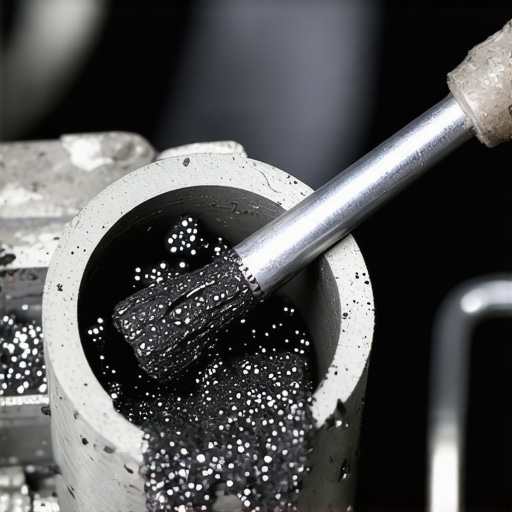
Many DIY enthusiasts celebrate too early after scrubbing the soot from an EGR valve, only to find the same P0401 ‘Insufficient Flow’ code returning within a week. An expert understands that the valve is merely the gateway; the true bottleneck often resides deep within the intake manifold’s cast-in passages. Carbon doesn’t just stop at the plunger; it hardens into a ceramic-like crust where the exhaust gas enters the intake stream. If these ports are restricted, even a brand-new valve cannot perform its duty. While you have the system apart, use a stiff mechanical wire or a small pick to ensure the internal channels are clear. This prevents the frustration of a failed repair and ensures your auto repair efforts actually yield long-term results. After reassembly, it is wise to perform the 5 soapy water trick for finding intake leaks to ensure no gaskets were pinched, which could lead to a lean condition and further driveability issues.
Why Does Your Transmission Shift Late When the EGR Fails?
The synergy between engine load and transmission shift logic is more fragile than most drivers realize. Because the ECU calculates engine load based partly on the expected volume of recirculated exhaust gas, a malfunctioning EGR system can provide false data to the Transmission Control Module (TCM). This often manifests as ‘ghost shifting’ or delayed gear engagement, particularly during moderate acceleration. If you find the hidden vacuum leak that makes your transmission shift early or late, you might discover the root cause is actually an EGR solenoid failing to manage vacuum correctly. Technical experts at Delphi Technologies emphasize that modern electronic EGR valves with integrated position sensors require precise voltage sweeps to confirm health, as a visually clean valve with a dead internal potentiometer remains a functional paperweight. This interconnectedness is why a minor emissions fault can suddenly make your car feel like it has a major drivetrain failure.
Address the Oil Vapor Issue at the Source
Carbon buildup in the EGR system isn’t solely a fuel problem; it is often exacerbated by excessive oil vapor entering the intake via the crankcase ventilation system. If your engine is ‘breathing’ too much oil, the soot from the exhaust gasses will mix with that oil to create a thick, tar-like sludge that no solvent can easily penetrate. This is why checking your PCV valve is a mandatory step in any advanced tune up. Implementing the 14 pcv valve fix that stops engine oil consumption can significantly extend the life of your cleaned EGR valve by keeping the intake air dry and soot-free. Furthermore, if you’ve noticed why your car stumbles when you turn the ac on, it could be that the combined load of the compressor and a restricted EGR system is overwhelming the idle air control logic. Have you ever tried cleaning your manifold passages yourself, or do you prefer a complete component swap? Share your technical hurdles in the comments so we can troubleshoot these complex vacuum systems together.
For those dealing with secondary ignition issues caused by high under-hood temperatures, reviewing the 12 spark plug boot error that causes mystery misfires will help round out your diagnostic strategy and ensure your engine runs with factory-spec precision.
Teach the ECU to Trust Your Clean Components Again
Cleaning the physical valve is only half the battle; the electronic brain of your car is still living in the past. Modern Engine Control Units (ECUs) utilize ‘adaptive learning’ to compensate for the gradual accumulation of carbon over thousands of miles. As the EGR flow decreased, the ECU slowly adjusted fuel trim and ignition timing to maintain stability. If you suddenly restore full flow without resetting these learned values, the engine may experience a sudden lean or rich condition because the computer is still applying corrections for a blockage that no longer exists. A professional-grade scan tool is usually required to perform an ‘EGR Adaptive Reset.’ Without this step, you might find your auto repair efforts result in a car that idles worse than it did before the cleaning. It’s the digital equivalent of trying to run a marathon with the same heavy breathing pattern you used while sitting on the couch.
#IMAGE_PLACE_HOLDER_C#
Does a Neglected EGR Valve Shorten the Life of Your Catalytic Converter?
The short answer is a definitive yes, though the path to destruction is often indirect. When an EGR valve fails to open, combustion temperatures in the cylinders spike significantly. This thermal stress doesn’t just increase NOx emissions; it can lead to pre-ignition or ‘knock.’ Consistent knocking can eventually cause micro-fractures in the piston crowns or, more commonly, lead to engine misfires. These misfires dump unburned fuel into the exhaust stream, where it ignites against the precious metals of the catalytic converter. According to the Environmental Protection Agency (EPA), maintaining the integrity of the exhaust gas recirculation system is critical for preventing the premature thermal degradation of downstream after-treatment components. A melted honeycombed substrate inside your converter is a $1,200 mistake that a simple $15 can of solvent could have prevented. If you’ve noticed your car lacks power, checking for signs your catalytic converter is clogging should be your next logical step after addressing the EGR.
The Hidden Cost of Bypassing Emissions with Delete Kits
In certain enthusiast circles, the ‘EGR Delete’ is touted as a way to improve engine reliability by preventing soot from entering the intake. However, from a fluid dynamics and thermal management perspective, this is often a regression. Modern engines are engineered to operate with a specific thermal profile that accounts for the cooling effect of inert exhaust gasses. Removing this system can lead to higher head temperatures and potentially warped valves over long-term operation. Furthermore, the legality of these kits is non-existent for street-driven vehicles, and a missing EGR system is an immediate failure in any jurisdiction with visual or OBD-II based emissions testing. Instead of deleting the system, focusing on high-quality brake service and drivetrain maintenance ensures your vehicle remains compliant and efficient. A truly optimized engine isn’t one that has had its components removed, but one where every system—from the PCV to the EGR—is functioning in a state of chemical and mechanical equilibrium.
What Happens If You Forget the Gasket?
It seems like a minor detail, but the gasket between the EGR valve and the manifold is a critical pressure barrier. Because the EGR system deals with both high-pressure exhaust and vacuum-sensitive intake air, even a microscopic leak at this junction can throw off the manifold absolute pressure (MAP) sensor readings. This often results in a ‘surging’ sensation while cruising at steady speeds. If you are performing a tune up and notice a whistle or a high-pitched hiss, you likely have a vacuum leak. Before you tear the engine apart again, remember that a bit of patience during the reinstallation phase saves hours of troubleshooting later. Dealing with surging idle issues after cleaning often boils down to these small, overlooked interface points. Have you ever struggled with a gasket that just wouldn’t stay in place during a blind install?
The intricate dance between exhaust recirculation and ignition timing is where many auto repair enthusiasts lose their way. When the EGR system operates efficiently, it doesn’t just reduce emissions; it acts as a thermal buffer for the entire top end of your engine. Without that inert gas to quench the flame front, combustion temperatures can soar past 2,500°F, placing an immense burden on your cooling system and thinning out the oil film on cylinder walls. This thermal runaway is a primary reason for premature spark plug fatigue and coil pack failure. If you are constantly chasing misfires, the root cause might not be the ignition hardware at all, but a lean-burn condition caused by a clogged EGR passage that the ECU is trying to compensate for by retarding timing. 
Combustion Heat is the Silent Killer of Ignition Coils
While you might think of the EGR as a ‘green’ component, it is actually a vital cooling mechanism. High-performance engines rely on this recycled gas to lower the peak temperature of the combustion process. If the system is fouled, you aren’t just failing an emissions test; you are baking your engine from the inside out. According to technical insights from Bosch Mobility, precise control over the EGR rate is essential for maintaining the structural integrity of the piston crowns and preventing high-temperature corrosion. This is why a proper tune up must involve a physical inspection of the EGR feed tubes, which are often overlooked during a standard service.
Can an Uncalibrated EGR Valve Trigger a False Transmission Slip Code?
The short answer is yes, and it happens more often than most mechanic shops admit. Modern vehicles use ‘Load-Based’ shifting logic, where the Transmission Control Module (TCM) looks at engine torque output to decide when to move to the next gear. If your EGR valve is sticking slightly—not enough to throw a hard P0401 code, but enough to cause a 5% deviation in expected air density—the ECU miscalculates the engine’s torque. The result? The TCM thinks the engine is struggling and holds the gear too long, or worse, it creates a ‘harsh’ shift that feels like a mechanical failure in the gearbox. Before you authorize a $3,000 transmission rebuild, verify that your EGR position sensor is reporting a smooth, linear voltage sweep.
Stop Using Wire Brushes on Coated Internal Plungers
One of the most common mistakes in DIY auto repair is aggressive cleaning. Many modern EGR plungers are coated with a specialized anti-friction polymer or a ceramic layer designed to shed soot. If you attack these with a stainless steel wire brush, you create micro-scratches that actually give carbon a better ‘anchor’ to latch onto. Instead, use a chemical soak method. Submerge only the mechanical portion of the valve in a carbon-dissolving bath for several hours, keeping the electronic solenoid dry. This allows the chemistry to do the heavy lifting, preserving the smooth surface finish that prevents future sticking. While your valve is soaking, it is a great time to perform a brake service or rotate your tires, making the most of your shop time.
Mastering the Delta Pressure Feedback Loop
On many Ford and Mazda vehicles, the EGR isn’t monitored by a position sensor on the valve itself, but by a DPFE sensor that measures the pressure drop across an orifice. These sensors are notorious for failing due to moisture accumulation in the silicone hoses. If you’ve cleaned the valve and the manifold but the light stays on, inspect these tiny hoses for cracks or clogs. This is the kind of specialized knowledge that elevates your diagnostic game. Have you encountered a ‘ghost’ code that refused to clear even after replacing the main hardware? Tell us about your most frustrating diagnostic mystery in the comments—we specialize in solving the ‘unsolvable’ vacuum leaks and electronic gremlins that keep vehicles off the road.
The Exhaust Gas Recirculation (EGR) valve is often the most unfairly maligned component in modern auto repair. While it is frequently blamed for rough idles and decreased fuel economy, the reality is that these valves are built for longevity. They do not usually break in a mechanical sense; instead, they simply choke on the very carbon soot they are designed to manage. From an expert perspective, the rush to replace this component is often a failure of diagnostic nuance. A deep understanding of the carbon lifecycle in high-mileage engines reveals that most EGR issues can be resolved with localized chemical intervention rather than a total hardware swap. This not only keeps your tune up costs manageable but also preserves the original equipment manufacturer (OEM) quality of your vehicle emissions system.
Stop Buying Replacement Parts You Can Easily Clean
The economic logic of replacing an EGR valve at the first sign of trouble is flawed. A professional-grade mechanic knows that carbon buildup is an inevitable byproduct of internal combustion, especially in direct-injection engines. According to technical documentation from the Society of Automotive Engineers (SAE), EGR systems are paramount for controlling combustion temperatures and reducing NOx emissions, but they are also prone to fouling. By opting for a thorough cleaning, you address the root cause—carbon occlusion—without the $300 to $600 price tag of a new assembly. If your vehicle is experiencing a check engine light that blinks at highway speeds, it is often a sign that the EGR is struggling to actuate, not that the solenoid has failed.
How Do You Identify a Stuck Valve Without a Diagnostic Scanner?
Seasoned experts look for specific behavioral cues from the engine that suggest an EGR fault. If your car stumbles during a cold start or exhibits a ‘hunting’ idle, the valve may be stuck open, allowing too much exhaust into the intake manifold at the wrong time. Conversely, if you notice an increase in engine knock or ‘pinging’ under load, the valve is likely stuck closed. You can often verify this by monitoring your fuel efficiency; a fouled system can significantly degrade your thermal efficiency. Learning how to recover your mpg through simple component maintenance is a hallmark of an advanced DIYer. This level of self-sufficiency is what separates a car owner from a true automotive enthusiast who understands the mechanical synergy of their vehicle.
Precision Solvent Selection for Carbon Dissolution
Successfully cleaning an EGR valve requires more than just a wire brush; it requires the right chemical profile. Standard brake cleaners can be too harsh for the internal gaskets, while some lubricants may attract even more soot once the engine reaches operating temperature. Use a dedicated throttle body or EGR cleaner that is oxygen-sensor safe. This ensures that as you purge the carbon, you aren’t inadvertently poisoning the catalytic converter. While you are deep into the engine bay, it is the perfect time to apply other mechanic tips such as checking for vacuum leaks or inspecting the intake runners for similar buildup. The goal is to restore the smooth, unobstructed flow of gasses that the ECU expects for optimal performance tuning.
If you are dealing with more than just engine stumbles, explore our deep dive into brake service strategies to ensure your entire vehicle remains as efficient and safe as your newly cleaned intake system.
Look Beyond the Hardware to the Clogged Manifold Passages
Many DIY enthusiasts celebrate too early after scrubbing the soot from an EGR valve, only to find the same P0401 ‘Insufficient Flow’ code returning within a week. An expert understands that the valve is merely the gateway; the true bottleneck often resides deep within the intake manifold’s cast-in passages. Carbon doesn’t just stop at the plunger; it hardens into a ceramic-like crust where the exhaust gas enters the intake stream. If these ports are restricted, even a brand-new valve cannot perform its duty. While you have the system apart, use a stiff mechanical wire or a small pick to ensure the internal channels are clear. This prevents the frustration of a failed repair and ensures your auto repair efforts actually yield long-term results. After reassembly, it is wise to perform the 5 soapy water trick for finding intake leaks to ensure no gaskets were pinched, which could lead to a lean condition and further driveability issues.
Why Does Your Transmission Shift Late When the EGR Fails?
The synergy between engine load and transmission shift logic is more fragile than most drivers realize. Because the ECU calculates engine load based partly on the expected volume of recirculated exhaust gas, a malfunctioning EGR system can provide false data to the Transmission Control Module (TCM). This often manifests as ‘ghost shifting’ or delayed gear engagement, particularly during moderate acceleration. If you find the hidden vacuum leak that makes your transmission shift early or late, you might discover the root cause is actually an EGR solenoid failing to manage vacuum correctly. Technical experts at Delphi Technologies emphasize that modern electronic EGR valves with integrated position sensors require precise voltage sweeps to confirm health, as a visually clean valve with a dead internal potentiometer remains a functional paperweight. This interconnectedness is why a minor emissions fault can suddenly make your car feel like it has a major drivetrain failure.
Address the Oil Vapor Issue at the Source
Carbon buildup in the EGR system isn’t solely a fuel problem; it is often exacerbated by excessive oil vapor entering the intake via the crankcase ventilation system. If your engine is ‘breathing’ too much oil, the soot from the exhaust gasses will mix with that oil to create a thick, tar-like sludge that no solvent can easily penetrate. This is why checking your PCV valve is a mandatory step in any advanced tune up. Implementing the 14 pcv valve fix that stops engine oil consumption can significantly extend the life of your cleaned EGR valve by keeping the intake air dry and soot-free. Furthermore, if you’ve noticed why your car stumbles when you turn the ac on, it could be that the combined load of the compressor and a restricted EGR system is overwhelming the idle air control logic.
Teach the ECU to Trust Your Clean Components Again
Cleaning the physical valve is only half the battle; the electronic brain of your car is still living in the past. Modern Engine Control Units (ECUs) utilize ‘adaptive learning’ to compensate for the gradual accumulation of carbon over thousands of miles. As the EGR flow decreased, the ECU slowly adjusted fuel trim and ignition timing to maintain stability. If you suddenly restore full flow without resetting these learned values, the engine may experience a sudden lean or rich condition because the computer is still applying corrections for a blockage that no longer exists. A professional-grade scan tool is usually required to perform an ‘EGR Adaptive Reset.’ Without this step, you might find your auto repair efforts result in a car that idles worse than it did before the cleaning.
Does a Neglected EGR Valve Shorten the Life of Your Catalytic Converter?
The short answer is a definitive yes. When an EGR valve fails to open, combustion temperatures in the cylinders spike. This thermal stress doesn’t just increase NOx emissions; it can lead to pre-ignition or ‘knock.’ Consistent knocking can eventually cause micro-fractures in the piston crowns or lead to engine misfires. These misfires dump unburned fuel into the exhaust stream, where it ignites against the precious metals of the catalytic converter. According to the EPA, maintaining the integrity of the exhaust gas recirculation system is critical for preventing the premature thermal degradation of downstream after-treatment components. If you’ve noticed your car lacks power, checking for how to tell if your catalytic converter is actually clogged should be your next logical step.
Expert Insights & Advanced Considerations
Cheap Gas Isn’t Saving You a Dime
While the octane rating might meet minimum requirements, the detergent packages in budget fuels are often insufficient for modern direct-injection systems. This leads to faster carbon accumulation within the EGR valve and intake ports. Consistently using Top Tier gasoline or a high-quality fuel treatment can significantly reduce the frequency of manual cleanings and prevent a rough idle.
Thermal Cameras Reveal Flow Realities
Instead of guessing if a valve is open, professional technicians often use infrared cameras to observe the heat signature of the EGR pipe during operation. If the pipe remains cool while the computer commands flow, you have a physical blockage or a dead solenoid. This non-invasive diagnostic technique saves hours of teardown time and is a staple of a modern tune up strategy.
Hard Driving Won’t Clear Heavy Soot
The old-school advice to ‘blow the carbon out’ by redlining the engine—often called an Italian tune-up—rarely works for a stuck EGR valve. Heavy carbon crusting requires chemical intervention, not just heat. In fact, aggressive driving with a restricted EGR can cause lean-condition misfires. If you encounter these, understanding the 8 spark plug gapping error that kills your power is essential before you blame the ignition system entirely.
Curated Expert Resources
MIT OpenCourseWare (Internal Combustion Engines): This academic resource offers foundational fluid dynamics knowledge that explains why exhaust gas acts as a cooling agent rather than a pollutant, providing the engineering ‘why’ behind the system.
iATN (International Automotive Technicians Network): A premier peer-to-peer resource where a master mechanic will share real-world data on ghost codes and obscure vacuum leaks that standard manuals miss.
Motor Age Training: Provides advanced diagnostic procedures and technical webinars that go beyond basic OBD-II code descriptions to help you master the nuances of auto repair.
#IMAGE_PLACEHOLDER_E#
Final Expert Perspective
Navigating the complexities of modern emissions requires a shift from basic parts swapping to true diagnostic mastery. By treating the EGR system as a vital thermal regulator rather than an optional afterthought, you protect your engine from premature fatigue and ensure your vehicle passes its next inspection with ease. If you have any doubt about your DIY results, learning how to choose a skilled mechanic you can trust is the best insurance policy for your car’s longevity. Do you have a preferred solvent for carbon removal, or a diagnostic trick we missed? Share your technical insights below so we can continue to refine these auto repair strategies together.