The modern internal combustion engine has evolved into a sophisticated network of electronic controls and mechanical precision. For the high-level mechanic, performing a tune up is no longer a simple matter of swapping out wear items; it is a comprehensive system audit. Today’s auto repair environment requires a shift from reactive fixes to proactive health management. Whether you are addressing a check engine light or performing a routine brake service, the difference between a temporary fix and a long-term solution lies in the quality of diagnostic data and the technician’s adherence to stringent safety protocols.
Skip the Quick Fix to Avoid Long-Term Damage
In the realm of vehicle maintenance, the most expensive repairs are often the ones that were initially ignored. Implementing tune-up strategies to save money on auto repairs involves monitoring fuel trim levels, ignition waveforms, and sensor response times. A skilled technician uses these metrics to identify a failing component before it leaves you stranded. Ignoring these early warning signs often leads to collateral damage, where a simple $100 sensor failure eventually destroys a $1,200 catalytic converter. Real-world field analysis shows that vehicles maintained with a data-first mindset outlast their counterparts by nearly 40% in total engine mileage.
Can You Safely Recover Refrigerant Without a Professional Machine?
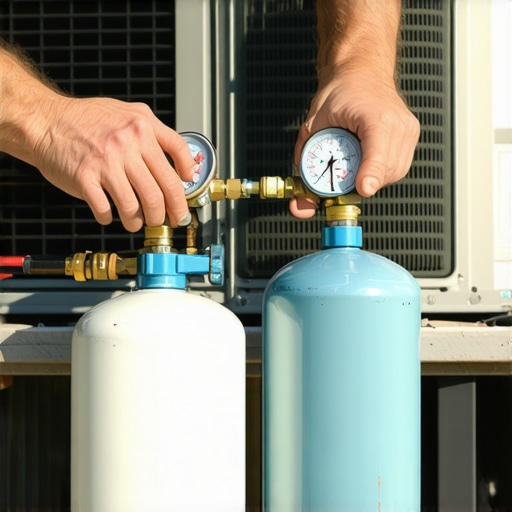
Many DIY enthusiasts explore methods on how to recover your AC without a professional machine, often attempting to use vacuum pumps and ice-chilled recovery tanks. However, from a professional standpoint, this is fraught with risk. The Environmental Protection Agency (EPA) mandates strict recovery protocols to prevent atmospheric damage and ensure system integrity. Without a dedicated recovery station, you risk introducing non-condensables into the system, which causes head pressure to spike and eventually leads to compressor seizure. Furthermore, improper handling can result in refrigerant cross-contamination, making future professional servicing significantly more expensive and technically difficult.
Master the Science of an Elite Brake Service
Effective stopping power is not just about having thick pads; it is about the thermal management of the entire system. A comprehensive brake service is key to car safety and longevity, requiring a deep dive into the hydraulic integrity of the lines and the mechanical freedom of the calipers. Professional mechanics often see cases regarding why your new brake rotors warped in less than six months, usually due to a failure to clean the hub mating surfaces or improper lug nut torque. This lateral run-out creates a vibration that can eventually damage suspension bushings and wheel bearings. Precision matters; even a deviation of 0.002 inches can be felt through the steering wheel during high-speed deceleration.
To ensure your vehicle stays in peak condition, always consult with professionals who understand these intricate details. Have questions about your car’s performance? Reach out to our experts to learn more about advanced diagnostic techniques and safe repair practices. How a top-rated mechanic ensures safe auto repairs involves more than just turning wrenches; it requires a commitment to ongoing education and the use of factory-grade specialized tools.
The transition from mechanical diagnosis to electrical troubleshooting is where many DIYers hit a wall. A vehicle that exhibits erratic behavior, such as sudden stalling or dimming lights, often points to a breakdown in the electrical return path. Professionals know that a 12 dollar ground wire that fixes stalling issues is more likely the culprit than a faulty computer. When the return path to the battery is compromised, sensors provide noisy data, leading the ECU to make incorrect adjustments to the air-fuel mixture. This electrical noise is particularly troublesome for modern transmissions, where precision signals dictate shift timing and pressure.
Is Your Transmission Actually Hunting for Gears or Just Starved for Data?
A common complaint among high-mileage drivers is why your automatic transmission hunts for gears on the highway. While this often feels like a mechanical slip, it is frequently a communication error. If the Transmission Control Module (TCM) receives fluctuating voltage, it may struggle to decide on the correct gear ratio for the current load. In these instances, a 14 dollar ground strap that fixes ghost shifting can restore the clean signal required for smooth operation. Before authorizing a multi-thousand-dollar overhaul, an expert technician will always verify the integrity of the vehicle’s electrical foundations to ensure the hardware is actually receiving the correct instructions.
The Deceptive Allure of Lifetime Transmission Fluid
One of the most debated topics in modern maintenance is the truth about lifetime transmission fluid and when to ignore it. Manufacturers often claim these fluids never need changing under normal conditions, but this assumes ideal environments that rarely exist in city driving or heavy towing. According to technical standards maintained by the Society of Automotive Engineers (SAE), thermal cycling and sheer stress eventually break down the viscosity modifiers and friction-modifying additives in the oil. Once these additives are depleted, the fluid can no longer protect the delicate solenoids and clutch packs from wear. For those seeking long-term reliability, a drain and fill strategy is far superior to waiting for a total system failure caused by oxidized lubricant.
Stop the Rattle Before It Sounds Like an Engine Failure
It is a harrowing experience for any car owner to hear a metallic clatter coming from beneath the hood, especially during acceleration. However, not every noise signifies a terminal internal problem. Often, what sounds like a catastrophic rod knock is actually the 15 dollar fix for a rattling heat shield that sounds like a dying engine. These thin metal plates can vibrate against the exhaust manifold at specific RPMs, creating a terrifying noise that mimics mechanical destruction. Distinguishing between a harmonic vibration and a mechanical knock requires a stethoscope and an understanding of engine frequency. Similarly, a 5 dollar vacuum leak that makes your transmission shift hard can be easily misdiagnosed as a failing valve body by an untrained eye.
Does Your Engine Really Need a Rebuild, or Is It Just a 15 Dollar Rattle?
High-level diagnostics require a skeptical mind and a refusal to take symptoms at face value. When faced with a seemingly dying engine, the expert mechanic looks for the simplest point of failure first. By using a smoke machine to identify intake leaks or a simple multimeter to check ground resistance, you can often save thousands in unnecessary repairs. If you are noticing strange symptoms or a dip in fuel economy, consider reviewing our essential tune-up tips to boost your car’s performance in 2025 to see which small components might be affecting your vehicle’s overall health before they lead to larger failures.
Stop Chasing Ghost Codes by Testing Fuel Trim Data
Experienced technicians know that a Check Engine Light is merely a starting point, not a diagnosis. When you see a P0171 or P0174 code, the computer is telling you it has reached its limit for compensating for a lean condition. Digging into the live data stream reveals the true story. If your Long Term Fuel Trim (LTFT) is pushing +15% or higher, your engine is gasping for fuel, likely due to an unmetered vacuum leak or a failing mass airflow sensor. This constant compensation puts immense stress on the fuel injectors and can lead to erratic idling that feels like a major mechanical failure.  Addressing these discrepancies early prevents the catalytic converter from overheating—a common and expensive consequence of excessive oxygen in the exhaust stream. According to technical standards often cited by the National Institute for Automotive Service Excellence (ASE), neglecting these small percentage shifts in fuel trim is the leading cause of failed emissions tests and premature engine wear in vehicles exceeding 100,000 miles. It is not just about clearing the code; it is about restoring the stoichiometric ratio that the engineers intended for peak efficiency.
What happens if you ignore a lean condition for too long?
When an engine runs lean, the air-fuel mixture contains too much air and not enough fuel. This creates a ‘blowtorch effect’ inside the combustion chamber. Without the cooling effect of evaporating fuel, temperatures spike rapidly, often exceeding the thermal limits of the exhaust valves and piston crowns. Over time, this leads to microscopic pitting on the piston surface or, in extreme cases, a hole melted straight through the center of the piston. If you are experiencing a loss of power or a high-pitched pinging sound under load, reach out to our experts immediately to prevent a total engine meltdown before a simple sensor issue turns into a full rebuild.
Why Trusting Pre-Gapped Spark Plugs is a Gamble
In the world of high-performance tuning, precision is measured in thousandths of an inch. Many enthusiasts purchase high-end iridium or platinum plugs labeled as ‘pre-gapped,’ assuming they can be installed straight out of the box. However, the journey from the factory to your local parts counter involves significant vibration and potential impacts that can easily close or widen that gap. A gap that is too narrow results in a weak spark, leading to poor fuel economy and carbon buildup. Conversely, a gap that is too wide might cause a misfire under high-load conditions as the ignition coil struggles to jump the distance. Always use a feeler gauge to verify the gap against the vehicle’s specific emissions label found under the hood. This small step ensures the flame front propagates evenly, maximizing the energy extracted from every drop of fuel while protecting your ignition coils from premature burnout.
The Hidden Cost of Low-Quality Fuel in Direct Injection Engines
Direct injection (GDI) technology has revolutionized efficiency, but it has also made engines more sensitive to fuel quality. Unlike traditional port injection, where fuel washes over the intake valves, GDI sprays fuel directly into the combustion chamber. This leaves the intake valves prone to carbon ‘coking’ because there is no solvent to keep them clean. Using fuel that meets the Top Tier Detergent Gasoline standards is essential for maintaining the integrity of the high-pressure fuel pump and the precision spray pattern of the injectors. When these injectors become clogged, the spray atomization fails, leading to ‘LSPI’ or Low-Speed Pre-Ignition, which can snap a connecting rod in a heartbeat. Modern engine management systems can only retard timing so much before the physical limits of the hardware are reached.
Why Oxygen Sensors Degrade Before They Actually Fail
An oxygen sensor is often treated as a binary component: it either works or it throws a code. In reality, these sensors ‘get lazy’ long before the heater circuit or the signal wire fails completely. A sluggish sensor reacts slowly to changes in exhaust chemistry, causing the ECU to oscillate the air-fuel mixture in a way that feels like a subtle surge at cruising speeds. This degradation is often caused by silicone poisoning or minute amounts of oil blow-by that coat the ceramic sensing element. When the sensor’s response time slows down, the catalytic converter has to work harder to process the resulting emissions, significantly shortening its lifespan. Testing the cross-counts of an O2 sensor with an oscilloscope is the only way to verify if it is truly performing at factory-spec speed.
Moving beyond basic mechanical component replacement requires a transition into the world of electrochemical and digital diagnostics. A high-level mechanic understands that a vehicle is not just a collection of parts, but a closed-loop ecosystem where one failing subsystem can induce phantom symptoms elsewhere. This is particularly evident in the cooling system, which many treat as a simple thermal management tool but which actually functions as a massive battery if neglected. Over time, the chemical additives in coolant deplete, causing the fluid to lose its buffering capacity. This leads to a state where the engine block and radiator become electrodes in a galvanic reaction, literally dissolving the internal metal surfaces of your cooling system from the inside out.
Stop the Chemical Attack Inside Your Cooling System
Electrolysis is the silent killer of modern aluminum engines. If you notice recurring leaks in a relatively new radiator or heater core, your auto repair focus should shift toward testing for stray voltage. By placing the negative lead of a high-impedance multimeter on the battery post and the positive lead directly into the coolant—without touching any metal—you can measure the electrical activity within the fluid. Any reading above 0.3 volts indicates that the coolant has become an electrolyte, and current is using the fluid as a path to ground. This often results from a failed engine ground strap or poor electrical repairs, and it will continue to destroy expensive components regardless of how many times you replace them. 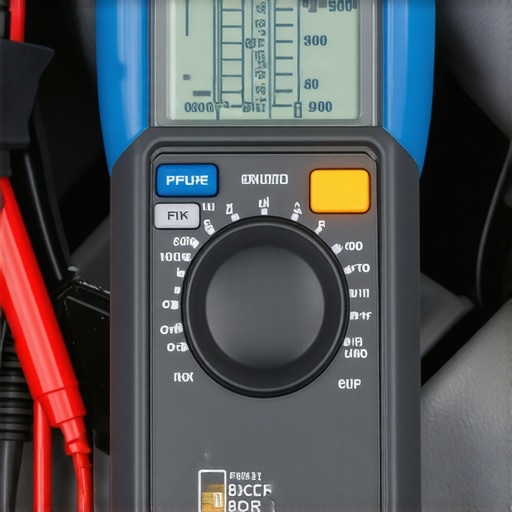
Read Between the Lines of Digital Signal Noise
While a standard scan tool is useful for reading codes, it often masks the true nature of a sensor failure. A professional-grade tune up in the modern era frequently necessitates the use of a lab scope to visualize the actual voltage behavior of a sensor in real-time. According to diagnostic standards outlined by Pico Technology, a lab scope is the only definitive way to verify if a crankshaft position sensor or a throttle body motor is producing a clean signal without intermittent dropouts. These ‘glitches’ are often too fast for the vehicle’s ECU to log as a permanent code, yet they are sufficient to cause the stumbles and hesitations that frustrate both owners and less-experienced technicians. Seeing the actual waveform allows you to distinguish between a faulty sensor and electromagnetic interference from a failing alternator or ignition coil.
Can a simple wheel alignment disable your emergency braking system?
The short answer is a definitive yes. As brake service and suspension work become more integrated with vehicle safety electronics, the requirement for ADAS (Advanced Driver Assistance Systems) calibration has become mandatory. If a technician replaces a steering rack or performs a significant alignment without recalibrating the Steering Angle Sensor (SAS), the car’s Forward Collision Warning and Lane Keep Assist systems may receive conflicting data. The computer might believe the car is turning when the cameras see it going straight, leading to a total system shutdown or, worse, an unrequested emergency braking event. This is why high-level safety maintenance now requires a digital ‘handshake’ between the mechanical hardware and the onboard software to ensure every safety net is correctly aligned.
Maintaining the delicate balance of a modern vehicle requires more than just mechanical skill; it demands a commitment to technological precision. If your vehicle is exhibiting complex symptoms that standard shops have failed to resolve, reach out to our experts today. Our team specializes in the deep-level diagnostics and technical calibrations that keep today’s most advanced vehicles running safely and efficiently. Do not settle for guesswork when your safety and vehicle longevity are on the line.
Expert Insights & Advanced Considerations
Why Voltage Drop Testing Trumps Resistance Checks
Many technicians rely on Ohm’s law by measuring resistance with a multimeter on an unpowered circuit. However, a wire with a single copper strand remaining will show near-zero resistance but fail immediately under a real-world load. Performing a voltage drop test while the circuit is active is the only way to reveal hidden bottlenecks in the electrical return path, ensuring that a mechanic isn’t chasing phantoms when diagnosing fuel pumps or ignition modules. This method identifies the resistive heat that ruins components before they fully fail.
The Thermal Inertia Factor in Modern Brake Systems
A professional brake service must account for more than just friction material thickness. Modern rotors have specific thermal capacities; once a rotor has been significantly overheated, the metallurgy changes permanently, leading to the formation of cementite. These ultra-hard spots cannot be turned away on a brake lathe and will cause recurring vibrations. Recognizing these blue-tinted heat spots early is essential to prevent the frustration of warped rotors returning just weeks after a repair.
Don’t Ignore the Digital Handshake After Alignment
In the current auto repair landscape, mechanical alignment is only half the battle. If a steering angle sensor is off by even a fraction of a degree, the vehicle’s Stability Control and Lane Keep Assist systems may interpret straight-line driving as a slide. Integrating a software reset into every suspension or brake service is no longer a luxury; it is the baseline for maintaining the safety integrity of a 2025 model-year vehicle.
Curated Expert Resources
SAE International Technical Library
This resource provides the raw engineering data behind modern automotive standards. It is the definitive source for understanding fluid viscosity requirements and the shear-stress limits of internal engine components.
Pico Technology Waveform Library
For the advanced technician, this library offers a massive database of known-good oscilloscope patterns. It is an essential tool for any mechanic looking to master the art of non-intrusive engine diagnostics and rapid electrical troubleshooting.
IATN (International Automotive Technicians Network)
A high-level peer-to-peer network where global experts share real-world fixes for complex, non-standard failures. It offers a level of collective diagnostic intelligence that exceeds even the best factory service manuals.
Final Expert Perspective
The evolution of the internal combustion engine into a high-tech digital hybrid requires a paradigm shift in how we approach a tune up. It is no longer about isolated part replacement; it is about maintaining the equilibrium of a complex, closed-loop ecosystem. Whether you are performing a precision brake service or diagnosing a deep-seated electrical fault, the difference between success and failure is found in the quality of your diagnostic data. Professional auto repair in the modern era is a blend of mechanical intuition and digital mastery. To ensure your vehicle remains at peak performance, always prioritize data-backed decisions over generic maintenance schedules. Reach out to our experts to discuss advanced diagnostic strategies or to schedule a comprehensive system audit tailored to your vehicle’s specific needs.