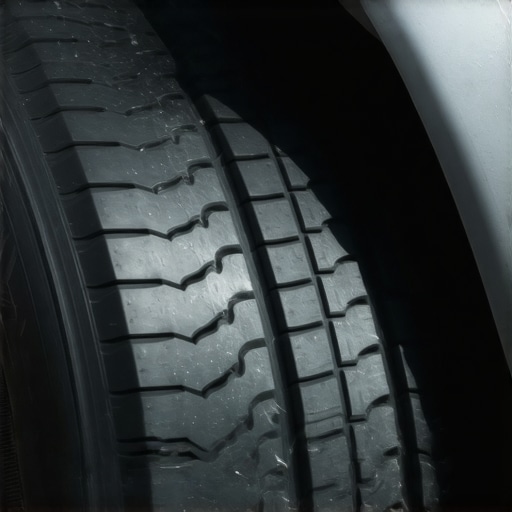
Beyond the Rubber: The Mechanical Sabotage of Tire Longevity
When a fresh set of tires, engineered for forty thousand miles of service, begins showing the steel belts within six months, we are not witnessing a product failure but a systemic mechanical crisis. Modern tire compounds are highly resilient, yet they remain the most vulnerable point in a vehicle’s kinetic chain. As an expert in auto repair and vehicle dynamics, I have observed that rapid tread wear is almost always a symptom of unaddressed parasitic forces. These forces, ranging from micro-oscillations caused by worn dampers to the subtle drag of a misaligned subframe, transform a standard commute into a high-intensity abrasive event. To preserve your investment, you must view the tire as a diagnostic canvas that reveals the health of your entire chassis.
The Silent Killer of Fresh Rubber: Why Basic Alignment Specs Aren’t Enough
Most vehicle owners believe a standard wheel alignment is a one-size-fits-all solution, but the reality is far more complex. Static alignment settings often fail to account for dynamic load changes. If your tires are wearing faster on the inside edge, you are likely dealing with more than just a toe adjustment issue. Worn control arm bushings can allow the wheel to deflect outward under acceleration or braking, creating a ‘scrub’ effect that literally sands down the rubber. This is why a comprehensive tune up of the suspension system is non-negotiable when installing high-performance rubber. Precision geometry is the only defense against the friction-heavy environment of modern asphalt.
Could Your New Tires Be Failing Because of an Aging Brake System?
It is a common misconception that the braking system and tire wear are unrelated. In professional mechanic circles, we understand that a sticking caliper or a dragging pad creates localized thermal expansion. This heat transfers to the tire’s bead and carcass, altering the chemical properties of the rubber and making it more susceptible to rapid erosion. Integrating a professional brake service strategy is a critical preventative measure. When the brakes do not release fully, the engine must fight that resistance, and the contact patch of the tire bears the brunt of that struggle. According to technical data from the Society of Automotive Engineers (SAE), even a 5% increase in rolling resistance due to brake drag can accelerate tread loss by nearly 30% over a 5,000-mile interval.
Hidden Suspension Geometry Faults That Eat Treads for Breakfast
The relationship between a vehicle’s dampers and tire life is absolute. If you fail to how to spot a leaky shock before it ruins your tires, you are essentially allowing your car to ‘pogo’ down the highway. This constant vertical oscillation creates ‘cupping’ or ‘scalloping’—small, high-low spots across the tread. This isn’t just a noise issue; it is a safety hazard that reduces your contact patch significantly during wet weather. A systematic approach to auto repair ensures that every component, from the ball joints to the struts, works in harmony to keep the tire flat against the road. If your vehicle feels floaty or dived during stops, your tires are already in danger. If you suspect your suspension is compromised, reach out to a professional to perform a lateral runout test and ensure your vehicle is safe for the road.
Don’t Let a Worn Bearing Ruin Your New Rubber
Beyond the dampers and alignment, the wheel hub assembly represents a critical fail-point for tire longevity. A wheel bearing with even a fraction of a millimeter of internal play allows the entire wheel to oscillate along its vertical axis. This movement causes the tire to ‘scrub’ against the road in a way that no alignment rack can detect during a static test. Learning how to identify a bad wheel bearing by ear can save you hundreds in premature tire replacement. When a bearing begins to fail, the resulting heat and vibration accelerate the breakdown of the tire’s internal belts, leading to a structural failure long before the tread has reached its legal limit.
The Simple Hub Clean That Saves Your Steering Geometry
Experienced technicians know that the interface between the wheel and the hub is as important as the tire itself. Rust, scale, or debris trapped between these surfaces creates lateral runout, which translates into a shimmy that feels identical to an out-of-balance tire. This is why performing a 15 hub clean up that fixes steering wheel shake is a mandatory step for any precision-focused mechanic. If the wheel does not sit perfectly flush against the hub, the resulting wobble will unevenly distribute the vehicle’s weight across the tire’s footprint, causing ‘patchy’ wear that ruins the ride quality and decreases fuel efficiency.
Why Does Your Car Shake at Exactly 55 MPH But Not at 70?
This phenomenon is rarely about the tires alone; it is usually a matter of harmonic resonance. Every vehicle has a natural frequency at which its suspension components vibrate. When a tire is slightly out of balance or a bushing is soft, the vibration can peak at specific speeds. If you are wondering why your car shakes at exactly 55 mph but not at 70, you are likely witnessing a conflict between tire imbalance and suspension dampening. Identifying these harmonics requires an expert who looks beyond the balancing machine to check for ‘flat spots’ or shifted belts within the tire carcass itself. Professional diagnostic tools, such as the 20 scanner that every modern driver should own, can sometimes help identify if these vibrations are triggering ABS or traction control sensors, providing further clues to the mechanical root cause.
Demand Road Force Balancing for High-Precision Performance
Traditional balancers only measure the weight distribution of the wheel and tire assembly while it spins in the air. However, tires do not operate in a vacuum; they operate under the massive load of the vehicle. Road Force balancing uses a load roller to simulate the weight of the car, identifying ‘hard spots’ in the tire’s sidewall that a standard balancer would miss. According to technical documentation from the Tire Industry Association (TIA), addressing ‘radial force variation’—the difference in stiffness around the circumference of the tire—is essential for modern vehicles with sensitive, lightweight suspension systems. If your car still vibrates after a standard balance, your next step should be a Road Force diagnostic to ensure the tire is actually round under load.
Understanding these advanced variables is what separates a basic repair from true automotive stewardship. If you are struggling to find a shop that prioritizes these nuances, take a moment to learn how to choose a skilled mechanic you can trust who understands that your tires are only as good as the chassis they are bolted to. Have you ever had a mystery vibration that stumped your local shop? Share your experience in the comments below or tell us which diagnostic trick finally solved your tire wear woes.
When Your Steering Rack Fights Your Tires
While most drivers focus on the visible components of the suspension, the steering rack often hides the most insidious causes of rapid tread depletion. Internal wear in the rack and pinion assembly—specifically play in the inner tie rod sockets—introduces a variable toe condition that no static alignment can resolve. As you drive, the wheels oscillate between toe-in and toe-out depending on the road surface and torque application. This instability creates a feathering pattern across the tire tread that feels like a subtle vibration but acts like a cheese grater on the rubber. During a comprehensive auto repair session, a skilled technician must check for ‘memory steer’ or dead spots in the electronic power steering (EPS) motor, which can prevent the wheels from returning to a true center, causing one tire to drag slightly through every corner.
Why the TPMS Light is a Laggard Indicator
Modern Tire Pressure Monitoring Systems (TPMS) are designed for safety, not for performance or longevity. In many vehicles, the warning light only triggers when pressure drops 25% below the manufacturer’s recommended cold inflation pressure. By the time that icon illuminates on your dashboard, your tires have already been running under-inflated for weeks, causing excessive heat buildup in the sidewalls and accelerated wear on the outer shoulders. According to the National Highway Traffic Safety Administration (NHTSA), proper inflation is the single most important factor in tire safety and durability, yet a significant percentage of vehicles on the road operate with at least one dangerously under-inflated tire. To truly protect your investment, a monthly tune up of your tire pressures using a high-quality digital gauge is essential, especially during seasonal temperature swings where a 10-degree drop can equal a loss of one PSI.
Can You Actually Rotate Tires on a Staggered Fitment?
Luxury and performance vehicles often feature a staggered fitment, where the rear tires are wider than the fronts to handle higher power output. This configuration makes traditional front-to-back rotation impossible, leading many owners to skip rotation entirely. However, a mechanic who understands vehicle dynamics will tell you that side-to-side rotation is still viable—and necessary—if the tires are non-directional. By swapping the left and right tires on the same axle, you counteract ‘camber wear’ patterns typical of performance-oriented suspension setups. If you aren’t sure if your current set is directional, look for an arrow on the sidewall; if it is missing, you have the green light to swap sides and potentially squeeze an extra 5,000 miles out of that expensive rubber. If you are noticing uneven wear on a performance setup, consider scheduling a specialized brake service to ensure your electronic stability control isn’t over-braking one wheel to compensate for a dragging sensor.
How Polyurethane Bushings Trade Comfort for Tread Life
For those seeking sharper handling, upgrading from factory rubber bushings to polyurethane variants is a common modification. While these stiffer components hold the suspension geometry much tighter under load, they also transmit more high-frequency vibration into the tire carcass. This lack of compliance means the tire must absorb all the micro-impacts that the rubber bushings used to dampen. This can lead to faster structural fatigue in the tire’s internal belts. In the world of high-end auto repair, we often see that the quest for a ‘planted’ feel results in a tire that reaches its heat-cycle limit long before the tread depth is gone. Balancing the durometer of your suspension components with the load rating of your tires is a delicate science that requires more than just off-the-shelf parts.
Stop Over-Tightening Your Wheels if You Value Your Hubs
While most enthusiasts focus on the tread, the way the wheel attaches to the vehicle is a frequent source of phantom vibrations. Using an impact wrench to blast lug nuts into place without a calibrated torque wrench creates uneven clamping force across the rotor hat. This induces lateral runout—a subtle wobble—that eventually results in uneven brake pad transfer and, subsequently, patchy tire wear. A professional mechanic knows that the specific torque sequence is as vital as the final value. When the wheel is not perfectly centered on the hub, the tire’s rotational axis shifts, forcing the rubber to fight against its own momentum. This mechanical disharmony is a primary reason why many drivers experience a vibration that no amount of balancing can fix.
Why Does Your Steering Angle Sensor Matter More Than Your Alignment Specs?
In the era of Advanced Driver Assistance Systems (ADAS), a mechanical alignment is only half the battle. If your vehicle features electronic stability control or lane-keep assist, your tune up must include a Steering Angle Sensor (SAS) recalibration. If the car’s computer thinks the steering wheel is off-center, it may apply minute, imperceptible braking force to individual wheels to correct the path. This constant electronic interference causes one tire to scrub more than the others. According to technical bulletins from Hunter Engineering Company, failing to reset the SAS after a physical alignment can lead to increased rolling resistance and premature engagement of the traction control system, which silently eats away at your tread depth.
The Hidden Danger of Environmental Dry Rot on Low-Mileage Rubber
Many vehicle owners assume that because they have plenty of tread depth, their tires are safe. However, rubber is a dynamic organic polymer that degrades through a process called oxidation. If your car sits for long periods, especially in high-ozone environments or under direct UV exposure, the essential oils within the compound evaporate. This results in dry rot—micro-cracks in the sidewall and between the tread blocks. These cracks are structural compromises that can lead to catastrophic blowout even if the tire looks new. During a thorough brake service or inspection, your technician should check the DOT date code; tires older than six years are often chemically expired regardless of their visual condition. Specialized anti-ozonant chemicals are built into the rubber, but they only migrate to the surface when the tire is flexed during driving, meaning shelf-life is a real threat to safety.
Unsprung Weight is the Enemy of a Perfect Contact Patch
Modifying a vehicle with heavier, oversized wheels might look impressive, but the increase in unsprung weight fundamentally changes how your dampers interact with the road. A heavier wheel-and-tire assembly has more inertia, making it harder for the shock absorber to push the tire back down into contact with the asphalt after hitting a bump. This leads to micro-hopping, where the tire spends milliseconds off the ground. When it lands, it does so with a momentary skid, creating flat spots over thousands of miles. This is why high-end auto repair professionals emphasize lightweight components; keeping the tire’s contact patch consistent is the only way to ensure the rubber wears evenly and maintains its grip threshold during emergency maneuvers. Take a moment to inspect your tire’s manufacture date—is your rubber older than it looks? Drop a comment and tell us the weirdest wear pattern you’ve ever discovered on a low-mileage set of tires.
Expert Knowledge and Critical Chassis Adjustments
Reset Your Steering Angle Sensor Now
In the modern era of Advanced Driver Assistance Systems (ADAS), a mechanical alignment is only half the battle. If your vehicle features electronic stability control, your tune up must include a Steering Angle Sensor (SAS) recalibration. If the car’s computer thinks the steering wheel is off-center, it may apply minute, imperceptible braking force to individual wheels to correct the path. If you notice that your steering wheel is off-center after an alignment, this electronic ghost is likely scrubbing your tires every mile you drive.
Hand-Torque Every Lug Nut
Using an impact wrench to blast lug nuts into place without a calibrated torque wrench creates uneven clamping force across the rotor hat. This induces lateral runout—a subtle wobble—that eventually results in uneven brake pad transfer and patchy tire wear. Learning how to properly torque lug nuts without a professional gun ensures the wheel sits perfectly flush against the hub, preventing mechanical disharmony that no amount of balancing can fix.
Manual Pressure Checks Beat TPMS
Modern Tire Pressure Monitoring Systems (TPMS) are designed for safety, not for performance or longevity. In many vehicles, the warning light only triggers when pressure drops 25% below the recommended level. To truly protect your investment, a monthly manual check using a high-quality digital gauge is essential. This proactive auto repair habit prevents the sidewall heat buildup that causes internal structural failure long before the tread wears out.
Authorities for Deeper Automotive Research
SAE International Technical Library
This resource provides peer-reviewed engineering data on vehicle dynamics. It is the best place for a serious mechanic to study the correlation between thermal expansion in brake systems and tire carcass degradation.
Hunter Engineering Learning Center
As the leaders in wheel service technology, Hunter offers extensive documentation on Road Force balancing. Their research explains why traditional balancing often fails to solve vibrations caused by tire ‘hard spots’ or radial force variation.
NHTSA Safety Research Portal
The National Highway Traffic Safety Administration offers comprehensive data on tire aging and the chemical breakdown of rubber polymers. Their reports are vital for understanding why tires older than six years require replacement regardless of visual tread depth.
#IMAGE_PLACEHOLDER_E#
Final Takeaway for High-Mileage Drivers
Mastering tire longevity requires shifting your focus from the rubber itself to the complex mechanical ecosystem of the chassis. Real-world auto repair success comes from understanding the interplay between suspension geometry, electronic sensors, and precise rotational balance. Utilizing expert mechanic tips for diagnosing common problems can help you catch these issues before they ruin a new set of tires. By following a comprehensive tune up checklist, you ensure your vehicle operates as a cohesive unit. If you have questions about your specific suspension setup or want to share a diagnostic success story, visit our contact page to join the conversation.