
Suspension diagnostics represent the frontier where mechanical engineering meets the reality of road-wear. A mystery clunk is often a symptom of a harmonic vibration caused by excessive clearance in a spherical joint or a degraded elastomeric bushing. Expert mechanics do not simply throw parts at a noise; they use an analytical process of elimination to determine whether the fault lies in the primary damping system or the lateral stability components. This systematic approach ensures that a standard auto repair remains cost-effective rather than a trial-and-error expense.
Trace the Kinetic Path of the Noise
To find a clunk, you must think like a suspension engineer. Noises are rarely where they seem. Sound travels through steel control arms and subframes, often telegraphing a rear-end issue to the driver’s feet. Start by determining if the noise is a single thud or a rhythmic rattle. A single thud during weight transfer usually points to a control arm bushing or a motor mount. Conversely, a rhythmic rattle over small bumps is a hallmark of worn sway bar end links. Professionals often use chassis ears—electronic microphones clipped to various components—to triangulate the source. If you suspect your dampers, it is critical to learn how to tell if your struts are actually blown before committing to a full replacement. According to technical standards established by the Society of Automotive Engineers (SAE), even a few millimeters of unintended travel in a ball joint can significantly alter the alignment geometry, leading to accelerated tire wear.
When Does the Sound Actually Occur?
Does the clunk manifest only during braking, or does it happen when you crest a speed bump? If the noise appears specifically during deceleration, you might be looking at a brake service issue rather than a suspension fault. Caliper pins that have lost their lubrication can rattle within the bracket, mimicking a suspension clunk. However, if the noise occurs when the steering wheel is turned, you must evaluate the tie rods and the steering rack itself. Understanding 3 steering noises that mean your car is unsafe is vital for any driver attempting a DIY diagnosis.
Isolate the Component with Load-Bearing Tests
Static inspections—where the car is simply sitting on a lift—often fail to reveal the culprit because the suspension is in a droop position. To find the source, the suspension must be under load. Using a drive-on lift or ramps allows you to reach up and shake the sway bar or pry against the control arms while they are in their natural operating position. Look for witness marks or shiny spots on metal parts where they may be making contact. You should also check for fluid leaks; you can how to spot a leaky shock before it ruins your tires to prevent secondary damage to your tread. If you find your tires are already showing odd patterns, investigate 3 ways to stop your tires from cupping to save money in the long run. If the diagnosis remains elusive, a skilled mechanic can use a pry bar to check for deflection in the subframe bushings, a common but overlooked source of heavy thumping. Professional diagnostics save time and prevent the unnecessary replacement of functional parts. Share your own diagnostic success stories or ask an expert in our community forums to refine your technique.Beyond the audible thuds lies the more insidious issue of high-speed instability, which often manifests as a vague or disconnected feeling at the helm. When the vehicle begins to drift without driver input, the diagnostic focus must shift toward the steering geometry. Investigating why your car wanders across the lane at high speeds often reveals that while individual components may technically be within wear limits, the cumulative tolerance stack-up is too high. This ‘floaty’ sensation is frequently the result of worn inner tie rod ends or softening steering rack bushings that allow the rack to shift laterally under load. Technical experts at the National Institute for Automotive Service Excellence (ASE) note that even a minor deviation in caster angle can compromise the self-centering action of the wheels, leading to a tiring driving experience on long highway hauls.
Stop the High-Speed Lane Wander
High-speed stability is a delicate balance of alignment and component rigidity. If you find your steering wheel is off-center after an alignment, it is rarely a manufacturing defect in the parts but rather a symptom of the ‘memory’ in old bushings or a technician failing to account for chassis flex. A vehicle that pulls or wanders requires a forensic look at the scrub radius and the condition of the rear subframe. If the rear axle is even slightly out of parallel with the front, the car will ‘dog-track,’ forcing the driver to provide constant corrective input. Furthermore, if you notice 3 reasons your steering feels heavy suddenly, you should inspect the fluid health and the pump’s bypass valve before assuming the rack has failed.
Could a Snapped Mount Mimic a Suspension Failure?
One of the most common pitfalls in professional diagnostics is misidentifying a drivetrain vibration as a suspension clunk. Because the engine and transmission are heavy masses suspended within the frame, their movement is intrinsically linked to the vehicle’s handling. It is essential to learn how to tell if your transmission mount is snapped, as the resulting metal-on-metal contact during hard acceleration or braking can send a jarring shock through the control arms. This phantom thud often leads DIYers to replace perfectly functional ball joints while the actual culprit—the rubber isolator in the mount—remains hidden. 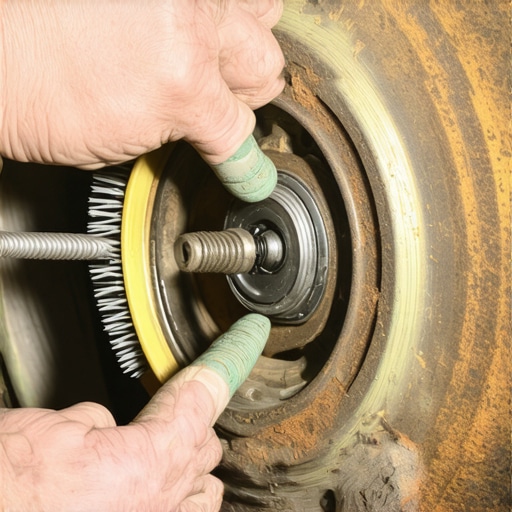
Address the Hidden Harmonic Vibrations
Not all handling issues involve movement; some involve harmonics. A high-frequency vibration that hums through the steering wheel at 60 MPH might not be a balance issue but a hub-centric interface problem. Utilizing the 15 hub clean-up that fixes steering wheel shake can eliminate the microscopic gaps caused by rust that prevent the wheel from sitting perfectly true. If the vibration is accompanied by a growl that changes when you swerve slightly, you must know how to identify a bad wheel bearing by ear. Tire health also plays a critical role here; observing 3 ways to stop your tires from cupping ensures that you aren’t fighting a losing battle against uneven tread wear caused by worn dampers. Finally, if you experience a physical resistance in the wheel, checking why your steering feels notchy while turning can help you distinguish between a failing hydraulic system and a binding steering column U-joint. Have you ever replaced a part only to find the noise persisted? Let us know in the comments which ‘phantom’ clunk took you the longest to solve so we can help others avoid the same headache.While basic diagnostics cover the obvious clunks, solving complex high-speed instability requires a deep dive into the ‘stack-up’ of minor wear. Even if every ball joint passes a pry-bar test, the collective softness of twenty-year-old rubber bushings creates a lag between driver input and chassis response. This phenomenon, often called ‘ghost walking,’ occurs when the suspension geometry shifts dynamically under the load of highway speeds, effectively changing your toe-in while you drive.
Reclaim Your Control by Upgrading to Polyurethane Bushings
For many enthusiasts, simply replacing old rubber with more rubber isn’t enough. Standard elastomeric bushings are designed primarily for NVH—Noise, Vibration, and Harshness—isolation rather than precision. If you demand a more surgical feel from your steering, consider transitioning to high-performance polyurethane. These components are significantly more rigid, meaning they resist the lateral deflection that leads to lane wander. However, the trade-off is a more communicative and sometimes harsher ride. 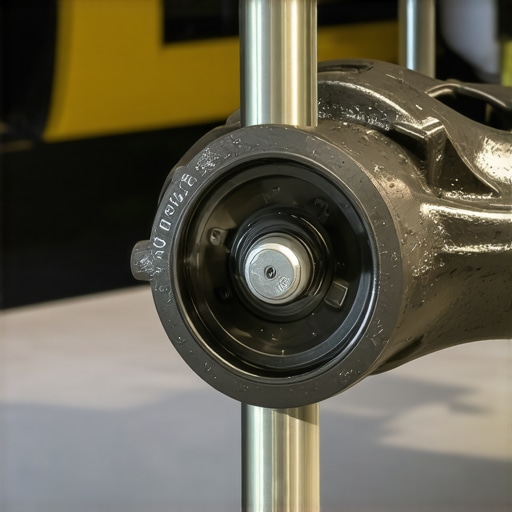
Why Does My Car Feel Unstable Even After a Fresh Alignment?
This is a frequent frustration for many drivers. The answer often lies in the difference between static and dynamic alignment. A car on an alignment rack is stationary; however, once it hits 70 MPH, aerodynamic lift and rolling resistance pull at the wheels. If your control arm bushings are soft, that force pulls the wheels into a ‘toe-out’ condition that didn’t exist in the shop. Professional tuners often compensate for this by setting a slight ‘toe-in’ bias to ensure the wheels reach a neutral, parallel state at speed.
The Crucial Role of Caster in Straight-Line Stability
Caster is frequently the most misunderstood angle in the alignment trio. While camber and toe get all the attention for tire wear, caster is what keeps your car pointed straight without constant correction. Think of the front wheels on a shopping cart—that ‘trail’ is positive caster. Increasing positive caster improves the self-centering torque of the steering wheel, providing that heavy, stable feel typical of high-end German sport sedans. According to the performance suspension experts at Bilstein, maintaining a precise damping rate is equally vital, as a strut that cannot control the spring’s rebound will cause the tire to ‘hop,’ momentarily losing its alignment geometry and causing a nervous sensation at the wheel.
Is Your Thrust Angle Causing the Car to Dog-Track?
If your front end is perfect but the car still feels like it is trying to pivot, you must look at the rear axle. The thrust angle is the direction the rear wheels are pointing relative to the vehicle’s centerline. If the rear subframe has shifted or a trailing arm is bent, the rear wheels will push the car sideways. This forces you to turn the steering wheel slightly just to keep going straight. Correcting a thrust angle issue is not a standard part of a ‘front-end’ alignment, so you must specifically request a four-wheel alignment to verify the chassis is truly square. If you have ever felt like your car was crab-walking down the road, share your experience in the comments below; it might be the key to helping another driver diagnose a bent rear component.
Stop Chasing Vibrations and Start Measuring Lateral Runout
While many enthusiasts concentrate on the visible components, the microscopic integrity of the hub-to-rotor interface dictates the refinement of the entire front end. If you have replaced your rotors multiple times only to have a steering wheel shake return within months, you likely aren’t dealing with ‘warped’ discs. Instead, you are likely a victim of lateral runout. Even a tiny speck of rust between the hub and the rotor can cause the disc to wobble as it rotates. Over time, this wobble leads to uneven pad material transfer, a phenomenon known as Disc Thickness Variation (DTV). To truly solve this, a professional mechanic will use a dial indicator to measure the runout with micrometer precision. According to technical documentation from Brembo, exceeding even a few hundredths of a millimeter in runout can lead to pedal pulsation and high-speed instability that mimics a failing ball joint. 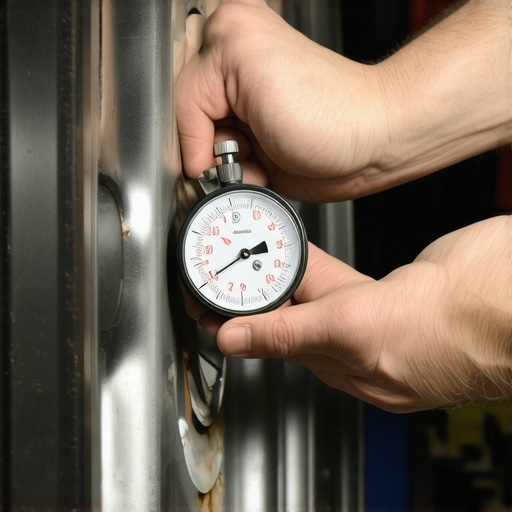
Aerodynamic Lift Exposes the Weakest Links in Your Dampers
At 40 MPH, a slightly worn shock absorber might feel comfortable, masking its inability to control the coil spring. However, as you reach highway speeds, aerodynamic lift begins to reduce the effective weight pressing the tires into the asphalt. In this low-load environment, a damper with a ‘dead spot’ in its travel fails to keep the tire in constant contact with the road. This creates a terrifying sensation of the car ‘floating’ or ‘dancing’ over road imperfections. If your vehicle feels planted in the city but nervous on the interstate, you must look beyond the bushings. This is where the internal valving of the strut has likely bypassed its effective service life. Ensuring your dampers are functioning is a critical part of any high-speed auto repair strategy to maintain safety during emergency maneuvers.
Could a Seized Eccentric Bolt Be Ruining Your Handling?
This is the nightmare of every alignment technician and the primary reason many cars never truly feel ‘right’ after a service. Modern independent rear suspensions rely on eccentric cam bolts to adjust toe and camber. Because these bolts are exposed to road salt and moisture, they frequently seize inside the metal sleeve of the bushing. When a technician tries to adjust your alignment, they may find the bolt won’t budge, or worse, they may ‘spring’ the bushing without actually moving the bolt, leading to an alignment that shifts the moment you drive off the rack. If your car won’t hold its settings, you must inspect these pivots for corrosion. Replacing a seized eccentric bolt is often the only way to restore the factory-spec handling you’ve been missing.
The Hidden Friction within Your Steering Column
Sometimes the issue isn’t in the wheels or the control arms, but in the path the signal takes from your hands to the rack. A steering system that feels ‘notchy’ or refuses to return to center often suffers from a binding U-joint in the intermediate steering shaft. This small, often-ignored joint can rust, creating high-effort spots as you turn the wheel. Before you assume you need an expensive brake service or a new power steering pump, lubricate these external joints and check for smooth articulation. Have you encountered a steering mystery that defied standard logic? Tell us about the weirdest fix that finally cured your car’s handling woes in the comments below.
Expert Insights & Advanced Considerations
Watch Out for Temperature-Induced Tolerances
Metal expands and contracts, and so does rubber. A clunk that disappears after ten minutes of driving is often a sign of an elastomeric bushing that has hardened with age but softens just enough once friction heat builds up. When performing a diagnostic, always test the vehicle in its cold state to identify the most severe geometry shifts. This is particularly relevant when you are trying to determine 3 symptoms of a bad inner tie rod or worn control arm pivots.
Stop Blaming the Alignment Rack for a Crooked Wheel
If your steering wheel is off-center after an alignment, the issue is frequently memory in the steering rack’s internal seals or worn mounting bushings. The wheels may technically be aligned on the rack, but under the load of the road, the rack shifts laterally. A professional mechanic will look for rack movement while an assistant cycles the steering wheel under load.
Precision Components Require Matched Pairs
Mixing a high-performance strut on one side with a budget-grade replacement on the other creates a damping imbalance that triggers high-speed instability. Always replace dampers in pairs to maintain a consistent roll center and response time during emergency maneuvers. Neglecting this often leads to a situation where you need brake service more frequently due to the uneven weight distribution during deceleration.
Curated Expert Resources
Hunter Engineering Training Modules: These resources offer deep technical dives into wheel alignment theory and the use of heavy-duty diagnostic equipment to solve thrust angle issues.
ASE Technical Study Guides: These provide essential knowledge for understanding the rigorous standards required for professional certification and precision auto repair.
Bilstein Suspension Academy: This source offers advanced insights into gas-pressure technology and how specific damping rates affect a vehicle’s footprint and stability at high speeds.
Final Expert Perspective
Navigating the complexities of high-speed handling and phantom clunks requires a shift from superficial checks to forensic analysis. Whether it is measuring lateral runout or applying the 15 hub clean-up that fixes steering wheel shake, the difference between a safe vehicle and a dangerous one lies in the microscopic details. A successful auto repair strategy always prioritizes empirical data over guesswork to restore factory-spec performance. Have you encountered a steering mystery that defied standard logic? Share your experiences with our community or ask our resident experts to help you solve your car’s most stubborn handling woes.