
For any vehicle surpassing the 75,000-mile threshold, the internal architecture of the engine enters a phase of thermal degradation that standard lubricants often fail to address. High-mileage oils are not merely marketing gimmicks; they are chemically distinct fluids engineered with elastomer conditioners and superior shear stability to combat the inevitable hardening of gaskets. However, a significant gap often exists between the premium service you pay for and the bulk-tank reality at many high-volume service centers. Transitioning to specialized fluids is a critical component of modern auto repair, yet the lack of transparency in the service bay can leave your engine vulnerable to the very leaks you are trying to prevent.
The Seal-Swelling Science Your Engine Desperately Needs
High-mileage formulations differentiate themselves through the inclusion of seal conditioners—specialized chemicals that cause aged gaskets to swell and regain elasticity. According to studies published by SAE International, these additives are particularly effective on nitrile and neoprene components which tend to shrink and crack over time. When a mechanic utilizes genuine high-mileage synthetic, the reduction in oil consumption is often measurable within two service intervals. If you notice your oil levels dropping between visits, it is worth investigating why your fluid levels keep dropping to determine if the issue is internal or external. Without these conditioners, the risk of oil entering the combustion chamber increases, leading to carbon buildup on valves and pistons.
Is there a way to verify the technician actually used the bottled oil?
Transparency is the greatest challenge in the auto repair industry. Most shops purchase oil in 55-gallon drums or massive overhead tanks to reduce costs. While these tanks are labeled, the technician often uses a generic dispense nozzle that does not distinguish between standard and high-mileage variants. To ensure you are getting the protection you pay for, ask to see the empty quart bottles or request that the technician performs the fill in your presence. Reliable shops understand that why regular tune-ups are key to car longevity includes using the precise lubricants specified on the work order. If the shop resists this level of transparency, it may be time to rethink your choice of service provider.
Why Bulk Dispensing Systems Hide Service Shortcuts
In high-volume environments, the pressure to maintain a high car count often leads to “good enough” mentalities. A shop may charge you for a premium high-mileage tune up while actually pumping a mid-grade semi-synthetic from the overhead reel. This is not just a financial concern; it is a mechanical one. Standard oils lack the robust detergent packages necessary to clean the sludge that accumulates in older blocks. If you are worried about your engine’s health, check out how a top-rated mechanic ensures safe auto repairs every time to see how transparent shops operate. Furthermore, check the color of your dipstick; if your engine oil looks like a milkshake shortly after a change, no amount of high-mileage additives will save you from a failing head gasket.
How the Wrong Oil Choice Compromises Variable Valve Timing
Many modern engines utilize Variable Valve Timing (VVT) systems that rely on precise oil pressure to operate. Using the wrong viscosity or a low-quality bulk oil can lead to sluggish solenoid response and catastrophic engine codes. This is exactly why cheap synthetic oil might be killing your variable valve timing systems in vehicles with over 100,000 miles. A true high-mileage oil maintains its viscosity under high-heat scenarios, ensuring the VVT phasers stay lubricated and responsive. If you’re unsure about your shop’s integrity, learn how to choose a skilled mechanic you can trust to ensure you get the chemical protection your high-mileage vehicle requires for another 100,000 miles of service.
Stop Ignoring the Cooling System’s Silent Thermal Stress
While high-mileage oil is vital, the cooling system is often the first domino to fall in an aging engine. Over time, plastic radiator tanks and coolant flanges become brittle through thousands of heat cycles. If you find yourself frequently topping off the reservoir, you need to investigate why your coolant level drops without a visible leak before a minor seep becomes a catastrophic overheat. The National Institute for Automotive Service Excellence (ASE) emphasizes that coolant pH levels shift over time, becoming acidic and eating away at internal gaskets from the inside out. This chemical breakdown is why many experts recommend a full system flush even if the fluid looks clean to the naked eye.
Can you trust the multi-point inspection sheet your technician handed you?
Most “complimentary” inspections are performed in under three minutes by entry-level lube techs. To verify their work, look for specific notes on component health rather than generic “green” checkmarks. A thorough mechanic should identify 3 signs your mechanic found a real suspension problem and not just a dirty part, such as torn boots or leaking struts. If your car feels unstable at highway speeds, you might be dealing with why your car wanders across the lane at high speeds, a common symptom of worn tie rods or bushings that many high-volume shops overlook during a standard tune up. Have you ever felt the shop missed something obvious during a routine visit? Share your experience in the comments below so others know what to look for.
The Dangerous Myth of Maintenance-Free Lifetime Fluids
Manufacturers often use the term “lifetime fluid” to lower the perceived cost of ownership during the initial lease period. However, in the world of high-mileage auto repair, this is a recipe for transmission failure. Heat is the ultimate enemy of hydraulic fluid, and once it breaks down, the friction plates inside your gearbox will begin to shed material. This is the dirty secret about lifetime transmission fluid that most dealerships won’t tell you until you’re facing a $5,000 replacement bill. If you notice a change in shift quality, learn why your transmission fluid is turning black and get it exchanged immediately. Expert-level brake service and transmission care require proactive fluid management, not just waiting for a warning light.
Don’t Let Notchy Steering Become a Safety Hazard
As a vehicle nears the six-figure mileage mark, steering components like the rack and pinion or universal joints begin to lose their factory precision. If your commute involves a lot of low-speed maneuvering and you notice resistance, investigate why your steering feels notchy while turning. This is often caused by hardened internal seals or a failing power steering pump that can no longer maintain consistent pressure. Many owners ignore these signs, assuming it is just a quirk of an older car, but it often precedes a total hydraulic failure. Addressing these issues early prevents the “heavy” steering sensation that can lead to driver fatigue or slow emergency response times during a slide. Furthermore, checking for uneven tire wear can reveal if your front-end geometry is compromised; investigate 3 tire wear patterns that prove your last alignment was lazy to ensure your auto repair professional isn’t cutting corners with the steering setup. Keeping a close eye on these nuances is what separates a car that lasts 300,000 miles from one that ends up in the scrap yard prematurely.
Beyond Pads and Rotors: Why Your ABS Module is Failing
As vehicles approach the decade mark, the focus on brake service often stops at the friction material, yet the most significant threat resides within the hydraulic lines. Brake fluid is hygroscopic, meaning it actively absorbs moisture from the atmosphere through microscopic pores in rubber hoses. Over time, this moisture content lowers the boiling point and initiates internal oxidation within the Anti-lock Braking System (ABS) modulator. According to the NHTSA Federal Motor Vehicle Safety Standard No. 116, brake fluids must meet strict chemical stability requirements, but these protections degrade as the additive package is depleted. When a mechanic fails to perform a full system flush, the internal valves of the ABS unit can seize, leading to a hard pedal feel or a complete loss of emergency braking functionality. If you have noticed a change in how your car stops, it is imperative to investigate why your brake pedal feels spongy after a long drive before the hydraulic unit sustains permanent damage.
Can neglected brake fluid trigger intermittent traction control warnings?
Many drivers are surprised to find that a traction control light is often a symptom of fluid contamination rather than a faulty sensor. As moisture-laden fluid cycles through the system, it can create micro-clogs in the delicate orifices of the pressure sensors. This leads to erratic voltage readings that the ECU interprets as a mechanical slip. A sophisticated modern auto repair facility will use an oscilloscope to track these voltage drops rather than just ‘throwing parts’ at the problem. If you are experiencing these electronic gremlins, check why your traction control light stays on after a battery change to see if the issue is electrical or hydraulic in nature. Ensuring your technician uses a dedicated brake fluid tester to check for copper content is the only way to truly verify the health of your lines.
Hunting the Electrical Ghosts of 100,000 Miles
In the realm of high-mileage tune up procedures, the electrical system is frequently overlooked until the car fails to start. However, the ‘silent’ degradation of grounding straps is a primary cause of erratic sensor behavior and poor fuel economy. As the braided copper cables that connect the engine block to the chassis oxidize, they develop high resistance, which starves the ignition coils of the current needed for a crisp spark. This is a common culprit for why your car hesitates under acceleration but idles fine, as the demand for voltage increases under load. A seasoned mechanic will perform a voltage drop test on the main ground points during any major service to ensure the computer is receiving a clean signal. If your dashboard lights flicker when you use the power windows, it’s a clear sign that your vehicle’s electrical foundation is crumbling.
The Critical Role of Harmonic Balancers in Engine Longevity
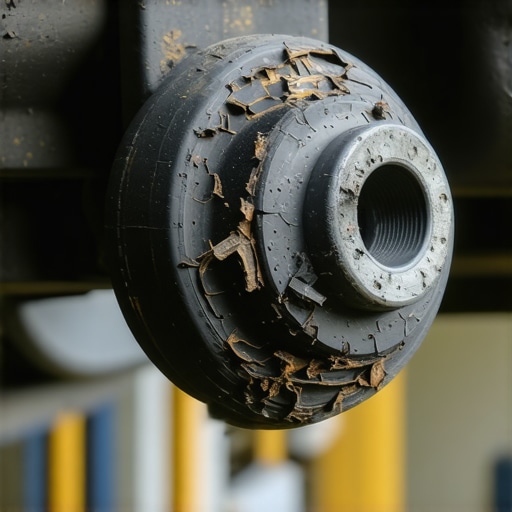
While most owners focus on the timing belt, the harmonic balancer—a rubber-damped pulley on the end of the crankshaft—is a ticking time bomb on older engines. The rubber insert is designed to absorb the torsional vibrations produced by the combustion process. After years of exposure to oil leaks and road salt, this rubber can dry rot and slip. If the balancer fails, the resulting vibrations can literally snap a crankshaft or destroy the front main seal. This often presents as a subtle ‘thrumming’ sensation in the steering wheel at specific RPM ranges. Have you ever felt a vibration that your local shop couldn’t find? Tell us about your diagnostic journey in the comments below; your experience might help another driver catch a failure before it becomes a total loss.
Stop Relying on Cheap Copper Spark Plugs
Modern high-mileage engines are designed to run on iridium or platinum electrodes which maintain a consistent gap over 100,000 miles. Many budget-friendly shops will install basic copper plugs during a tune up to keep costs low, but this is a mistake for older vehicles. Copper electrodes wear down quickly, increasing the gap and forcing the ignition coils to work harder to bridge the distance. This extra heat eventually burns out the coil boots and can lead to a ‘dead’ cylinder. If you’ve recently had work done and notice a decline in power, investigate why your engine misfires only when cold. High-quality plugs are the first line of defense against unburnt fuel reaching your catalytic converter—a component that is notoriously expensive to replace on high-mileage cars.
Read Between the Lines of Your Car’s Fuel Trim Data
Experienced owners know that a simple tune up often fails to address the subtle loss of efficiency that plagues engines with six-figure odometers. To truly understand your engine’s health, a mechanic must look at Long-Term Fuel Trims (LTFT). This data represents the computer’s ongoing effort to compensate for mechanical wear, such as microscopic vacuum leaks or slightly clogged fuel injectors. When LTFT values exceed positive or negative 10%, your engine is struggling to maintain the stoichiometric ratio, leading to poor gas mileage and increased cylinder temperatures. If you’ve noticed your fuel economy tanking, it is vital to investigate why your car is suddenly using more gas than usual. Often, the culprit isn’t a single failing part but a cumulative loss of seal integrity across the intake manifold.
Why Your Oxygen Sensors Are Lying to Your ECU
Oxygen sensors are the unsung heroes of fuel management, but they are wear items that degrade long before they trigger a Check Engine Light. As the sensor’s ceramic element becomes coated in carbon and silica bypass, its response time slows down—a phenomenon known as a ‘lazy’ sensor. According to data provided by the U.S. Department of Energy, replacing a degraded oxygen sensor can improve fuel economy by as much as 40%. A lazy sensor causes the engine to run slightly rich, which eventually poisons the expensive precious metals inside your catalytic converter. During your next auto repair visit, insist on a graph-based diagnostic to see if the sensor is switching between high and low voltages rapidly enough to satisfy modern emissions standards.
Can a clogged fuel filter actually burn out your electrical pump?
The relationship between the fuel filter and the pump is one of pure physics. As the filter accumulates debris, the pump must work significantly harder to push pressurized fuel through the restriction. This increased workload generates excess heat within the pump’s electric motor, which is normally cooled by the flow of gasoline. Over time, this thermal stress causes the internal windings to short-circuit. In vehicles with over 120,000 miles, replacing the filter is a cheap insurance policy against a $600 pump replacement. If you hear a high-pitched whining sound from your gas tank, you should learn why your car dies while driving but restarts after a while, as this is a classic symptom of an overheating fuel pump reaching its thermal limit.
Stop Chasing Phantom Squeaks by Reviving Your Chassis
While most brake service focuses on stopping power, the chassis rigidity of a high-mileage car often dictates how the vehicle handles under emergency braking. Rubber control arm bushings and subframe mounts naturally lose their viscoelastic properties over a decade of use. This leads to ‘dynamic alignment’ changes, where the wheels shift out of position specifically when you hit the brakes or turn hard. If your car feels disconnected from the road, it is worth checking why your car shakes when braking at high speeds to see if the issue is a warped rotor or a collapsed bushing. Upgrading to high-durometer rubber or polyurethane components can restore that ‘new car’ precision that has slowly eroded over the years. Have you successfully revived a high-mileage daily driver? Tell us which component made the biggest difference in the comments below!
Expert Insights and Advanced Mechanical Considerations
Stop Guessing and Start Logging Live Engine Data
True diagnostic mastery in modern auto repair requires moving beyond simple code reading. By utilizing a low-cost OBD-II scanner, you can monitor fuel trims and O2 sensor switching speeds in real-time. This proactive data analysis allows you to identify a failing component weeks before a dashboard light appears, saving the catalytic converter from unnecessary fuel wash.
Why Cheap Brake Hardware Ruins a Quality Pad Install
When performing a brake service, many technicians focus solely on the pads and rotors while ignoring the stainless-steel abutment clips and guide pins. Worn hardware prevents the pads from retracting fully, leading to drag and localized overheating. These brake service secrets ensure that your stopping power remains consistent and silent for the full life of the friction material.
Thermal Cycling is the Silent Killer of Plastic Engine Connectors
As a vehicle ages, the plastic electrical connectors for injectors and sensors become exceptionally brittle due to thousands of heat cycles. A skilled mechanic knows that simply unplugging a sensor during a tune up can snap the locking tab, leading to intermittent connection issues later. Applying a small amount of dielectric grease to these older connections is a professional-grade move that prevents moisture intrusion and terminal oxidation.
Curated Expert Resources for Deep Dive Maintenance
NHTSA Safety Recalls Database: This is the ultimate starting point for any high-mileage owner to ensure that foundational safety components, such as airbag inflators or fuel pumps, haven’t been compromised by factory defects. ASE Certification Portal: Use this to verify that your service provider has invested in the formal training required for complex diagnostics; it is the industry standard for vetting professional skill. Car Care Council: This resource provides detailed maintenance schedules that go beyond the basic owner’s manual, focusing on long-term reliability for vehicles reaching the 200,000-mile milestone.
Final Expert Perspective on Vehicle Longevity
Achieving extreme longevity in an aging vehicle isn’t about luck; it is about shifting your mindset from reactive fixing to proactive chemical and mechanical management. By applying essential tune-up tips and ignoring common auto repair myths debunked by the pros, you can maintain factory-level performance well into the second decade of a car’s life. The core of modern auto repair is understanding that fluids are cheaper than hard parts, and data is more reliable than a technician’s intuition. If you have questions about a specific diagnostic challenge or want to share your own 200,000-mile success story, we invite you to reach out and contact our team for further professional insights.