
Achieving a perfectly straight tracking path is often the primary goal of any comprehensive auto repair, yet drivers frequently find themselves grappling with a persistent right-hand pull immediately after leaving the alignment rack. From a master mechanic perspective, an alignment is merely a geometric synchronization of the suspension components; it does not account for the dynamic forces exerted by rotating mass, hydraulic imbalances, or pneumatic anomalies. When a technician confirms that your camber, caster, and toe-in settings are within factory specifications but the steering wheel still fights you, we must look toward deeper mechanical culprits that often escape a standard multi-point inspection. This phenomenon, often referred to as ‘radial pull’ or ‘memory steer,’ requires an analytical approach to identify whether the issue is rooted in the rubber on the road or the brake service history of the vehicle.
The Alignment Rack Lies: Why Post-Service Pulling Happens Anyway
It is a common misconception that a green printout from an alignment machine guarantees a straight drive. In reality, the machine measures the orientation of the wheels while static, but it cannot detect a tire with a conical wear pattern. If your vehicle has suffered from prolonged misalignment, the tires may have developed a ‘set’ that forces them to track in a specific direction regardless of the current suspension geometry. In these instances, 3 tire wear patterns that prove your last alignment was lazy can offer a historical roadmap of how the rubber has been compromised. If you find that 3 tire wear patterns that prove your last alignment was lazy are present, the pull is likely pneumatic, not mechanical.
Could a Seized Caliper Be Mimicking a Suspension Fault?
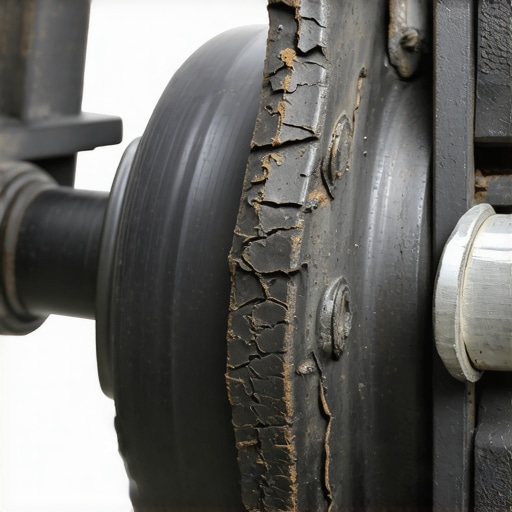
Hydraulic drag is a silent contributor to steering instability. A sticking brake caliper or a collapsed flexible brake hose can exert just enough pressure on the rotor to create a rotational speed differential between the left and right sides. This ‘brake pull’ often mimics a suspension misalignment. If your car drifts to the right specifically when your foot is off the accelerator, a technician should evaluate the temperature of the rotors using an infrared thermometer. Ensuring that your brake service includes a thorough cleaning and lubrication of the slide pins is essential; otherwise, you might be chasing ghost suspension issues. Expert resources like the National Institute for Automotive Service Excellence (ASE) emphasize that braking system health is inextricably linked to vehicle handling and safety. You should consider whether you need to how to rescue a seized brake caliper slide pin to restore neutral steering.
Stop Blaming the Tie Rods and Check Your Steering Gear
Beyond the tires and brakes, the internal valving of the steering rack can cause a ‘lead’ or ‘pull.’ If the hydraulic seals within the power steering rack are leaking internally, they may apply unequal pressure to one side of the piston even when the steering wheel is centered. This is a complex failure that usually requires a complete tune up of the steering system or a full rack replacement. Additionally, if you notice that why your steering wheel is off-center after an alignment, it suggests the technician failed to properly index the steering angle sensor or center the rack before locking down the tie rods. This lack of precision results in a car that technically has correct alignment specs but ‘thinks’ it is in a turn. To ensure your vehicle remains reliable, explore our brake service secrets how to boost safety and longevity to understand how integrated systems affect your daily drive. Have you checked your tire pressure lately? A mere 5 PSI difference can pull a car across three lanes of traffic.
Why Your Car Remembers the Last Turn Too Well
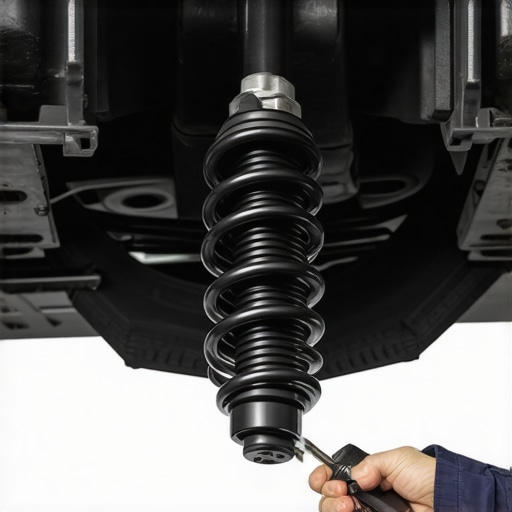
In the world of professional chassis tuning, we often encounter a phenomenon known as ‘memory steer.’ This occurs when a vehicle fails to return to center after a turn, or worse, continues to pull in the direction of the last maneuver. This is rarely an alignment angle issue; instead, it is usually a mechanical bind in the upper strut mounts or ball joints. If the bearing plate at the top of your strut tower is seized, the coil spring actually winds up like a clock spring when you turn. Once you straighten the wheel, that stored energy tries to pull the steering back. If you have noticed that why your steering feels notchy while turning, you are likely dealing with a physical obstruction in the steering axis rather than a geometric error. A seasoned technician knows that a ‘good’ alignment cannot overcome a strut that refuses to pivot freely. You should investigate how to tell if your struts are actually blown to see if the internal valving or the external mounting hardware is the true source of your drift.
Is Your Steering Computer Actively Fighting Your Hands?
In modern vehicles equipped with Electronic Power Steering (EPS), the software is just as critical as the hardware. Many drivers are unaware that their car features an ‘Active Pull Compensation’ system designed to counteract road crown. However, if the technician performs an alignment but fails to reset the Steering Angle Sensor (SAS) to zero, the EPS motor may apply a continuous torque to the rack because it ‘thinks’ the vehicle is in a perpetual turn. This digital ghost can make a perfectly aligned car feel like it is constantly wandering. The Society of Automotive Engineers (SAE) highlights in their technical standards that integrated electronic stability control systems rely on millisecond-perfect data from these sensors. If the SAS is off by even a fraction of a degree, your auto repair remains incomplete. This is why some steering issues persist even after new parts are installed; the computer simply hasn’t been told that the hardware is now straight. If you find yourself wrestling with the wheel at highway speeds, it might be time to look into why your steering wheel shakes specifically at 65 mph to rule out electronic interference or wheel balance issues.
The Hidden Impact of Fluid Degradation on Directional Stability
For those still driving vehicles with hydraulic assist, the condition of the power steering fluid is a frequently ignored factor in steering pull. Over time, heat and friction break down the fluid’s viscosity and allow small particles of rubber and metal to contaminate the system. These contaminants can lodge in the spool valve of the steering rack, causing uneven pressure distribution. If the fluid cannot flow symmetrically through the rack’s internal galleries, the steering will feel ‘heavy’ in one direction and ‘light’ in the other. This imbalance creates a subtle but constant pull. Before committing to an expensive rack replacement, a smart mechanic will often suggest a full system purge. Learning how to flush your power steering without a pump can be a cost-effective first step in restoring hydraulic balance. Furthermore, listen for 3 steering noises that mean your car is unsafe, as these often signal that the pump is cavitating or the fluid is bypass-leaking internally. Have you ever experienced a sudden change in steering weight during a long drive? Share your experience in the comments or tell us if a simple fluid change solved your mystery drift; your insights help our community of enthusiasts diagnose these tricky gremlins faster.
Chassis Flex and the Reality of Frame Fatigue
In high-mileage vehicles or those that have experienced a significant impact, the issue may not be the bolt-on parts but the chassis itself. Frame fatigue or a slightly tweaked subframe can alter the ‘thrust angle’ of the vehicle. If the rear wheels are not tracking perfectly behind the front wheels—even if the front wheels are aligned to each other—the car will ‘dog-track,’ creating a sensation of pulling to one side. This requires a tune up of your expectations, as standard alignment shops might not have the frame-measuring equipment to detect a 2-millimeter shift in a subframe mount. If you suspect your vehicle’s history involves more than just a few potholes, identifying 3 reasons your steering feels heavy suddenly can help you determine if the structural integrity of your steering geometry has been compromised. Always ensure your technician checks the thrust angle, as a car that is ‘straight’ in the front but ‘crooked’ in the back will never drive true.
Stop Trusting Static Bushings: The Dynamic Deflection Problem
One of the most elusive causes of a persistent pull is dynamic toe change. While your vehicle is stationary on the alignment rack, the suspension is in a neutral state, and the bushings appear solid. However, as soon as you apply torque to the wheels or hit a highway-speed wind load, worn lower control arm bushings can deflect. This shift alters the steering geometry in real-time, causing the wheel to ‘walk’ out of its calibrated position. A master mechanic knows that even if a bushing isn’t torn, loss of durometer (the rubber’s hardness) can lead to uncommanded steering inputs. If you have recently performed a tune up on your suspension but ignored the rubber bits, you may find that signs your control arm bushings are shot explains why your static alignment doesn’t hold up under pressure.
The Engine Torque Connection: When Mounts Dictate Direction
In front-wheel-drive vehicles with transverse-mounted engines, ‘torque steer’ is a known characteristic, but it should not manifest as a constant drift during cruise. If your car pulls specifically during acceleration, the culprit might not be the wheels at all, but rather the engine and transmission mounts. When these mounts fail, the entire powertrain can shift several degrees, changing the effective length and angle of the CV axles. This imbalance in torque delivery forces the car to one side. According to data monitored by the National Highway Traffic Safety Administration (NHTSA), structural failures in powertrain support can lead to significant handling instability. If you’ve noticed a ‘thunk’ when shifting gears alongside your steering issues, it is time to check how to diagnose broken engine mounts before throwing more money at the alignment shop.
Does Road Crown Always Cause a Drift to the Right?
Many technicians use ‘road crown’ as a catch-all excuse for a car that drifts, but a sophisticated auto repair professional understands the nuance of cross-caster settings. Most roads are built with a slight slope toward the shoulder to facilitate water drainage. To counteract this, many manufacturers suggest a slightly asymmetrical caster setting—usually having more positive caster on the right side. This ‘pro-active lead’ helps the car naturally climb the hill of the road crown to stay straight. However, if you are driving in the left lane of a divided highway where the crown slopes left, a car set up perfectly for the right lane will suddenly feel like it is diving for the median. Have you tested your car on a truly flat surface, like a large parking lot, to see if the pull persists? If it only happens on certain highways, your mechanic may need to adjust your ‘cross-caster’ to better suit your local geography. You can learn more about what is cross-caster and why it matters to speak the same language as your alignment tech.
The Hub and Bearing Factor: When Friction Outmuscles Geometry
We often focus on the angles of the wheels, but we forget the friction within the hubs. A wheel bearing that is beginning to pit or lose its lubrication creates significant rotational drag. This drag acts as a localized braking force, pulling the car toward the side with the failing bearing. Unlike a seized caliper, which generates immense heat, a failing bearing might only produce a subtle hum or a slight vibration at specific speeds. If your brake service confirmed the calipers are retracting properly, the next step is a ‘roll test’ or checking for play in the hub assembly. This is an auto repair fundamental that is frequently skipped in favor of computer-aided diagnostics. If you suspect your hubs are the source of the drag, identifying how to tell which wheel bearing is noisy could save you from an unnecessary second alignment. While checking the bearings, don’t forget to inspect the ball joints for vertical play; a joint that is ‘tight’ but lacks grease can bind and cause the same memory steer issues discussed earlier.
When Body Panels and Airflow Fight Your Tires
At highway speeds, your vehicle isn’t just a rolling machine; it’s an aerodynamic body subject to massive air pressure differentials. If you’ve suffered a minor fender bender or have loose underbody plastic shielding, the resulting air turbulence can create localized high-pressure zones. This ‘aero-pull’ is particularly deceptive because it vanishes during low-speed city driving. A mechanic might spend hours on the alignment rack without realizing that a flapping splash shield is acting like a rudder. For those performing a performance-oriented tune up, checking that every aerodynamic strake and belly pan is secured is as vital as checking the tire pressure.
Why Your Differential Might Be Steering the Front End
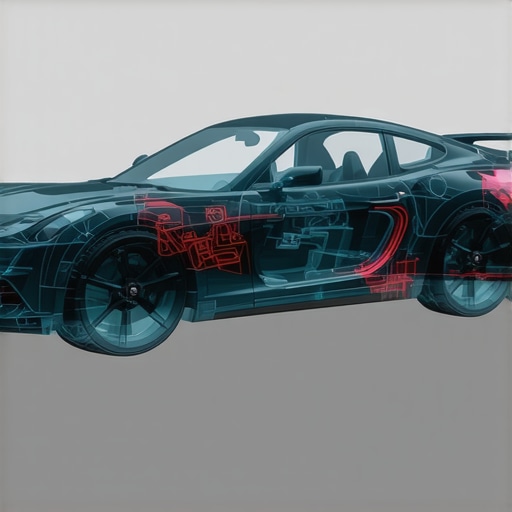
The internal mechanics of your drivetrain—specifically the differential—can exert a significant influence on directional stability. In vehicles equipped with a Limited-Slip Differential (LSD), worn internal clutch packs or the use of incorrect gear oil can cause the unit to ‘bind’ or bias torque unevenly. This creates a parasitic drag on one axle shaft, effectively trying to pivot the car around that wheel. This isn’t a geometry issue; it’s a drivetrain imbalance that no amount of auto repair to the suspension can fix. If the pull coincides with slight throttle inputs, the health of your transaxle fluid should be your first point of investigation.
Can a Malfunctioning Torque Vectoring System Overrule Your Steering?
Modern All-Wheel Drive (AWD) systems utilize sophisticated software to pulse the brakes or adjust clutch engagement to aid cornering. If a wheel speed sensor is delivering slightly erratic data—perhaps due to a film of metallic dust from a previous brake service—the computer may erroneously apply ‘corrective’ braking to one wheel. This digital intervention creates a ghost pull that feels identical to a mechanical misalignment. According to technical bulletins from the Inter-Industry Conference on Auto Collision Repair (I-CAR), ensuring the integrity of the electronic sensor network is paramount following any structural or suspension work. Without a clean signal, the car’s safety net becomes its own worst enemy.
Stop Ignoring the Corner Weights
Even if every angle is perfect, an unevenly weighted chassis will never track straight. Corner balancing is a technique usually reserved for the racetrack, but its principles apply to every daily driver. If a vehicle has a sagging spring or a heavily loaded toolbox permanently sitting on one side, the ‘cross-weight’ of the car is thrown off. This causes the tires to have different contact patch sizes, which in turn creates a rolling resistance differential. If you’ve recently upgraded your suspension, you must ensure that how to tell if your struts are actually blown includes a check for ride height consistency across all four corners.
Are you still fighting a steering ghost that refuses to go away? Don’t let a lazy diagnostic process cost you another set of tires. Take a moment to inspect your undercarriage for loose panels or reach out to a specialist who understands that steering is an integrated system of aerodynamics, electronics, and physics. Your car deserves to drive as straight as the day it left the showroom.
Expert Insights into Complex Steering Behaviors
Cross-Caster Counteracts the Slope of the Road
A master mechanic knows that roads are not perfectly flat. Most highway surfaces are engineered with a slope toward the shoulder to facilitate water drainage, which naturally pulls your vehicle to the right. To combat this, precision auto repair technicians set the right-side caster slightly higher than the left. This intentional imbalance allows the car to climb the road crown, keeping you centered without effort. If your shop ignores this cross-caster setting, your car will always feel like it is diving for the ditch on the highway.
Digital Corrections Often Mask Mechanical Failures
In the era of Electronic Power Steering, the software can actually fight your hands. If the technician fails to perform a digital zero-point calibration on the Steering Angle Sensor, the power steering motor may apply constant torque to correct what it perceives as a drift. This is why a comprehensive tune up of your steering system must include an OBD-II interface check. Identifying 3 signs your mechanic found a real suspension problem and not just a dirty part is the first step in determining if the issue is software or steel.
#IMAGE_PLACEHOLDER_E#
Soft Bushings Throw Off Your Dynamic Alignment
Static alignment on a rack is only half the story. When you are moving at highway speeds, the air pressure and drivetrain torque push against your wheels. If your control arm bushings have lost their durometer or stiffness, the wheels will spread or toe-out under load. This dynamic shift will never show up on a stationary machine. You should check how to identify a bad wheel bearing by ear or feel, as hub friction can exacerbate this bushing deflection, causing a pull that only appears at high speeds.
Recommended Authority Resources for Diagnostic Precision
- ASE Professional Certification Guides: These provide the technical foundation for understanding suspension geometry and steering system hydraulics, moving far beyond basic auto repair concepts.
- SAE International Technical Standards: These standards are essential for professionals who want to understand the physics of tire scrub radius and how wheel offset affects directional stability.
- Manufacturer Technical Service Bulletins: Often, a persistent pull is a known factory defect or software bug that a standard mechanic might miss without access to specialized OEM databases.
The Professional Verdict on Achieving Neutral Steering
Restoring a vehicle’s ability to track straight requires looking past the green numbers on an alignment printout. It is an integrated effort involving consistent brake service, healthy suspension bushings, and calibrated electronics. By following essential tune-up tips to boost your cars performance in 2025, you ensure that every component, from the tires to the steering angle sensor, is working in harmony. If you have ruled out the alignment but the wheel still fights you, prioritize a deep dive into your hydraulic health and electronic settings. A truly straight-driving car is the result of a complete system tune up, not just a single adjustment. Professional drivers know that even the smallest 5 PSI difference or a dragging brake pad can ruin the experience; ensure your why regular brake service is key to car safety and longevity is part of your regular maintenance routine to keep your steering neutral and safe.